
Tag: data science
From ZizzMedia, the free news encyclopedia
80 articles in this section
-
 Executive Overview In the rapidly evolving landscape of artificial intelligence, Large Language Models (LLMs) have largely transitioned from conversational novelties to autonomous workers capable of executing complex, multi-step workflows. Yet, a persistent engineering bottleneck threatens to derail production pipelines everywhere:...
-
 Executive Overview In the rapidly evolving landscape of artificial intelligence engineering, the transition from conversational chatbots to autonomous agents represents a paradigm shift. Today’s software architectures increasingly rely on Large Language Models (LLMs) not merely to generate text, but to...
-
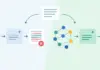 Executive Overview In the rapidly evolving landscape of Retrieval-Augmented Generation (RAG), developers continually strive to mitigate the inherent "lossiness" of dense vector databases when processing atomic facts, numeric statistics, and complex entity relationships. While standard vector RAG pipelines excel at...
-
 Executive Overview In the rapidly evolving landscape of generative artificial intelligence, the transition from conversational text models to autonomous, action-oriented agents represents one of the most significant engineering milestones of the decade. Modern applications demand that language models do more...
-
 Executive Overview In the rapidly evolving landscape of generative artificial intelligence, foundational large language models (LLMs) such as Meta’s Llama 3 8B have proven themselves as remarkably capable generalists. They excel at creative writing, summarization, brainstorming, and broad-spectrum question answering....
-
 Executive Overview In the rapidly evolving landscape of artificial intelligence, building robust autonomous agents depends heavily on a model’s ability to seamlessly interface with external systems. While large language models (LLMs) like Meta’s Llama 3 8B excel as general-purpose conversationalists,...
-
 Executive Overview In the rapidly evolving landscape of generative artificial intelligence, the transition from conversational generalists to autonomous agents represents the next major technological frontier. However, deploying Large Language Models (LLMs) into production environments—particularly those requiring deterministic API integrations—exposes a...
-
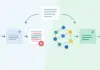 Executive Overview In the rapidly evolving landscape of Retrieval-Augmented Generation (RAG), engineers continually face a persistent engineering challenge: semantic lossiness. Standard vector-based RAG architectures, while remarkably proficient at broad semantic retrieval and conceptual search, frequently stumble when tasked with high-precision,...
-
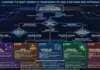 Executive Overview The landscape of generative and agentic artificial intelligence has undergone a seismic shift. What began in 2023 as experimental, fragile scaffolding consisting of loosely coupled Python scripts and raw API calls has matured into a robust, highly competitive...
-
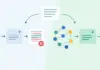 Executive Overview The rapid deployment of Retrieval-Augmented Generation (RAG) systems across enterprise architectures has exposed a fundamental architectural flaw: lossiness in dense vector spaces. While traditional vector-based RAG pipelines excel at capturing semantic similarity and contextual vibes, they systematically falter...