Executive Overview
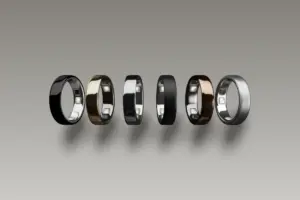
Oura, the prominent health and wellness technology company renowned for its pioneering smart rings, is reportedly setting the stage for one of the most anticipated public market debuts of the year. According to recent reports citing insider sources, the San Francisco- and Finland-based firm is planning to raise up to $3 billion as early as next month in a landmark U.S. Initial Public Offering (IPO). This offering is projected to catapult the 900-person company to a staggering valuation north of $16 billion.
The move underscores a meteoric rise for Oura, which has rapidly evolved from a niche gadget beloved by Silicon Valley biohackers into a mainstream health-monitoring powerhouse. However, the path to the public markets is not without its hurdles. While revenue projections have skyrocketed—expected to approach the $2 billion milestone in 2026—Oura is simultaneously navigating an increasingly crowded wearables landscape, intensified competition from heavyweights like Samsung and Whoop, and a freshly minted class-action lawsuit challenging the scientific accuracy of its sleep-tracking algorithms.
As the company prepares to pull back the curtain on its financials through a public S-1 filing following its confidential submission earlier this year, stakeholders, investors, and consumers alike are watching closely to see how the smart ring pioneer handles the scrutiny of the public sector.
Detailed Chronology: From Niche Biohacking to Public Market Ambitions
To understand the magnitude of Oura’s upcoming IPO, it is necessary to examine the accelerated timeline that brought the company to this juncture. Founded on a premise of combining elegant jewelry design with biometric sensors, Oura initially carved out a dedicated following among tech executives, elite athletes, and biohackers willing to pay a premium for granular sleep and recovery data.
For years, the company operated as a private, venture-backed startup refining its hardware iterations. However, the inflection point arrived swiftly over the past several years, fueled by a post-pandemic obsession with personal health, longevity, and preventative wellness.
- September 2025: Oura solidified its financial foundation by closing an enormous $875 million Series E funding round. Led by prominent institutional heavyweights including Fidelity, ICONIQ, Whale Rock, and Atreides—alongside earlier backers such as Dexcom, The Chernin Group, Forerunner Ventures, Coatue, and Temasek—this funding round valued the company at an impressive $10.9 billion.
- May 2026: Signaling its intent to transition from private entity to public titan, Oura officially announced that it had confidentially filed for a U.S. IPO.
- August 2026: Financial reports leaked to major news outlets revealed that the company was accelerating its timeline, targeting an IPO as early as next month to raise up to $3 billion. Crucially, the reports indicated that existing investors plan to offload a substantial block of stock during the offering, suggesting strong secondary liquidity demands.
- Late August 2026: Amid preparations for the public debut, Oura was hit with a regulatory and legal speedbump. A proposed class-action lawsuit filed in San Francisco accused the company of deceptive marketing regarding the clinical accuracy of its sleep-staging features. Despite the legal challenge, Oura’s leadership remains steadfast, preparing to defend its proprietary technology as it steers toward the public markets.
Supporting Context & Metrics: Explosive Financial Growth in a Crowded Market
Oura’s projected $16 billion valuation represents a breathtaking leap from its $10.9 billion price tag just under a year ago. This financial momentum is backed by extraordinary revenue trajectories that rival the growth rates of top-tier enterprise software companies rather than traditional hardware manufacturers.
Financial Trajectory
- 2024: Oura generated approximately $500 million in revenue.
- 2025: Revenue doubled to roughly $1 billion, propelled by broader consumer adoption and international expansion.
- 2026 (Projected): The company expects to pull in close to $2 billion in sales, an ambitious target that, if met, will provide a compelling narrative for prospective public market investors reviewing the forthcoming S-1 prospectus.
The Competitive Battlefield
Despite its stellar growth, Oura does not operate in a vacuum. The smart ring and broader wearables market has transformed into a high-stakes battleground.
Two years ago, tech giant Samsung entered the fray with the commercial launch of the Galaxy Ring, leveraging its vast global distribution network and ecosystem lock-in to capture consumer mindshare. Meanwhile, Oura’s most direct and aggressive rival, Whoop, has undergone a parallel evolution.
Once known primarily as a screenless fitness band favored by endurance athletes and male fitness enthusiasts, Whoop spent the past year aggressively pivoting its brand identity. By incorporating advanced physiological monitoring—such as hormone tracking and specialized blood-panel testing targeting perimenopause and thyroid health—Whoop successfully broadened its demographic appeal. This strategic reinvention fueled Whoop’s own valuation up to $10 billion during its Series G fundraise in March 2026.
Oura has executed a remarkably similar playbook, shedding its early reputation as an exclusive toy for tech elites to become a household name synonymous with holistic sleep and recovery management.
Official Statements and Legal Defense
As Oura transitions into the public spotlight, it must also contend with the heightened legal and regulatory scrutiny that accompanies a multi-billion-dollar valuation.
The class-action lawsuit filed in San Francisco last week struck at the core of Oura’s value proposition. The plaintiffs allege that the company misleads consumers by claiming its rings can determine the exact stage of sleep a wearer is experiencing. The complaint points out that traditional, precise sleep staging typically requires clinical environments outfitted with scalp electrodes and eye sensors—such as polysomnography.
Oura’s leadership has not shied away from the controversy. In a definitive statement issued over the weekend, an Oura spokesperson forcefully pushed back against the allegations:
"We plan to defend against these claims in the appropriate legal forum. While Oura Ring is not a medical device or a substitute for a clinical sleep study, Oura’s sleep staging has been validated and compared favorably in multiple studies against polysomnography, the gold standard. Multiple third-party, independent studies support our claims of accuracy and we have transparently reported on the mechanisms and measures that inform Oura’s sleep staging."
This robust defense highlights the delicate tightrope wearable tech companies must walk: marketing advanced wellness insights that consumers crave while carefully navigating the strict regulatory boundaries separating consumer lifestyle gadgets from FDA-regulated medical devices.
Future Outlook: Navigating the Public Markets
As Oura approaches its anticipated September debut, all eyes will be on the company’s official S-1 filing to reveal the granular details of its profit margins, customer acquisition costs, international penetration, and research and development expenditures.
The decision by early investors to sell a significant chunk of stock during the offering signals a desire to lock in gains from a venture that has matured rapidly over the last half-decade. However, it also places the burden of future growth squarely on the shoulders of public market retail and institutional shareholders.
To sustain a valuation exceeding $16 billion, Oura will need to prove that it can continue to innovate faster than deep-pocketed rivals like Samsung, fend off market-share encroachment from Whoop, and successfully navigate legal challenges regarding product claims without dampening consumer trust.
If Oura can successfully weather these headwinds and deliver on its projected $2 billion revenue milestone for 2026, its IPO could serve as a watershed moment for the consumer health-tech sector, cementing smart rings as an indispensable category in personal wellness.