
ZizzMedia
From today's featured article
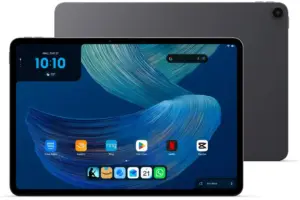
In a move that marks a definitive turning point for its hardware division, Amazon has officially retired its long-standing "Fire" tablet branding and the restrictive, proprietary FireOS that defined it. In its place, the retail giant has introduced the "Alexa Tablet" family—a comprehensive suite of devices that embrace a full-featured, open Android experience. This strategic pivot, timed perfectly for the Black Friday shopping season, signals Amazon’s acknowledgement of a shifting consumer landscape that demands better software compatibility, broader app accessibility via the Google Play Store, and hardware that competes directly with premium Android rivals.
By transitioning to a more standard Android interface, Amazon is shedding the “walled garden” reputation that haunted its previous hardware iterations. Whether for the budget-conscious student or the creative professional requiring high-end specifications, the new lineup—spanning the compact Alexa Tablet 8 to the powerhouse Alexa Tablet 12 Pro—represents the most significant hardware refresh in the company’s history.
The story of Amazon’s tablet journey is one of evolution. For over a decade, the Fire Tablet series served as a gateway to Amazon’s ecosystem, utilizing a heavily forked version of Android that excluded Google Mobile Services (GMS). While this served Amazon’s business model of keeping users within their digital storefront, it often frustrated users who desired the flexibility of standard Android.
Behind the scenes, internal pressure had been mounting to address the stagnation in the tablet market. Data suggested that users were increasingly looking for productivity-focused devices rather than just media consumption tools. The development of the "Alexa Tablet" line began with the goal of reconciling Amazon’s voice-assistant-first approach with the versatility of the open Android ecosystem.
Did you know ...

- ... that The AI-Fueled Siege: How Ecommerce Fraud Is Evolving for 2027 — Executive Overview: The Automation Arms Race The digital storefront, once a symbol?
- ... that Shaken, Stirred, and Stationery: The Cultural Legacy and Unexpected Retail Renaissance of James Bond’s Iconic GoldenEye Parker Pen — Executive Overview James Bond has once again dominated global media headlines, capturing?
- ... that The Pixel Watch 5 Price Drop: A Strategic Pivot or a Pre-Holiday Gambit? — Executive Overview: Unpacking the $100 Discount In a surprising shift for the?
- ... that Global Tech Giants Deploy Massive Security Overhauls in Record-Breaking Patch Wave — Executive Overview The cybersecurity landscape faced an unprecedented deluge of software remediation?
- ... that The Portable Projection Revolution: Analyzing XGIMI’s Latest Hardware Discounts — Executive Overview As the home theater market continues to pivot toward flexibility?
- ... that The Framerate Ceiling: Why Rockstar Games Locked GTA 6 to 30 FPS on Current-Gen Consoles—Even the PS5 Pro — Executive Overview The debate that has dominated gaming forums, technical analysis channels,?
- ... that Microsoft Advertising’s Decade-Defining Bidding Upgrade: A Comprehensive Analysis — Executive Overview: A New Era of Automated Bidding In a move that?
- ... that The Definitive Guide to Robots.txt Management in the Era of AI Agents and Advanced Crawlers — Executive Overview The humble robots.txt file has long served as the digital?
In the news

- Productivity & Leadership: The Ultimate Guide to DeWalt’s Early Black Friday 2026 Power Tool Savings — Disclosure: We may earn a commission from links on this.
- Digital Marketing: Urgent Security Alert: WordPress 7.1.5 Patches 18 Critical Vulnerabilities, Including Remote Code Execution — Executive Overview: A Necessary Defense In a move that underscores.
- Tech & Innovation: The Anthropic IPO: Unmasking the Circular Economics of the AI Gold Rush — Executive Overview As Anthropic makes its long-awaited debut on public.
- Business & Entrepreneurship: The Great Digital Domino Effect: Why the Recent Global Tech Outages Weren’t a Cyberattack—They Were Something Much More Ironic — Executive Overview Over the span of six chaotic days, the.
- Advertising & PR: The Rise of Creative Data 2.0: Why CMOs Must Master Agentic Commerce — Executive Overview: The Paradigm Shift The landscape of digital marketing.
On this day
November 19

- 2026 – Executive Overview — Framework Computer, the celebrated consumer electronics manufacturer renowned for its…
- 2026 – Google Expands User Personalization Across Search, Discover, and News: What Publishers Need to Know — Executive Overview In a sweeping update aimed at bridging the…
- 2026 – The Evolution of the Whoniverse: BBC Greenlights Pre-School Animated Series Doctor Who: TARDIS Crew Amid Franchise Transition — Executive Overview The future of the iconic British sci-fi institution…
- 2026 – Your Customers Are Using AI Search. They’re Still Googling You, Too. Here’s What Your Marketing Strategy Might Be Missing. — Death of the Single-Channel Journey: Why AI Search and Traditional…
- 2026 – Resurrection of an Icon: How AMC and Bacardí Orchestrated the Crypt Keeper’s Grand Return — Executive Overview: A Calculated Haunting In the landscape of modern…
- 2026 – The Seven-Figure Playbook: Essential Copywriting Strategies for High-Conversion Lead Generation and Revenue Growth — Executive Overview In the modern digital economy, the boundary between…
- 2026 – The Pinnacle of Sonic Luxury: A Deep Dive into Sony’s 1000X The Collexion — Executive Overview: A Decade of Dominance Refined Ten years ago,…
Today's featured article from Tech Gadgets & Reviews

The Framerate Ceiling: Why Rockstar Games Locked GTA 6 to 30 FPS on Current-Gen Consoles—Even the PS5 Pro — Tech Gadgets & Reviews
|
The debate that has dominated gaming forums, technical analysis channels, and social media feeds since the initial reveal of Grand Theft Auto 6 has finally been put to rest by Rockstar Games. In a definitive statement to the games media, developer leadership has confirmed what many industry insiders long suspected: current-generation consoles, including Sony’s heavily marketed and expensive PlayStation 5 Pro, will not receive a 60 frames-per-second (fps) mode—now or in any future patches. For a segment of the gaming community, this revelation has been met with acute disappointment. In an era where high-refresh-rate gaming has become the gold standard of performance, accepting a hard-locked 30 fps cap for one of the most anticipated entertainment releases in human history feels, to some, like a generational compromise. However, according to Rockstar’s technology production director, Marc Chambers, this decision is not the result of poor optimization, a lack of ambition, or artificial limitation. Instead, it is the unavoidable mathematical consequence of a generational hardware bottleneck: the Central Processing Unit (CPU). While the gaming public often equates raw graphical power with the graphics processing unit (GPU), GTA 6 represents an unprecedented paradigm shift in open-world complexity, AI simulation, physics calculations, and environmental density. Even with the introduction of the PS5 Pro’s advanced upscaling technology and enhanced graphics capabilities, the processing core of current-generation hardware simply cannot sustain the rigorous algorithmic demands of Vice City at double the standard framerate. This article explores the technical reality behind Rockstar’s controversial decision, dissects the hardware limitations of the PS5, Xbox Series X|S, and PS5 Pro, reviews the technical evaluations from testing authorities like Digital Foundry, and examines what this means for the ultimate future of the title on personal computers. |