
Executive Overview
The debate that has dominated gaming forums, technical analysis channels, and social media feeds since the initial reveal of Grand Theft Auto 6 has finally been put to rest by Rockstar Games. In a definitive statement to the games media, developer leadership has confirmed what many industry insiders long suspected: current-generation consoles, including Sony’s heavily marketed and expensive PlayStation 5 Pro, will not receive a 60 frames-per-second (fps) mode—now or in any future patches.
For a segment of the gaming community, this revelation has been met with acute disappointment. In an era where high-refresh-rate gaming has become the gold standard of performance, accepting a hard-locked 30 fps cap for one of the most anticipated entertainment releases in human history feels, to some, like a generational compromise. However, according to Rockstar’s technology production director, Marc Chambers, this decision is not the result of poor optimization, a lack of ambition, or artificial limitation. Instead, it is the unavoidable mathematical consequence of a generational hardware bottleneck: the Central Processing Unit (CPU).
While the gaming public often equates raw graphical power with the graphics processing unit (GPU), GTA 6 represents an unprecedented paradigm shift in open-world complexity, AI simulation, physics calculations, and environmental density. Even with the introduction of the PS5 Pro’s advanced upscaling technology and enhanced graphics capabilities, the processing core of current-generation hardware simply cannot sustain the rigorous algorithmic demands of Vice City at double the standard framerate.
This article explores the technical reality behind Rockstar’s controversial decision, dissects the hardware limitations of the PS5, Xbox Series X|S, and PS5 Pro, reviews the technical evaluations from testing authorities like Digital Foundry, and examines what this means for the ultimate future of the title on personal computers.
Detailed Chronology of the Controversy
The path to Rockstar’s definitive confirmation regarding GTA 6’s framerate has been fraught with speculation, counter-speculation, and shifting expectations tied to mid-generation hardware refreshes.
The Initial Shock and Early Speculation
When Rockstar Games first pulled back the curtain on Grand Theft Auto 6, the initial trailers captured the global imagination with jaw-dropping visual fidelity, dense crowds, hyper-realistic water physics, and unprecedented lighting systems. However, industry veterans immediately noted the writing on the wall: the sheer scale of the asset streaming, lighting calculations, and physics simulations hinted strongly at a 30 fps target.
For months, the gaming community clung to hope. Historically, major open-world titles often launch with performance constraints, only for developers to unlock higher framerates later via optimization patches or subsequent hardware iterations. Gamers reasoned that even if the base PlayStation 5 and Xbox Series X struggled to maintain 60 fps, surely the rumored "Pro" models would bridge the gap.
The PS5 Pro Announcement and False Hopes
When Sony officially unveiled the PlayStation 5 Pro—carrying a hefty $700 price tag and boasting a significantly upgraded GPU and proprietary PlayStation Spectral Super Resolution (PSSR) upscaling—the conversation shifted. Marketing materials emphasized superior visual modes combined with high-framerate performance across the library, leading many consumers to assume that GTA 6 would effortlessly hit a performance mode on the upgraded hardware.
Instead, leaks and subsequent official confirmations poured cold water on those expectations. Industry insiders began reporting that GTA 6 was explicitly targeting a locked 30 fps across all consoles, with the PS5 Pro leveraging its horsepower exclusively toward graphical enhancements rather than higher velocity.
The Definitive Word from Rockstar
The speculation finally reached its conclusion when Marc Chambers, Rockstar’s technology production director, gave an explicit breakdown to Kotaku. Chambers clarified once and for all that no amount of patching, optimization, or downscaling of visual settings would yield a 60 fps (or even a 40 fps) mode on current-generation consoles. The hardware limitations were structural, baked into the silicon of the current console generation, and utterly impervious to software magic alone.
Supporting Context & Metrics: Decoding the Hardware Bottleneck
To understand why GTA 6 is locked to 30 fps, one must look past simple buzzwords like "resolution" and "graphics cards" and examine the intricate division of labor within modern video game consoles.
The GPU vs. CPU Divide
A video game console operates much like a high-performance computer, relying on two primary processors to render an interactive digital world:
- The Graphics Processing Unit (GPU): Responsible for rendering pixels, drawing geometry, calculating lighting, handling reflections, and applying textures.
- The Central Processing Unit (CPU): Responsible for managing game logic, non-player character (NPC) artificial intelligence, physics engines, traffic systems, spatial audio, asset streaming, and world simulation.
In the case of the PlayStation 5 and Xbox Series X, both consoles utilize custom Zen 2-based AMD processors. While these CPUs were a massive generational leap over the aging Jaguar processors found in the PS4 and Xbox One eras, they were already moderately constrained by the time the consoles launched in 2020.
When Sony engineered the PlayStation 5 Pro, they invested heavily in the GPU. The Pro boasts a massive upgrade in compute units and integrates Sony’s custom PSSR upscaling machine-learning hardware. However, the CPU in the PS5 Pro received only a minor, incremental clock-speed bump rather than a generational architectural overhaul. It remains fundamentally tied to the Zen 2 family.
Why Lowering Settings Won’t Unlock 60 FPS
A common counter-argument from gamers suggests that developers should simply introduce a "Performance Mode" by turning off ray tracing, lowering crowd density, or reducing resolution to 1080p, thereby freeing up resources for a 60 fps target.
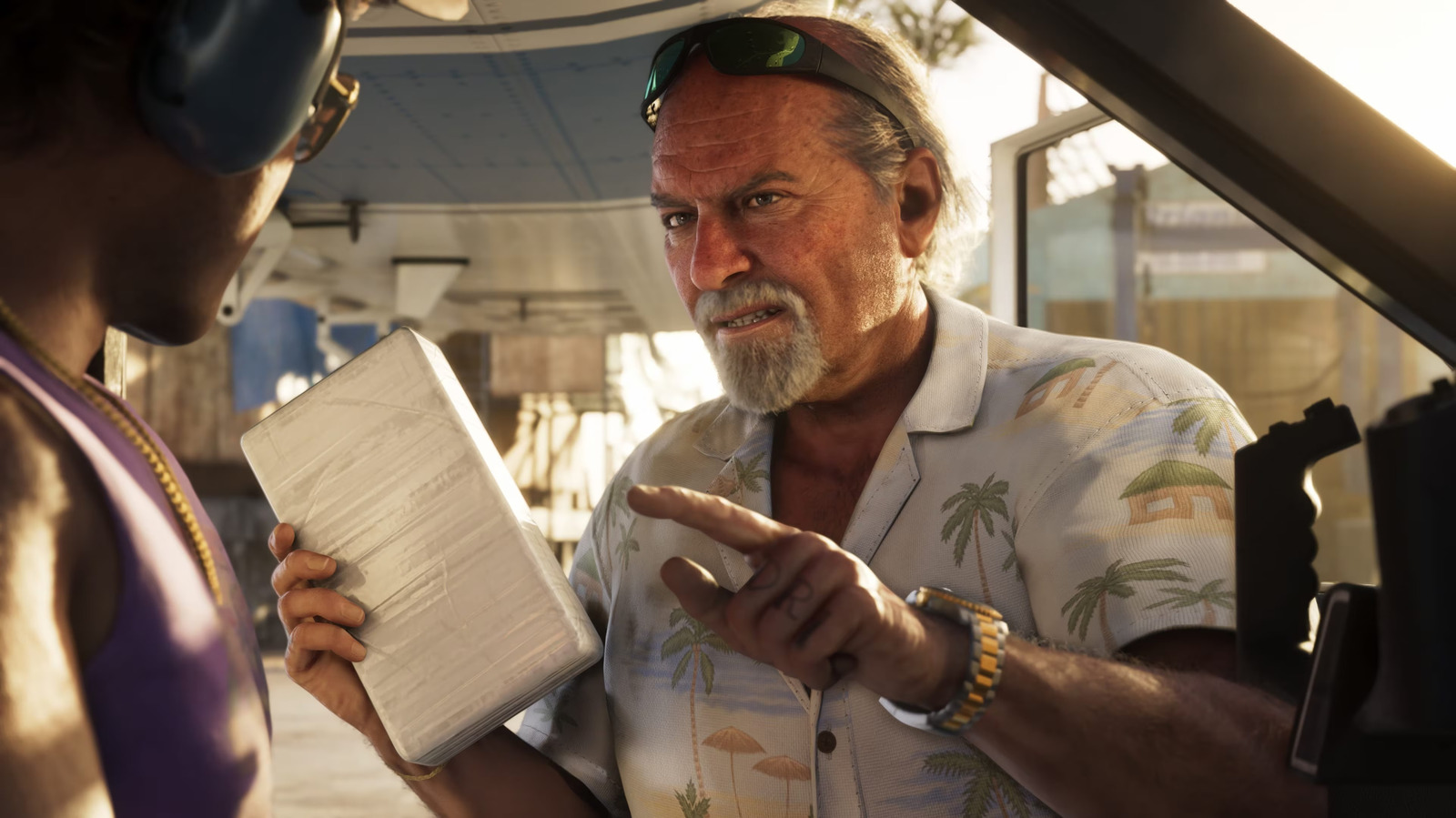
According to Rockstar’s technical team, this approach is fundamentally unviable for GTA 6. The game’s performance bottleneck is CPU-bound, not GPU-bound.
- Complex World Simulation: Vice City is not merely a pretty backdrop; it is a living, breathing ecosystem. GTA 6 simulates thousands of independent entities simultaneously. From advanced pedestrian routing and dynamic traffic patterns to emergent wildlife ecosystems (including a staggering variety of distinct bird species modeled with individual behaviors), the processor is working at maximum capacity just to keep the world coherent.
- Asset Streaming: The sheer density of the environment requires lightning-fast data streaming from the NVMe SSDs, coordinated entirely by the CPU.
- The Ray Tracing Reality: Even if ray-traced global illumination and reflections were completely disabled, the reduction in GPU load would do nothing to alleviate the crushing computational weight placed on the CPU by the game’s simulation engine. The processor would still be maxed out, rendering a 60 fps target mathematically impossible.
Technical Findings from Digital Foundry
Independent analysis from technical experts at Digital Foundry corroborates Rockstar’s assertions. Their hardware stress-testing revealed specific performance characteristics across Sony’s console ecosystem:
- Resolution and Upscaling: Both the base PS5 and the PS5 Pro render GTA 6 internally at a native 1440p resolution. However, the base PS5 displays this with a noticeably softer image presentation, whereas the PS5 Pro utilizes PSSR to reconstruct and upscale the image into a remarkably clean, near-4K visual output.
- Visual Enhancements on Pro: The PS5 Pro utilizes its extra GPU muscle to add complex ray-traced shadows and vastly improved lighting clarity to the base game’s already impressive suite of ray-traced reflections.
- Framerate Stability: While both consoles are locked to a 30 fps cap, the experience of that cap differs. The PS5 Pro delivers a rock-solid, locked 30 fps with immaculate frame pacing. Conversely, the base PS5 maintains 30 fps for the vast majority of the experience, but can occasionally stutter and drop into the mid-20s during chaotic, high-intensity sequences loaded with heavy alpha effects, explosions, and dense particle physics.
Despite the compromise on responsiveness, Digital Foundry heralded GTA 6 as a "landmark achievement in visual realism," noting that the aesthetic and atmospheric payoff largely justifies the hardware sacrifice.
Official Statements and Industry Impact
The confirmation from Rockstar has sparked widespread debate across the gaming industry regarding hardware parity, consumer expectations, and the trajectory of console development.
Marc Chambers’ dialogue with Kotaku provided rare, transparent insight into the engineering hurdles faced by triple-A developers working at the bleeding edge of hardware capabilities. Chambers emphasized that Rockstar’s primary objective was not to artificially restrict player choice, but to push the boundaries of what an open-world environment could achieve.
"The PS5 Pro’s upgraded GPU and upscaling tech help make the game look breathtakingly sharp, introducing advanced ray-traced elements that simply weren’t feasible on base hardware," Chambers noted during technical discussions. "However, because the Pro’s processor is only an incremental step forward, it is simply not powerful enough to run the game’s complex simulation at higher frame rates without catastrophic compromises to the world integrity."
Industry analysts have pointed out that this situation highlights a growing philosophical divide in hardware manufacturing. As console manufacturers push mid-generation upgrades emphasizing visual fidelity, upscaling, and ray tracing, they risk alienating a vocal demographic of core gamers who prioritize framerate fluidity and input responsiveness above all else.
Furthermore, the decision places the onus squarely on PC gamers—and those willing to wait patiently—to experience Vice City in high-refresh-rate glory.
Future Outlook: The Road Ahead for Vice City
While current-generation console owners must come to terms with a locked 30 fps experience, the lifecycle of a Rockstar Games release is notoriously long-lived, spanning multiple hardware generations and platform migrations.
The Inevitable PC Port
Historically, Rockstar Games follows a deliberate, staggered release strategy. Grand Theft Auto V originally launched on the Xbox 360 and PlayStation 3 in 2013 at 30 fps, received enhanced console ports for the PS4 and Xbox One eras, and finally arrived on PC years later with uncapped framerates and supreme visual scalability.
While Rockstar has not yet officially announced a PC version of GTA 6, industry precedent guarantees that one is in development. When the game eventually makes its way to personal computers, players equipped with high-end desktop CPUs and advanced graphics cards will finally bypass the hardware walls currently restricting console players, unlocking high framerates, custom resolutions, and even deeper simulation mods.
Current-Gen Options
For players eager to dive into Vice City on day one, the hardware ecosystem is clear. Fans will need to secure a copy on:
- PlayStation 5 (for a standard 1440p/30fps experience with minor frame drops in heavy action).
- PlayStation 5 Pro (for the definitive console experience, featuring crisp PSSR upscaling, enhanced ray-traced shadows, and a locked, perfectly paced 30 fps).
- Xbox Series X|S (utilizing Microsoft’s powerful hardware architecture to handle the open world).
- Cloud Streaming Alternatives (such as accessing legacy or current iterations through streaming ecosystems).
Conclusion
Rockstar Games’ decision to lock GTA 6 to 30 fps on current-generation consoles—including the formidable PS5 Pro—is a stark reminder of the physical limitations governing hardware engineering. While the modern consumer desires uncompromising performance in every category, the sheer computational violence required to simulate Vice City’s vibrant, systemic ecosystem leaves no room for higher framerates on current silicon.
For now, players must choose whether the breathtaking visual fidelity, staggering environmental density, and landmark technical achievements of GTA 6 are worth the trade-off of a cinematic 30 fps cap. If history is any guide, the journey into Vice City will remain a defining cultural milestone of the decade—regardless of the framerate it runs on.