Executive Overview
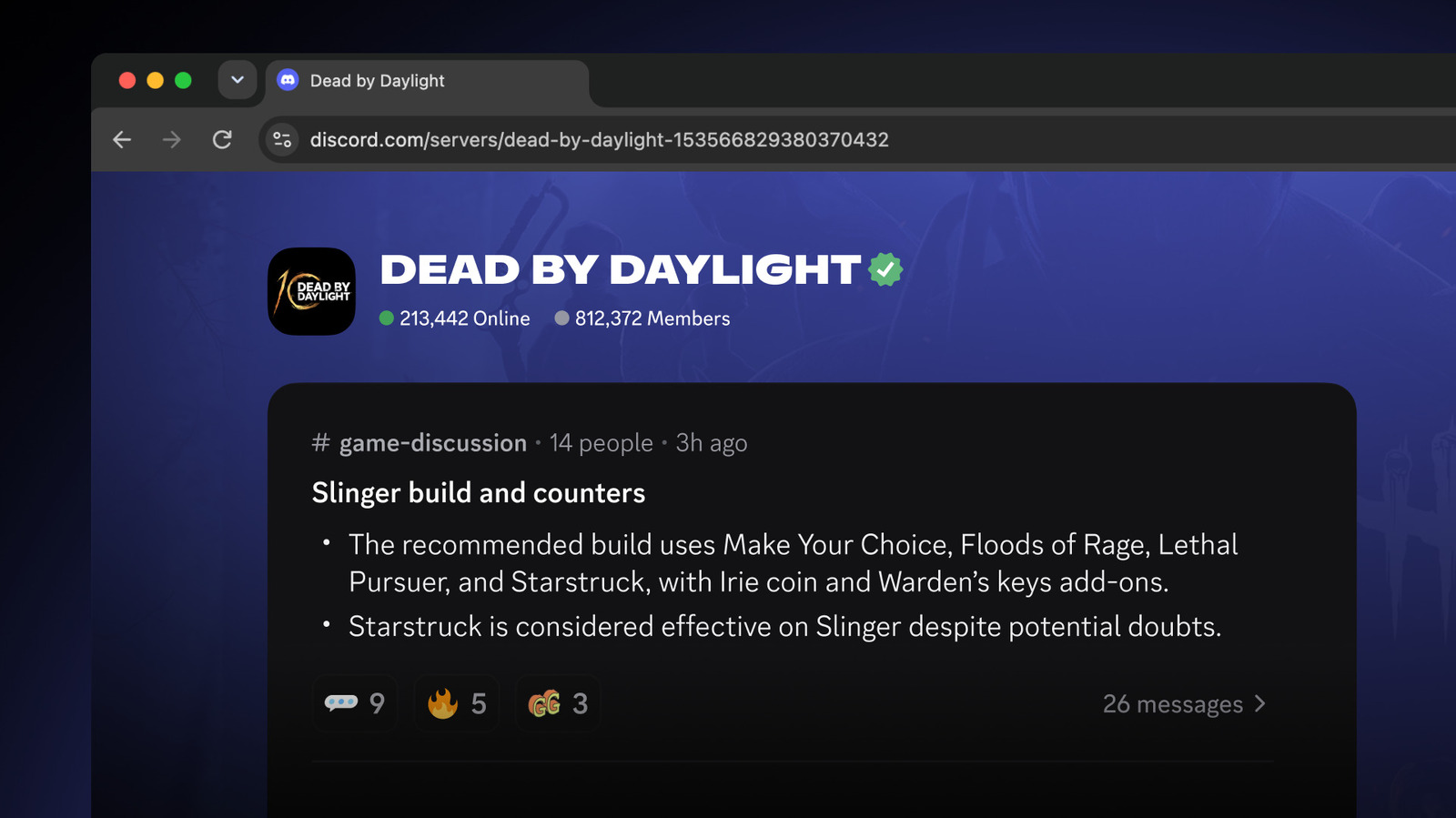
In a major strategic pivot that bridges the gap between private chat applications and public web forums, Discord is rolling out a sweeping policy update that will make public conversations on its largest communities searchable via mainstream search engines like Google. Beginning November 16, all of the platform’s "Discoverable Servers" will automatically receive public-facing Server Web Pages. By mid-December, these hubs will index exact message text from public channels, transforming chats that were once confined to the app into indexed web content.
The update represents a foundational shift in how Discord positions itself within the broader internet ecosystem. Long celebrated as a walled garden for real-time, gamer-centric, and niche community communications, the platform is now mimicking the open-web utility of platforms like Reddit and traditional forums. While the company frames the move as an intuitive way to help users find answers, community resources, and peer support through standard web searches, the change has immediately triggered fresh scrutiny.
Privacy advocates, server administrators, and regular users are raising questions about consent, data indexing, and the evolving definition of privacy in digital social spaces. Coming on the heels of Discord’s recent public relations hurdles regarding controversial age-verification rollouts, this latest maneuver tests the boundaries of user trust. Although Discord has implemented several opt-out mechanisms and region-specific defaults—such as automatically opting out users in the EU, UK, and other heavily regulated jurisdictions—the overarching paradigm has shifted: what you say in a public Discord server may soon be permanently indexed by search engine crawlers.
Detailed Chronology of the Update
To understand the magnitude of this change, it is essential to trace the rollout schedule and the architectural mechanics underpinning Discord’s new web presence.
Phase 1: The Introduction of Server Web Pages (November 16)
The transformation begins on November 16, when Discord introduces dedicated Server Web Pages for every community designated as a "Discoverable Server." These are not standard invite links; they are public web portals designed to showcase the community to the wider internet.
- Core Components: Each Server Web Page will feature foundational metadata about the community, including its official title, custom branding, a comprehensive description, member metrics, and automated summaries of ongoing discussions within public channels.
- The Goal: These pages are engineered to serve as high-level landing zones for external traffic, giving search engines structured text to crawl and index.
Phase 2: Indexing Exact Messages and Search Engine Integration (Mid-December)
The more consequential shift arrives by mid-December, when the platform bridges the gap between internal chat logs and external search indexes.
- Verbatim Display: Messages posted to public channels within Discoverable Servers will begin appearing word-for-word on the corresponding Server Web Pages.
- Google and Search Crawlers: Consequently, these exact conversational strings will become accessible via web search engines. If a user searches a specific troubleshooting query, technical question, or niche hobby discussion on Google, a public Discord thread could appear in the results, functioning identically to a Reddit thread, Stack Overflow post, or traditional forum archive.
- Anonymity Protections: In an effort to mitigate direct personal exposure, Discord has confirmed that neither the channel summaries nor the individual verbatim messages will display the original poster’s username or avatar.
Phase 3: Administrative and User-Level Interventions
Recognizing that blanket indexing would inevitably cause friction, Discord has provided layered control mechanisms for both server administrators and individual participants:
- Admin-Level Opt-Outs: Administrators of Discoverable Servers were given the tools ahead of time to review their channels and opt specific areas out of the web indexing pipeline entirely.
- User-Level Controls: Individual participants retain granular control over their digital footprint. By navigating to the "Data and Privacy" section of their User Settings, users can prevent their messages within Discoverable Servers from being indexed or displayed on external web pages.
- Geographic and Demographic Exceptions: To comply with complex international legal frameworks, regional deployment varies significantly. In the European Union, the United Kingdom, Canada, Brazil, Australia, and South Korea, channel message indexing is off by default. Users in these regions must manually opt in. Furthermore, accounts registered to teen users are entirely excluded from the feature, with no manual override available until they reach the age of majority.
Supporting Context & Metrics: Defining the Scope
To fully grasp the implications of Discord’s search-indexing initiative, one must analyze the platform’s scale, its historical architecture, and the competitive pressures driving this evolution.
The Scale of Discoverable Servers
Discord’s definition of a "Discoverable Server" specifically targets its largest and most active public ecosystems. To qualify for Discoverable status, a community generally requires:
- A minimum threshold of 1,000 active members.
- Strict adherence to Discord’s Community Guidelines and moderation standards.
- Open admission policies where prospective members do not require a direct invite link to enter.
Multiply these criteria across thousands of gaming clans, cryptocurrency projects, software development hubs, study groups, and hobbyist networks, and the volume of generated text is astronomical. Millions of messages flow through these servers daily. By exposing this historical and real-time data to search engines, Discord is unlocking a massive vault of user-generated content that was previously locked behind its desktop and mobile application walls.
The Walled Garden vs. Open Web Dilemma
Historically, Discord has prided itself on being a semi-private conversational space. While users understood that public servers could technically be viewed by anyone who joined them, there was an implicit social contract: conversations remained inside the app. They were ephemeral, difficult to archive without specialized third-party scraping tools, and invisible to mainstream web crawlers.
By shifting toward an open-web indexing model, Discord is crossing a psychological and technological Rubicon. The platform is transitioning from a messaging utility into a knowledge repository. This mirrors the trajectory of platforms like Reddit, which capitalized on its indexed forum threads to become an indispensable training dataset for artificial intelligence models and a primary destination for web search traffic.
However, this transition introduces distinct vulnerabilities. Unlike traditional forums where users often adopt pseudonymous personas with the explicit intent of public discourse, Discord users frequently chat with a casual, stream-of-consciousness cadence native to instant messaging apps. A casual remark made in a public gaming channel could now theoretically resurface years later in a professional background check, an academic inquiry, or a search engine query, completely divorced from its original conversational context.
Regulatory Pressures and Global Fragmentation
The rollout highlights the growing complexity of operating a global digital platform under fragmented regulatory regimes. Discord’s decision to make channel indexing opt-out in the United States and other unregulated markets, while making it opt-in for the EU, UK, and several other nations, underscores the undeniable influence of strict data protection laws like the General Data Protection Regulation (GDPR).
The complete exclusion of teen accounts is another critical metric of risk mitigation. Following intense global scrutiny regarding youth safety, data harvesting, and age verification, Discord cannot afford regulatory missteps involving underage data exposure. By walling off teen accounts entirely from the search-indexing initiative, the company is attempting to insulate itself from legislative penalties and child safety advocacy groups.
Official Statements and Platform Rationale
In its official communications, Discord has framed the feature rollout as a user-centric enhancement designed to solve long-standing discovery pain points.
The Official Position: "Easier to Discover"
In a blog post titled Making Content from Discoverable Servers Easier to Discover, the company articulated its core motivation:
"Discord is making a policy change that will further increase the visibility of conversations on its largest public servers… The reason Discord gave for the change is to make it easier for information from these communities to be surfaced in web searches. In other words, you might start seeing Discord pages and messages the same way you’d find a Reddit thread among search hits."
The company’s product architects argue that valuable troubleshooting advice, creative tutorials, and community-driven guides generated within Discord servers are currently trapped in a digital silo. When a user searches for a hyper-specific technical fix or game mod solution on Google, valuable insights locked inside a Discord community are missed simply because search engine crawlers cannot read them. By structuring these conversations into Server Web Pages and feeding them to search engines, Discord aims to become a premier destination for organic search traffic.
Mitigating Anonymity Concerns
Addressing potential backlash regarding privacy, Discord executives have emphasized the removal of direct identifiers. By stripping away user avatars and account usernames from both the web page summaries and the verbatim message displays, the company believes it has struck a balance between public information sharing and individual privacy preservation.
Furthermore, the company points to its tiered opt-out framework as evidence of user empowerment. "Server admins for those Discoverable Servers can take action starting now to opt-out channels… And individual users can also choose to keep their Discoverable Server posts from being indexed via the Data and Privacy section of Discord’s User Settings."
Industry Critics and User Pushback
Despite these safeguards, critics, privacy advocates, and community leaders have expressed skepticism. Many argue that an opt-out model—rather than an opt-in model—places an unfair burden on the average user, many of whom may not read policy update notifications or understand how to navigate privacy settings.
Moreover, industry analysts point out that stripping usernames and avatars does not entirely eliminate the risk of re-identification. Stylometry (the linguistic analysis of writing styles), unique phrasing, specific technical project references, or contextual clues within a chat message can easily allow motivated actors or automated scrapers to link anonymous quotes back to real-world identities.
Future Outlook: The Long-Term Implications for Discord and the Web
As Discord navigates this delicate transition, the long-term ramifications extend far beyond individual user settings. The platform’s pivot toward open-web indexing signals several broader trends for the future of digital communication and online communities.
1. The Death of the Ephemeral Chat Illusion
For years, users have treated chat applications as inherently transient spaces. Even when public, the friction required to find, read, and archive chat logs acted as a natural barrier to mass surveillance and web indexing. By normalizing the conversion of chat logs into indexed web articles, Discord is helping dismantle the illusion of ephemerality. Users across all platforms will increasingly be forced to adopt a "write-once, publish-everywhere" mindset, recognizing that casual digital utterances can become permanent parts of the public internet archive.
2. Shifts in Community Moderation and Culture
Server administrators and moderators now face a dramatically expanded scope of responsibility. A public server is no longer just a digital clubhouse; it is a published web publication. Moderation teams will need to be hyper-vigilant about policing hate speech, misinformation, copyrighted material, and doxxing attempts in public channels, knowing that these infractions will no longer disappear into the chat scroll but could be permanently mirrored on search engine results pages. Consequently, many smaller communities may choose to downgrade their status from "Discoverable" to private invite-only hubs to escape the administrative overhead and liability of open-web indexing.
3. The Monetization and AI Training Horizon
While Discord has not explicitly tied this search-indexing initiative to artificial intelligence model training, industry observers are drawing immediate parallels to similar moves made by Reddit, Stack Overflow, and major publishing houses. High-quality, conversational human data—such as technical troubleshooting, gaming guides, and peer-to-peer advice found on Discord—is the gold standard for training Large Language Models (LLMs). By making Discoverable Server content easily crawlable by search engines, Discord is inevitably making that same data accessible to AI web scrapers. Whether Discord eventually monetizes this data asset directly through licensing deals, or simply uses it to bolster its own platform discoverability and ad targeting capabilities, remains one of the most pressing questions for the platform’s future.
4. Regulatory Backlash and Compliance Hurdles
Finally, the stark geographical divide in how this feature is deployed—opt-out in the US versus opt-in in the EU and UK—highlights the ongoing bifurcation of the global internet. As regulatory frameworks tighten worldwide, platforms that attempt to bridge open-web indexing with private messaging architectures will face continuous legal friction. If user privacy groups or international regulatory bodies challenge the adequacy of Discord’s opt-out mechanisms, the company may be forced to scale back its indexing ambitions or adopt stricter opt-in defaults on a global scale.
Conclusion
Discord’s decision to open its largest public servers to Google search indexing is a watershed moment in the platform’s history. It represents a bold push to capture mainstream web traffic and cement its utility as a public knowledge base. However, it also introduces profound privacy challenges, shifts the burden of data governance onto everyday users, and permanently alters the social contract of online chat. As the mid-December indexing rollout approaches, the true test will be whether Discord’s opt-out safeguards are robust enough to weather the inevitable privacy scrutiny, or if users will respond by retreating further into private, encrypted digital enclaves.