
Executive Overview
Google has officially bridged a long-standing gap between its user-facing Search Console Performance reports and its programmatic Search Analytics API. In a move designed to streamline automated reporting and eliminate the need for complex, error-prone data "stitching," the search giant has integrated three critical features into the Search Analytics API: branded vs. non-branded query classification, dedicated multimodal search tracking, and advanced multi-filter list capabilities.
For SEO professionals, developers, and data engineers, this update represents a significant leap in efficiency. By surfacing these data points directly via the API, Google is enabling teams to build sophisticated, real-time dashboards that reflect the actual performance of modern search behaviors—including visual discovery and branded intent—without relying on manual regex-based approximations or fragmented data calls.
Detailed Chronology: From UI Feature to API Integration
The integration of these features is the culmination of a staggered rollout that began in late 2025. Initially, these insights were siloed within the Search Console web interface, forcing power users to manually export data or rely on third-party aggregators to correlate their performance metrics.
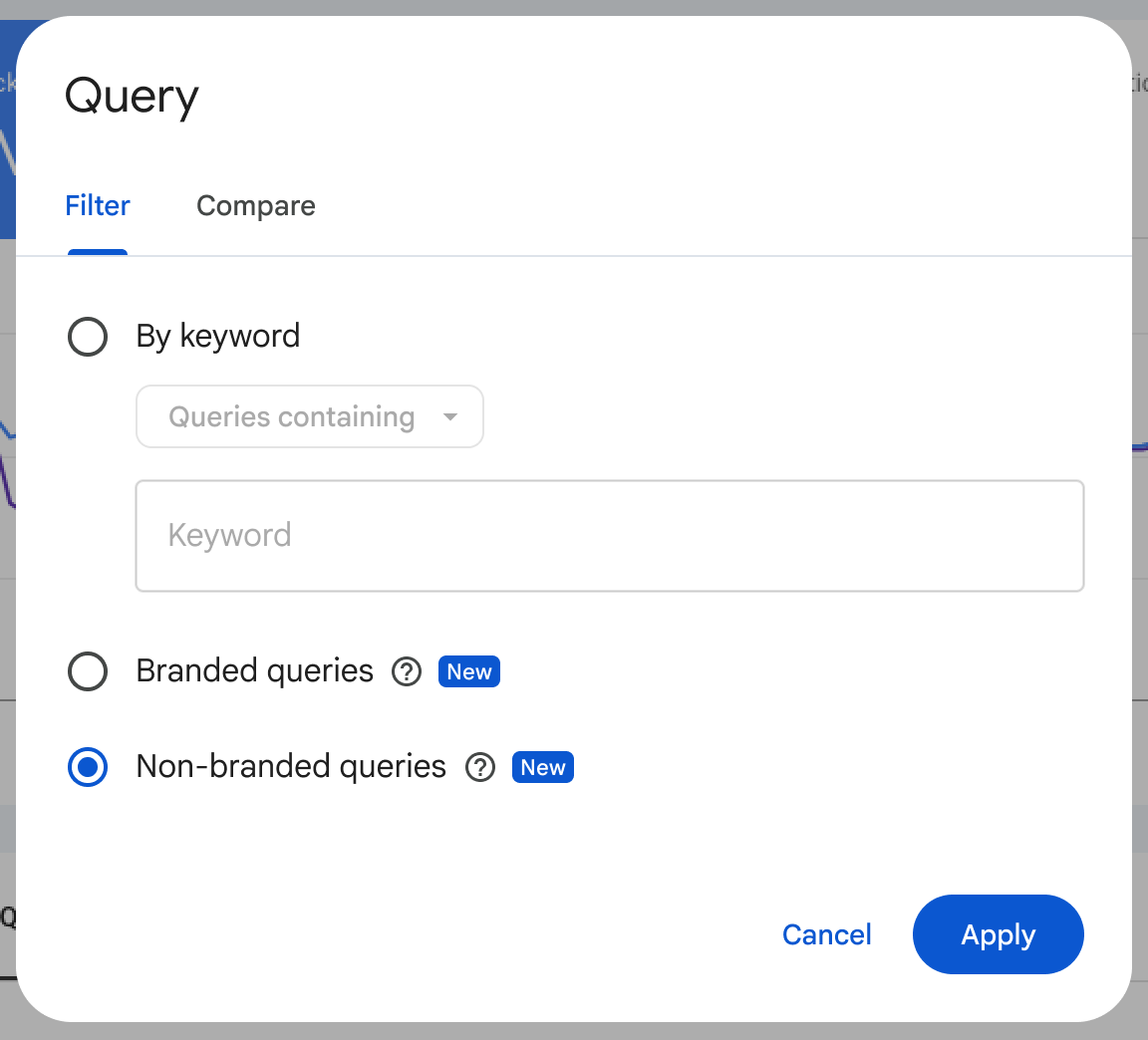
- November 2025: Google introduced the branded queries filter in the Search Console Performance report, utilizing an AI-assisted classification system to distinguish between navigational branded searches and informational non-branded queries.
- February 21, 2026: The official start date for tracking branded query classification. Google clarified that retrospective data prior to this date cannot be retroactively classified using the new system.
- September 2026: Google enabled "web multimodal" reporting in the Search Console Performance report, providing visibility into traffic driven by Google Lens, Circle to Search, and direct image uploads.
- November 2026: Google formally announced the inclusion of these features into the Search Analytics API, effectively providing developers with the tools to automate what had previously been a manual analysis process.
This phased approach underscores Google’s commitment to providing granular transparency into how modern searchers interact with the web, moving beyond simple text-based queries into a more complex, multi-modal, and intent-driven landscape.
Deep Dive: Unpacking the New API Capabilities
1. Branded vs. Non-Branded Classification
The introduction of the brandedClassification dimension is perhaps the most requested update for SEOs. Previously, analysts had to maintain extensive, often inaccurate "regex lists" to categorize their keyword traffic.
Now, with the inclusion of BRANDED and NON_BRANDED values, developers can filter or group data at the query level with programmatic precision. However, there are architectural constraints:

- Property Scope: The dimension is restricted to top-level properties.
- Data Thresholds: If a property fails to meet minimum query or impression thresholds, the API will return an empty set rather than inaccurate data.
- Operator Constraints: The
brandedClassificationfield exclusively accepts theequalsoperator. Furthermore, it cannot be combined with existing standard query filters, necessitating distinct API requests for branded vs. non-branded segments.
2. Multimodal Web Search Data
The webMultimodal type now receives its own dedicated classification within the API. This is a critical development as the search landscape shifts toward visual discovery. This category covers:
- Google Lens: Mobile-based visual queries.
- Circle to Search: High-intent user interactions on Android devices.
- Image Uploads: Direct search-by-image activity within the Google interface.
While the Performance report has been showing this data since September, the API now allows for the programmatic monitoring of visual discovery. A notable ambiguity remains regarding "Chrome Image Search"—while mentioned in legacy help documentation, the current API reference omits it, leaving analysts to verify if these interactions are subsumed under broader web categories or currently excluded from API metrics.
3. Advanced Filtering with filterLists
The introduction of the filterLists field is a boon for global SEO strategy. Previously, analyzing a specific region—such as the DACH (Germany, Austria, Switzerland) or LATAM (Latin America) markets—required multiple API calls, increasing the risk of hitting rate limits and complicating data reconciliation.
The new field allows users to:
- Group multiple countries or devices into a single, efficient request.
- Reduce latency in reporting systems by consolidating data retrieval.
- Maintain cleaner, more concise codebases for internal SEO tools.
Supporting Context & Metrics: The "AI-Assisted" Reality
It is imperative to understand that Google’s branded/non-branded classification is not a binary, static list; it is an AI-assisted process. Consequently, as Google noted in its November 2025 release, some queries may occasionally be misclassified.
For high-stakes enterprise SEO, this means that "automation" does not equate to "blind trust." Analysts are encouraged to run the new API-provided data in parallel with their existing proprietary brand regex lists. By identifying discrepancies, teams can better understand where the AI model’s logic differs from their specific business brand definitions, allowing for more nuanced reporting.
Furthermore, the integration with BigQuery for bulk data export is currently in a state of flux. While Google has signaled that webMultimodal data will eventually be available for properties with active bulk exports, the current BigQuery table reference remains limited to the original six search types. This gap between the API and BigQuery availability creates a temporary disparity for data science teams that rely on raw, long-term logs rather than summary-level API data.
Official Statements and Industry Impact
In responding to user concerns regarding the historical data gap, Google’s John Mueller famously noted that "there is a point when data starts being tracked." This is a stark reminder that in the world of Google Search Console, historical data is not always back-fillable.
For toolmakers and SaaS SEO platforms, this update necessitates a change in how they architect their dashboards. Developers must now account for the "February 21, 2026" cutoff date for branded data, ensuring that their tools handle the transition from manual, regex-based filtering to the new, native brandedClassification dimension without corrupting long-term trend lines.
Future Outlook: What Lies Ahead
The integration of these features is a clear signal that Google intends to maintain Search Console as the primary source of truth for SEO performance. However, several questions remain for the road ahead:
- BigQuery Alignment: When will the
webMultimodaltype reach parity within the BigQuery bulk export tables? This is the missing link for enterprise teams that perform deep-dive analysis on billions of rows of data. - Chrome Integration: Will Google formalize the reporting of Chrome-based image search within the API, or will it remain a "black box" metric?
- Refined Granularity: As AI-assisted classification becomes more accurate, will Google provide the ability to define "Brand" at the property level, or will we remain tethered to their proprietary, non-customizable classification?
Recommendations for Webmasters:
- Audit Your Tools: If you rely on custom-built SEO dashboards, coordinate with your engineering team to deprecate legacy regex filtering in favor of the new
brandedClassificationAPI field. - Verify Multimodal Totals: Before aggregating
webandwebMultimodalfigures, perform a cross-check against the Search Console Performance report to ensure your API requests are not double-counting or omitting specific traffic segments. - Monitor Documentation: The API reference documentation is currently being updated in real-time. Keep a close watch on the
filterListsandtypedefinitions as they evolve to include potential future search modalities.
By embracing these API enhancements, digital marketing teams can move away from the "data wrangling" phase of reporting and focus on what truly matters: analyzing the shifting intent of their users in an increasingly multimodal and branded-search-centric ecosystem. As Google continues to refine these metrics, the competitive advantage will go to those who can effectively integrate these new signals into their broader marketing intelligence strategy.