Executive Overview: A Strategic Pivot to the West
For years, the global smartphone market has operated under a predictable rhythm, dominated by a duopoly that often feels resistant to radical hardware shifts. However, Xiaomi’s latest move—the official Western launch of the Xiaomi 18 Pro and 18 Pro Max—serves as a clear, authoritative signal that the status quo is under threat. By finally bringing its signature dual-screen flagship architecture to international markets, Xiaomi is no longer just competing on price; it is competing on pure, uncompromising innovation.
The launch represents a significant strategic pivot. Having bypassed the European and North American markets with the Xiaomi 17 Pro and Pro Max series last year, the company has spent the intervening months refining its hardware, perfecting its Leica-tuned imaging systems, and integrating industry-leading generative AI. The result is a duo of handsets that don’t just match the technical specifications of their Cupertino-based counterparts—they arguably eclipse them in terms of hardware versatility. With the debut of the Snapdragon 8 Elite and "Extreme" variants, the 18 Pro series is positioned not as an alternative to the flagship norm, but as the new benchmark for power users who demand more than a flat slab of glass.
Detailed Chronology: From Regional Powerhouse to Global Contender
The journey of the Xiaomi 18 Pro series to the global stage was not accidental; it was a calculated campaign of market anticipation.
- Q3 2023: The absence of the Xiaomi 17 Pro and Pro Max in Western markets left a vacuum in the "super-premium" Android segment. Industry analysts noted that while Xiaomi maintained dominance in China, the lack of a high-end dual-screen export limited their brand prestige in the West.
- Q1 2024: Internal reports suggested a "re-alignment" of Xiaomi’s global strategy, focusing on supply chain consolidation and the integration of the Snapdragon 8 Elite architecture.
- Current Date: The official unveiling confirms that the company has overcome the logistical hurdles that previously tethered the dual-screen form factor to domestic markets. The rollout to the UK and broader Western markets signifies that Xiaomi is confident in its ability to compete at the $1,600+ price bracket, a territory historically guarded by Apple and Samsung.
Technical Architecture: Power, Efficiency, and the Rear Display
The Xiaomi 18 Pro series is defined by a dichotomy: a refined, user-centric front experience and a radical, highly functional rear interface.
The Snapdragon 8 Elite Engine
At the heart of both devices is the Snapdragon 8 Elite platform. The base 18 Pro utilizes the standard Elite chipset, which, in our initial benchmarks, shows a generational leap in multi-core efficiency. The 18 Pro Max, however, pushes boundaries with the "Extreme Gen 6" variant. This silicon is tuned for sustained thermal performance, allowing for high-frame-rate gaming and complex generative AI tasks without the throttling that plagues lesser devices.
The Rear Display: A Functional Paradigm Shift
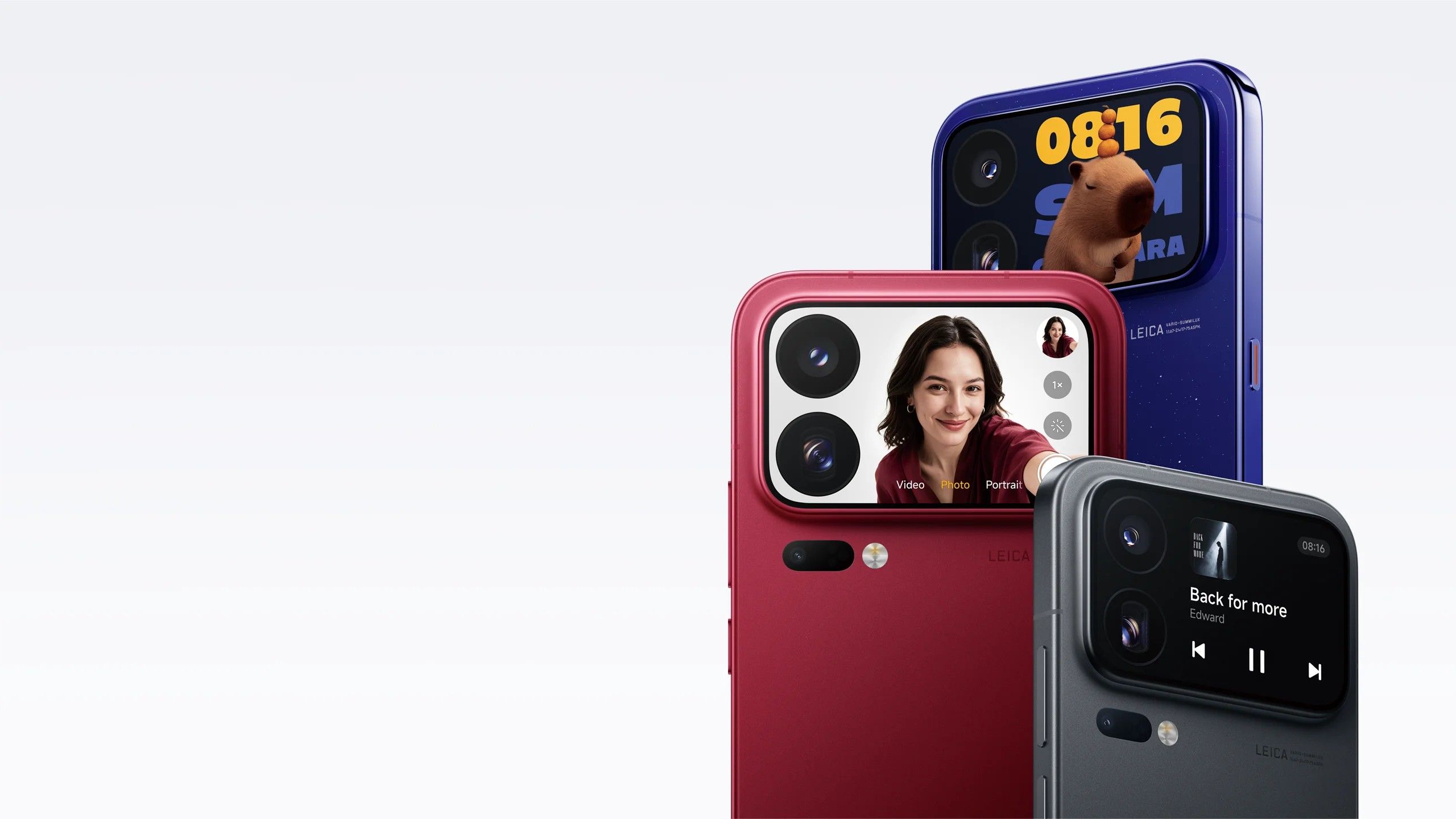
The most striking feature of the 18 Pro series remains the rear-facing secondary display. Unlike novelty secondary screens of the past, Xiaomi has integrated this into the core UI. It serves three primary purposes:
- Photography Mastery: By acting as a real-time viewfinder for the 200MP rear camera array, the rear display eliminates the need to use lower-quality front-facing sensors for high-fidelity self-portraits.
- Productivity and Notifications: The screen provides at-a-glance access to notifications, media playback controls, and customizable widgets, keeping the main display pristine and distraction-free.
- Generative AI Customization: Users can employ on-device AI to generate unique watch faces or interactive mascots, effectively turning the back of the phone into a customizable digital accessory.
Camera Systems: Co-Engineered with Leica
Xiaomi’s partnership with Leica continues to mature. The 200MP main sensor is paired with a 200MP periscope telephoto lens—a configuration that defies current industry trends. By leveraging the computational photography prowess of the Snapdragon 8 Elite, these cameras offer a "Leica Authentic" look that prioritizes dynamic range and color accuracy over the over-sharpened, high-contrast images often produced by competitors.
Supporting Context & Metrics
To understand why these devices are commanding prices of £1,199 ($1,600) and £1,399 ($1,850), one must look at the hardware specifications that justify the investment.
| Feature | Xiaomi 18 Pro | Xiaomi 18 Pro Max |
|---|---|---|
| Primary Display | 6.4-inch 120Hz AMOLED | 6.9-inch 120Hz AMOLED |
| Chipset | Snapdragon 8 Elite | Snapdragon 8 Elite Extreme |
| Battery | 6,000mAh (90W Charge) | 7,050mAh (100W Charge) |
| Base RAM/Storage | 12GB / 256GB | 12GB / 256GB |
| Max Config | 16GB / 512GB | 16GB / 1TB |
The battery capacity is particularly noteworthy. The 18 Pro Max’s 7,050mAh cell is a marvel of engineering, made possible by advancements in silicon-carbon battery technology. Combined with the 100W HyperCharge capability, the device can effectively move from a "low battery" state to a full charge in under 30 minutes, fundamentally changing the charging anxiety cycle that persists with other flagship devices.
Furthermore, the implementation of "Privacy Display" technology on the front panel—designed to restrict viewing angles and prevent shoulder-surfing—addresses a growing demand for digital security in professional environments.
Official Statements and Industry Reception
In a statement provided during the launch event, Xiaomi’s design lead emphasized the "holistic philosophy" of the 18 Pro series. "We wanted to move beyond the traditional smartphone form factor," they noted. "The rear display isn’t an add-on; it’s an extension of the user’s intent, whether that’s capturing a moment with the precision of a Leica lens or managing a workflow with AI-assisted widgets."
Early industry feedback has been largely positive, though cautious regarding the price point. Critics acknowledge that while the hardware is peerless, the software ecosystem must now prove it can sustain such high-end expectations in a market saturated by the iOS and standard Android environments.
Future Outlook: The Road Ahead
The arrival of the Xiaomi 18 Pro and 18 Pro Max is more than a product release; it is an ultimatum to the industry. By bringing its most advanced technology to the West, Xiaomi is forcing a re-evaluation of what a flagship phone is.
Potential Impacts:
- Market Pressure: Competing manufacturers will likely be forced to accelerate their own experimental form factors to avoid looking "stagnant."
- AI Integration: The success of the 18 Pro’s generative AI apps will likely determine how quickly other OEMs adopt on-device AI as a primary selling point rather than a supplementary software feature.
- Consumer Shift: As the gap in build quality between premium Androids and market leaders closes, we expect to see a migration of users who have felt "trapped" by the lack of hardware evolution in the Western smartphone market.
As we move through the year, all eyes will be on the adoption rates of the 18 Pro Max. If it succeeds, it will prove that Western consumers are indeed ready to pay for innovation that pushes the boundaries of the traditional phone. If it struggles, it may suggest that the market is more entrenched than Xiaomi’s marketing team anticipated. Regardless, the Xiaomi 18 Pro series has already achieved its primary goal: it has made the global flagship conversation significantly more interesting, and for that alone, it demands our full attention.