Executive Overview: A New Era of Logistics
The era of the "last-mile" delivery drone has officially arrived in the American suburbs. Uber Eats, the global titan of food delivery, has launched its highly anticipated commercial drone delivery service in Spring, Texas, marking the first tangible milestone in a sprawling partnership with autonomous flight pioneer Zipline. By integrating long-range, high-speed drone technology directly into the Uber Eats application, the companies are attempting to fundamentally rewrite the logistics of food and retail distribution.
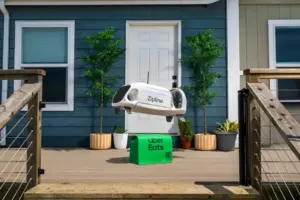
This launch is more than a localized pilot program; it is the opening salvo in a multi-year, multi-billion-dollar strategy to normalize aerial logistics in the United States. With ambitious goals to facilitate one million drone deliveries per day by the end of 2029, the partnership aims to shift the paradigm of urban convenience. By utilizing specialized pods lowered via tether—eliminating the need for drones to land—the system promises a seamless, high-velocity delivery experience that operates at speeds of up to 70 miles per hour, 300 feet above the ground.
However, as the service prepares for expansion into Dallas and dozens of other U.S. cities, it faces a complex landscape of regulatory, logistical, and social hurdles. The project serves as a test case for whether the promise of reduced traffic and enhanced efficiency can outweigh growing public concerns regarding noise pollution, wildlife disruption, and the sanctity of residential privacy.
Detailed Chronology: From Humanitarian Aid to Commercial Scale
To understand the significance of the Uber-Zipline alliance, one must look at the trajectory of Zipline’s maturation as a company. Founded in 2014, the California-based startup initially gained international renown for its life-saving humanitarian efforts. Its early mission was far removed from delivering fast-food lunches; the company focused on transporting blood, vaccines, and essential medical supplies to remote, hard-to-reach locations in Rwanda.
This rigorous, high-stakes environment allowed Zipline to refine its proprietary ecosystem, which includes not only the aircraft themselves but also the complex logistics software and the launch-and-retrieval systems required for fleet-wide autonomy.
The Regulatory Breakthrough
The pivot toward U.S. commercial markets was solidified in 2022 when Zipline received its Part 135 air carrier certification from the Federal Aviation Administration (FAA). This critical regulatory stamp of approval authorized the company to conduct long-range commercial drone deliveries, a hurdle that has stifled many other competitors in the autonomous vehicle space.
Following this, the partnership with Uber deepened into a financial alliance. While the companies have kept specific figures under wraps, the broader industry signaled its confidence in the model when Zipline recently secured a massive $1.5 billion funding round. Led by major investment firms such as Paradigm, WCM Investment Management, and Layer Global, the round also included a strategic investment from Uber—cementing the ride-hailing giant’s position not just as a distribution partner, but as a stakeholder in the future of the technology itself.
Supporting Context: The Technology and The Ecosystem
The mechanics of the Zipline delivery system are designed for speed and safety. Unlike quadcopters that hover and land, Zipline’s long-range drones are fixed-wing aircraft that maintain efficient flight paths. When they reach their destination, they hover at an altitude of approximately 300 feet. The order, encased in a small, aerodynamic, and protective pod, is lowered to the customer via a tether. This system mitigates the safety risks associated with landing heavy machinery in residential driveways or crowded backyards.
User Experience and Integration
For the consumer, the transition is intended to be invisible. Within the Uber Eats app, eligible users in the service area will see a new "drone" icon on the home page. This gateway filters the restaurant selection to include only those currently participating in the drone network.
At the Texas launch, the service includes a mix of major national chains—such as Jersey Mike’s and Zaxby’s—and local favorites like Urban Bird and Abu Omar Halal. This curated list is designed to ensure that a variety of menu items, weighing up to eight pounds, can be safely and reliably delivered. The weight limit is a critical operational constraint, but one that covers the vast majority of individual food delivery orders currently handled by human drivers.

Official Statements and Industry Vision
The rhetoric surrounding the partnership is decidedly transformative. Zipline CEO and co-founder Keller Cliffton has positioned the move as a foundational shift in domestic expectations. "In partnership with Uber Eats, we’re going to create a new expectation for delivery in America," Cliffton stated.
The underlying philosophy is that the current model of food delivery—which relies on cars, traffic congestion, and carbon-emitting internal combustion engines—is inefficient for the modern age. By removing these vehicles from the road, proponents argue, the drone ecosystem provides a "net benefit" to society. The vision is one of "instant gratification without the friction of traffic," where the errand of driving to pick up a forgotten item or a takeout order becomes obsolete.
However, industry leaders acknowledge that they are still in the "early days" of adoption. Scaling a technology across the diverse topographies and regulatory landscapes of the United States requires more than just capital; it requires a culture shift among the citizens who will live beneath the flight paths.
Future Outlook: Challenges and The Road Ahead
While the vision of millions of daily drone deliveries is compelling, the path forward is fraught with systemic friction. The "drone delivery" space is becoming increasingly crowded, with high-profile competitors like Alphabet’s Wing and Amazon’s Prime Air vying for dominance in the same airspace.
The "NIMBY" Factor and Environmental Concerns
As these services scale, they are encountering significant pushback. Residents in pilot cities have frequently raised alarms regarding "drone noise"—a constant, high-pitched hum that many find disruptive to the tranquility of suburban life. Beyond noise, there are legitimate environmental and safety concerns. Wildlife advocates warn of potential disruption to local ecosystems, while privacy advocates have voiced apprehension about the surveillance capabilities of autonomous drones flying at low altitudes over private property.
Scaling to One Million
The goal of one million deliveries per day by 2029 is mathematically daunting. To achieve this, Zipline and Uber must not only expand their fleet size and reach but also navigate an increasingly complex web of local municipal ordinances. While the FAA governs the sky, local zoning and noise regulations could act as a bottleneck for mass adoption.
Furthermore, the technology must prove it can handle adverse weather conditions, dense urban environments with complex obstacles, and the sheer unpredictability of human behavior.
Conclusion: The Strategic Gamble
The Uber-Zipline partnership represents a strategic gamble that the convenience of aerial delivery will ultimately overcome the skepticism of the public. If successful, the venture will transform Uber from a platform that manages human labor into an operator of a fully autonomous, aerial logistics network.
As the service expands from Spring to Dallas and eventually to dozens of additional U.S. cities, the data gathered from these initial flights will be invaluable. The industry is currently witnessing a transition where the "future of transportation" is shifting from the road to the air. Whether this transition will be embraced by the average American remains the most significant question of the next decade. For now, the sky above Texas serves as the laboratory where the logistics of tomorrow are being tested, one pod at a time.