Executive Overview
In a move that marks a pivotal transformation for the automotive giant, Tesla has officially opened pre-orders for its autonomous "Cybercab." Announced late Friday, November 14, 2026, the opportunity is currently restricted to a select cohort of customers, signaling the beginning of a high-stakes transition from a consumer vehicle manufacturer to an autonomous mobility-as-a-service (MaaS) provider.
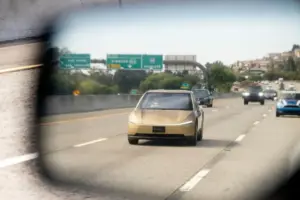
The vehicle, characterized by its distinct, compact, and often-gold-hued aesthetic, carries a retail price of $29,990. However, the ownership model deviates significantly from traditional car purchases. Early adopters are discovering that ownership comes with strings attached: mandatory subscription fees, strict geographical limitations, and a rollout strategy that prioritizes specific Texas urban centers before a wider national release. As Tesla prepares to phase out its polarizing Cybertruck line in 2027 to repurpose factory capacity for the Cybercab, the industry is left to wonder: Is this the dawn of a fully autonomous future, or a high-risk gamble that relies too heavily on unproven regulatory milestones?
Detailed Chronology: From Concept to Consumer
The journey to the Cybercab has been marked by aggressive timelines and shifting product priorities. While Tesla’s vision for a "Robotaxi" has been a staple of CEO Elon Musk’s master plan for years, the reality of the vehicle’s arrival is finally taking physical form as of November 2026.
The Initial Launch
On November 14, 2026, Tesla broke its silence regarding the consumer-facing version of the Cybercab. By Friday evening, the company confirmed that pre-orders were live for "select customers." Unlike traditional vehicle launches, where a customer might select a trim level or paint color, this launch was characterized by immediate restrictive disclosures that caught many prospective buyers off guard.
The "Fine Print" Revelation
Following the announcement, prominent tech reviewer Marques Brownlee provided the public with a look at the actual order page. The details revealed a complex logistical reality:
- Geofencing: The vehicles will not be "go-anywhere" machines upon delivery. They are restricted to specific, geofenced areas within select Texas cities.
- Logistical Hurdles: Buyers must be prepared to accept delivery within those specific regions, effectively limiting the initial market to a tiny fraction of Tesla’s global customer base.
- The Subscription Model: Beyond the $29,990 entry price, owners are greeted with a $299-per-month operational fee. This fee acts as a "tax" on autonomy, covering the software and connectivity required to maintain the vehicle’s self-driving capabilities.
The Pivot in Production
The launch of the Cybercab does not exist in a vacuum. Earlier in November 2026, Tesla confirmed that it would cease production of the Cybertruck in 2027. This decision, driven by lower-than-projected sales and the logistical nightmare of the Cybertruck’s manufacturing process, provides the necessary factory footprint to mass-produce the Cybercab. This is a clear indicator that Tesla is pivoting its capital expenditure toward high-volume, autonomous transport rather than consumer-owned utility vehicles.
Supporting Context & Metrics: The Economics of Autonomy
To understand why Tesla is moving so aggressively, one must look at the shifting economics of the company. The transition from the Cybertruck to the Cybercab is not merely a product swap; it is a fundamental change in business model.
The Cost of Ownership vs. The Cost of Operations
The $29,990 price tag is ostensibly attractive, putting the Cybercab in the range of entry-level compact vehicles. However, the total cost of ownership (TCO) is heavily front-loaded by the monthly subscription fee.
When the news broke regarding the $299/month fee, the market reacted with skepticism regarding the value proposition. This led to a rare, public correction from Elon Musk. In a post on X, Musk suggested the current figure was a placeholder and "too high," stating, "Should match the cost of Tesla [Full Self-Driving] and connectivity for other models, which is more like ~$115/month." This fluctuation in pricing strategy illustrates that Tesla is still "finding the floor" for its subscription model, testing consumer price sensitivity in real-time.

The Geofencing Constraint
Ashok Elluswamy, Tesla’s director of Autopilot software, provided clarity on the technical requirements, noting that the Cybercab will operate "unsupervised inside all the same geo locations as @robotaxi, just serving the owners’ needs." This effectively means that the Cybercab is not a "level 5" autonomous vehicle capable of driving anywhere at any time. Instead, it is a highly capable robot that requires high-definition mapping and regulatory clearance within specific urban corridors. This "geofenced autonomy" is a common industry standard used by competitors like Waymo and Zoox, suggesting that Tesla is moving away from the "anywhere, anytime" promises of the past in favor of a more pragmatic, phased deployment.
Official Statements and Industry Response
The discourse surrounding the Cybercab has been dominated by the tension between Tesla’s ambition and the regulatory reality.
The CEO’s Vision
Elon Musk remains the primary architect of the Cybercab’s narrative. His insistence that the vehicle "will be available nationwide, as we receive regulatory approval," highlights the core bottleneck for the company. Tesla’s ability to scale this project is no longer limited by manufacturing—it is limited by state and federal transport departments. The company is currently engaged in a high-stakes lobbying effort to standardize autonomous vehicle regulations, which would allow the Cybercab to expand beyond its current Texas testing grounds.
The Expert Perspective
Industry analysts are cautious. While Tesla’s engineering prowess in battery efficiency and software integration is undeniable, the move to replace a consumer-truck line with a restricted-use autonomous cab is a gamble on the speed of regulatory approval. If states move slowly, or if safety concerns arise during the initial Texas rollouts, the revenue projections for the Cybercab could fall flat, leaving Tesla with a massive, idle factory capacity and a depreciating fleet of specialized vehicles.
Future Outlook: A 2027 Paradigm Shift
As we look toward the December 2026 delivery window and the subsequent sunsetting of the Cybertruck in 2027, several questions remain at the forefront of the automotive industry.
The Regulatory Hurdle
The success of the Cybercab rests entirely on the shoulders of the National Highway Traffic Safety Administration (NHTSA) and local municipal governments. Can Tesla prove that its "unsupervised" driving stack is statistically safer than human drivers in complex, mixed-traffic urban environments? If they succeed, the Cybercab could become the most profitable vehicle in Tesla’s history. If they fail, the company faces a significant reputational and financial crisis.
The Evolution of the "Owner"
The concept of "personal use" of an autonomous cab is a fascinating evolution of the car-ownership model. In the next 18 to 24 months, we will see if owners are willing to pay a monthly premium to own a vehicle they cannot drive themselves, especially if they are tethered to specific city boundaries.
Tesla is betting that the convenience of a dedicated, always-ready robotaxi will outweigh the loss of traditional driving autonomy. They are banking on a future where the car is a service, not a possession. Whether the public is ready to embrace this "Golden Cybercab" future—or whether they will mourn the loss of the Cybertruck—will be the defining narrative of the next two years of Tesla’s history.
For now, the orders are in. The factories are being reconfigured. And in the streets of Texas, the first wave of autonomous Cybercabs is preparing to roll out, representing one of the most daring corporate pivots in the history of the 21st-century technology sector.