Executive Overview
Across the corporate landscape, business leaders routinely encounter a comforting refrain from their operational teams: "We are using AI every day." However, an examination of enterprise workflows reveals a starkly different reality. In most organizations, artificial intelligence adoption remains fragmented, ad hoc, and fundamentally manual. Employees open chat interfaces to solve isolated problems, engaging in protracted prompt-and-response cycles to generate single deliverables—only to repeat the entire labor-intensive process from scratch the following week.
This casual, reactive approach to generative AI yields incremental efficiency gains at best, while failing to build lasting organizational equity. The strategic frontier has shifted from basic prompt engineering to the deployment of systematized "AI Employees"—custom-trained, reusable, and semi-autonomous AI workflows built on top of centralized corporate knowledge bases.
According to operational blueprints developed by enterprise strategists, including Callan Faulkner, co-founder of business accelerator The Uncommon Business, and media architect Michael Stelzner, modern enterprise leverage requires moving human operators out of repetitive execution roles and into positions of strategic oversight. By establishing structured "Business Brains," codifying implicit domain expertise into reusable skills, and deploying scheduled autonomous agents, organizations are drastically altering the labor-to-revenue equation.
The financial and operational implications are striking. The Uncommon Business operates on pace for approximately $40 million in annualized revenue supported by a lean core team of just 50 human employees—a ratio that previously demanded an workforce several times larger. Crucially, market leaders emphasize that this shift is not aimed at headcount reduction, but at maximizing human capital output. Nevertheless, an unprecedented rift is opening in the labor market: non-AI-fluent workers face rapid obsolescence not because AI directly replaces their roles, but because AI-enabled professionals are delivering up to ten times the output at higher quality standards.
Detailed Framework: The Step-by-Step Architecture of an AI Employee
Transitioning an organization from manual prompting to autonomous AI execution requires a structured operational methodology. Enterprise workflow architects break down this journey into five core technical and strategic phases:
+-------------------------------------------------------------------+
|                   THE ENTERPRISE AI ARCHITECTURE                  |
+-------------------------------------------------------------------+
|                                                                   |
|   +-----------------------------------------------------------+   |
|   | LAYER 1: THE BUSINESS BRAIN (Centralized Repository)      |   |
|   | Brand Voice | SOPs | ICPs | Historical Performance Data   |   |
|   +-----------------------------------------------------------+   |
|                                 |                                 |
|                                 v                                 |
|   +-----------------------------------------------------------+   |
|   | LAYER 2: WORKSPACE SKILLS & PROMPT MODULES                |   |
|   | Domain Logic | Task Workflows | Output Standards          |   |
|   +-----------------------------------------------------------+   |
|                                 |                                 |
|                                 v                                 |
|   +-----------------------------------------------------------+   |
|   | LAYER 3: SYSTEM CONNECTORS & EXTERNAL TOOLS               |   |
|   | CRM Systems | Database Sync (Notion) | Communications     |   |
|   +-----------------------------------------------------------+   |
|                                 |                                 |
|                                 v                                 |
|   +-----------------------------------------------------------+   |
|   | LAYER 4: AUTONOMOUS SCHEDULING & ORCHESTRATION            |   |
|   | Cron Jobs | Desktop Co-Work Agents | Human Approval Loops |   |
|   +-----------------------------------------------------------+   |
|                                                                   |
+-------------------------------------------------------------------+
Phase 1: The Operational Audit and Time-Value Calculation
The development of an AI employee begins with an unsparing internal audit of how human labor is spent. Organizations evaluate all recurring daily, weekly, and monthly tasks against two criteria:
- Economic Threshold: Tasks valued below an arbitrary operational threshold (typically $50 to $100 per hour).
- Cognitive Alignment: Repetitive processes that do not actively require human high-level strategic reasoning or creative spark.
Target deliverables typically include presentation outlines, tailored sales proposals, routine client communication, market research aggregation, and marketing copy variations. Rather than abdicating creative oversight, human specialists shift from baseline creators to high-level system architects and senior editors.
Phase 2: Centralizing the "Business Brain"
An AI employee is only as effective as the underlying context to which it has access. Legacy organizations frequently operate with fragmented documentation scattered across personal drives, unstructured chat logs, and unwritten domain knowledge. Building an AI worker requires constructing a unified "Business Brain"—a centralized, curated repository containing:
- Comprehensive pricing schedules and dynamic margin frameworks.
- Formal Standard Operating Procedures (SOPs).
- Granular Ideal Client Profiles (ICPs) and buyer persona frameworks.
- Historical archives of winning sales proposals, customer objection matrices, and brand style guides.
If documentation is insufficient to onboard a top-tier human executive within thirty minutes, it remains equally inadequate for an AI agent.
Phase 3: The AI Interview Method
Extracting tacit expertise from human subject matter experts (SMEs) represents the primary bottleneck in system design. To overcome this, team members utilize the "AI Interview Method."
Rather than manually authoring complex instruction manuals, the SME initiates a diagnostic session with an advanced LLM (such as Anthropic’s Claude) using verbal input tools (e.g., Wispr Flow) to eliminate typing friction. The human operator defines the organizational context and intended output, then explicitly instructs the model to subject them to a high-impact diagnostic interview.
[SYSTEM INSTRUCTION EXAMPLE]
"I am building an AI employee to manage our enterprise sponsorship proposals.
Before executing any generation, interview me with five high-impact questions
designed to extract my implicit framework, objection-handling strategies,
and quality standards. Once complete, package this logic into a master skill."
Through this interactive feedback loop, the AI model codifies subtle decision-making criteria that the human operator might otherwise fail to document manually.
Phase 4: Packaging and Integration into Workspaces
Once the model produces an optimal result, the chat thread is packaged into a permanent, reusable module—frequently structured as a custom workspace skill or project within environments like Anthropic’s Claude Projects.
A fully realized AI employee incorporates three interconnected components:
- The Skill Module: A standardized, single-command prompt instruction set that triggers complex multi-stage tasks.
- Knowledge Files: The specific subset of the "Business Brain" required to execute the assigned function (e.g., historical proposal archives, client FAQs).
- API Connectors: System bridges that allow the AI agent to pull data from or publish output directly into corporate platforms, such as Salesforce, HubSpot, or Notion databases.
+-------------------------------------------------------------------------+
|                  AI EMPLOYEE COMPONENT ARCHITECTURE                     |
+-------------------------------------------------------------------------+
|                                                                         |
|  +--------------------+   +---------------------+   +----------------+  |
|  |    SKILL MODULE    | + |   KNOWLEDGE FILES   | + |   CONNECTORS   |  |
|  |  Instructive Logic |   |  Contextual Memory  |   |  CRM / Notion  |  |
|  +--------------------+   +---------------------+   +----------------+  |
|                                      ||                                 |
|                                      /                                 |
|  +-------------------------------------------------------------------+  |
|  |                         THE AI EMPLOYEE                           |  |
|  |     Executes domain tasks autonomously to enterprise standards    |  |
|  +-------------------------------------------------------------------+  |
|                                                                         |
+-------------------------------------------------------------------------+
Phase 5: Continuous Testing and Skill Governance
Deploying an AI employee requires continuous calibration. Enterprise guidelines recommend treating skill refinement with the same rigor as human employee onboarding. When an AI agent returns an unsatisfactory result, operators do not discard the run or settle for sub-par output. Instead, they apply programmatic correction loops:
[CORRECTION LOOP PROMPT]
"Here is your generated text: [INSERT OUTPUT].
Here is how I manually edited this section to meet our enterprise standard: [INSERT REVISION].
Analyze the divergence, update the primary skill file instructions to account for this gap,
and explain what blind spot in your current system instruction caused the error."
By systematically documenting failure modes and applying precise corrections, teams elevate output quality from initial generic drafts to enterprise-grade execution.
Supporting Context & Performance Benchmarks
The transition from manual labor to automated AI workflows yields stark efficiency metrics across core business functions. Organizations track these shifts using concrete performance parameters:
| Operational Function | Legacy Human-Only Workflow | AI Employee Augmented Workflow | Net Performance Gain |
|---|---|---|---|
| Social Content Design | 2–3 days per carousel (Canva/Design team) | 8 minutes per carousel (Claude Design Skill) | ~95% reduction in production time |
| Sales Proposal Build | 60–90 minutes of manual drafting per lead | Automated baseline draft in < 2 minutes | 30x throughput increase |
| Market/Competitor Intelligence | 3–5 hours weekly manual research & logging | Autonomous weekly background execution | 100% manual labor eliminated |
| Enterprise Scale Ratio | ~100–150 employees needed for $40M revenue | ~50 human operators paired with AI systems | 2x–3x revenue per employee |
Operational Case Studies
- The Copywriting Multiplier: At The Uncommon Business, senior human copywriters transitioned from manually drafting individual sales pages to overseeing a network of custom AI copywriting skills, automated quality-assurance reviewers, and hook generators. The initial investment to build and refine a specialized voice-copywriting skill required 15 hours of human iterative training. Compared against the typical three-month onboarding ramp required for a human copywriter to master an enterprise tone, the upfront development investment yielded immediate operational returns.
- The Talent Disparity Gap: Corporate environments are observing a growing divide between traditional and AI-fluent talent. In one documented incident cited by Faulkner, an enterprise hired a traditional marketing specialist who required weeks to manually build sales pages and visual assets. Concurrently, AI-trained team members within the same enterprise were leveraging customized skill libraries to execute ten times the volume of approved work within a single business day. The legacy employee was subsequently let go—not because an AI tool directly replaced the headcount, but because the role demanded an operator capable of directing AI engines to execute at market speed.
MARKET REACTION & TRAINING GAP
┌─────────────────────────────────────────────────────────┐
│ Learn AI via Self-Directed Experimentation:     85%     │
├─────────────────────────────────────────────────────────┤
│ Receive Formal Enterprise Corporate Training:    7%     │
├─────────────────────────────────────────────────────────┤
│ Out-of-Pocket Expense Paid by Individual:       >50%     │
└─────────────────────────────────────────────────────────┘
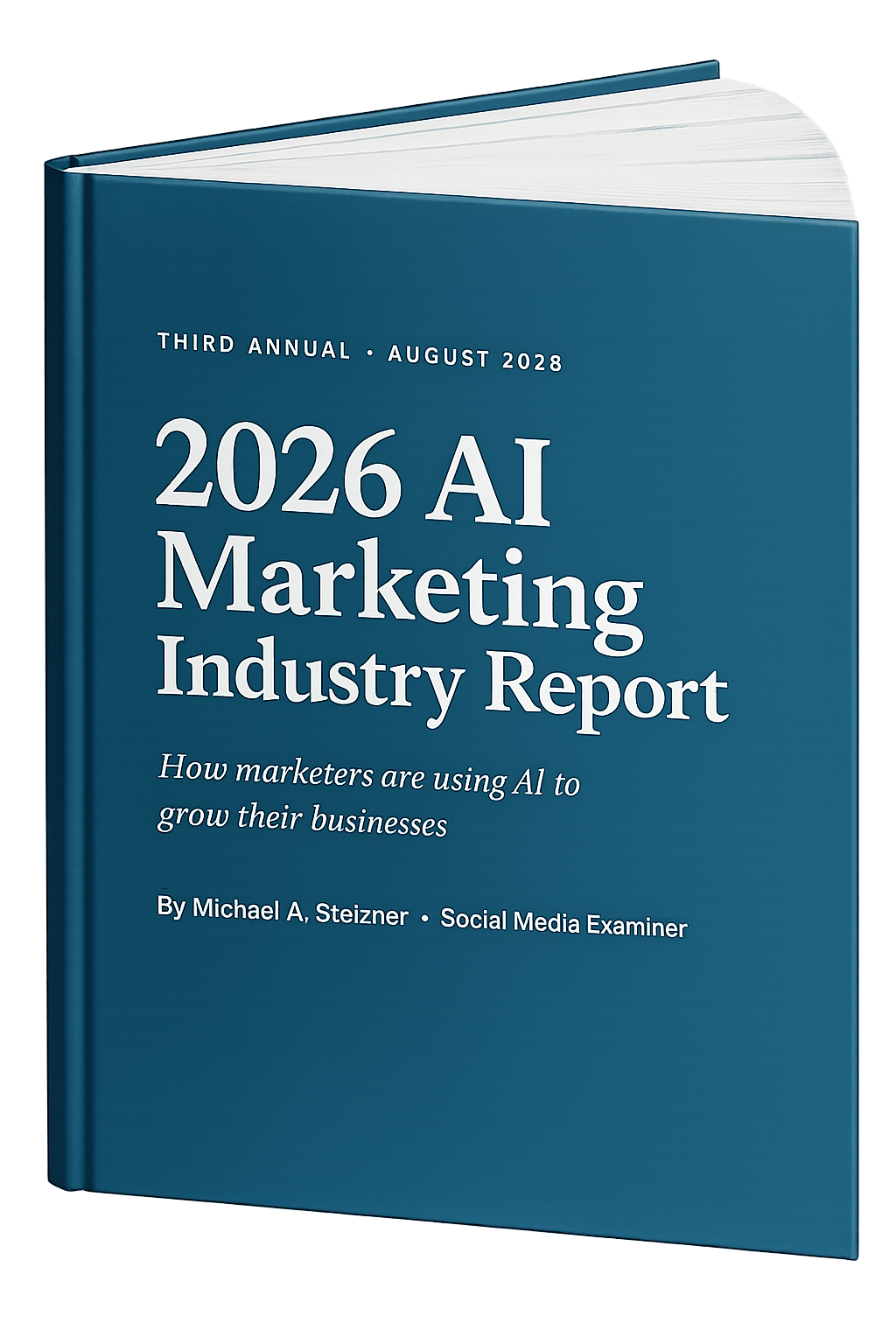
(Source: Annual AI Marketing Industry Report, SME Survey of 681 Professionals)
Official Statements and Strategic Commentary
Key industry pioneers emphasize that successfully building AI employees requires an enterprise-wide mindset shift regarding work ethic, leverage, and human capital strategy.
"Many professionals prove their worth by doing everything themselves. That instinct is now a operational liability. Finding the fastest path to an A-plus output is the new competitive advantage… A skill is an AI employee. It is a trained, reusable AI system that performs a specific business function as well as or better than a human. Crucially, every AI employee works for a human, activating them to their higher potential."
— Callan Faulkner, Co-Founder of The Uncommon Business
Faulkner further addresses corporate anxiety regarding workforce reductions, maintaining that high-growth firms adopt automation to expand throughput rather than downsize teams:
"The goal isn’t fewer humans. I have never fired a person because of AI. However, the gap between AI-trained and non-trained employees is showing up starkly. The role still requires a strategic visionary human to direct the AI and bring the messaging to life. AI wasn’t the problem; the refusal to adopt it was."
— Callan Faulkner
Media strategist and host of the AI Explored podcast, Michael Stelzner, highlights the structural friction enterprises face during early implementation:

"Most business owners hear ‘we use AI every day’ from their teams, but when you look under the hood, people are just starting from scratch over and over again in a blank chat window. Building systems, workflows, and skills is an entirely different operational discipline."
— Michael Stelzner, Host of AI Explored
Future Outlook and Governance Requirements
As organizations advance beyond single-prompt usage into autonomous multi-agent environments, operational management strategies must evolve to mitigate technical debt and administrative friction.
+--------------------------------------------------------------------+
|                  AUTONOMOUS SCHEDULING INFRASTRUCTURE              |
+--------------------------------------------------------------------+
|                                                                    |
|  [ Dedicated On-Premises / Cloud Host Environment ]                 |
|   └── Desktop Execution Agent (e.g., Claude Cowork App)            |
|       ├── Runs 24/7 on Dedicated Hardware                          |
|       ├── Prevents Sync / Sleep Interruption                       |
|       └── Executes Cron-Scheduled AI Employee Skills               |
|                                                                    |
|  [ Scheduled Execution Workflow ]                                  |
|   ├── Monday 06:00 AM ──> Execute "Competitor Trend Scraping"      |
|   │                       └── Output: Auto-populate Notion DB      |
|   └── Hourly Execution ─> Pull Transcripts via API Connectors      |
|                           └── Output: Update Business Brain Logs   |
|                                                                    |
|  [ Human Review Gate ]                                             |
|   └── Human Operator Logs In ──> Approves / Edits Generated Items  |
|                                                                    |
+--------------------------------------------------------------------+
1. Autonomous Desktop Scheduling and Infrastructure Setup
The latest frontier in operational deployment involves placing trained skills on automated run schedules using tools like desktop co-working environments (e.g., Anthropic’s Claude Cowork). To overcome localized machine power-saving limitations, forward-thinking enterprises deploy dedicated, always-on host computers logged into centralized corporate accounts.
- Automated Market Research: An automated skill executes every Monday at 6:00 AM, analyzing viral content strategies across sector competitors, mapping trending hook frameworks, combining internal podcast transcripts, and automatically populating structured content briefs into a team Notion database. Human marketing teams arrive on Monday morning merely to approve or modify pre-generated assets.
- Continuous System Ingestion: Automated routines ingest meeting transcripts on an hourly schedule, extract key decision points, and continuously refresh the centralized corporate knowledge repository.
2. Version Control and Skill Auditing
As organizations build dozens of custom AI skills across disparate business units—such as HR, legal, sales, and operations—managing skill overlap and decay becomes critical. Leading enterprises implement rigid governance protocols:
- Centralized Skill Repositories: All system prompts and workspace skills are backed up to a centralized Notion or GitHub database detailing author, version history, structural dependencies, and operational intent.
- Meta-Skill Auditing: Organizations deploy meta-skills designed specifically to crawl the skill database, flag redundancies, update legacy prompts against modern LLM release benchmarks, and verify structural alignment.
- Quarterly Operations Audits: Skill governance is integrated directly into quarterly business reviews. Department heads are tasked with presenting the roster of active AI employees, demonstrating process automation levels, and auditing tool performance.
Structural Conclusion
The paradigm shift from manual task execution to AI employee management represents a fundamental restructuring of business architecture. Organizations that successfully centralize context, codify expertise into modular skills, and deploy autonomous execution pipelines will achieve unprecedented output density per employee. Conversely, businesses that rely on ad-hoc prompting will find themselves increasingly unable to compete on speed, cost, or operational efficiency.