Federal law enforcement agencies are accelerating a sweeping transnational investigation into the ShinyHunters cybercrime syndicate. The group, which has extorted upwards of $70 million from corporate and government targets in 2026 alone, recently breached the FBI’s own recruitment portal (fbijobs.gov).
The attack on federal infrastructure has galvanized the U.S. Department of Justice and the FBI, pushing investigators to move with unprecedented speed. This aggressive posture has already yielded dramatic results: the apprehension of key overseas figures, the sealing of high-profile indictments, and the exposure of a deeply troubling nexus between cyber extortionists and the very professionals hired to stop them.
According to exclusive insights from sources close to the federal investigation, investigators probing the ShinyHunters hack have identified senior executives at two separate ransomware negotiation firms who maintained unusually close ties with the cyber extortion syndicate. One U.S.-based executive is alleged to have actively assisted the gang in operating shinywire[.]com, a now-defunct extortion portal designed to pressure victims into paying out multi-million dollar ransoms.
The unfolding scandal exposes deep structural vulnerabilities and misaligned incentives within the cyber-incident response industry. It highlights a dark ecosystem where the boundaries between corporate remediation, ransom negotiation, and criminal extortion have blurred into a complex web of complicity, greed, and alleged violence.
Detailed Chronology: From Dutch Raids to Federal Indictments
The dominoes began to fall in mid-September 2026, when international law enforcement launched a coordinated strike against the core leadership of the ShinyHunters brand.
The Arrest of Pepijn van der Stap
On the evening of September 15, 2026, Dutch authorities executed a high-stakes tactical raid in the Netherlands, deploying flash-bang grenades to apprehend Pepijn van der Stap, a convicted hacker and senior suspect tied to ShinyHunters. Police successfully detained Van der Stap while he was actively logged into his Signal instant messaging account.
This tactical precision gave law enforcement real-time access to his active chats. Investigators quickly realized that Van der Stap’s Signal archive was a cryptographic treasure trove, detailing communications with frequent international contacts, including ransomware negotiators based in the United States and Canada. Furthermore, sources revealed that Van der Stap’s decrypted messages contained the blueprint for an alleged murder-for-hire plot targeting individuals abroad. Though the contract killings were never executed, the discovery underscored the dangerous, violent trajectory the syndicate had taken.
The Rise of "Rey" and the FBI Jobs Hack
With Van der Stap neutralized, control over the ShinyHunters brand shifted rapidly to "Rey," identified last year as a teenage hacker operating out of Amman, Jordan. Under Rey’s direction, the group executed its most brazen public stunt to date: the late-September breach of fbijobs.gov.
The hackers taunted the bureau by threatening to leak highly sensitive personnel records, including Social Security numbers, home addresses, specialized unit details, and private psychological and medical evaluations. The compromise of federal recruitment infrastructure triggered an immediate international dragnet. On October 3, Reuters reported that Rey had been detained by Jordanian authorities and was actively cooperating with the FBI.
The Arrest of Edward Dubrovsky
Buoyed by Van der Stap’s Signal logs, federal investigators set their sights on the negotiation ecosystem. On October 9, the cyber community was rocked by the news that the FBI had arrested Edward Dubrovsky, a 54-year-old Canadian cybersecurity executive and co-author of a recent book advising companies to always engage with cyber extortionists.
Filed in U.S. District Court, court records show Dubrovsky has been charged with threatening to disclose stolen data and interfering with interstate commerce through extortion. Prosecutors quickly moved to keep Dubrovsky in custody pending trial, with case files placed under strict seal.
According to sources close to the investigation, Van der Stap’s messages proved that Dubrovsky maintained continuous, backchannel communications with the Dutch hacker. Crucially, Dubrovsky allegedly possessed advance knowledge of the FBI data breach weeks before the public disclosure—yet chose to remain silent, failing to warn the bureau or protect the targeted personnel.
Supporting Context & Metrics: The Anatomy of an Extortion Empire
To understand the scale of the ShinyHunters enterprise, one must trace its evolution from a French-led credential-stealing ring in 2019 to a sophisticated, multi-national corporate shakedown operation.
The Rise and Fall of "Shinywire"
Federal investigators believe the operational architecture of ShinyHunters relied heavily on specialized intermediaries. According to sources close to the probe, at least one executive at a prestigious U.S.-based consulting firm—a company with more than 1,000 associates—played an active role in operating shinywire[.]com.
Active from May 3, 2026, until mid-October, the Shinywire platform indexed nearly 100 corporate and institutional victims of ShinyHunters breaches. Each listing functioned as an aggressive pressure valve:
The Countdown: Victims were given a strict seven-day window to negotiate and agree to ransom demands.
The Proof of Life: The site hosted samples of stolen corporate data, proprietary source code, and employee records.
The Final Drop: Organizations that refused to engage found their complete datasets published on the ShinyHunters Tor-based shaming blog.
Cached records from monitoring services like urlscan.io demonstrate how the portal targeted high-profile entities, such as American medical technology giant Intuitive Surgical, which suffered a credential-harvesting breach in March 2026 via targeted phishing.
The PowerSchool Precedent and the Myth of "Deletion"
The limits of corporate ransom payments were brutally exposed during the December 2024 ShinyHunters campaign against education technology titan PowerSchool. The breach compromised the sensitive data of 62 million students and 9.5 million teachers across the United States and Canada.
PowerSchool reportedly paid a $2.85 million ransom, assisted by incident response firm CyberSteward. (A 20-year-old ShinyHunters affiliate, Matthew Lane of Sterling, Massachusetts, was subsequently sentenced to four years in prison for his role in the attack).
Despite the multi-million-dollar payout, the assurance of data deletion proved illusory. By May 2025, individual school districts began receiving secondary extortion demands using identical samples of the stolen student records. The incident reinforced a grim reality echoed by premier incident response firms like Coveware and Unit 221B: paying a cybercriminal offers no technical guarantee that data has been destroyed.
Telegram Leaks: The Extortionists’ Frustration
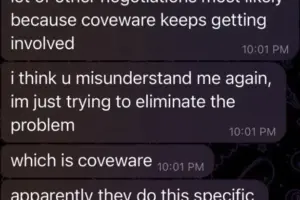
Internal communications recovered from ShinyHunters’ Telegram channels illustrate the friction caused by security firms that advise clients against paying. In private chats from April and May 2026, the group’s primary account administrator expressed deep frustration with Coveware, complaining that the firm’s anti-ransom messaging was severely damaging their monetization rates.
"Go on my website, majority of those companies would’ve paid if it weren’t for Coveware giving them misinformation," the ShinyHunters operator wrote to a co-conspirator. "Someone (100% Coveware) is going out of their way to make sure i am not paid."
Rather than bowing to market pressure, the syndicate actively discussed ways to "eliminate the problem"—pointing directly to the firms counseling clients to refuse ransom demands.
Official Statements and Industry Conflict of Interests
The revelations surrounding Dubrovsky and the Shinywire portal have thrust the $10 billion cyber-incident response and ransomware negotiation industry into an existential crisis.
Corporate Disavowals
In the wake of Dubrovsky’s arrest, his former firm, Cypfer, rushed to distance itself from the unfolding scandal. In an official statement released on October 14, Cypfer maintained that its business model does not facilitate ransomware payments and emphasized that it learned of Dubrovsky’s arrest solely through media reports.
"We had no prior knowledge of Mr. Dubrovsky’s arrest," a Cypfer spokesperson stated. "CYPFER has not received any outreach from law enforcement and, to our knowledge, is not the target of any law enforcement investigation."
Cypfer noted that it operates entirely separate from CyberSteward and is currently under the ownership of the Apros Group, a holding company led by former FBI special agent Jason Hogg. Hogg previously helmed Aon Cyber Solutions Group, which acquired Cytelligence—a forensics firm founded by Daniel Tobok, Dubrovsky’s former business partner with whom he has been embroiled in bitter legal disputes in Ontario courts.
The Inherent Conflict of Interest in Ransomware Negotiations
Industry leaders argue that the structural financial models governing many negotiation firms create perverse incentives. Mark Camillo, CEO of cyber insurance consortium CyberAcuView, highlighted a glaring ethical hazard: many negotiation firms charge clients a percentage of the total ransom paid out to hackers rather than a flat retainer fee.
"This makes no sense if they are also the negotiator," Camillo warned. "There needs to be more transparency in the process, as no one in the ecosystem should be profiting purely on the size of the ransomware transaction or payment itself."
When a negotiator’s fee scales with the size of the extortion demand, they possess an inherent financial incentive to maximize payouts, discourage low-ball offers, and ensure a transaction is completed—regardless of the long-term security risks to the client.
A Growing Wave of Federal Prosecutions
The Department of Justice is aggressively cracking down on corrupt actors within the remediation ecosystem.
The MonsterCloud Case: On October 7, the DOJ charged Zohar Pinhasi, CEO of Florida-based remediation firm MonsterCloud, with wire fraud and conspiracy. Pinhasi allegedly charged clients $19 million to resolve ransomware attacks while secretly paying hackers only $8 million behind his clients’ backs.
The Angelo Martino Sentencing: In July, ransomware negotiator Angelo Martino was sentenced to 70 months in federal prison for conspiring with the BlackCat/ALPHV syndicate. Martino had weaponized his position, selling his clients’ confidential negotiation strategies directly to the threat actors to maximize extortion yields.
Future Outlook: A Turning Point for Cybersecurity
The takedown of Pepijn van der Stap, the detention of "Rey," and the indictment of Edward Dubrovsky mark a watershed moment in the global fight against cyber extortion. For years, the boundary between the "white hat" incident response community and the "black hat" underworld operated in a legal and ethical gray zone.
As federal investigators peel back the layers of the ShinyHunters syndicate, several critical shifts are expected to reshape the industry:
Stricter Regulatory Oversight: Insurance carriers and government regulators are likely to mandate strict audits of ransomware remediation firms, banning contingency-fee models that tie negotiator compensation to ransom payout volumes.
Intensified Scrutiny of Backchannels: Law enforcement’s successful exploitation of encrypted messaging platforms like Signal serves as a warning to corrupt intermediaries. Communications between negotiators and threat actors are increasingly visible to federal intelligence.
The Death of Impunity: The willingness of the DOJ to prosecute licensed cybersecurity executives demonstrates that professional credentials will no longer shield individuals from federal conspiracy and extortion charges.
Ultimately, the ShinyHunters investigation serves as a sobering reminder that the ransomware crisis is sustained not just by criminal ingenuity in foreign jurisdictions, but by domestic enablers willing to monetize corporate panic from within. As the legal proceedings against Dubrovsky and his co-conspirators advance, the cyber insurance and incident response sectors face a reckoning that will permanently alter how companies respond to the digital gun to their head.