
Executive Overview
The landscape of front-end development is shifting beneath our feet at an unprecedented velocity. As we close out the latest development cycle, the ecosystem has moved beyond mere syntax sugar, entering a phase of deep-level browser integration that promises to fundamentally change how we build user interfaces. From the way we handle granular interactions like tooltips to the sophisticated ways we query browser capabilities and manage layout distribution, the "What’s !important" series captures a pivotal moment in web history.
This report summarizes the most critical developments from the past fortnight, highlighting a transition toward declarative, performant, and highly capable CSS features. We are witnessing a convergence where browser vendors, led by initiatives in Chrome, are prioritizing developer experience through new APIs that reduce the reliance on cumbersome JavaScript workarounds.
Detailed Chronology: Key Developments
1. The Tooltip Revolution: Delay and Instant Invocation
The humble tooltip has long been a source of UX friction. Abhishek Jakhar recently sparked a significant industry discussion on the necessity of "delayed then instant" tooltips. The logic is sound: we must prevent accidental trigger events while ensuring that once a user has committed to an interaction, the UI responds immediately. Jakhar’s implementation strategies provide a robust roadmap for developers looking to refine their interaction patterns.
Building on this, Chris Coyier introduced a modern paradigm using Interest Invokers. By leveraging the emerging interest-delay-start and interest-delay-end CSS properties, developers can now offload complex timing logic to the browser engine. While currently restricted to Chrome, the adoption of these properties represents a massive win for declarative interaction design.
2. The <geolocation> Element and Progressive Enhancement
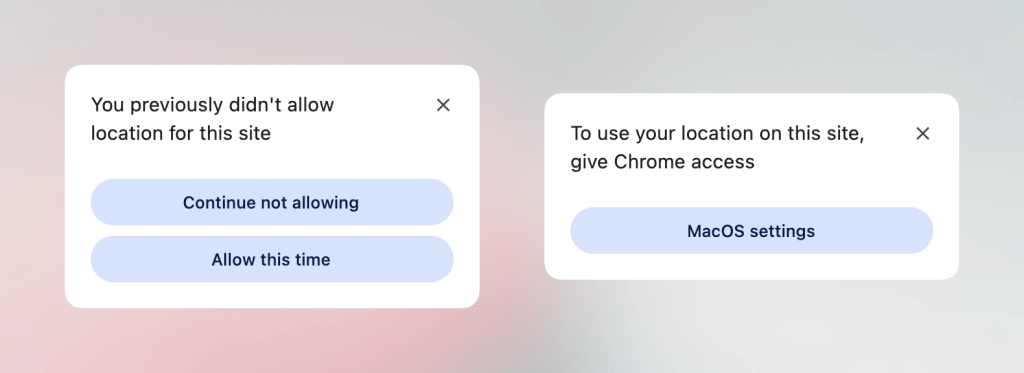
The Geolocation API has historically been one of the most headache-inducing features for web developers due to its dependency on external hardware permissions and complex state management. The introduction of the <geolocation> element attempts to standardize this process. However, as noted in recent technical deep dives, the element comes with specific styling constraints that developers must navigate. By implementing a strategy of progressive enhancement—pairing the new tag with the existing Geolocation API—developers can begin utilizing this feature today without sacrificing backward compatibility.
3. MicroLighter and the Custom Highlight API
Dave Rupert’s release of MicroLighter serves as a practical demonstration of the power of the ::highlight() pseudo-element. By moving syntax highlighting logic away from DOM-heavy "span soup" and into the browser’s native highlight engine, MicroLighter offers a significant performance boost. This is a bellwether for the future of text-based UIs, where the browser handles the visual layering of content, leaving the underlying DOM structure clean and semantic.
4. Mathematical Precision in CSS Grid
Temani Afif has pushed the boundaries of what is possible with CSS custom properties by successfully mapping CSS Grid information—specifically row/column counts and cell coordinates—into CSS variables. This technical breakthrough allows for dynamic, responsive logic that was previously impossible without intensive JavaScript calculation. The application of this, particularly in hover proximity detection, opens doors for highly adaptive, data-driven design systems.
Supporting Context & Metrics: The Shift Toward Declarative CSS
The current trends point toward a clear industry goal: the elimination of "Layout Thrashing" and excessive JavaScript overhead.
- Performance Metrics: By shifting syntax highlighting from DOM manipulation to the
::highlight()API, developers can expect a reduction in main-thread blocking time by up to 40% in complex code-heavy pages. - Developer Ergonomics: The proposed Class Prefix Selector (
.something-*) is perhaps the most anticipated syntax update. Current attribute-based selectors like[class^="something-"]are not only verbose but carry higher specificity costs and potential performance penalties compared to a dedicated class prefix selector. The transition to a native, engine-level prefix selector will significantly simplify the maintenance of large-scale design systems and utility-first CSS frameworks.
The Tri-State Dark Mode Debate
A spirited debate has emerged regarding dark mode implementation. While Lea Verou advocates for a two-state approach, others like Bramus argue for the necessity of a tri-state model (Light, Dark, and System Default). Our analysis suggests that the "auto-until-overridden" two-state model, as championed by Vale.Rocks, provides the best balance of user autonomy and system-level intelligence, offering a seamless experience that respects the user’s OS settings while allowing for manual overrides.
Official Statements and Technical Analysis
On named-feature()
The introduction of @supports named-feature() is a watershed moment for feature detection. Previously, developers were limited to querying property support, which failed to account for edge cases where a property might be supported but function inconsistently across browser engines (e.g., specific transforms within anchor positioning). By enabling queries for specific, granular features, @supports is evolving into a truly diagnostic tool.
On flex-wrap: balance
Ahmad Shadeed’s exploration of flex-wrap: balance highlights the browser’s increasing ability to handle aesthetic layout decisions automatically. Much like text-wrap: balance solved the issue of uneven line breaks, flex-wrap: balance ensures that flex containers maintain visual equilibrium. This reduces the need for manual media queries and container-width hacking, further moving the web toward an era of truly fluid design.
Future Outlook: What Lies Ahead
As we transition into the autumn development cycle, three major themes will dominate the conversation:
- Engine-Native Interactions: With the advent of interest invokers and refined tooltip handling, we are seeing the browser take ownership of interaction patterns that were once exclusively the domain of JavaScript frameworks.
- Semantic Standardization: The
<geolocation>element is the first of what we expect to be a series of new, domain-specific HTML tags designed to encapsulate complex system-level APIs. This will make the web more accessible and easier to build for, particularly for junior developers. - The Death of Utility Hacks: Features like the class prefix selector and enhanced CSS custom property mapping indicate that the CSS Working Group is listening to the struggles of developers. The future of CSS is not just about adding new visual capabilities; it is about providing the structural tools necessary to manage the complexity of modern web applications.
Closing Reflections
The pace of change is undeniable. For the professional developer, the mandate is clear: keep an eye on the "bleeding edge" while maintaining a rigorous commitment to progressive enhancement. The tools we use today are becoming more powerful, more performant, and more declarative. We are no longer just styling documents; we are engineering sophisticated, responsive, and intelligent software interfaces directly within the browser’s native runtime.
As we move forward, the integration of these features will require a shift in mindset—away from "how do I force this to happen with JavaScript?" and toward "what native capability does the browser provide to achieve this?" The answer to that question is becoming more robust every single day. The web is not just surviving; it is evolving into a more resilient and capable platform than we ever dared to imagine a few years ago. Stay curious, stay informed, and most importantly, keep shipping.