Executive Overview
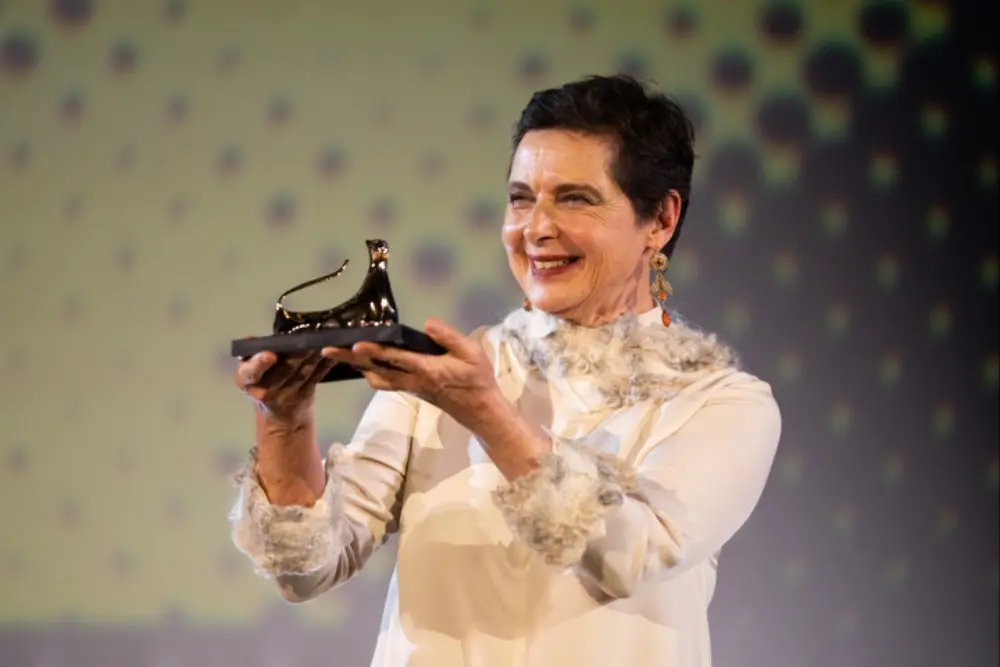
The cinematic landscape shifted irrevocably when Spanish actress Karla Sofía Gascón stepped onto the global stage in Jacques Audiard’s critically acclaimed feature Emilia Pérez. Her powerhouse performance not only earned her prestigious accolades across the international film circuit—including a historic best actress win at the Cannes Film Festival—but also propelled her into the history books as the first openly transgender actor to secure an Academy Award nomination.
Yet, this monumental triumph was shadowed by intense public scrutiny. Gascón’s historic Oscar campaign became the epicenter of a fierce social media controversy, fueled by unverified historical posts and ideological friction. Speaking candidly at the International Film Festival of India (IFFI) in Goa—where her latest Spanish Western, Trinidad, celebrated its world premiere—Gascón addressed the storm head-on. She asserted that the controversy was not a spontaneous reaction to her past, but a coordinated backlash driven by institutional and societal resistance to seeing a transgender woman claim Hollywood’s highest honors.
Beyond the headlines, Gascón’s narrative is one of enduring artistic resilience. Spanning a diverse career of more than three decades—from Mexican telenovelas to avant-garde European arthouse films—she continues to challenge typecasting, traverse international borders, and advocate for an industry grounded in human connection rather than political exploitation. This comprehensive report examines the intersection of her historic milestone, the socio-political headwinds facing the transgender community, and her rapidly expanding international filmography.
Detailed Chronology
The Rise of Emilia Pérez and Global Acclaim
Karla Sofía Gascón’s career-defining moment arrived with Jacques Audiard’s genre-defying musical-crime-drama Emilia Pérez. In the film, Gascón delivered a dual-layered performance as Manitas, a fearsome Mexican cartel leader seeking to transition and live authentically as her true self, Emilia.
The film’s relentless momentum began on the Croisette at the 2024 Cannes Film Festival, where the female ensemble cast shared the Best Actress prize—a rare and prestigious collective honor. This initial victory opened the floodgates for international recognition:
- European Film Awards & Lumiere Awards: Gascón secured further top-tier wins, solidifying her status as a formidable global talent.
- Major Industry Nominations: She earned critical nods at the Golden Globes and the BAFTAs, setting the stage for an unprecedented Oscar run.
- The Academy Award Nomination: Gascón officially broke the glass ceiling, becoming the first transgender actor ever nominated in an acting category by the Academy of Motion Picture Arts and Sciences.
The Oscar Campaign Controversy
Despite the critical acclaim, Gascón’s march toward the Oscars was heavily disrupted. An intense row erupted over resurfaced, out-of-context social media posts from her past. Critics weaponized the historical digital footprint, generating a firestorm that threatened to derail her awards momentum.
Reflecting on the ordeal in Goa, Gascón firmly pushed back against the narrative constructed by her detractors:
"It has never yet been shown that I wrote anything against anyone, nor has it been proven anywhere. It was just a pile of assumptions, with everyone saying something different, and they created a figure of me that isn’t me."
She described the multi-month Hollywood awards ecosystem as an exhausting, political gauntlet. For Gascón, the intense politicking of awards season threatens to overshadow the true purpose of filmmaking. She maintains that actors are frequently exploited as chess pieces in broader economic and ideological games—an environment that pulls focus away from pure artistic expression.
The World Premiere of Trinidad in Goa
Stepping away from the Hollywood awards machine, Gascón traveled to Goa for the International Film Festival of India (IFFI). There, she was honored by Chanchal Kumar, secretary of India’s Ministry of Information and Broadcasting, during an extensive masterclass.
The centerpiece of her visit was the world premiere of her new Spanish Western, Trinidad. Embracing yet another radical transformation, Gascón plays a gun-wielding, wheelchair-bound outlaw serving as the primary antagonist of the 19th-century frontier tale. Demonstrating her commitment to challenging roles, she admitted that while she initially envisioned a traditional Western role involving horses and fast-paced gunplay, confronting a sedentary character offered a profound masterclass in empathy and physical restraint.
Supporting Context & Metrics
The State of Transgender Representation in Cinema
Gascón’s historic nomination arrives at a precarious moment for global human rights. During her public appearances in India, the actress did not mince words regarding the current political and social climate surrounding gender diversity.
[Global Political Shift]
       │
       ▼
[Regression in Transgender & Sexual Diversity Rights]
       │
       ▼
[Marginalization: Trans People Viewed as "Lowest in Society"]
       │
       ▼
[Institutional Backlash Against High-Profile Success (e.g., Awards Campaigns)]
"We are living through a moment of regression in the rights of transgender people, of sexual diversity," Gascón observed. She contextualized the fierce opposition she faced during her Oscar run not as an isolated incident of internet culture, but as a symptom of a global sociopolitical backlash. Because transgender individuals are systematically marginalized and frequently treated as the most vulnerable tier of society, the prospect of a trans woman claiming a premier global award proved threatening to entrenched cultural gatekeepers.
Career Trajectory and International Expansion
Before her international crossover, Gascón built a robust 30-year career spanning Spain and Latin America, notably starring in high-octane Mexican telenovelas. Her post-Emilia Pérez reality, however, is markedly different. The most tangible change in her daily professional life is simple yet profound: she no longer has to audition.
Having conquered multiple linguistic and cultural barriers, Gascón has actively sought out projects that push her artistic boundaries:
- Scuola di Seduzione: A recent Italian feature showcasing her ability to effortlessly cross European cinema markets.
- Trinidad: A gritty Spanish-language Western exploring villainy from a physically confined perspective.
- Las Malas: Directed by Armando Bo, this adaptation of Camila Sosa Villada’s acclaimed novel features Gascón in the role of Tia Encarna. Shot over four months in Argentina and Uruguay, Gascón counts this performance among the finest work of her entire career, hinting at potential festival premieres in Cannes or Venice.
Official Statements & Industry Perspectives
On the Art of Acting and Directing
Gascón’s philosophy on filmmaking is anchored in collaboration, humility, and psychological depth. Rejecting the ego-driven demands often associated with top-tier movie stars, she emphasizes the collective nature of film production:
"I don’t want to create conflict on set. I don’t want to create a difference between me and the others. I don’t want blue flowers in my caravan."
She reserves special praise for auteur Jacques Audiard, whom she hails as the finest director she has ever collaborated with. She credits Audiard with fostering an atmosphere of playful experimentation and profound creative freedom on the set of Emilia Pérez:
"He brings you the liberty to act. He plays a lot, he laughs a lot, he’s really funny, and I think he is a really good friend."
Crafting Characters from the Voice Outward
During her masterclass at IFFI, Gascón shared her meticulous technical approach to character development. She builds every performance from the vocal register outward. For Trinidad, she sought a soft, calm vocal cadence to contrast with her character’s menacing nature. For Emilia Pérez, she engaged in an extensive trial-and-error process, recording various vocal registers on cassette tape before locking in a deep, resonant voice for Manitas and a delicate, refined pitch for Emilia—a preparation that proved invaluable during automated dialogue replacement (ADR) sessions.
Bridging Cultures and Rejecting Typecasting
Drawing a direct line between the heightened emotional stakes of Mexican telenovelas and the passionate performance traditions of Indian cinema, Gascón argued that theatricality and psychological truth are not mutually exclusive.
Furthermore, she issued a broader critique of international casting directors who overly rely on rigid national, gendered, or identity-based labels:
"It’s nice when Indian people work in Spain, work in the United States. I love when a Russian works in Africa. I think we are all the same humanity."
Future Outlook
As Karla Sofía Gascón looks toward the horizon, her trajectory points firmly toward borderless storytelling. Having shattered historical glass ceilings in Hollywood, she is choosing to invest her capital in daring international collaborations rather than resting on the laurels of past prestige.
Key developments on her horizon include:
- Festival Circuit Anticipation: The anticipated premiere of Armando Bo’s Las Malas, widely expected to make major waves at upcoming European film festivals like Cannes or Venice.
- Expanded Global Footprint: Continued work across Italian, Spanish, and Latin American productions, proving her versatility across diverse cinematic traditions.
- Advocacy Through Art: Remaining an uncompromising voice for artistic integrity, pushing back against the weaponization of identity politics in the entertainment industry while advocating fiercely for the visibility and dignity of marginalized communities worldwide.
In an industry often distracted by the superficial optics of awards campaigns and digital noise, Karla Sofía Gascón remains steadfastly focused on what brought her to the screen three decades ago: the raw, transformative power of shared human stories.