Executive Overview
In a landmark transaction signaling a profound shift in the children’s entertainment sector, Canadian media powerhouse WildBrain has officially completed the acquisition of child-focused generative artificial intelligence startup Personality AI. Valued at up to $69 million in a structured cash-and-stock arrangement, the strategic acquisition is designed to fuse WildBrain’s massive, globally recognized intellectual property (IP) library—comprising beloved classics and contemporary hits such as Teletubbies, Yo Gabba Gabba!, Strawberry Shortcake, and Degrassi—with Personality AI’s pioneering, secure conversational technologies.
The deal represents a calculated bet by WildBrain leadership that the future of children’s entertainment lies not in passive viewing, but in dynamic, interactive, and personalized engagement. By incorporating Personality AI’s proprietary conversational models, WildBrain aims to transform traditional media franchises into living, responsive digital ecosystems. However, entering the generative AI space while prioritizing young audiences requires navigating a labyrinth of regulatory constraints, data privacy laws, and parental expectations. To address these concerns head-on, Personality AI has built its technical architecture around stringent safety protocols, child development frameworks, and compliance mechanisms certified by the Federal Trade Commission’s (FTC) COPPA Safe Harbor Program.
Under the terms of the acquisition, WildBrain has disbursed approximately $11 million in cash alongside 1 million common shares at closing. Additional consideration includes $2 million in WildBrain shares—capped at 1 million shares—payable on the first anniversary of the deal’s finalization, with the remaining balance disbursed in cash. Furthermore, the agreement features up to $56 million in performance-based cash consideration tied directly to Personality AI’s revenue milestones spanning from 2027 through 2029. Personality AI CEO John Goscha will transition to WildBrain, assuming the role of Executive Vice President of Personality AI and reporting directly to WildBrain CEO and President Josh Scherba.
This deep dive explores the mechanics of the acquisition, the technological foundation of Personality AI, the financial structure of the deal, and the broader implications for the future of interactive children’s media.
Detailed Chronology and Transaction Structure
The path to this acquisition reflects the rapidly accelerating convergence of legacy children’s entertainment and next-generation artificial intelligence. While generative AI technologies have swept through enterprise software, consumer applications, and adult-targeted media over the past several years, the children’s sector has remained fiercely guarded. Content creators, regulatory bodies, and parents alike have maintained a cautious stance toward AI, driven by legitimate fears regarding data harvesting, inappropriate content generation, and the potential psychological impacts of machine-driven interactions on developing minds.
Personality AI carved out a unique niche within this high-stakes ecosystem by approaching conversational AI through the lens of child safety and developmental psychology. Rather than deploying raw, unconstrained large language models (LLMs), the startup forged a multidisciplinary approach, uniting AI engineers, child development experts, and veteran entertainment producers. This collaborative methodology yielded a suite of conversational character AIs specifically calibrated to mirror the distinct personalities of licensed children’s properties while enforcing rigid behavioral boundaries.
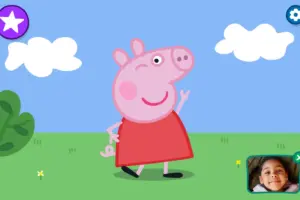
The startup’s viability and technological maturity were dramatically validated last year when tech titan Amazon selected Personality AI to spearhead the development of an interactive platform for Amazon Kids+, its premier kids-focused subscription service. This collaboration culminated in the launch of a Peppa Pig generative product, allowing young users to converse directly with the iconic British animated character within a controlled digital environment.
Buoyed by its success with Amazon and its active participation in the FTC-backed COPPA Safe Harbor Program—one of the industry’s most rigorous independent oversight frameworks for federal child privacy protections—Personality AI caught the attention of major media conglomerates. WildBrain, seeking to maximize the monetization and engagement potential of its vast catalog, emerged as the ideal buyer. Negotiations matured over recent months, culminating in a definitive agreement that balances upfront capital deployment with long-term performance incentives.
Financial Breakdown of the $69 Million Acquisition
The transaction is structured to align the incentives of Personality AI’s founders and core developers with WildBrain’s long-term enterprise growth strategy:
- Upfront Consideration: WildBrain paid approximately $11 million in cash at closing, supplemented by the issuance of 1 million common shares.
- Anniversary Consideration: An additional $2 million worth of WildBrain shares (capped at 1 million shares) is scheduled for distribution to shareholders on the first anniversary of the closing date, with any remaining balance settled in cash.
- Performance-Based Earn-Out: The bulk of the headline valuation—up to $56 million—is contingent upon Personality AI achieving specific revenue benchmarks between fiscal years 2027 and 2029. This structured earn-out mitigates financial risk for WildBrain while rewarding Personality AI for scalable commercial execution.
- Leadership Integration: Personality AI founder and CEO John Goscha steps into the executive suite at WildBrain as Executive Vice President of Personality AI, ensuring continuity of vision and technical leadership under CEO Josh Scherba.
Supporting Context, Technology, and Market Metrics
To understand the strategic rationale behind WildBrain’s investment, one must examine the shifting economics of children’s media consumption. Traditional linear television and passive streaming models, while still profitable, face mounting pressure from interactive platforms such as Roblox, YouTube, and immersive gaming environments. Today’s digital-native children expect agency; they do not merely want to watch their favorite characters—they want to talk to them, influence their adventures, and experience personalized narratives.
However, delivering on this expectation without violating child privacy laws or exposing minors to algorithmic hallucinations is an exceptionally difficult engineering and ethical challenge. Generative AI models are notoriously prone to "hallucinations"—generating plausible-sounding but entirely fabricated or inappropriate information. In an adult context, this is a nuisance; in a pediatric context, it is an existential risk for brand owners and a regulatory nightmare.
The Personality AI Safety Stack
Personality AI’s core competitive advantage lies in its multi-layered safety architecture. The startup’s products are engineered to solve several distinct industry bottlenecks:
- Strict Behavioral Guardrails: The AI models do not operate with open-ended conversational freedom. Instead, they are anchored to the precise behavioral traits, speech patterns, and emotional profiles of established intellectual property. If a child asks a character an out-of-bounds or sensitive question, the system is programmed to gently pivot the conversation back to franchise-appropriate themes.
- Zero Data Retention: Addressing the core mandate of children’s privacy legislation, Personality AI’s infrastructure does not retain personally identifiable information (PII) or behavioral profiles tied to individual children. This architecture eliminates the primary vulnerability that plagues modern digital advertising and data-tracking ecosystems.
- Interdisciplinary Development: By embedding child development specialists directly into the engineering workflow, the startup ensures that the pacing, tone, and cognitive load of the conversational interactions align with the developmental stages of the target audience—whether toddlers, preschoolers, or early-elementary children.
- Regulatory Compliance: Participation in the COPPA Safe Harbor Program provides third-party verification that Personality AI’s technical frameworks meet or exceed the stringent mandates of the Children’s Online Privacy Protection Act (COPPA).
WildBrain’s Strategic Portfolio Expansion
For WildBrain, integrating this technology unlocks unprecedented monetization vectors across its global franchise portfolio. As an industry leader managing powerhouse properties like Teletubbies, Yo Gabba Gabba!, Degrassi, and Strawberry Shortcake, WildBrain operates an extensive in-house global licensing and consumer products agency, WildBrain CPLG.
By deploying Personality AI’s conversational tools, WildBrain can bridge the gap between content consumption and consumer product sales. Imagine a child interacting with a conversational Strawberry Shortcake doll or digital application that seamlessly recommends real-world merchandise, live events, or themed experiences in a manner fully supervised and approved by parents. This capability transforms static consumer products into dynamic, interactive touchpoints that foster deeper brand loyalty and extend the commercial lifecycle of legacy IP.
Official Statements and Industry Perspective
Leadership from both organizations emphasized the transformative potential of the merger during the formal announcement.
WildBrain CEO and President Josh Scherba framed the acquisition as a pivotal milestone in the company’s evolution toward comprehensive, end-to-end franchise management:
"Personality AI enables more continuous interaction between fans and brands, strengthening our ability to deliver end-to-end franchise solutions to partners," Scherba stated. "This highly complementary acquisition positions us and Personality AI as a more integrated partner to IP owners globally through our in-house licensing agency, WildBrain CPLG, while helping support the continued growth of both our owned and partner brands."
John Goscha, founder and CEO of Personality AI, echoed these sentiments, highlighting the shared philosophical commitment to child safety and wellbeing that underpinned the negotiations:
"I’m thrilled to be joining forces with WildBrain, a clear leader in family entertainment," Goscha remarked. "At Personality AI, we share WildBrain’s commitment to children’s wellbeing, which is why we employ rigorous safety standards to ensure appropriate, authentic and trustworthy content and experiences for kids, parents and IP owners alike."
Industry analysts have responded positively to the transaction, noting that it provides WildBrain with an immediate first-mover advantage in the regulated children’s generative AI space. While many media conglomerates have hesitated to adopt generative AI due to legal ambiguities surrounding copyright and safety, WildBrain’s acquisition of a compliant, purpose-built startup allows it to bypass greenfield development risks and immediately deploy market-ready technology.
Future Outlook: The Next Frontier of Children’s Entertainment
As WildBrain integrates Personality AI into its corporate structure over the coming months, the industry will be watching closely to see how the technology is first deployed across the company’s portfolio. Initial rollouts are widely expected to focus on flagship properties where fan engagement is exceptionally high, such as Teletubbies and Strawberry Shortcake, as well as collaborative projects with external brand partners utilizing the WildBrain CPLG network.
The broader implications of this acquisition point toward a structural transformation in how children’s media is produced, monetized, and consumed. As conversational AI becomes a standard feature of digital entertainment, companies that fail to incorporate secure, child-safe interactive technologies risk losing the attention of a generation that expects characters to respond, remember, and converse.
However, the ultimate success of WildBrain’s $69 million investment will not be measured solely by financial returns or revenue earn-outs between 2027 and 2029. It will be judged by the company’s ability to maintain absolute trust among parents and regulatory bodies. In the delicate ecosystem of children’s entertainment, maintaining that trust is the ultimate prerequisite for commercial longevity. With Personality AI’s robust safety stack now fully anchored within WildBrain’s global operations, the Canadian media giant is exceptionally well-positioned to lead the charge into the next era of interactive family entertainment.