Executive Overview
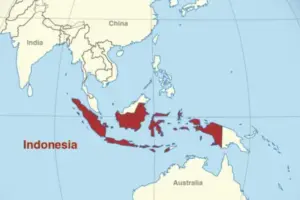
As global retail titans continuously scour the globe for untapped engines of growth, attention is increasingly shifting toward Southeast Asia’s economic powerhouse: Indonesia. According to recent United Nations population data, Indonesia stands as the fourth most populous nation on Earth, housing roughly 288 million residents. It trails only India (1.46 billion), China (1.41 billion), and the United States (345 million).
Yet, when juxtaposed against these traditional retail heavyweights, Indonesia presents an intriguing economic paradox. While its population is immense and digitally connected—boasting an internet penetration rate of roughly 80% with over 230 million online users—its aggregate retail consumption remains comparatively modest. World Bank metrics highlight a massive chasm between Western and Eastern consumption values, leaving Indonesia with a total Household Final Consumption Expenditure that sits far below its demographic weight.
This stark disparity between high digital engagement and low baseline retail sales signals a profound market opportunity. Indonesia is not merely an emerging market; it is a coiled spring. For international brands, direct-to-consumer (DTC) labels, and multinational conglomerates, mastering the Indonesian digital landscape is no longer an experimental venture—it is a strategic imperative. However, translating this demographic potential into bottom-line revenue requires navigating a labyrinth of regulatory hurdles, linguistic mandates, geographic fragmentation, and complex logistical networks.
This report provides a comprehensive blueprint for foreign enterprises seeking to conquer the Indonesian e-commerce ecosystem, exploring market metrics, dominant digital platforms, entry structures, and the critical operational frameworks required for long-term survival.
Detailed Chronology and Market Evolution
The maturation of Indonesia’s digital economy has not happened overnight. It is the result of a steady, deliberate evolution fueled by mobile-first adoption, infrastructural investments, and a rapidly expanding middle class.
- The Mobile-First Leap (Early 2010s): Unlike Western nations that transitioned systematically from desktop computers to laptops and finally to smartphones, Indonesia largely bypassed the desktop era. The proliferation of affordable Android and iOS devices served as the primary gateway to the internet for tens of millions of citizens across the archipelago’s thousands of inhabited islands.
- The Rise of Homegrown Marketplaces (Mid-2010s): Recognizing the unique logistical challenges of an island nation, local entrepreneurs laid the groundwork for domestic e-commerce giants. Platforms like Tokopedia and Bukalapak emerged to bridge the gap between fragmented local merchants and urban consumers, laying the structural groundwork for digital commerce.
- Regional Consolidation and Capital Influx (Late 2010s to 2020): Regional powerhouses such as Shopee (backed by Sea Group) and Lazada (backed by Alibaba) poured billions of dollars into aggressive marketing, hyper-localized logistics networks, and aggressive discounting. This period cemented a fierce competitive landscape where foreign investment collided with domestic innovation.
- The Social Commerce Explosion (2021–Present): The COVID-19 pandemic accelerated digital adoption by years. More recently, social commerce platforms—led by TikTok Shop alongside established meta-ecosystems like WhatsApp, Instagram, and Facebook—transformed entertainment into retail. Livestream shopping became a cultural and economic phenomenon, reshaping how Indonesians discover, evaluate, and purchase consumer goods.
- Regulatory Tightening (2023–2026): As digital marketplaces matured, the Indonesian government stepped in with increasingly stringent regulations. Authorities introduced strict cross-border pricing floors, data localization laws, mandatory local language rules, and structural requirements for foreign entities. Today, operating in Indonesia requires a sophisticated understanding of compliance, shifting the market from a "wild-west" growth phase into a highly regulated, professionalized corporate arena.
Supporting Context & Metrics: The Numbers Behind the Opportunity
To contextualize Indonesia’s digital retail landscape, analysts must evaluate macroeconomic indicators alongside digital penetration metrics. Evaluating retail sales globally is notoriously difficult due to inconsistent reporting methodologies and varying definitions of retail composition. To establish a reliable baseline, economists frequently turn to the World Bank’s Household Final Consumption Expenditure metric—defined as the market value of all goods and services purchased by domestic households.
Comparative Economic Metrics (Global Context)
- United States: ~$19.8 trillion (based on recent structural trend evaluations)
- China: ~$7.48 trillion
- India: ~$2.4 trillion
- Indonesia: ~$773.6 billion
While Indonesia’s $773.6 billion expenditure metric is dwarfed by the U.S. and China, its growth velocity is what captures the attention of institutional investors.
Internet Penetration and Digital Reach
Comparable online-only retail metrics remain murky, largely relying on fragmented governmental disclosures and aggregator data. According to DataReportal’s comprehensive global digital overview, internet adoption across the world’s top four most populous nations showcases a staggering digital footprint:
- China: 1.3 billion internet users (92% penetration rate)
- United States: 323.9 million internet users (94% penetration rate)
- India: 1.0 billion internet users (68% penetration rate)
- Indonesia: 230.4 million internet users (80% penetration rate)
With an 80% penetration rate among a 288-million-strong population, Indonesia boasts a digitally native consumer base. The country’s demographic profile heavily skews young, with millennials and Generation Z driving mobile consumption, digital wallet adoption, and online brand discovery. Greater Jakarta alone—the sprawling metropolitan area housing over 32 million residents—serves as an ultra-dense urban crucible for high-velocity e-commerce demand.
Official Statements and Industry Insights
Navigating the Indonesian market requires listening closely to regulatory bodies, trade authorities, and regional trade consultancies. International trade organizations consistently highlight the nation’s immense upside, tempered by clear institutional warnings.
According to the U.S. Department of Commerce’s International Trade Administration (ITA), Indonesia is officially categorized as a market "poised for online growth," driven by a digitally hungry population actively seeking international lifestyle and technology brands. However, the ITA routinely cautions foreign corporations regarding non-tariff barriers, intellectual property enforcement, and localization requirements.
Regional consultancy firms, such as Asialink, underscore the absolute dominance of local and regional digital ecosystems. Market data compiled by Asialink indicates that just three platforms—Shopee Indonesia, Tokopedia, and Lazada—capture an overwhelming 76% of all online retail sales in the country. Both Shopee and Lazada operate robust first-party retail arms alongside their third-party marketplace structures, giving them unprecedented leverage over supply chains and consumer data.
Prominent international consumer brands have successfully established footharks within these ecosystems. Cosmetics giants such as L’Oréal Paris, Nivea, Garnier, La Roche-Posay, and Maybelline, alongside apparel icons like Adidas and Puma, tech leaders like Samsung and Xiaomi, and fast-moving consumer goods (FMCG) titans like Philips, Tefal, Nestlé, and Kellogg’s, utilize these marketplaces as frontline touchpoints for Indonesian consumers.
Yet, regulatory experts emphasize that relying solely on cross-border marketplace shipping is no longer viable. A key regulatory obligation enforced by Indonesian authorities is the establishment of a minimum wholesale value of $100 per unit on goods entering the country via cross-border channels. This policy effectively prices low-cost cross-border e-commerce out of the market, forcing brands to establish domestic warehousing and local distribution frameworks if they hope to compete on price and delivery speed.
Market Entry Strategies: Navigating Compliance and Operations
For international brands evaluating how to enter the Indonesian market, three primary pathways emerge: selling cross-border, partnering with local distributors, or establishing an independent corporate entity. Each option carries distinct risk profiles, capital requirements, and compliance burdens.
1. Corporate Structuring: The PT PMA Route
For brands seeking direct, independent control over their operations, intellectual property, and revenue streams, establishing a PT PMA (Penanaman Modal Asing)—a foreign-owned limited liability company—is the gold standard.
According to corporate structure guidelines for Indonesia, a PT PMA is the only legal vehicle that grants foreign brands absolute independence. However, the compliance burden is heavy:
- Shareholder Mandate: Requires a minimum of two shareholders, at least one of whom must be a foreign entity or individual.
- Capital Requirements: Mandates a substantial minimum paid-up capital requirement of $150,000.
- Licensing: Successful formation yields a Nomor Induk Berusaha (NIB), or Business Identification Number, which is legally required to operate any e-commerce enterprise within the country.
2. Omnichannel Integration: Distributors vs. E-Commerce Enablers
Because building a PT PMA from scratch requires significant upfront capital, many foreign brands adopt a hybrid omnichannel strategy. This approach bifurcates operational responsibilities between traditional wholesale distribution and digital-first execution.
- Traditional Distributors: These entities purchase sector-specific inventory wholesale and manage physical retail distribution, customs clearance, and regulatory compliance. Established distribution heavyweights like DKSH Indonesia and Enseval provide foreign brands with immediate access to traditional brick-and-mortar retail networks across the archipelago’s thousands of islands.
- E-Commerce Enablers: Distinct from traditional distributors, e-commerce enablers specialize in managing a brand’s digital storefront, digital marketing campaigns, customer service, and backend fulfillment exclusively across marketplaces. Prominent enablers operating in the region include Jet Commerce and SCI Group.
3. Language, Compliance, and Social Commerce Realities
No entry strategy can succeed in Indonesia without acknowledging cultural and legal localization. By strict statutory law, Bahasa Indonesia is mandatory for all e-commerce product descriptions, instructional manuals, and warranty details. Failing to localize product listings can result in severe penalties or delisting by regulatory watchdogs.
Simultaneously, brands must balance traditional marketplaces with social commerce. While Shopee, Tokopedia, and Lazada command formal search-and-buy traffic, social platforms—specifically TikTok Shop, WhatsApp, Instagram, and Facebook—act as the primary engines of brand discovery and impulse purchasing. Livestream commerce, in particular, requires real-time engagement with Indonesian consumers who expect interactive, entertaining, and highly responsive brand interactions.
Future Outlook: The Next Decade of Indonesian Digital Commerce
As we look toward the latter half of the 2020s and into the 2030s, Indonesia’s e-commerce trajectory points toward hyper-professionalization, consolidation, and deeper technological integration.
The days of easy, low-barrier cross-border arbitrage are definitively over. The Indonesian government’s commitment to protecting domestic micro, small, and medium-sized enterprises (MSMEs) through strict valuation floors, tax compliance mandates, and data localization rules means that foreign brands must treat Indonesia as a localized priority rather than a secondary export market.
Winning in Indonesia will increasingly require an integrated omnichannel architecture. Successful global brands will likely utilize a PT PMA structure for ultimate asset protection, partner with specialized e-commerce enablers to dominate marketplace mindshare, leverage local distributors like DKSH or Enseval for regional logistics, and maintain an aggressive, culturally resonant presence across social commerce channels.
Furthermore, as logistical infrastructure improves across Indonesia’s outer islands—fueled by government investments in ports, domestic shipping routes, and digital fiber networks—addressable consumer pools will expand far beyond Greater Jakarta. Brands that invest early in localized compliance, Bahasa Indonesia proficiency, and authentic digital storytelling will capture the loyalty of the world’s fourth-largest population, securing a formidable competitive advantage in one of the 21st century’s most vibrant economic frontiers.