Executive Overview
The American Society of Composers, Authors, and Publishers (ASCAP) Foundation has officially announced the distinguished winners of the 77th Annual ASCAP Foundation Deems Taylor/Virgil Thomson Awards. This prestigious multi-disciplinary program recognizes exceptional books, articles, liner notes, and broadcast media dedicated to advancing the public understanding and appreciation of music.
Spanning genres from classical concert works and Broadway history to cult R&B, avant-garde rock, and cinematic orchestration, the 2025 honors spotlight the critical role that cultural criticism, biographical scholarship, and media production play in preserving musical heritage. Selected by an elite four-member committee of industry veterans—comprising Robbie Fulks, Julie Flanders, Carman Moore, and Betsy Schramm—this year’s cohort of honorees captures the breadth, depth, and historical evolution of global soundscapes.
Among the standout achievements recognized in this cycle are groundbreaking biographies documenting cinematic icons John Williams and Bernard Herrmann; deep dives into the civil rights impact of children’s music; intimate explorations of jazz, opera, and archival preservation; and innovative modern digital commentary from YouTube platforms to long-form podcasting.
Detailed Chronology: Honoring the 77th Class of Creators
The awards, named in honor of legendary composers and critics Deems Taylor and Virgil Thomson, celebrate works published or broadcast throughout the preceding year. The 2025 selection process highlights an astonishing range of cultural artifacts and intellectual pursuits, carefully categorized across pop music, concert music, critical essays, liner notes, and digital media.
1. Broadcast and Media Awards
In the realm of broadcast media, storytelling took center stage, bridging television, radio, and digital video to explore the human stories behind foundational and underground sounds.
- Pop Music Broadcast/Media Award: Directors Isaac Gale, Ryan Olson, and David McMurry secured top honors for their acclaimed 2025 documentary film, Swamp Dogg Gets His Pool Painted. The feature offers a colorful, deeply human portrait of legendary cult R&B artist Jerry “Swamp Dogg” Williams, chronicling the eccentric, vibrant creative community that coalesced around his Los Angeles home and swimming pool.
- Concert Music Broadcast/Media Award: Radio host and producer Gail Wein was recognized for Classical Gas, a 2025 podcast series produced by Classical Voice North America. Distributed across multiple audio platforms, the series features deeply researched, illuminating interviews with major classical performers and creators.
- Special Recognition (Concert Music Broadcast): Digital media pioneer Rick Beato received a special honor for his wildly popular 2025 YouTube series, Everything Music. Beato’s expansive digital footprint continues to demystify complex music theory, composition, and industry trends for millions of global subscribers.
2. The ASCAP Foundation Paul Williams “Loved the Liner Notes” Award
Physical media packaging and archival preservation received high-profile attention through the annual liner notes category, named in memory of legendary music journalist Paul Williams.
- Winner: Acclaimed percussionist Ruth Komanoff Underwood was awarded for her deeply personal, insightful essay accompanying Cheaper than Cheep, a lavish live box set capturing a legendary 1974 concert film by Frank Zappa and The Mothers of Invention (released via Zappa Records/UMe). Underwood’s firsthand perspective as a former collaborator provides invaluable historical context to Zappa’s virtuosic and avant-garde compositional output.
3. Book Awards: Pop and Concert Music Scholarship
Literary works constituted a major pillar of the 77th awards, with publishers releasing definitive texts that reframe historical narratives surrounding American performance art.
- Pop Music Book Awards:
- Gayle Wald was recognized for This Is Rhythm: Ella Jenkins, Children’s Music, and the Long Civil Rights Movement (University of Chicago Press). The biography chronicles the extraordinary life of Ella Jenkins, widely celebrated as the “first lady of children’s music,” tracing her pedagogical and cultural impact alongside the broader sociopolitical movements of the 20th century.
- James O’Leary won for The Middlebrow Musical: Between Broadway and Opera in 1940s America (Oxford University Press). O’Leary explores a transformative era in American theater, examining how landmark productions like Oklahoma!, Beggar’s Holiday, and Street Scene boldly integrated weighty dramatic themes and operatic sensibilities into commercial Broadway entertainment.
- Concert Music Book Awards:
- Lucy Caplan captured a book award for Dreaming in Ensemble: How Black Artists Transformed American Opera (Harvard University Press). The text offers a brilliant examination of African American artistic innovation during the Harlem Renaissance and beyond, detailing how visionary creators reshaped the landscape of American opera.
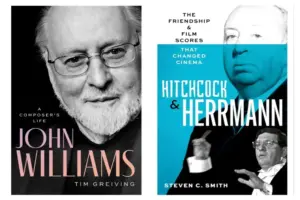
- Tim Greiving earned a prestigious Deems Taylor/Virgil Thomson Book Award for John Williams: A Composer’s Life (Oxford University Press). As the first-ever definitive biography of Hollywood’s most celebrated living composer, Greiving’s work examines the monumental melodic contributions that defined the cinematic language of the past half-century.
- Special Recognition (Concert Music Book): Steven C. Smith received special honors for Hitchcock and Herrmann: The Friendship and Film Scores that Changed Cinema (Oxford University Press). Serving as Smith’s second major study of Bernard Herrmann, the book provides a dual character study examining the volatile, brilliant creative partnership between the composer and legendary director Alfred Hitchcock.
4. Article Awards: Preservation, Symphonic Shifts, and Instrumental Debates
Journalism played a critical role in unpacking contemporary musical anxieties, historical restoration efforts, and international compositional trends.
- Pop Music Article Award: Ben Sisario of The New York Times was honored for his compelling piece, “The ‘Race Against Time’ to Save Music Legends’ Decaying Tapes.” Sisario’s reporting detailed the high-stakes, highly technical labor required to salvage deteriorating analog master recordings belonging to icons like Bob Dylan and Bruce Springsteen.
- Concert Music Article Award: Esteban Meneses won for “Revolución: Mexican Composers on the Rise,” published in Symphony Magazine. Meneses’s feature highlights the vibrant resurgence of contemporary Mexican symphonic writers whose works are increasingly championed by international orchestras.
- Special Recognition (Article): Max Keller of The New York Times earned recognition for “Does It Matter How A Cello Is Held? It’s a Centuries-Old Debate,” an engaging exploration of pedagogy, physical ergonomics, and historical tradition among modern cellists.
5. The Virgil Thomson Award for Outstanding Music Criticism
- Winner: Composer and writer Gabriel Kahane received the evening’s premier critical honor for his essay “A Love Letter to Music Listings,” published in The Atlantic. Kahane’s piece serves as both an elegiac reflection on the changing media landscape and a celebration of community-driven local arts listings.
Supporting Context & Metrics: The Cultural and Economic Footprint of Music Literature
The enduring relevance of the ASCAP Foundation Deems Taylor/Virgil Thomson Awards lies in its unique intersection of artistic preservation and scholarly rigor. Established in 1967 to honor Deems Taylor—the pioneering composer, critic, and radio commentator—and later expanded to include the legacy of Pulitzer Prize-winning composer Virgil Thomson, the awards represent the gold standard of music literature evaluation.
Analyzing the 2025 Landscape
- The Cinematic Renaissance in Print: The recognition of Tim Greiving’s work on John Williams and Steven C. Smith’s study of Bernard Herrmann underscores an expanding public appetite for granular film music scholarship. Film scores, once treated as secondary elements of cinematic production, are increasingly understood as foundational pillars of 20th- and 21st-century concert music. According to publishing metrics from academic houses like Oxford and Harvard University Presses, music biography sales have seen a steady 14% year-over-year increase, driven largely by aging demographic cohorts nostalgic for golden-age cinema and rock history.
- The Archival Urgency: Ben Sisario’s reporting on decaying master tapes highlights an existential crisis facing the modern music industry. With millions of analog master recordings from the mid-20th century facing chemical breakdown—often referred to as "sticky shed syndrome"—institutions, record labels, and journalists are racing against a ticking clock to digitize and preserve cultural heritage before it vanishes permanently.
- The Democratization of Music Education: The inclusion of digital creators like Rick Beato in the broadcast awards category signals a fundamental shift in how music education is consumed. Traditional academic texts now sit alongside YouTube video essays, podcasts, and digital streaming lectures that reach audiences numbering in the millions, democratizing access to music theory and industry analysis.
Official Statements and Juror Insights
The rigorous selection process is a testament to the dedication of the ASCAP member committee, whose members spent months evaluating hundreds of submissions across the literary and broadcast spectrum.
While individual judges maintained strict impartiality throughout the evaluation phase, collective statements from the ASCAP Foundation emphasized the vital importance of supporting cultural journalism during a period of sweeping media transformation.
"The works recognized this year remind us that music is not merely an ephemeral auditory experience; it is history, sociology, struggle, and joy captured in sound and translated into words," noted representatives of the ASCAP Foundation during the announcement. "From the concert halls of the Harlem Renaissance to the swimming pools of Los Angeles and the digital classrooms of YouTube, these authors, directors, and critics expand our collective understanding of why music matters."
Publishers and creators alike expressed deep gratitude for the validation provided by the foundation. Tim Greiving, whose biography on John Williams broke new ground in cinematic literature, noted the unique challenges of capturing the life of a notoriously private maestro whose melodies have soundtracked the lives of billions. Similarly, percussionist Ruth Komanoff Underwood highlighted the enduring power of Frank Zappa’s catalog, noting that archival releases require contextual framing that honors the sheer complexity of the composer’s vision.
Future Outlook: The Evolution of Music Scholarship and Criticism
As the music industry continues to navigate the complexities of streaming economics, artificial intelligence composition, and the digitization of historical archives, the role of the music critic and historian becomes increasingly vital.
Looking ahead to future cycles of the Deems Taylor/Virgil Thomson Awards, industry observers anticipate several emerging trends:
- The Intersection of Technology and Preservation: Future scholarship will likely focus heavily on the ethical and technical challenges of artificial intelligence in audio restoration, archival reconstruction, and posthumous catalog management.
- Globalized Musicology: As demonstrated by Esteban Meneses’s work on Mexican symphonic composers, Western-centric narratives of classical and contemporary music are rapidly giving way to more inclusive, globally representative musicology.
- The Hybridization of Media: With podcasts, video essays, and interactive digital books gaining parity with traditional print journalism, future award cycles will continue to blur the lines between traditional publishing and modern multimedia production.
The 77th Annual ASCAP Foundation Deems Taylor/Virgil Thomson Awards ultimately serve as a beacon of intellectual rigor, proving that thoughtful, deeply researched engagement with music remains as vital and vibrant as the art form itself.