ATHENS — In a bold regulatory move that places the country at the vanguard of the global digital safety debate, the Greek parliament has officially passed sweeping legislation banning children under the age of 15 from accessing mainstream social media platforms. Spearheaded by Prime Minister Kyriakos Mitsotakis and championed as a "difficult but necessary" intervention, the bill establishes an unprecedented framework for youth protection within the European Union.
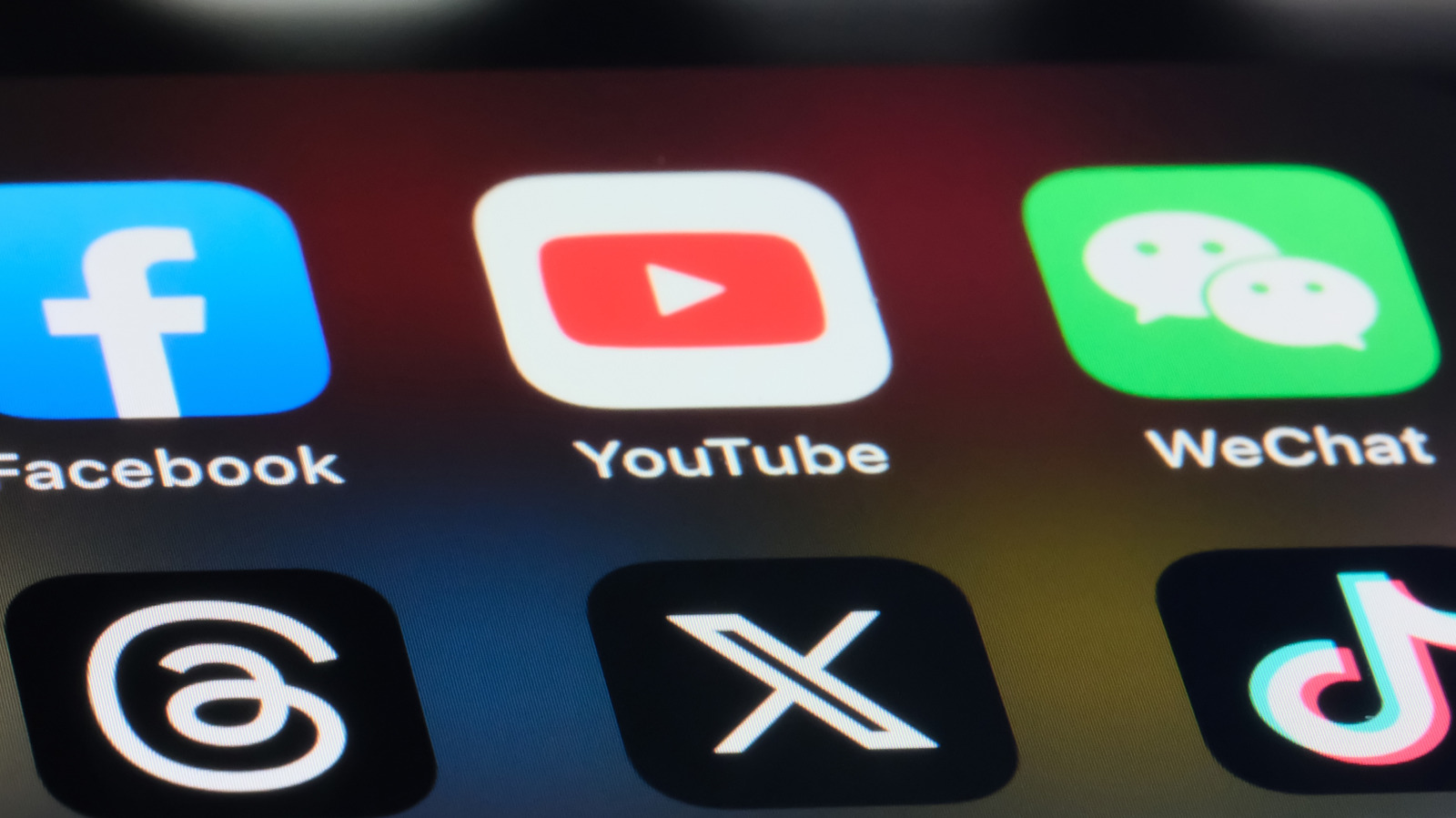
With the legislation now officially ratified, the enforcement mechanisms will come into full effect on January 1, 2027. The law targets dominant digital ecosystems—including TikTok, Instagram, Facebook, and X (formerly Twitter)—and places the legal burden of compliance directly onto tech conglomerates. Platforms will be legally mandated to deploy robust, proportionate, and reliable age-verification protocols or face severe financial penalties enforced via the European Union’s expansive Digital Services Act (DSA).
As governments worldwide grapple with the escalating mental health crisis among adolescents, rampant cyberbullying, and algorithmic radicalization, Greece’s legislative action represents one of the most aggressive state-level crackdowns on youth digital consumption to date. By bridging the gap between domestic policy and overarching European digital frameworks, Athens has signaled that it is no longer willing to wait for Brussels to forge a consensus, setting a high-stakes precedent for the rest of the continent.
Executive Overview: The Anatomy of a Digital Crackdown
The newly minted Greek law represents a fundamental shift in how democratic governments view the digital autonomy of minors. Historically, internet regulation has focused on data privacy, copyright enforcement, and the removal of illicit content. However, the Greek parliament’s recent vote shifts the paradigm toward public health and developmental welfare, treating addictive digital algorithms with the same regulatory severity traditionally reserved for substances like tobacco and alcohol.
Under the provisions of the new statute, minors under 15 will be legally barred from maintaining accounts on major social networking sites. To ensure compliance, the legislation introduces a sophisticated technological infrastructure anchored by state-backed applications: Kids Wallet and Gov.gr. These applications are designed to pair directly with a child’s mobile device to block unauthorized access while safeguarding user privacy through privacy-preserving cryptographic protocols known as "age tokens."
Despite fierce resistance from domestic minority parties—who raised concerns over overreach, technical feasibility, and civil liberties—Prime Minister Mitsotakis leveraged his parliamentary majority to push the legislation across the finish line. The law enjoys robust backing from the Greek electorate, building upon a well-received 2024 ban on mobile phones in classrooms.
As Greece prepares for the 2027 rollout, international policymakers are watching closely. The Greek administration has made no secret of its broader geopolitical ambition: to pressure the European Commission and member states into adopting a unified, bloc-wide standard for youth digital safety.
Detailed Chronology: From Concept to Law
The path to Greece’s sweeping social media ban has been meticulously orchestrated, moving swiftly from executive announcement to parliamentary reality over the span of several months.
Phase One: Laying the Groundwork (2024)
The ideological foundation for the current ban was laid well before the social media legislation was drafted. In 2024, the Greek government successfully implemented a comprehensive ban on mobile phones in all primary and secondary schools across the country. Designed to combat plummeting attention spans and restore classroom discipline, the policy served as a vital testing ground for public sentiment regarding state intervention in youth technology use. Buoyed by favorable public response and encouraging educational outcomes, Prime Minister Mitsotakis’s administration began quietly consulting with legal scholars, child psychologists, and digital rights experts regarding the feasibility of an outright ban on external social media platforms.
Phase Two: Official Announcement and Executive Vision (Early 2026)
Earlier this year, Prime Minister Mitsotakis shocked the tech sector by officially announcing plans to prohibit children under 15 from accessing social networks. Acknowledging the friction the policy would inevitably cause, Mitsotakis framed the initiative as an unavoidable duty of the state to protect vulnerable minds from predatory business models. The announcement immediately ignited a firestorm of debate across European media outlets, contrasting sharply with the European Commission’s historically hands-off approach to platform regulation.
Phase Three: Parliamentary Battle and Legislative Ratification (Late 2026)
As the drafted bill moved through the Hellenic Parliament in late 2026, it faced fierce headwinds. Opposition minority parties vocalized strong resistance, arguing that the ban infringed upon digital freedoms and would inevitably drive tech-savvy youth toward unregulated, more dangerous corners of the dark web or peer-to-peer messaging applications.
Recognizing the existential urgency of the issue, Prime Minister Mitsotakis utilized his majority government to override the opposition. Following intensive debates and minor technical adjustments regarding data security, the parliament officially passed the bill into law, establishing the hard deadline of January 1, 2027, for full implementation.
Supporting Context & Metrics: The Global Digital Landscape
Greece’s legislative leap does not occur in a vacuum; it is part of a rapidly evolving global movement to shield children from the adverse psychological impacts of hyper-connected environments.
The Australian Precedent and Technical Hurdles
Globally, Australia made history as the first nation to enact a comprehensive social media ban for children. However, Australia’s rollout has underscored the immense logistical complexities inherent in age-verification technologies. Tech platforms have repeatedly argued that accurately verifying a user’s age without requiring invasive biometric data or government-issued identification poses a near-impossible engineering puzzle.
Learning from Australia’s early friction, Greek officials have structured their enforcement mechanism around decentralization and data minimization. Through the state-backed Kids Wallet and Gov.gr apps, Greece aims to utilize "age tokens"—cryptographic credentials that verify whether a user meets the age threshold without transmitting sensitive personal identities to third-party tech giants like Meta, ByteDance, or X.
The European Regulatory Framework
At the continental level, the European Commission recently introduced the EU Kids Act, which proposes restricting social media access for children under 13. However, Greece’s legislation goes a step further by raising the threshold to 15, reflecting a growing consensus among developmental psychologists that early adolescence remains a critical, highly vulnerable window for identity formation and emotional regulation.
Furthermore, any failure by social media corporations to implement these age-verification mandates will not be treated lightly. Penalties will be directly tied to the European Union’s Digital Services Act (DSA), meaning non-compliant platforms could face astronomical global fines reaching up to six percent of their annual worldwide turnover.
Official Statements and Political Discourse
The passage of the Greek law has sparked intense commentary from government officials, technology advocates, and child welfare experts.
Dimitris Papastergiou, Greece’s Minister of Digital Governance and Artificial Intelligence, defended the administration’s aggressive timeline during a press briefing following the vote:
"It would have been very easy to do absolutely nothing today and wait for the perfect European law. But the challenge is here. Children are sinking into the internet every day, and I believe a responsible government must do what it is obliged to do."
Addressing concerns surrounding data privacy and government surveillance—a primary criticism lobed by opposition parties—Papastergiou emphasized that the infrastructure powering the Kids Wallet and Gov.gr applications was deliberately engineered to protect user privacy.
"These apps are designed to protect privacy and minimize data collected by using age tokens that can confirm someone’s age while minimizing the disclosure of their personal data," Papastergiou noted, attempting to assuage fears of state overreach.
Prime Minister Mitsotakis has consistently framed the domestic legislation as a strategic catalyst for broader international reform. In previous statements leading up to the vote, Mitsotakis stressed that his government’s ultimate "goal is to push the European Union in this direction as well," hoping to transform Greek policy into a continent-wide blueprint.
Future Outlook: Challenges and Horizons toward 2027
As the countdown to January 1, 2027, begins, the Greek government faces a monumental implementation challenge. The intervening months will require unprecedented cooperation between the Greek Ministry of Digital Governance, domestic telecommunications providers, and multinational technology conglomerates.
Technical and Behavioral Obstacles
Critics of the law remain skeptical about its practical efficacy. Cybersecurity experts warn that technologically adept teenagers will inevitably find workarounds—such as Virtual Private Networks (VPNs) or foreign account registration—to bypass regional age-verification blocks. Furthermore, educators and mental health professionals point out that restricting access to mainstream social media platforms without simultaneously providing alternative social outlets and digital literacy education may simply drive youth underground into less moderated digital spaces.
A Watershed Moment for Big Tech
For social media giants, the Greek law represents a troubling regulatory domino. If Greece successfully operationalizes its age-verification framework without suffering catastrophic economic or political blowback, other European nations may feel emboldened to bypass sluggish EU-wide legislative processes and enact their own sovereign bans.
Ultimately, Greece’s under-15 social media ban marks a definitive turning point in the modern digital age. The era of the unregulated internet playground for children is rapidly drawing to a close. Whether Athens’ bold gambit proves to be a successful model for global public health or an unenforceable administrative hurdle will depend entirely on the execution of its technological infrastructure in the months leading up to 2027.