Executive Overview: A Paradigm Shift in Digital Commerce
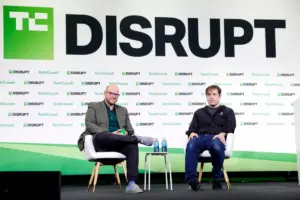
The internet as we have known it for the past three decades is approaching a definitive inflection point. At the 2026 New York Times DealBook Summit, Microsoft CEO Satya Nadella issued a profound warning: the era of the "human web"—a landscape defined by passive browsing, human-driven search queries, and display-ad-based monetization—is rapidly ceding ground to an "agentic web."
In this emerging paradigm, autonomous AI agents act as intermediaries between users and the vast expanse of digital services, executing tasks, making transactions, and synthesizing information without the constant oversight of a human user. Nadella posits that this shift is not merely technological; it is an economic earthquake. As AI agents begin to navigate the digital landscape, the traditional "aggregator" business models that have sustained tech giants for years face an existential threat. For companies reliant on high-volume traffic and click-through advertising, the transition to an agent-driven ecosystem necessitates a radical pivot from eyeballs to transactions.
Detailed Chronology: The Evolution of Web Interaction
To understand the gravity of Nadella’s remarks, one must look at the history of digital gatekeepers. The internet’s evolution has always been defined by how information is discovered and monetized.
- The Portal Era (1995–2000): The web began with centralized portals like Yahoo! and AOL. These services acted as the "front door" to the internet, organizing content into human-readable directories. Their business model was based on the "eyeball economy"—capturing as many users as possible to maximize banner ad impressions.
- The Search Era (2000–2020): Google disrupted the portal model by prioritizing intent. Instead of browsing a directory, users typed a query, and an algorithmic search engine delivered a curated result. This birthed the Cost-Per-Click (CPC) and keyword-advertising model that remains the backbone of the modern web.
- The Agentic Era (2026 and beyond): We are currently witnessing the birth of the third phase. In the agentic web, users no longer need to "search" or "browse" in the traditional sense. They provide an intent to an AI agent—e.g., "Find me a pair of running shoes under $150 and purchase them using my preferred settings"—and the agent handles the discovery, price comparison, and checkout process.
Nadella’s critique suggests that the aggregators who currently dominate the search and retail spaces are essentially fighting a losing battle against these agents, much like Yahoo! once struggled to adapt to the agility of Google’s search-driven model.
Supporting Context & Metrics: The Friction of Protectionism
The tension between AI agents and incumbent platforms was brought into sharp relief during the summit when the conversation shifted to Amazon’s aggressive stance against automated crawlers. Amazon, which has built its empire on a tightly controlled user experience, has actively moved to block AI agents from scraping its catalog or interacting with its checkout APIs.
The "Walled Garden" Dilemma
Amazon’s strategy is rooted in self-preservation. By allowing an AI agent to shop on its platform, Amazon loses the ability to present its own ads, track user behavior within its own ecosystem, and control the brand journey. However, Nadella argues that this "walled garden" approach is inherently fragile.
- The Transactional Pivot: In an agent-dominated world, the value moves away from the "click" and toward the "fulfillment." If a platform refuses to accommodate agents, it risks being bypassed entirely.
- The Competitor’s Opportunity: Nadella explicitly cited Shopify as a potential beneficiary. If Amazon chooses to exclude agents, Shopify—which provides the infrastructure for millions of independent merchants—could choose to lean into open integration. By allowing agents to interface with its stores, Shopify could effectively turn the entire ecosystem of independent e-commerce sites into a single, agent-accessible marketplace.
The Economic Metrics of Disruption
The transition from an "eyeball" economy to a "transactional" economy carries significant fiscal risk for firms like Alphabet, Meta, and Amazon.
- Ad-Inventory Degradation: If an agent solves a user’s problem instantly, there is no "results page" to serve ads on. The multi-billion dollar search ad industry is predicated on the user spending time looking at results.
- The Cost of Integration: Companies that embrace agents must move toward API-based commerce, where they are paid for the transaction rather than the advertising real estate. This transition requires a complete overhaul of marketing budgets and data analytics.
Official Statements: "If You Don’t Accept the Agent, Someone Else Will"
Nadella’s rhetoric during the DealBook Summit was characterized by a rare level of candor. He framed the resistance to AI agents as a symptom of "incumbent’s trap"—a condition where leaders become so enamored with their current revenue streams that they ignore the writing on the wall.

"The current aggregators who have a business model which was for the human web will get, in some sense, reshuffled," Nadella stated. He emphasized that the "human web" was an era of passive interaction, whereas the "agentic web" is one of extreme utility.
Addressing the resistance from retail giants, he noted: "If you’re in love with a particular business model, you have to kind of scramble." His message was clear: The genie is out of the bottle. If a platform tries to lock the doors, the technology will simply route around them, potentially rendering those platforms obsolete in the eyes of the consumer who prizes convenience and speed above all else.
Future Outlook: Navigating the Post-Search Landscape
As we look toward 2027 and beyond, the technological and economic landscape will likely fragment into two distinct camps: the "Open-Agent" platforms and the "Closed-Loop" incumbents.
The Rise of Interoperability
We are likely to see the emergence of standardized protocols for agent-platform communication. Just as HTML allowed for the democratization of information, a new standard for "Agent-to-Commerce" (A2C) interaction may emerge. Platforms that adopt these standards will see an influx of automated traffic, while those that resist may find themselves in a digital silo, increasingly irrelevant to the modern, agent-empowered consumer.
The Shift in Marketing Strategies
For brands and retailers, the challenge will be to optimize for "agent-visibility" rather than "SEO." How does a brand ensure its products are recommended by an AI agent that is optimizing for price, reliability, and shipping speed? This will necessitate a move toward:
- Transparency: Providing structured, real-time data to agents.
- Reputation Management: Ensuring that the AI "thinks" highly of the brand based on historical performance.
- Transactional APIs: Moving away from traditional ad-spend toward direct integration with agent-facilitated payment systems.
Conclusion: The Unstoppable Tide
Satya Nadella’s intervention at the DealBook Summit serves as a final wake-up call for the tech industry. We are exiting the era of the "human-in-the-loop" internet and entering the era of "intent-as-a-service." While the incumbents currently hold the power of the gatekeepers, history suggests that no moat is wide enough to stop a technological tide as fundamental as the shift toward autonomous agency. Companies that choose to build bridges rather than walls will define the next generation of the global digital economy.
The question is no longer whether AI agents will reshape the internet, but which giants will survive the reshuffling and which will be left behind in the ruins of the human-centric web.