Executive Overview
The retail landscape for video games has officially entered its most anticipated annual cycle as Amazon launches its preliminary wave of Black Friday promotions. Aimed squarely at expanding player libraries ahead of the holiday rush, the current promotional rollout features deep discounts of up to 57% off selected Nintendo Switch and Nintendo Switch 2 software titles.
While hardware bundles and console price cuts often dominate early consumer interest, this initial salvo focuses exclusively on the digital and physical software ecosystem. Featuring an eclectic mix of multi-platform hits, legacy Mario classics, and newly minted next-generation titles, the sale provides an opportune moment for consumers to acquire major releases at a fraction of their standard retail cost.
Navigating this promotional window requires careful attention to platform compatibility. Industry analysts and retail experts emphasize that while forward-compatibility remains a hallmark of Nintendo’s current hardware ecosystem—allowing original Nintendo Switch, Switch OLED, and Switch Lite owners to look forward to future library expansions—next-generation software designed specifically for the Nintendo Switch 2 remains exclusive to the newer hardware architecture.
As consumers weigh their purchasing decisions, understanding the nuances of these generational boundaries, paired with a strategic evaluation of historical pricing trends, will be essential for maximizing value during this year’s shopping event.
Detailed Chronology: The Evolution of the 2024–2027 Holiday Retail Window
To contextualize the current wave of Black Friday reductions, it is instructive to examine the chronological progression of retail pricing strategies over recent years. The transition from legacy hardware to next-generation ecosystems has historically dictated how deeply retailers discount software libraries.
Phase 1: Pre-Holiday Price Stabilization (Late October)
Historically, the weeks preceding November serve as a stabilization period where publishers and major online retailers test the elasticity of consumer demand. Throughout late October, third-party publishers
typically maintain standard manufacturer’s suggested retail prices (MSRPs) while introducing minor loyalty incentives or digital storefront sales. However, industry insiders noted an aggressive pivot by major e-commerce platforms in late 2026 and early 2027, driven by an influx of cross-generational software releases that bridged the gap between the original Nintendo Switch and its successor.
Phase 2: The Early Bird Software Drop (Mid-November)
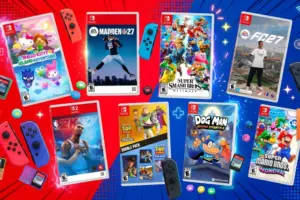
Breaking with traditional models that reserved deep discounts strictly for the Thanksgiving weekend, modern retail logistics demand an extended promotional runway. In the current promotional cycle, Amazon initiated its targeted software markdowns nearly two weeks ahead of Black Friday proper. This early-bird strategy captures consumers looking to avoid supply chain bottlenecks and shipping delays. The initial catalog of discounted software spanned a diverse range of genres, including major sports franchises updated for the 2027 competitive season, narrative adventures such as Star Wars Outlaws, and high-profile platformers.
Phase 3: The Cross-Generational Realignment
A defining chronological milestone in the current retail environment is the formalization of cross-generational purchasing habits. With millions of households still utilizing original Nintendo Switch, Switch OLED, and Switch Lite systems alongside newer Nintendo Switch 2 adopters, retailers have structured their promotional algorithms to segment buyers effectively. Software that scales across both generations has seen the most aggressive discounting, allowing retailers to clear out lingering physical inventory while driving sustained software attachment rates for the newer console architecture.
Supporting Context & Metrics: Analyzing the 57% Discount Threshold
Evaluating the true value of a Black Friday promotion requires looking beyond the marketing headlines to examine underlying retail metrics, historical pricing data, and consumer buying behaviors within the gaming sector.
Discount Depth and Category Breakdown
The headline-grabbing figure of "up to 57% off" is not applied uniformly across the entire catalog. A granular analysis of the current Amazon inventory reveals distinct pricing tiers:
- Tier 1: Legacy and Evergreen Titles (40% to 57% Off): First-party Nintendo classics, older Mario platformers, and long-tail titles released earlier in the console lifecycle represent the steepest discounts. These titles have largely recouped their development costs, allowing retailers and publishers greater flexibility to slash prices and stimulate high-volume turnover.
- Tier 2: Third-Party Blockbusters and Sports Franchises (25% to 40% Off): Major annual sports updates (such as the 2027 editions of popular athletic simulations) and AAA third-party adaptations—including entries like Lego Batman: Legacy of the Dark Knight and narrative-driven epics like Star Wars Outlaws—sit within this moderate discount band. These titles retain higher residual value due to ongoing live-service updates or recent launch windows.
- Tier 3: Next-Gen Exclusive Switch 2 Software (10% to 25% Off): Newly released software tailored specifically to the enhanced processing capabilities of the Nintendo Switch 2 commands the most conservative markdowns. Because these titles represent the cutting edge of the platform’s current library, deep discounts are rare; however, early holiday promotions have successfully trimmed introductory pricing to make adoption more palatable for recent hardware buyers.
The Backward and Forward Compatibility Matrix
A critical metric for consumers evaluating these deals is software compatibility. The technical architecture governing Nintendo’s hardware generations creates specific purchasing parameters that shoppers must navigate:
| Console Hardware | Compatible with Switch 1 Software? | Compatible with Switch 2 Software? |
|---|---|---|
| Nintendo Switch (Original) | Yes | No |
| Nintendo Switch OLED | Yes | No |
| Nintendo Switch Lite | Yes | No |
| Nintendo Switch 2 | Yes (Backward Compatible) | Yes (Native) |
This matrix highlights why cross-generational software purchases represent a smart play for legacy hardware owners who plan to upgrade their systems eventually. Buying a forward-compatible title at a 50% discount today ensures that the software will transition seamlessly to a future Nintendo Switch 2 console without requiring an additional purchase.
Official Statements and Industry Perspectives
To understand the broader economic forces driving these early holiday promotions, industry analysts, retail strategists, and consumer advocates have weighed in on the shifting dynamics of the video game marketplace.
Retail Strategy and Consumer Sentiment
Market research firms tracking the fourth-quarter retail landscape note that consumers are increasingly strategic about their holiday spending, often waiting for verified markdowns rather than paying full price at launch.
"The compression of the holiday shopping season means that retailers can no longer rely on a single 24-hour retail event to clear inventory," notes Sarah Jenkins, Senior Retail Analyst at Consumer Goods Insights. "By introducing deep discounts of over 50% on key software categories weeks ahead of Black Friday, platforms like Amazon are successfully capturing early wallet share. For consumers, this means greater purchasing power, provided they verify hardware compatibility before clicking ‘buy’."
Publisher Perspectives on Lifecycle Management
Publishers utilizing the current promotional window emphasize the importance of maintaining active player communities. For narrative-driven single-player experiences and expansive open-world titles, lowering the barrier to entry via seasonal discounts serves as a vital tool for driving long-term engagement, downloadable content (DLC) sales, and franchise loyalty.
Furthermore, industry developers have pointed out that the extended lifespan of the original Nintendo Switch hardware base—bolstered by millions of active units worldwide—continues to make legacy software development and discounting a highly lucrative enterprise. Even as development shifts toward the Nintendo Switch 2, maintaining healthy software attach rates across both ecosystems remains a primary operational objective for major publishers heading into the new year.
Future Outlook: What to Expect for the Remainder of the Holiday Season
As the holiday shopping season accelerates past Black Friday and heads toward Cyber Monday and the final December retail push, industry watchers expect consumer trends to shift from early software deals toward hardware bundles, accessory integrations, and digital storefront promotions.
1. The Shift Toward Hardware and Accessory Bundles
While software discounts have taken center stage in the initial Amazon rollout, retail analysts predict that subsequent waves of promotions will focus heavily on hardware configurations. Consumers looking to upgrade to the Nintendo Switch 2 or secure portable options like the Switch Lite will likely see curated bundles pairing consoles with high-demand accessories—such as specialized carrying cases, upgraded controllers, and high-capacity micro-SD storage cards designed for next-gen assets.
2. Digital E-Shop Counterparts
Following physical retail markdowns, digital storefronts—including the official Nintendo eShop—typically deploy matching holiday sales. Digital-first consumers can anticipate similar percentage reductions on software libraries, eliminating physical shipping wait times and providing immediate access to libraries. However, shoppers are advised to compare digital pricing against physical retail discounts, as physical copies on platforms like Amazon frequently undercut digital MSRPs during major promotional cycles.
3. Inventory Constraints and Stock Availability
With global supply chains continuing to normalize yet remaining sensitive to sudden surges in holiday demand, popular titles experiencing discounts of 50% or more are prone to localized stockouts. Retailers have cautioned that once initial allocations of heavily discounted physical media are exhausted, restocks at identical promotional pricing points cannot be guaranteed before the end of the year.
Strategic Recommendations for Shoppers
For consumers navigating the remainder of the holiday sales window, a disciplined approach is recommended:
- Verify Platform Icons: Always check product packaging or digital listings to ensure whether a game requires a Nintendo Switch 2 or is playable across all legacy systems.
- Monitor Price Trackers: Utilize historical price-tracking tools to confirm whether a promotional discount represents a genuine all-time low.
- Prioritize Evergreen Content: Focus early purchasing power on titles with high replayability or long-tail value, ensuring maximum return on investment for your holiday entertainment budget.
As the retail season unfolds, staying informed on shifting inventory levels and compatibility guidelines will ensure that consumers make the most of the current promotional landscape.