Executive Overview
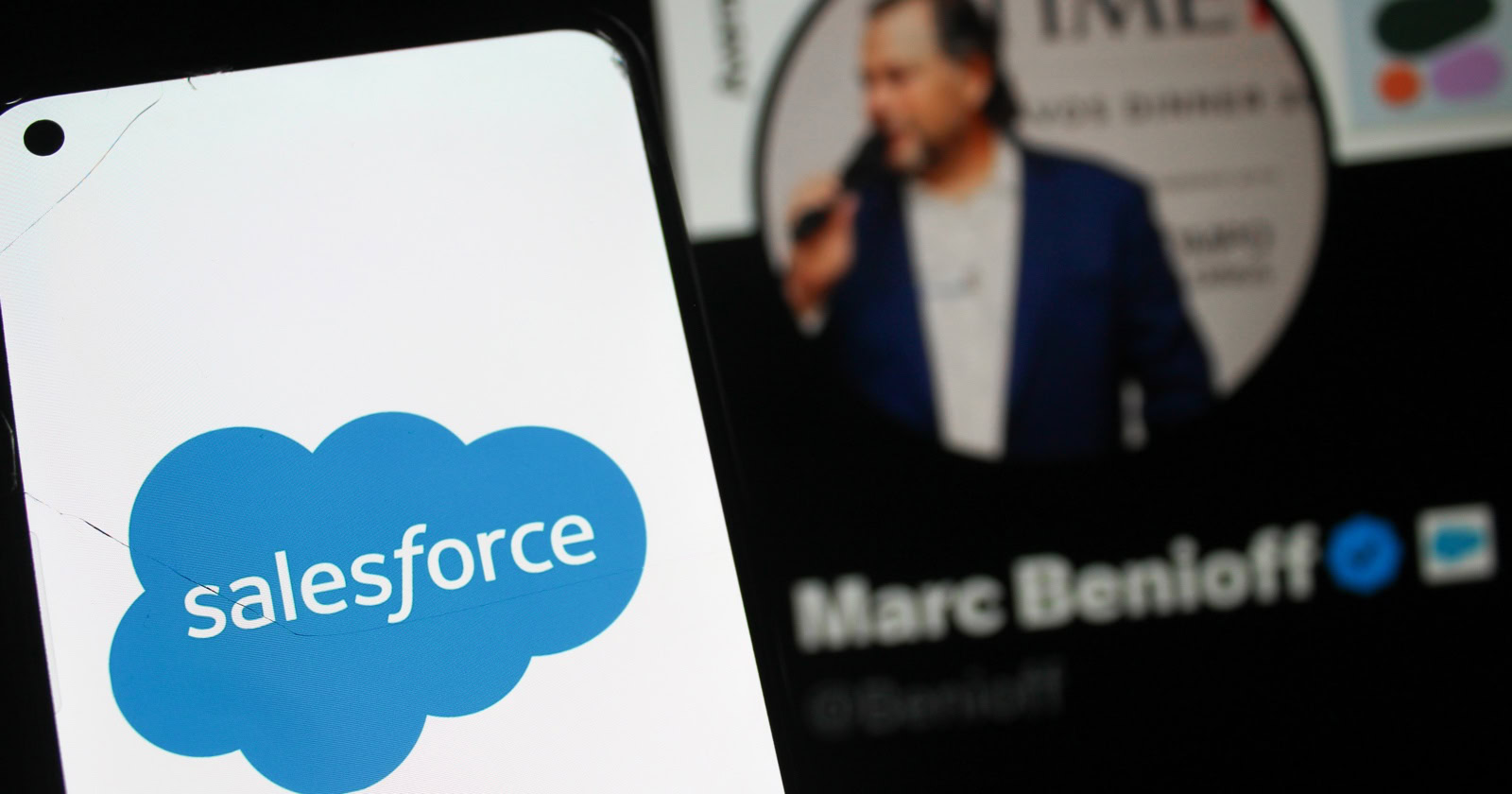
The intersection of artificial intelligence and digital marketing has long been fraught with hyperbole, shifting paradigms, and existential anxiety for webmasters. However, few recent developments have crystallized this friction quite as starkly as a social media post published by Salesforce CEO Marc Benioff on November 18. Declaring a definitive "Goodbye SEO" on X (formerly Twitter), Benioff grabbed industry headlines by promoting Palmata—an AI-driven analytics and simulation tool designed to track how brands are perceived and recommended within generative AI engines like OpenAI’s ChatGPT, Anthropic’s Claude, and Google Gemini.
Benioff’s declaration played into a growing narrative that traditional search engine optimization (SEO) is dying. His thesis was simple yet disruptive: modern consumers are bypassing traditional search engine results pages (SERPs) entirely. Instead of issuing a keyword query and navigating through a list of blue links, users are directly asking AI conversational agents for purchasing advice. According to Benioff, this behavioral shift results in a troubling paradigm for digital marketers: "No click. No referral. Nothing in your analytics."
Yet, beneath the surface of this bold marketing stunt lies a fascinating corporate contradiction. While Salesforce’s chief executive publicly buried SEO on social media, official documentation published by Salesforce paints an entirely different picture. A dedicated SEO and Answer Engine Optimization (AEO) guide written by Salesforce’s own Senior Director of SEO, Graham Hardt, explicitly states that SEO "is still the foundation" and that traditional search optimization is "not going away." Furthermore, original product documentation for Palmata—which entered the Salesforce ecosystem via its September 1 acquisition of Contentful—similarly acknowledges that traditional SEO frameworks remain essential for organizational visibility.
This report investigates the fallout of Benioff’s provocative statements, examines the technical and strategic reality of balancing SEO with emerging AEO tools, details the sharp counterarguments from industry-leading search professionals, and analyzes what this ideological split means for the future of digital marketing and enterprise software.
Detailed Chronology: From Contentful to Salesforce and the "Goodbye SEO" Tweet
To understand the current controversy, one must trace the timeline of Palmata’s emergence and the corporate lineage that brought it into the Salesforce fold.
June 2025: The Genesis of Palmata
Palmata was originally introduced to the market in June by Contentful. Conceived as a response to the rapid rise of generative engine optimization, the tool was engineered to address a blind spot for enterprise brands: visibility inside LLM (Large Language Model) outputs. Jason McGhee, head of product and engineering for Palmata at the time, published an introductory blog post emphasizing that while the digital landscape was shifting toward conversational interfaces, traditional SEO had historically provided organizations with a "practical framework for improving visibility." McGhee explicitly noted that foundational SEO work "remains essential" even as new AI tracking metrics emerge.
September 1, 2025: The Salesforce Acquisition
Salesforce completed its definitive acquisition of Contentful on September 1, absorbing its technological assets, intellectual property, and personnel. With this acquisition, Palmata transitioned into the Salesforce product ecosystem, eventually becoming integrated into Salesforce Marketing Cloud as both a standalone offering and an embedded module.
September 11, 2025: The Internal Dissonance Emerges
Just ten days after absorbing Contentful, Salesforce published a comprehensive resource for digital marketers titled the Salesforce Guide to SEO and AEO. Authored by Graham Hardt, the company’s Senior Director of SEO, the guide was targeted at new businesses navigating the modern digital ecosystem. Buried in its text was a foundational truth that would later directly contradict the company’s chief executive: Hardt asserted that SEO "isn’t going away" and that "SEO is still the foundation" of digital visibility. Ironically, Palmata’s official product pages and FAQ sections directly linked to this guide as a foundational resource for understanding modern visibility layers.
November 18, 2025: The Tweet Heard Round the SEO World
The cognitive dissonance reached a boiling point on November 18 when Marc Benioff took to X. In a post designed to drive market awareness for Palmata, Benioff proclaimed:
“Goodbye SEO. Customers aren’t searching anymore—they’re asking Claude, ChatGPT, Gemini, and other AI assistants which brands they should purchase. No click. No referral. Nothing in your analytics.”
The tweet immediately ignited a firestorm across the digital marketing community. While intended as a brilliant product pitch for Palmata—which allows businesses to monitor AI brand sentiment, receive optimization recommendations, and simulate algorithmic changes before publishing—it triggered a fierce pushback from veteran SEO practitioners who viewed the "Death of SEO" narrative as fundamentally flawed, misleading, and counterproductive.
Official Statements and Corporate Dissonance
The friction between Benioff’s public pronouncements and Salesforce’s official educational content highlights a classic tension in the tech industry: corporate executives leaning into sensationalist AI marketing to drive software sales, while enterprise practitioners and technical documentation teams maintain a grounded, pragmatic view of underlying mechanics.
What Salesforce’s Guide Actually Says
The Salesforce Guide to SEO and AEO attempts to harmonize traditional search practices with the realities of generative search. Rather than treating SEO and AEO as mutually exclusive disciplines, Salesforce’s official stance defines them as "two visibility layers for the same audience."
The guide outlines several key tenets:
- SEO as Infrastructure: Traditional technical, on-page, and off-page SEO creates the crawlable, authoritative web architecture that AI models scrape and index to train their datasets and formulate answers. Without robust SEO foundational elements, a brand’s digital footprint is effectively invisible to LLMs.
- AEO as the Consumer Interface: Answer Engine Optimization focuses on how brands are synthesized, cited, and recommended within conversational responses.
- Dual Metric Tracking: Enterprises are advised to monitor both sets of metrics—traditional organic traffic, rankings, and click-through rates alongside AI citation frequency, brand share of voice in LLM outputs, and sentiment analysis.
Despite these nuanced internal documents, Benioff’s public-facing statements bypassed this complexity, favoring a clean, disruptive narrative that framed AI search as a complete replacement for traditional web discovery.
Industry Backlash: How SEO Professionals Responded
Within minutes of Benioff’s post going live, prominent voices in the technical SEO and organic search communities took to social media to dissect, challenge, and ridicule the "Goodbye SEO" claim. The pushback centered on a fundamental misunderstanding: the erroneous belief that AI assistants operate in a vacuum independent of the traditional web.
Aleyda Solis: The Fundamentals Remain Unchanged
Aleyda Solis, world-renowned SEO and AI search consultant and founder of Orainti, posted a comprehensive rebuttal on X. Solis pointed out that generative AI search engines do not magically invent brand recommendations out of thin air; they rely heavily on structured data, authoritative third-party reviews, digital PR, and well-optimized web content.
"AI search relies on many of the same fundamentals as SEO," Solis wrote. "AI search optimization goes beyond traditional SEO, but it certainly doesn’t replace it."
Solis also drew a critical distinction between measurement and execution—a direct critique of tools like Palmata. While acknowledging that tracking AI visibility is valuable, she emphasized that "monitoring what AI platforms say about your brand and actually improving your visibility, recommendations, and business outcomes are very different things."
Pedro Dias: Redefining the Value Proposition
Pedro Dias, a technical SEO product manager and former Google engineer, offered a structural critique regarding how executive leadership perceives search marketing. Dias noted that SEO has historically suffered from an executive communication gap:
"SEO was never a topic that attracted the interest of decision makers. SEO isn’t traffic. It never has been."
Dias’s perspective suggests that executives like Benioff often conflate organic traffic (the surface-level metric of clicks) with market authority (the underlying digital footprint). Because traditional analytics packages fail to capture zero-click AI recommendations, executives panic, assuming the channel is dead—when in reality, the mechanics of how brands earn trust have simply evolved.
Lily Ray and Eli Schwartz: Market Oversaturation and Tool Fatigue
Other industry leaders highlighted the commoditization of AI-washing in the tech sector. Lily Ray, founder of Algorythmic, replied directly to Benioff, noting that the rush to monetize AI visibility metrics has created a crowded, noisy market: "This gold rush already happened, and the market is already oversaturated."
Growth advisor and author Eli Schwartz echoed this sentiment, dryly observing that Benioff’s announcement simply introduced "yet another AEO tool in the mix" packaged inside enterprise marketing suites.
Supporting Context & Metrics: The Reality of AEO vs. SEO
To evaluate whether Benioff’s "Goodbye SEO" claim holds any water, one must examine how modern generative AI engines actually retrieve information and source their recommendations.
How AI Search Engines Source Information
When a user asks ChatGPT or Claude for the "best enterprise CRM software," the LLM does not perform real-time clairvoyance. Instead, it typically utilizes a combination of:
- Retrieval-Augmented Generation (RAG): The AI queries a search index (such as Bing or Google) in the background, fetches top-ranking web pages, and synthesizes the content. If a brand does not rank well organically or lacks a strong technical SEO footprint, it stands little chance of being retrieved by the RAG pipeline.
- Pre-trained Weights and Authority Mentions: LLMs heavily weigh consensus across authoritative third-party domains (e.g., G2, Capterra, Reddit, industry publications, and Wikipedia). Earning mentions on these platforms requires classic digital PR and off-page SEO strategies.
- Structured Data and Semantic Clarity: Schema markup, clear HTML hierarchy, and clean APIs allow AI crawlers to parse entity relationships accurately. This is fundamentally a technical SEO discipline.
The Metrics Dilemma
Benioff’s critique that AI search results yield "No click. No referral. Nothing in your analytics" is empirically true in terms of direct, last-click attribution. However, digital marketing has long been moving away from single-touch attribution models.
Just as brand awareness campaigns, television advertisements, and social media impressions shape consumer intent without generating immediate web traffic, AI recommendations act as a top-of-funnel influence engine. A user may not click a link inside a ChatGPT response immediately, but the AI’s endorsement of a brand creates a primed buyer who will later type the brand name directly into a browser address bar—a phenomenon known as branded search volume.
Therefore, treating SEO and AEO as adversaries ignores the reality that great AEO is downstream of great SEO.
Future Outlook: Navigating the Dual-Layer Visibility Era
As enterprises look toward the remainder of the decade, the debate sparked by Salesforce highlights an inevitable maturation phase in digital marketing. The era of optimizing solely for a single list of ten blue links on Google is undeniably evolving into a multi-channel discovery ecosystem.
Key Takeaways for Marketing Executives
- Reject the False Binary: Organizations that abandon traditional SEO in favor of exclusive AEO tooling will find their foundational web architecture collapsing. Without clean code, fast site speeds, robust backlink profiles, and crawlable content, AI engines will have nothing to ingest, index, or recommend.
- Embrace Multi-Layer Measurement: Tools like Salesforce’s Palmata and Marketing Cloud integrations will become standard for tracking brand sentiment and share of voice inside LLMs. However, these metrics must be synthesized alongside traditional KPIs like organic traffic, keyword rankings, and branded search growth.
- Optimize for Entity Authority: Because AI engines rely on semantic understanding and consensus across the web, PR, customer review management, and digital community engagement (such as Reddit and specialized forums) are now core components of technical search strategy.
Conclusion
Marc Benioff’s "Goodbye SEO" proclamation was undoubtedly an effective marketing hook designed to position Salesforce and its newly acquired Palmata tool at the bleeding edge of the AI revolution. Yet, Salesforce’s own internal literature exposes the rhetorical hyperbole of the claim. SEO is not dying; it is mutating. As search engines transform from indexers of documents into synthesizers of knowledge, the foundational principles of visibility remain intact—proving that while the interface has changed, the underlying architecture of digital trust is more critical than ever.