
For the vast majority of web users, entering a query online is synonymous with visiting Google. It has long been the default gateway for researching a potential purchase, verifying a fact, or catching up on breaking global news. This staggering reach is vividly reflected in the data: according to Statcounter figures from October 2026, Google commands an overwhelming 91.04% of worldwide search engine referrals.
Yet, the search engine you rely on out of sheer habit is not always the optimal tool for the job. Consider the last time you frantically needed a high-resolution image cleared for reuse, tracked down a webpage that had seemingly vanished into digital ether, or required a completely private, unprofiled way to comb the web. These are fundamentally distinct technical and informational hurdles, and forcing them through a single, standardized search box is rarely the most efficient path forward.

This friction is where alternative search engines and discovery tools carve out their indispensable niche. Some platforms offer granular control over privacy parameters and custom ranking filters, while others synthesize complex multi-source research into interactive conversations. Some pull together ultra-specialized scholarly or localized collections, or map out content optimized for entirely different regional markets. For digital marketers and SEO professionals, these functional divides explain why true brand visibility cannot be achieved by simply submitting a site map to an alternative engine and hoping for the best.
Exploring these alternatives does not mean abandoning Google entirely; rather, it is about expanding your digital toolkit. To help users find better answers—and businesses uncover new avenues for consumer discovery—we have collated and analyzed 21 alternative search engines and specialized discovery tools worth testing.
Executive Overview: The State of Search in 2026
The landscape of online discovery has undergone a profound structural shift. For nearly three decades, traditional keyword matching dominated the web. However, the maturation of generative AI, heightened consumer demand for data privacy, and the rise of platform-specific silos (such as social networks functioning as search engines) have fractured the monolithic search paradigm.
As of late 2026, search is no longer a race solely defined by who has the largest index of blue links. It is defined by intent alignment:
- Conversational Synthesizers (e.g., ChatGPT, Perplexity) translate queries into synthesized insights complete with inline citations.
- Privacy-First Intermediaries (e.g., DuckDuckGo, Startpage, Kagi) decouple search behavior from user tracking and advertising profiling.
- Specialized Vertical Platforms (e.g., Openverse, WolframAlpha, the Wayback Machine) bypass open-web text search altogether in favor of computation, archiving, or licensed media retrieval.
Understanding this fragmented ecosystem is critical not just for everyday web users seeking efficiency, but for SEO strategists and digital marketers trying to capture mindshare in an era where AI-driven and regional engines capture billions of monthly visits.
Detailed Chronology: How AI Rewrote the Rules of Discovery
The transformation of the modern search engine was accelerated by a series of rapid technological milestones that permanently altered consumer expectations:
- Late 2022 / Early 2023: The launch of ChatGPT ignited a global paradigm shift, proving that users preferred natural-language dialogue over rigid query strings.
- Early 2023: Reacting to the existential threat posed by conversational AI, Google leadership fast-tracked internal AI integration, culminating in the public rollout of Bard (later rebranded to Gemini) in March 2023.
- May 2024: Google introduced AI Overviews to its main U.S. search results pages, fundamentally changing how informational queries are displayed—and drastically altering click-through dynamics for publishers.
- 2025–2026: Google unveiled advanced iterations such as AI Mode and deeper Gemini integrations, while competitors like Perplexity, Microsoft (with Copilot Search), and Yahoo (with Scout) normalized AI-native, multi-source grounded answers.
This evolution explains why nearly every major search tool today blends traditional web indexing with generative summaries. The two formats—raw web links and synthesized AI overviews—now work in tandem to tackle complex research workflows.
The 21 Alternatives Worth Testing
To help navigate this expansive landscape, the following platforms are categorized by their core functionality, supported by estimated monthly web visit data (sourced via Similarweb for October 2026) and referral metrics.
(Note on usage figures: Entries are ordered within each section by estimated monthly web visits to the primary domain or subdomain. These metrics represent total website traffic—not unique users, isolated search queries, or mobile app activity. Statcounter percentages measure search referral share within specific geographic samples).
1. AI Search and Answer Engines
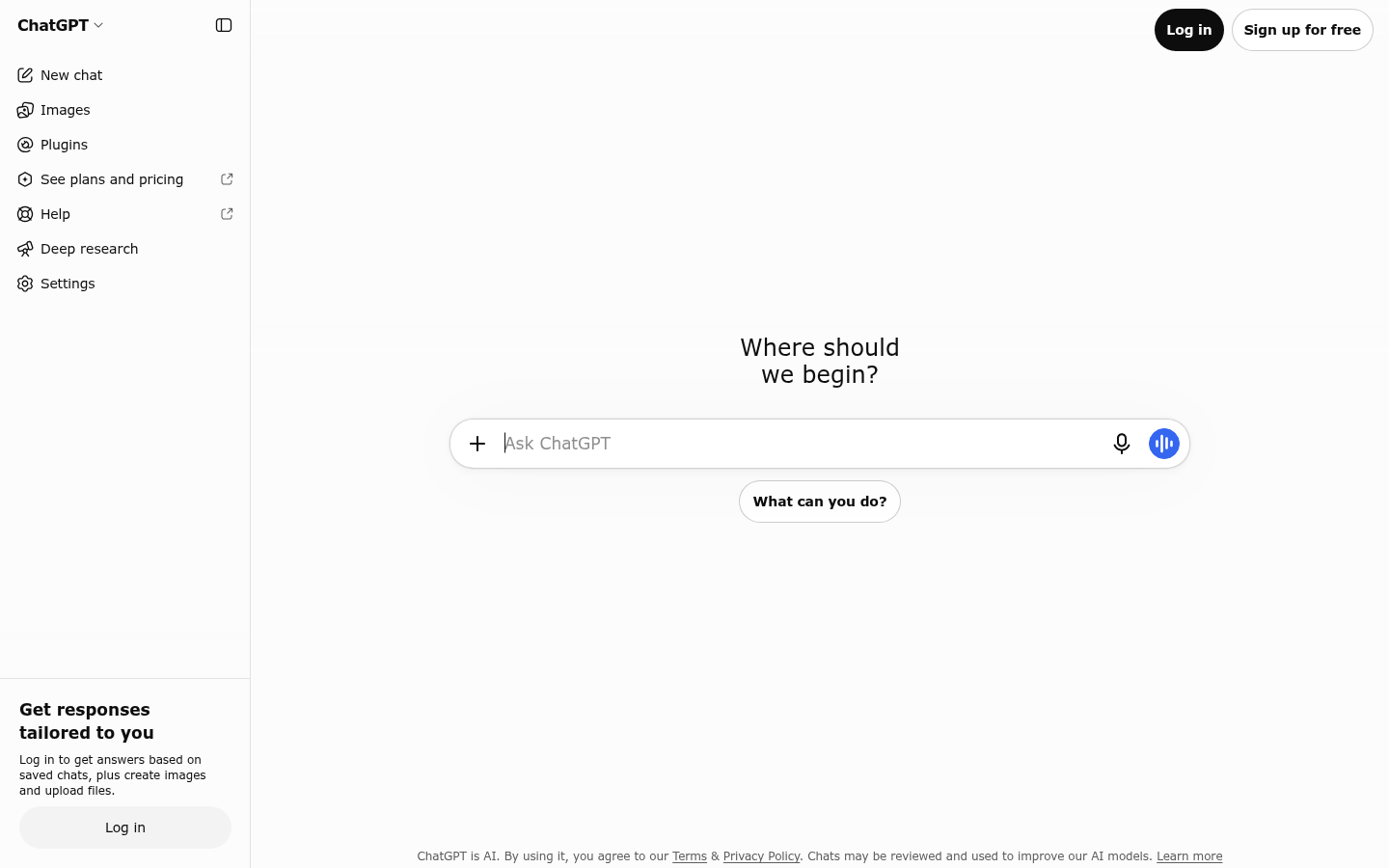
1. ChatGPT
- Estimated Monthly Web Visits: ~6 billion (to chatgpt.com, October 2026; covers total platform usage, not search alone).
- Best Use Case: Working through a multi-layered question with contextual follow-ups.
- What It Searches: Web retrieval mechanisms, including integrated search partners.
ChatGPT is invaluable when a query requires a fluid, evolving conversation rather than a static list of keywords. You can ask it to compare two philosophical approaches, clarify an obscure technical term, and immediately request recent real-world evidence without restarting your query. OpenAI’s documentation confirms that ChatGPT can retrieve current web information and append source links on both free and paid tiers. However, because it relies on third-party search providers under the hood, it is not an entirely independent web index. Always inspect its inline citations to verify claims.
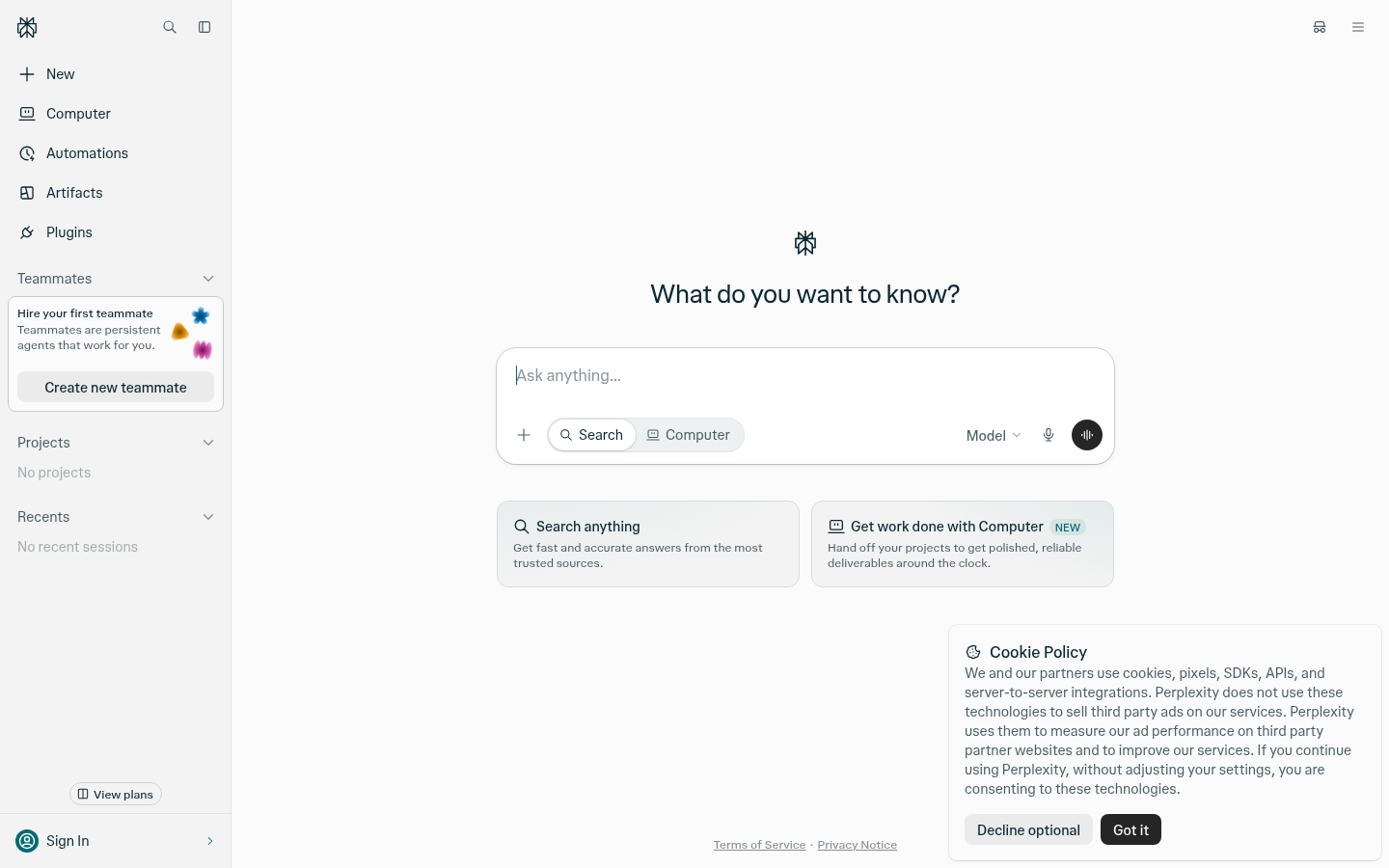
2. Perplexity
- Estimated Monthly Web Visits: ~88.3 million (to perplexity.ai, October 2026).
- Best Use Case: Gaining a comprehensive overview of a subject supported by a transparent trail of citations.
- What It Searches: Open web sources, with specialized academic or financial filtering tiers.
Perplexity places source-backed synthesis at the absolute center of the user experience. Its research-oriented approach allows users to bypass wading through endless lists of SEO-optimized articles, providing structured summaries immediately. Its Pro Search feature executes recursive, multi-step queries to cross-reference data.
Why SEO Experts Should Care: Dennis Goedegebuure notes that Perplexity serves as an exceptionally low-cost "test bench" for AI search optimization. Marketers can test high-value customer questions, inspect which domains are consistently cited, and audit how brand messaging and recently updated product facts appear in generative outputs—making it a vital tool for B2B buyer research visibility.
2. General Web Search
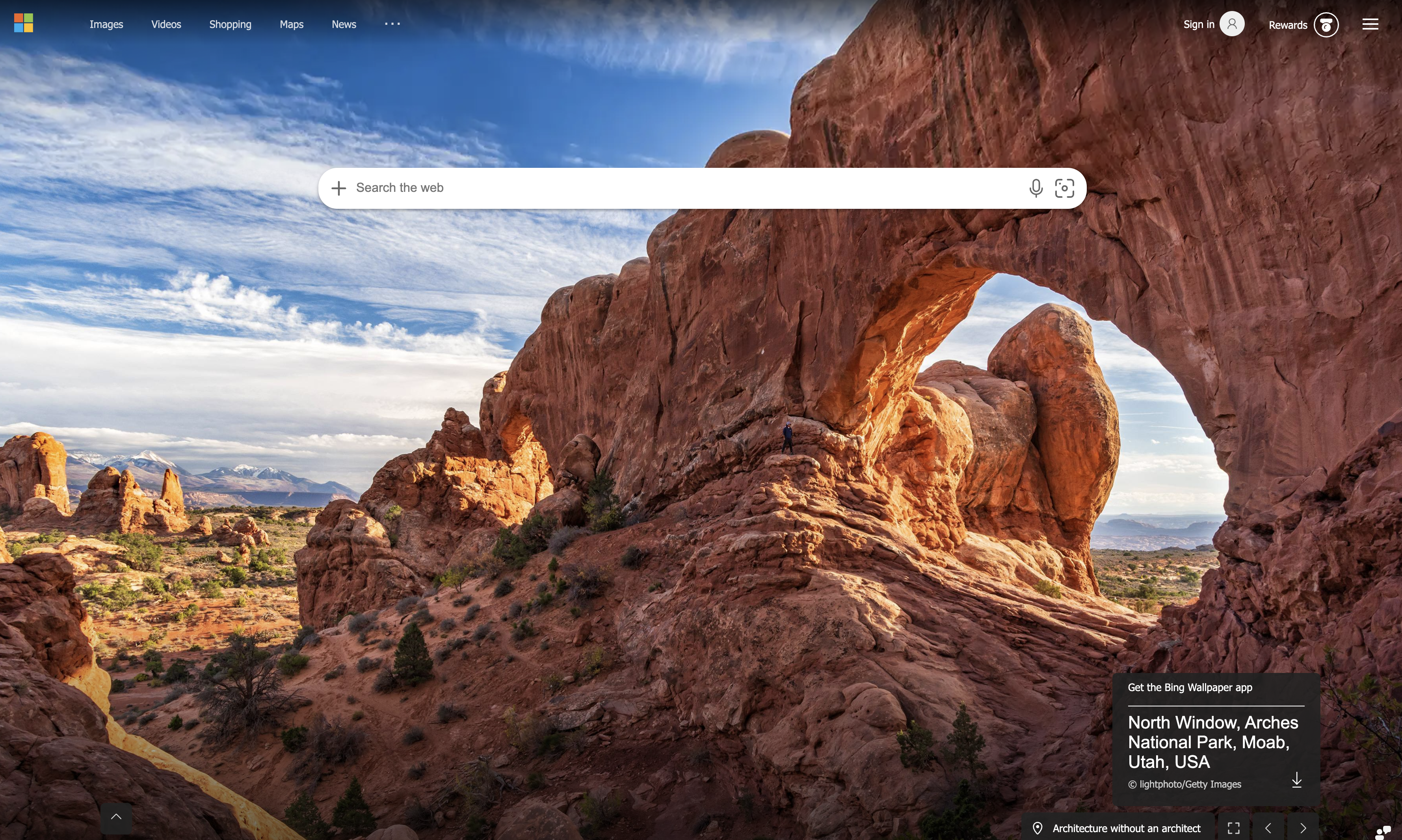
3. Microsoft Bing
- Estimated Monthly Web Visits: ~3.7 billion (to bing.com, October 2026).
- Best Use Case: Comprehensive web, news, and particularly Visual Search (identifying objects, plants, or products from an image).
- What It Searches: Microsoft’s proprietary web, image, and video index.
Bing remains a robust, full-service alternative to Google. Its standout feature is Visual Search: when you possess a photograph of an unfamiliar object or apparel item but lack descriptive keywords, you can upload the image to extract text, find shopping options, and locate visually similar resources. Furthermore, Bing’s Copilot Search integrates AI-generated summaries with direct citations, offering a seamless hybrid search model.
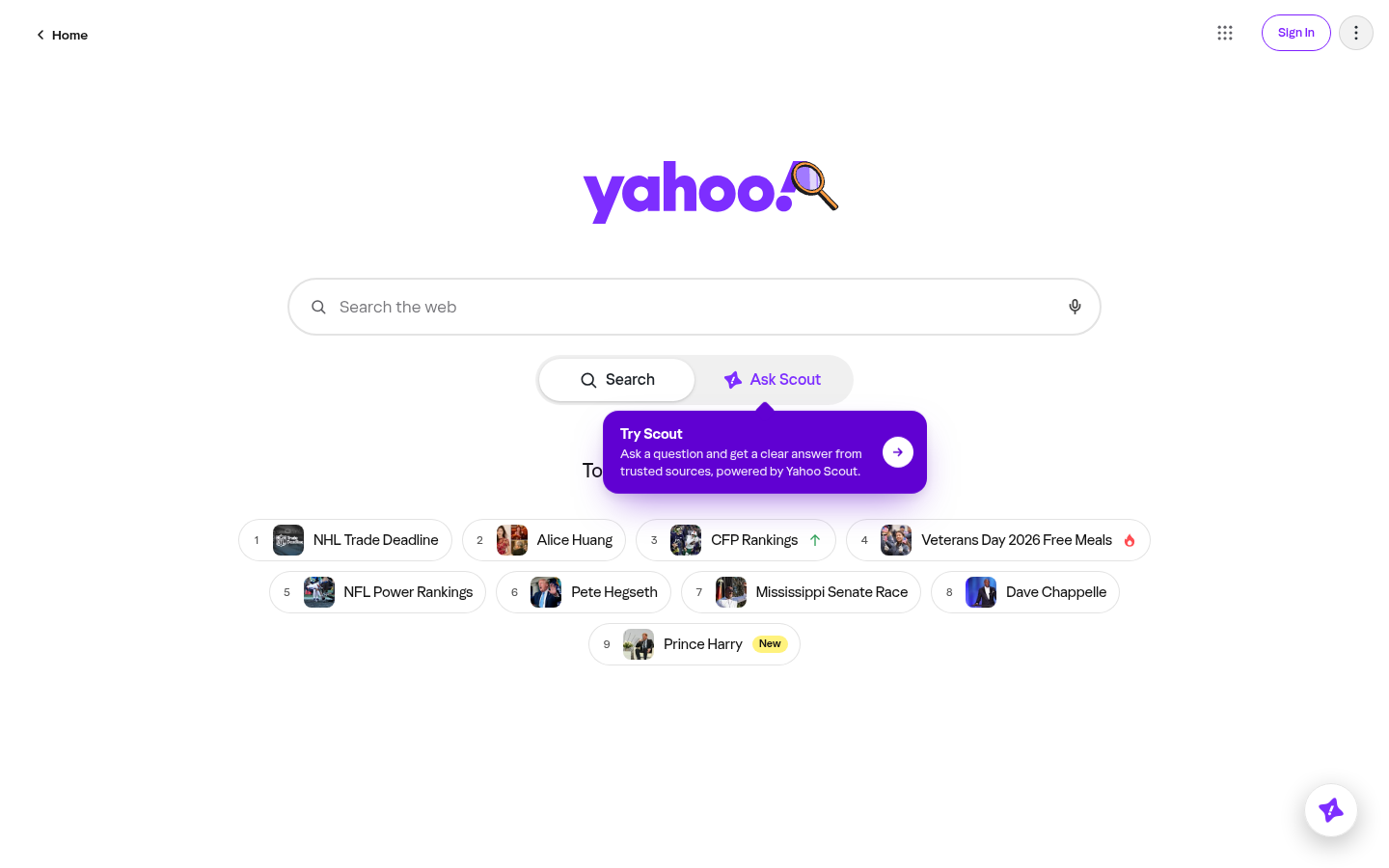
4. Yahoo Search
- Estimated Monthly Web Visits: ~751 million (to search.yahoo.com, October 2026).
- Search Engine Referral Share: ~2.54% in the U.S. (Statcounter, October 2026).
- Best Use Case: Searching in tandem with daily news, finance, and editorial content.
- What It Searches: Traditional web index, bolstered by the AI-powered Yahoo Scout engine (launched January 2026, utilizing Anthropic’s Claude and Microsoft’s Bing grounding APIs).
Yahoo Search excels for users embedded in its broader content ecosystem. While its pure search referral share is modest globally, it still drives thousands of targeted monthly visits for publishers—traffic that can translate into valuable downstream leads.
3. Regional Search Engines
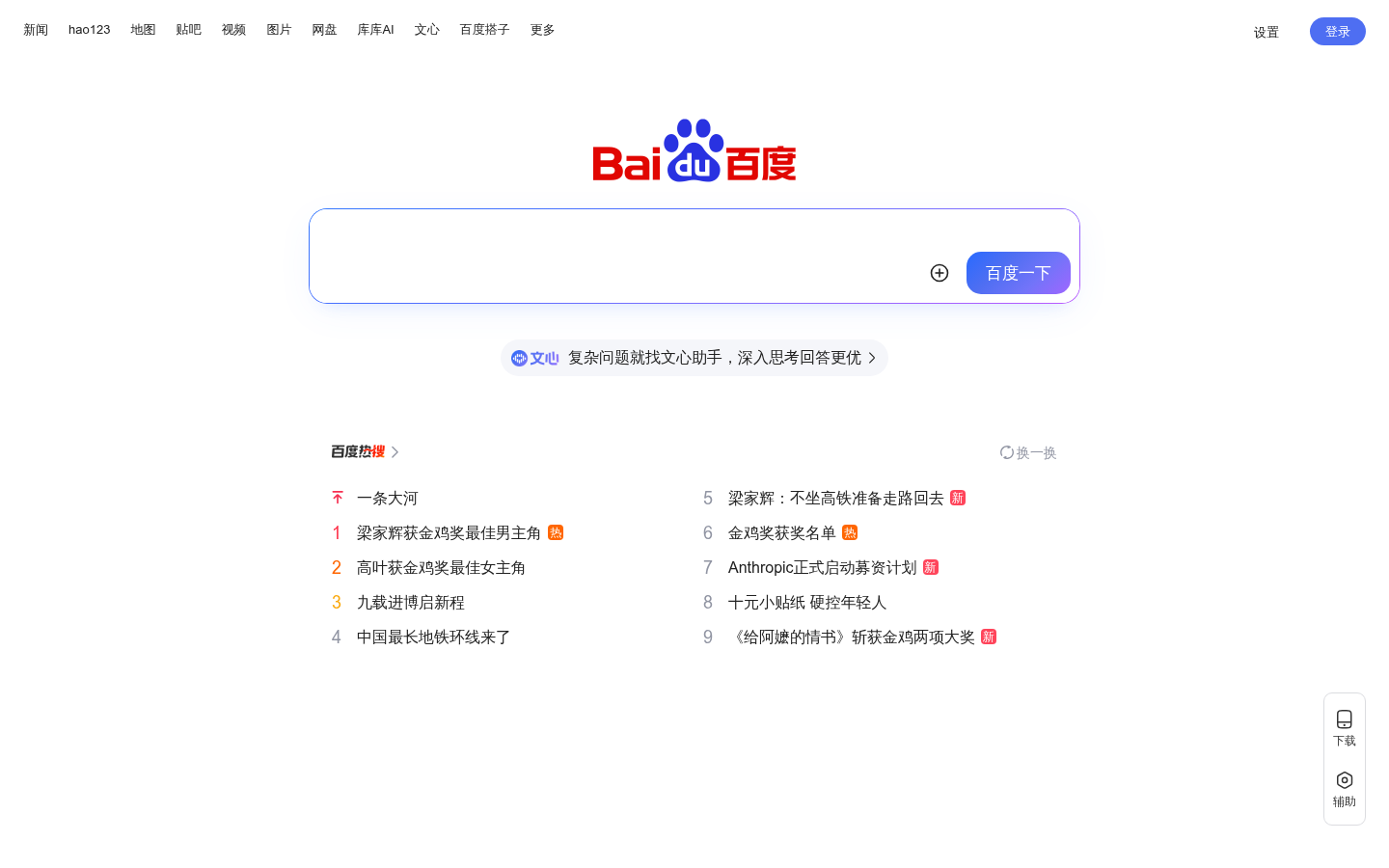
5. Baidu
- Estimated Monthly Web Visits: ~1.7 billion (to baidu.com, October 2026).
- Search Engine Referral Share: ~49% in China (Statcounter, October 2026).
- Best Use Case: Targeting Chinese-language audiences and analyzing local market sentiment.
- What It Searches: Comprehensive Chinese web index alongside Baidu’s proprietary services (Baike encyclopedia, Zhidao Q&A, Wenku documents, maps).
Baidu is non-negotiable for anyone conducting business or academic research in mainland China. It requires optimizing for domestic terminology and recognizing that much of its high-ranking content sits within Baidu’s own walled ecosystem rather than open-web domains.
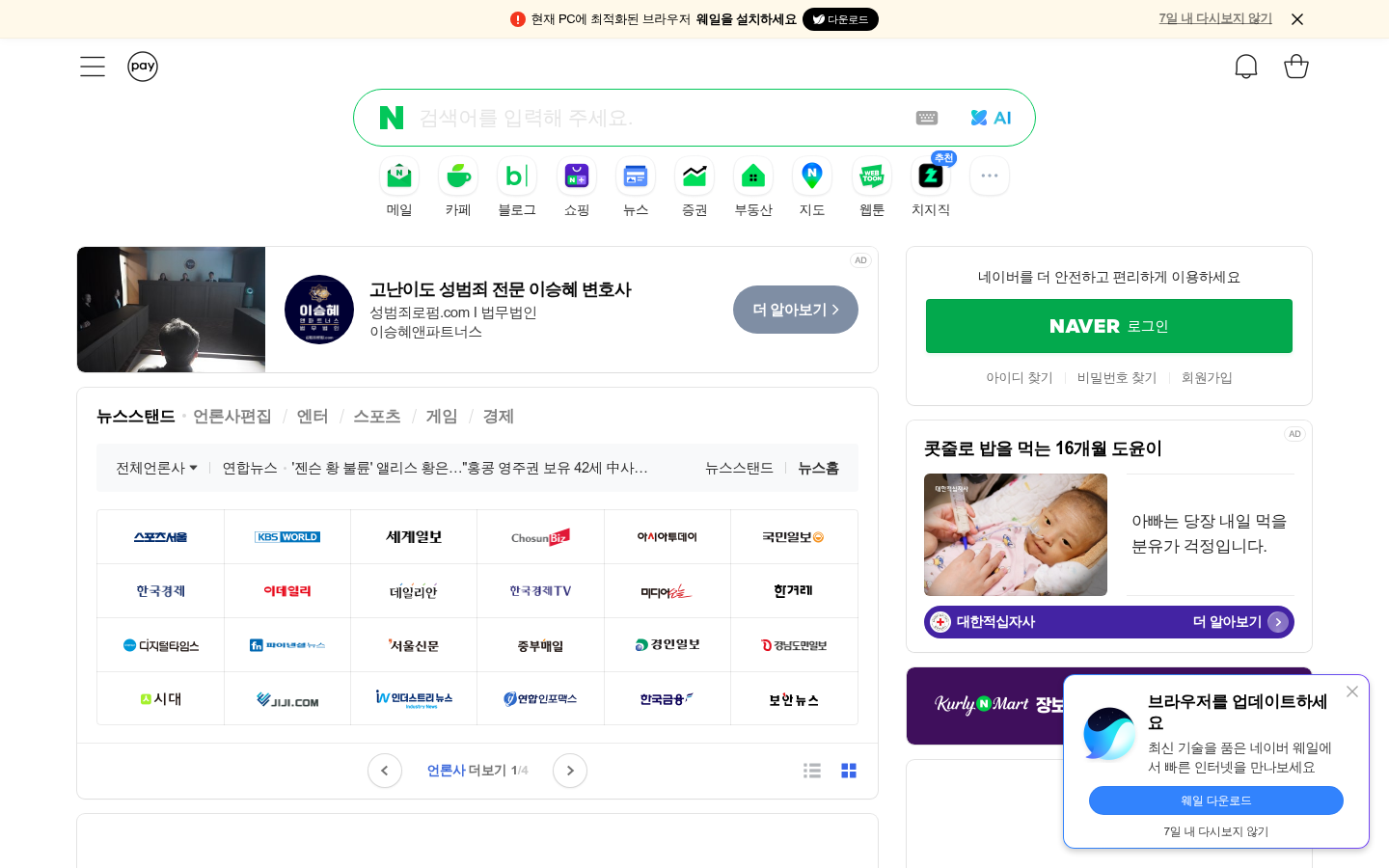
6. Naver
- Estimated Monthly Web Visits: ~1.5 billion (to naver.com, October 2026).
- Search Engine Referral Share: ~42.25% in South Korea (Statcounter, October 2026).
- Best Use Case: Deep-diving into South Korean cultural, commercial, and community discussions.
- What It Searches: Web pages alongside Naver Blogs, interest-based Café communities, and Knowledge iN Q&A threads.
Naver is the definitive gateway to South Korea’s digital landscape. Its search results heavily prioritize community-generated insights over traditional corporate web pages, making Naver Search Advisor an essential utility for international marketers.
7. Yandex
- Estimated Monthly Web Visits: ~162.2 million (to yandex.com, October 2026).
- Search Engine Referral Share: ~70.22% in Russia (Statcounter, October 2026).
- Best Use Case: Russian-language source collection and regional visibility analysis.
- What It Searches: Yandex proprietary search algorithms and regional databases.
Yandex dominates the search market in Russia. For international researchers or brands analyzing Eastern European digital footprints, it provides an entirely different ranking hierarchy and publisher ecosystem compared to Western counterparts.
8. Sogou
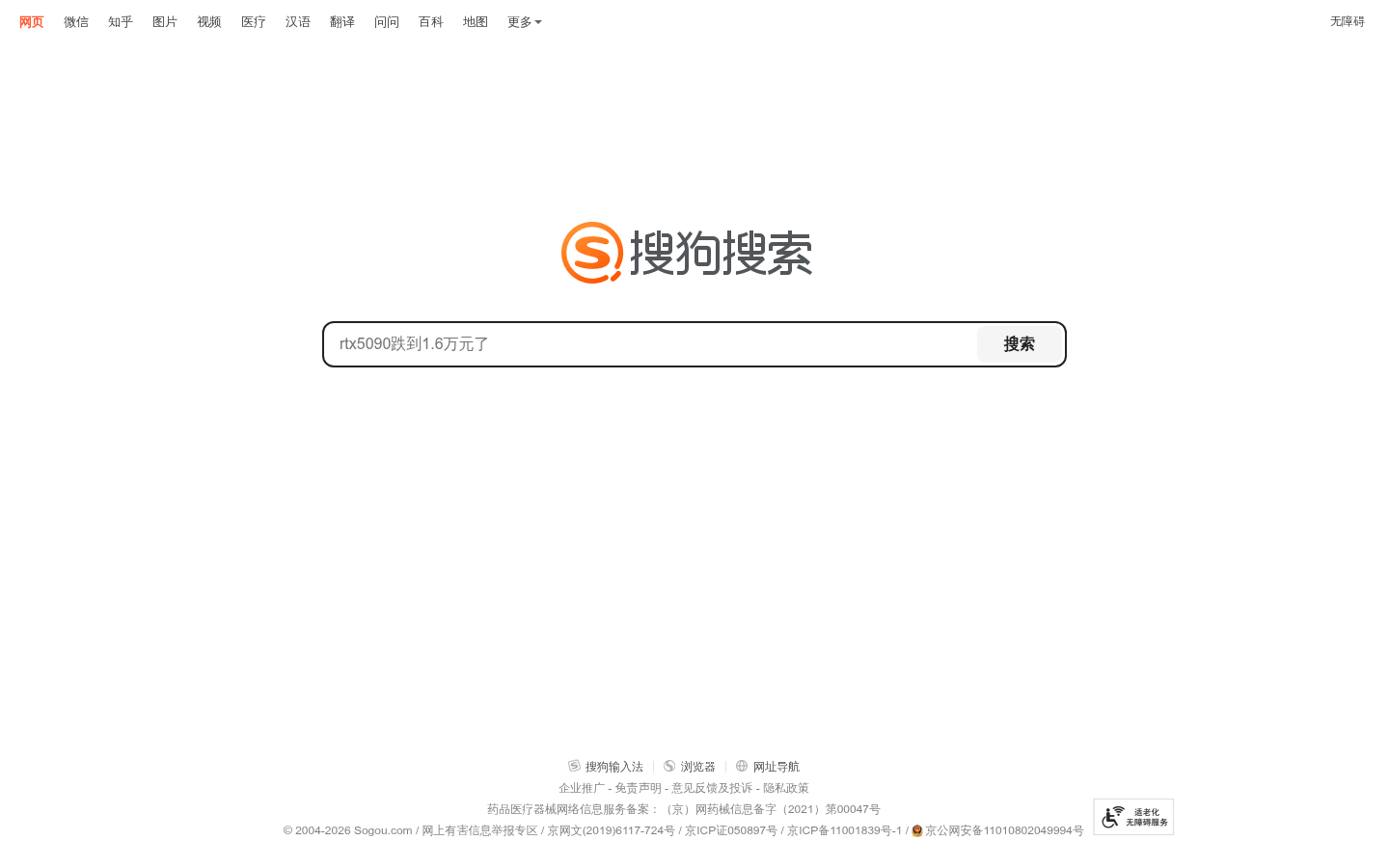
- Estimated Monthly Web Visits: ~16.5 million (to sogou.com, October 2026).
- Best Use Case: Discovering public content published within the WeChat ecosystem.
- What It Searches: Chinese web results and specialized WeChat search.
Sogou’s primary differentiator is its deep integration with WeChat, allowing users to unearth public articles and official accounts that traditional open-web search crawlers cannot access.
4. Privacy and Control-Focused Search
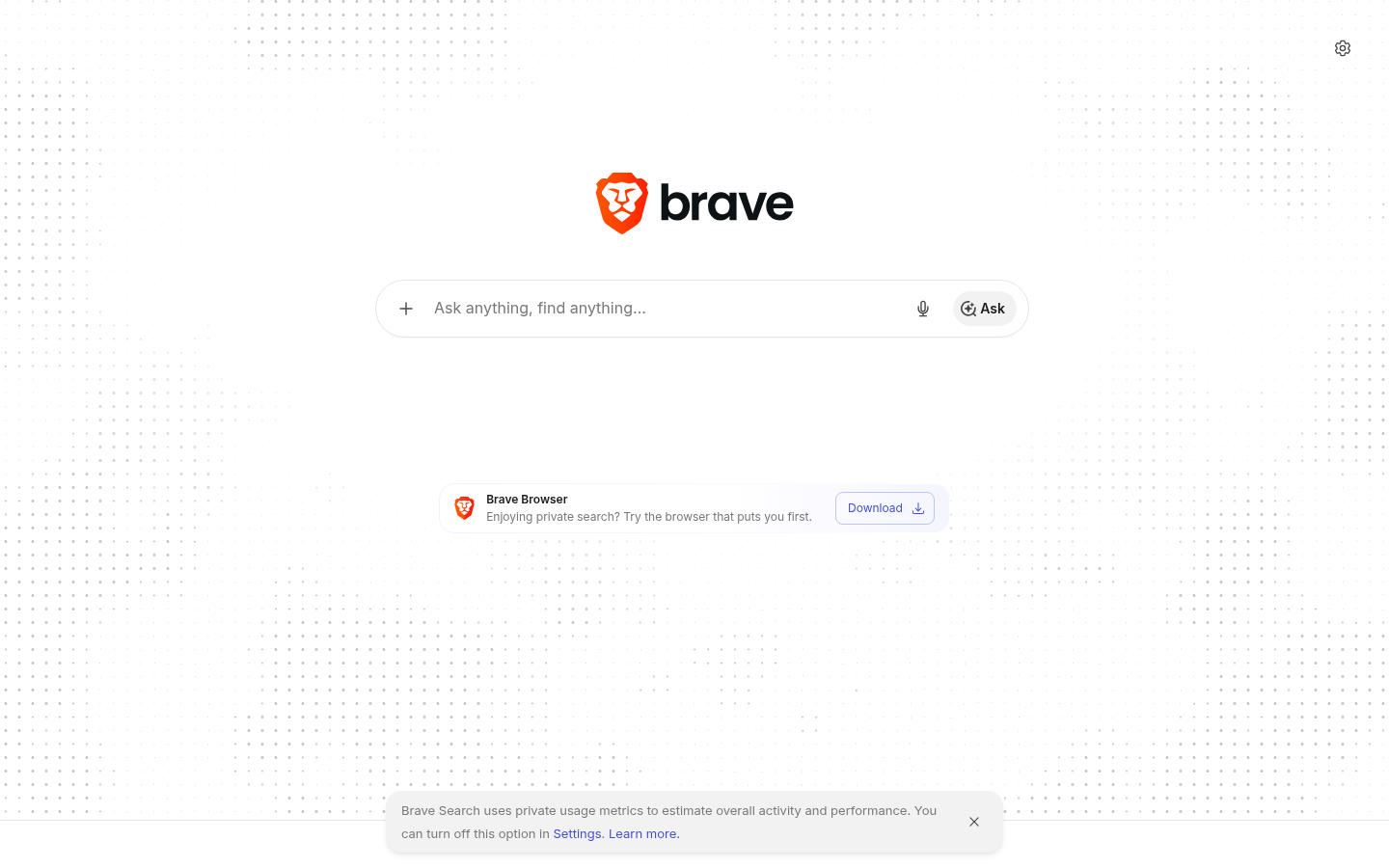
9. Brave Search
- Estimated Monthly Web Visits: ~698.8 million (to search.brave.com, October 2026).
- Best Use Case: Accessing an independent web index equipped with customizable ranking controls.
- What It Searches: Brave’s proprietary, independent web crawler index.
Brave Search is a technological heavyweight in the privacy space, having entirely severed its reliance on Bing’s index to build its own independent web crawler. Its unique Goggles feature allows users to apply custom ranking filters and community-driven algorithm rules, offering unprecedented control over search outputs.
10. DuckDuckGo
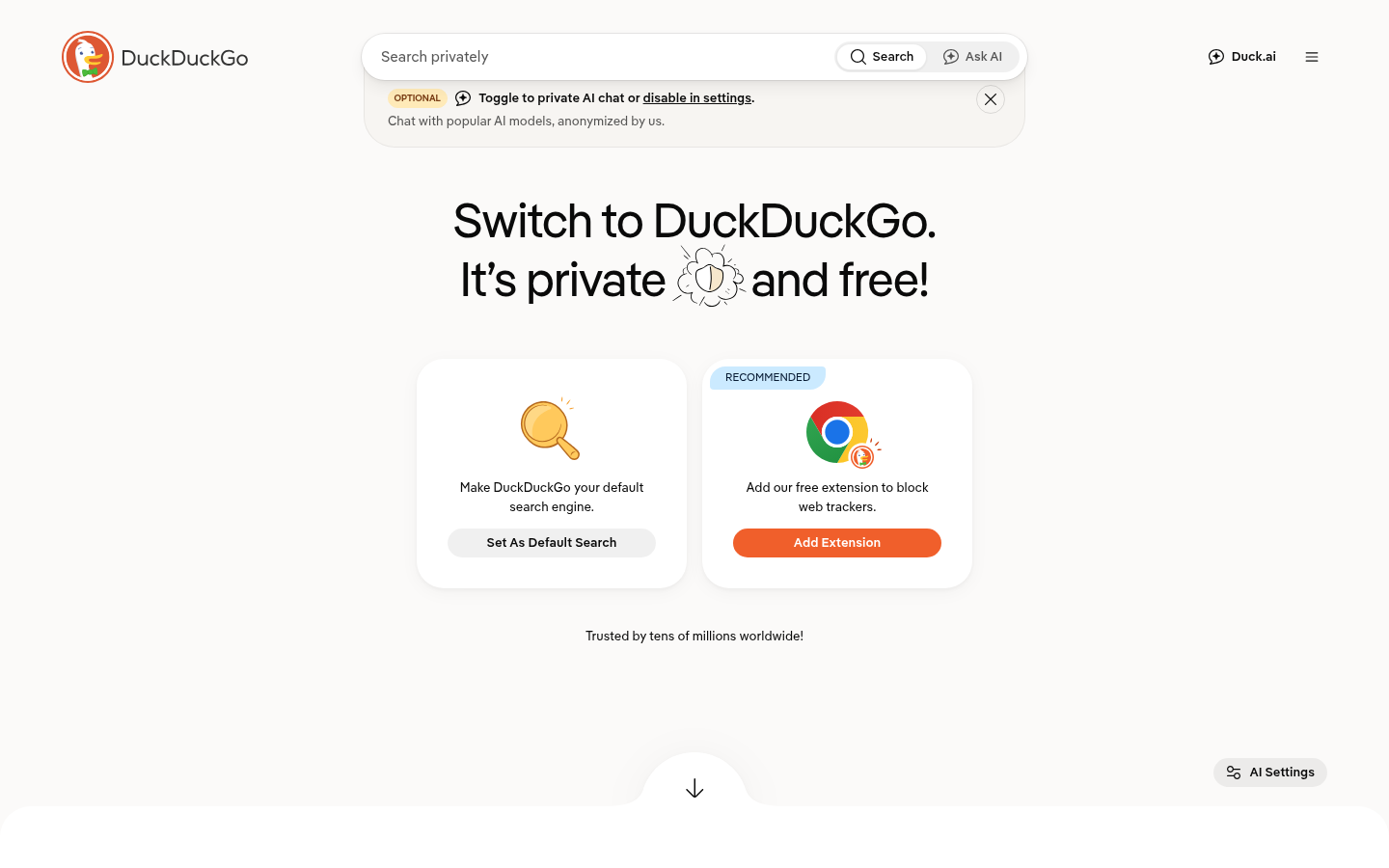
- Estimated Monthly Web Visits: ~681.9 million (to duckduckgo.com, October 2026).
- Best Use Case: Everyday web browsing free from personal search-history profiling and ad tracking.
- What It Searches: Traditional links and images largely sourced from Bing, supplemented by specialized indexes.
DuckDuckGo remains the gold standard for frictionless privacy. It ensures your IP address and query history are never logged to build a persistent behavioral advertising profile, though users should note that its underlying results rely heavily on Microsoft’s infrastructure.
11. Startpage
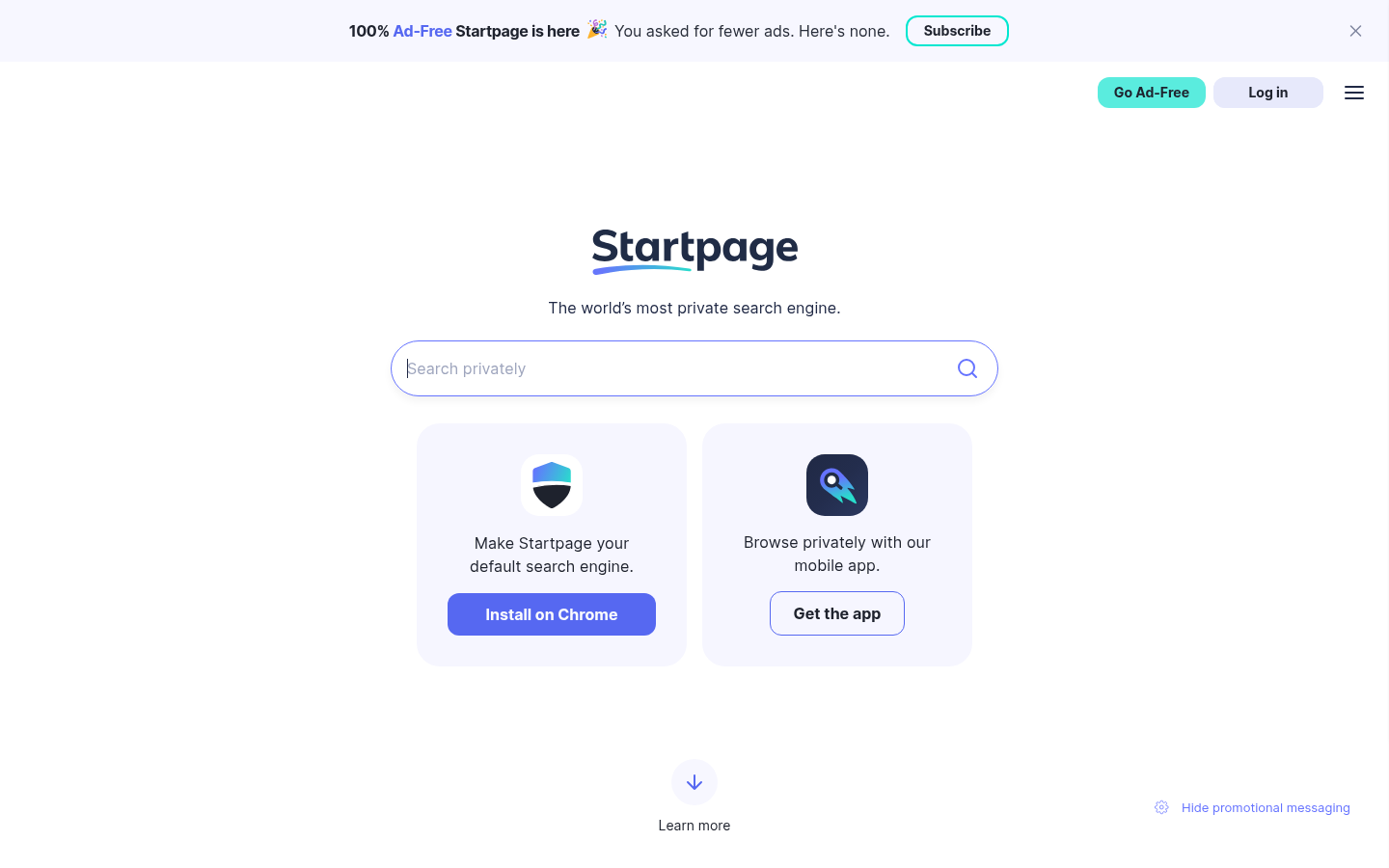
- Estimated Monthly Web Visits: ~57.6 million (to startpage.com, October 2026).
- Best Use Case: Accessing uncompromised Google and Bing search results without surrendering personal data.
- What It Searches: Google and Microsoft Bing via a privacy intermediary.
Startpage acts as an ingenious legal and technical proxy. When you submit a query, Startpage fetches the results from major providers on your behalf, stripping away all trackers and IP identifiers before returning the clean results to you.
12. Kagi
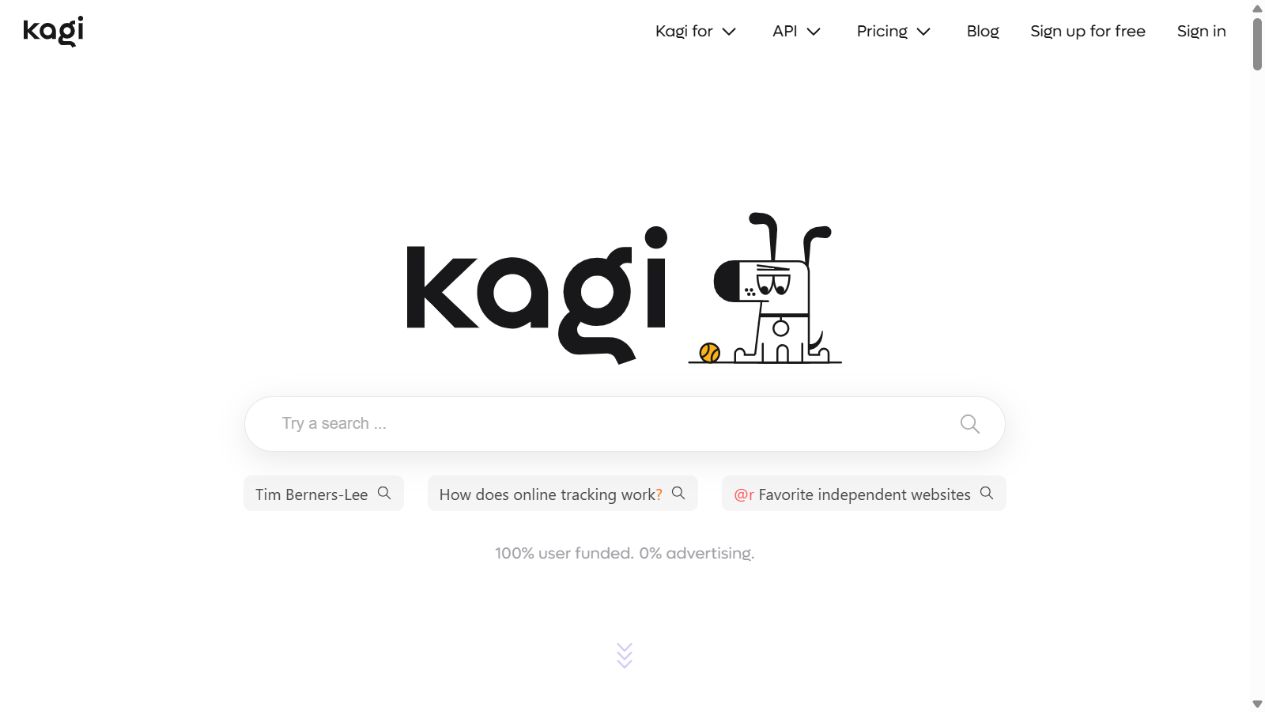
- Estimated Monthly Web Visits: ~4.6 million (to kagi.com, October 2026).
- Best Use Case: Premium, ad-free, hyper-customizable search.
- What It Searches: Proprietary indexes (Teclis) combined with major and specialist providers.
Kagi flips the traditional ad-supported search model on its head by charging a subscription fee (ranging from $5 to $10+ per month). In return, users get a completely ad-free experience with advanced management tools: you can permanently block, boost, or demote specific domains, and use Lenses to isolate searches to academic papers, forums, or code repositories.
5. Alternative Funding and Mission-Driven Search
13. Ecosia
- Estimated Monthly Web Visits: ~219 million (to ecosia.org, October 2026).
- Best Use Case: Channeling ad revenue generated from routine web searches directly into global climate action and tree-planting initiatives.
- What It Searches: Bing, Google, or European Search Perspective (EUSP), depending on region.
Ecosia proves that search utility can coexist with environmental activism. The organization publishes transparent monthly financial reports detailing how ad revenues fund reforestation projects worldwide.
14. KARMA Search
- Estimated Monthly Web Visits: ~451,800 (to karmasearch.org, October 2026).
- Best Use Case: Funding global animal welfare and biodiversity conservation projects through daily web browsing.
- What It Searches: Ad-supported web search (regional availability varies).
Functionally similar to Ecosia, KARMA directs its commercial search revenue toward nonprofit partners dedicated to wildlife protection, habitat restoration, and animal rights (such as Re:wild and iNaturalist).
15. Yep
- Estimated Monthly Web Visits: ~155,800 (to yep.com, October 2026).
- Best Use Case: Developers seeking clean search APIs for AI agents, or SEOs auditing an independent index.
- What It Searches: Ahrefs-operated first-party crawler and search index.
Built by the SEO data powerhouse Ahrefs, Yep operates its own web crawler. While it offers a public consumer interface, its primary utility lies in providing robust search APIs for developers building research applications and automated agents.
6. Specialized Discovery Tools
16. X.com
- Estimated Monthly Web Visits: ~4.4 billion (to x.com, October 2026).
- Best Use Case: Real-time news monitoring, public statements, and breaking cultural conversations.
- What It Searches: Public social platform posts and user threads.
When you need to know how a global event is unfolding this exact second, text-based social search on X provides unmatched real-time velocity, bypassing the latency of traditional journalistic publishing cycles.
17. LinkedIn
- Estimated Monthly Web Visits: ~2.1 billion (to linkedin.com, October 2026).
- Best Use Case: Professional identity mapping, B2B lead generation, and industry practitioner research.
- What It Searches: Professional profiles, corporate pages, and B2B articles.
LinkedIn serves as the world’s preeminent professional directory, allowing researchers to verify credentials, locate subject-matter experts, and examine industry discourse tied directly to verified career histories.
18. Wayback Machine
- Estimated Monthly Web Visits: ~46.4 million (to web.archive.org, October 2026).
- Best Use Case: Historical auditing, recovering deleted web pages, and tracking content evolution.
- What It Searches: Multi-decade archive of billions of captured web pages.
Operated by the Internet Archive, the Wayback Machine is an irreplaceable digital time capsule. It allows users to view how a specific URL looked at any given point in its history, making it indispensable for legal investigations, journalism, and retroactive SEO auditing.
19. SlideShare
- Estimated Monthly Web Visits: ~39.3 million (to slideshare.net, October 2026).
- Best Use Case: Sourcing conference presentations, pitch decks, and visual frameworks.
- What It Searches: Over 25 million professional slide decks and documents.
SlideShare bypasses traditional article formats, offering direct access to structured slide presentations used by industry leaders, educators, and corporate strategists.
20. WolframAlpha
- Estimated Monthly Web Visits: ~3.1 million (to wolframalpha.com, October 2026).
- Best Use Case: Computational problem-solving, data analysis, and factual calculation.
- What It Searches: Curated expert-level knowledge bases and computational algorithms.
WolframAlpha does not retrieve web pages; it computes answers. Whether you are solving complex calculus equations, converting obscure measurement units, or analyzing astronomical data, it processes inputs mathematically rather than matching keywords.
21. Openverse
- Estimated Monthly Web Visits: ~296,200 (to openverse.org, October 2026).
- Best Use Case: Discovering legally cleared, openly licensed images and audio assets for creative projects.
- What It Searches: Over 800 million Creative Commons and public domain media repositories.
Openverse aggregates massive repositories of freely reusable media, complete with one-click attribution tools, removing the legal ambiguity of standard web image searches.
Comparative Matrix: The 21 Search Options at a Glance
| Option | Best Use Case | Primary Search Source / Technology |
|---|---|---|
| ChatGPT | Complex, multi-turn conversational research | Web retrieval via integrated search partners |
| Perplexity | Citation-backed research overviews | Open web sources with specialized filtering |
| Microsoft Bing | Visual product/object search & general web | Proprietary Microsoft web, image & video index |
| Yahoo Search | Integrated news, finance, and web search | Traditional web index + Yahoo Scout AI engine |
| Baidu | Chinese-language research & local services | Chinese web index + Baidu proprietary platforms |
| Naver | South Korean community and cultural insights | Web pages, blogs, and Café networks |
| Yandex | Russian-language & regional Eastern European data | Yandex proprietary search technology |
| Sogou | Discovering public WeChat content | Chinese web + specialized WeChat article search |
| Brave Search | Independent web indexing with custom ranking | Brave’s own autonomous crawler index |
| DuckDuckGo | Everyday ad-free, unprofiled browsing | Bing links supplemented by independent feeds |
| Startpage | Privacy-mediated access to major search providers | Google and Bing proxied through Startpage |
| Kagi | Ad-free search with user-controlled source manipulation | Teclis indexes + major external providers |
| Ecosia | Directing search revenue to global reforestation | Bing, Google, or EUSP (region-dependent) |
| KARMA Search | Funding biodiversity and animal welfare initiatives | Ad-supported web search (regional variations apply) |
| Yep | Developer APIs & independent index auditing | Ahrefs-operated first-party crawler & API |
| x.com | Real-time news monitoring & public statements | Public platform posts and user threads |
| Professional networking & career background checks | Verified professional profiles & corporate content | |
| Wayback Machine | Historical website auditing & cached retrieval | Chronological web page snapshots |
| SlideShare | Sourcing original pitch decks & conference presentations | Professional slide presentations & documents |
| WolframAlpha | Mathematical computation & data conversion | Curated knowledge bases & computational algorithms |
| Openverse | Finding legally cleared, reusable media assets | Creative Commons & public domain media repositories |
Measuring Traffic From Alternative Search Engines
For webmasters and digital analysts, tracking referral traffic from non-Google sources is vital for uncovering high-intent niche audiences.
To monitor these channels effectively in Google Analytics 4 (GA4):
- Navigate to the Reports section.
- Open Acquisition > Traffic acquisition.
- Set the primary dimension to Session source / medium.
- Filter or search for alternative engines (such as
bing / organic,duckduckgo / organic,ecosia / organic, or specific regional referrers likenaver.comoryandex).
By segmenting these sessions, marketing teams can evaluate whether specialized audiences from platforms like Kagi, Brave, or Naver exhibit higher engagement or conversion rates compared to traditional Google traffic.
Future Outlook: The Fragmented Search Era
Google will undoubtedly retain its dominance as the default consumer habit for the foreseeable future. However, the monolithic era of search is permanently behind us.
The future belongs to task-specific routing: users increasingly select their search tool based on the exact nature of the problem at hand. Need to solve an equation? You turn to WolframAlpha. Need to verify what a competitor’s pricing page looked like in 2021? You open the Wayback Machine. Need an unprofiled, private query? You launch Brave or DuckDuckGo.
By experimenting with two or three alternative engines tailored to your specific daily workflows, you liberate yourself from algorithmic uniformity and unlock vastly superior tools for information discovery.