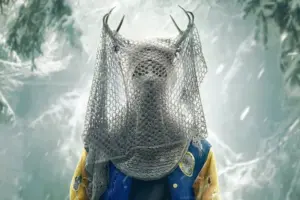
Executive Overview: The Anatomy of Despair
Since its debut, Yellowjackets has redefined the modern survival horror genre by seamlessly weaving psychological trauma with the visceral, primal stakes of wilderness survival. The narrative follows a high school girls’ soccer team whose plane crashes deep in the Canadian wilderness, forcing them into a multi-year descent into societal collapse, cultism, and eventually, cannibalism.
The brilliance of Yellowjackets lies not just in its shock value, but in its dual-timeline structure. By juxtaposing the harrowing, raw desperation of the 1990s crash survivors with the fractured, cynical lives of their adult counterparts, the show explores how extreme circumstances permanently alter the human psyche. For viewers left hungry for more of this specific "vibe"—the intersection of moral decay, isolation, and the uncanny—the cinematic landscape offers a rich, albeit disturbing, catalog of companion pieces. This report examines the essential films that capture the thematic marrow of Yellowjackets, tracing the evolution of survival cinema from classic isolationist studies to modern supernatural dread.
Detailed Chronology: From Reality to Myth
To understand why Yellowjackets resonates so deeply, one must examine the progression of the "stranded" trope in cinema. Historically, stories of survival have moved through three distinct phases:
The Realist Era (1940s–1970s)
Early survival films focused on the mechanical and moral constraints of being trapped. Alfred Hitchcock’s Lifeboat (1944) serves as the foundational text for this era, stripping away all external distractions to focus entirely on the ethical erosion occurring within a confined space. There are no supernatural monsters here; the monster is the group itself, forced to weigh the value of human life against the cold reality of limited resources.
The Sociological Descent (1960s–1980s)
As the cultural zeitgeist shifted, films like Peter Brook’s Lord of the Flies (1963) began to experiment with the breakdown of order. These films posited that human civilization is a fragile veneer, easily stripped away when authority is removed. The focus shifted from "how do we survive?" to "what do we become when no one is watching?"
The Modern Psychological/Supernatural Blend (2000s–Present)
The current era, spearheaded by Yellowjackets, adds a layer of ambiguity. Is the threat external (a vengeful forest spirit) or internal (collective psychosis)? Films like The Ritual (2017) exemplify this by forcing characters to confront ancient, mythological horrors that mirror their own unresolved grief and guilt.

Supporting Context & Metrics: The "Survival Horror" Appeal
Why does an audience, safe in their living rooms, crave the depiction of such profound suffering? Media analysts suggest that the "survival horror" genre serves as a controlled environment for processing collective existential dread.
- The Cannibalism Taboo: In Yellowjackets, the act of eating one’s own is the ultimate moral threshold. Films like Alive (1993) leverage the true-story weight of the 1972 Andes flight disaster to ground this concept in reality. By documenting the logistical reality of survival, these stories force viewers to confront their own survival instincts.
- The Cult Dynamic: The shift from a structured team to a tribal, ritualistic society is a hallmark of the genre. Metrics in viewer retention show that episodes focusing on the "Antler Queen" and the formation of the girls’ hierarchy consistently rank higher in engagement than standard drama episodes.
- Isolation as a Catalyst: Whether it is a deserted island, a mountain range, or a dense forest, the lack of external surveillance is the primary variable that allows the "madness" of these stories to flourish.
Curated Cinematic Recommendations
Alive (1993): The Brutal Benchmark
Based on the harrowing true story of a Uruguayan rugby team, Alive is the gold standard for survival realism. When the group is stranded in the Andes, the film meticulously tracks their degradation. Unlike fictional accounts, Alive relies on the sheer weight of history. The transformation of the plane wreckage from a vehicle of transport to a tomb and eventually a pantry is a masterclass in narrative pacing. It provides the essential "how-to" of survival horror that Yellowjackets fans will recognize instantly.
Eden (2015): The Mirror Image
For those seeking a narrative that hits every beat of the Yellowjackets premise—a soccer team, a crash, and a descent into factional violence—Eden is an essential, albeit contentious, watch. While it lacks the supernatural polish of modern prestige TV, it offers a raw, unvarnished look at the breakdown of social order. It serves as a stark reminder of how quickly "teams" become "tribes" when the supply chain of civilization is severed.
Lord of the Flies (1963): The Archetypal Descent
Peter Brook’s adaptation remains the most chilling interpretation of William Golding’s novel. By casting non-professional child actors, Brook achieved a level of naturalism that feels almost documentary-like. The film’s pacing is deliberate, allowing the audience to watch the slow, agonizing death of innocence. It remains the definitive study of the "savage" potential inherent in even the most polite societal structures.
Picnic at Hanging Rock (1975): The Atmospheric Precursor
If the draw of Yellowjackets is the "supernatural mystery" and the feeling of a landscape that is actively hostile to human presence, Picnic at Hanging Rock is mandatory viewing. It is a dreamlike, haunting film that refuses to provide answers. It suggests that nature is not merely a backdrop, but a sentient force that can swallow people whole, leaving only questions and trauma in its wake.
Lifeboat (1944): The Moral Crucible
Hitchcock’s confined-space thriller is a lesson in tension. With a cast representing a cross-section of society, the film creates a microcosm where democratic ideals clash with the immediate, selfish need to live. It is the perfect study of how authority, class, and morality are discarded in the face of death.

The Ritual (2017): The Mythological Nightmare
For fans who enjoy the "It" aspect of Yellowjackets—the sense that something ancient and malevolent lives in the woods—The Ritual is a visceral experience. It blends the tropes of a hiking trip gone wrong with ancient Norse mythology, creating a sense of dread that is both physical and spiritual. The cabin in the woods serves as a perfect homage to the isolation of the Yellowjackets crash site.
Future Outlook: Where Survival Horror Goes Next
The success of Yellowjackets proves that audiences are not tired of survival stories; they are simply demanding more complexity. The future of the genre lies in the "unreliable narrator." As we see in the show’s adult timeline, the trauma of the wilderness does not end when the rescue plane arrives.
We anticipate a shift in the genre toward the "aftermath" narrative—exploring how survivors of extreme events integrate back into a world that no longer makes sense to them. The "wilderness" is no longer just a geographical location; it is a psychological state that characters carry with them. As streaming platforms continue to invest in high-stakes, character-driven horror, we can expect the boundary between the "real" world and the "mythological" world to become increasingly porous, ensuring that the legacy of the Yellowjackets—and the films that paved the way for them—will continue to influence television and film for the next decade.
Conclusion
Whether you are drawn to the logistical puzzle of survival, the sociological decay of groups, or the terrifying possibility of supernatural intervention, the films listed above provide a comprehensive map of the genre. By engaging with these texts, viewers can deepen their appreciation for the intricate storytelling of Yellowjackets, recognizing the lineage of dread that makes the show a modern masterpiece of the genre.