Executive Overview: A Collision of Giants and Innovation
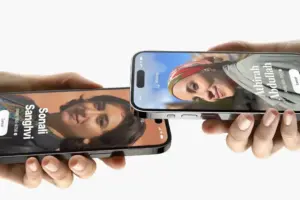
Apple, the Cupertino-based titan of consumer electronics, finds itself embroiled in a high-stakes legal confrontation in the Bombay High Court. At the heart of the dispute is "NameDrop," a marquee feature introduced in iOS 17 that allows users to seamlessly exchange contact information by bringing their iPhones or Apple Watches into close proximity.
The plaintiff, Santa Monica-based startup GG Technologies, alleges that this functionality directly infringes upon proprietary technology developed for its own networking application, StayTouch. Representing a significant threat to Apple’s operational flow in one of its most critical emerging markets, GG Technologies is seeking ₹15 billion (approximately $161.86 million) in damages. More critically, the startup is pursuing a permanent injunction that would restrict Apple from selling or importing any devices preloaded with the NameDrop feature into India.
This legal maneuver in India mirrors an ongoing, parallel conflict in the United States, where the International Trade Commission (ITC) has already opened a formal investigation into the matter. As Apple aggressively expands its manufacturing footprint and retail presence in India, this litigation serves as a stark reminder of the complexities inherent in global intellectual property rights and the rising power of nimble startups to challenge the world’s most valuable corporations.
The Genesis of a Dispute: Detailed Chronology
The Birth of StayTouch
The conflict finds its origins in 2018, when Gaurav Goel, an alumnus of the prestigious Indian Institute of Technology (IIT) Delhi and a former Goldman Sachs investment banker, founded GG Technologies. The startup’s flagship product, StayTouch, was designed to modernize the traditional business card exchange, utilizing proximity-based technology to facilitate contact sharing. The company filed for its initial U.S. patent protection for this technology in 2019, the same year the app made its market debut.
The Rise of NameDrop
In June 2023, Apple unveiled NameDrop as a core component of the iOS 17 ecosystem. The feature, which utilizes UWB (Ultra-Wideband) and NFC technology to initiate a "handshake" between devices, was touted by Apple as an intuitive, user-friendly evolution of Airdrop. By October 2023, the feature had been integrated across the iPhone lineup and expanded to Apple Watches running watchOS 10.1.
The Escalation
The relationship between the two entities deteriorated rapidly following the launch of NameDrop. GG Technologies asserts that the feature is a direct derivative of its patented work. After failed mediation attempts in April 2024, which are a mandatory precursor to commercial litigation under Indian law, GG Technologies officially filed suit in the Bombay High Court in October 2024.
Crucially, the startup secured its Indian patent in July 2024, providing the legal foundation for its current claim. The court filing, an expansive 781-page document, meticulously outlines the technical overlaps between StayTouch and NameDrop, arguing that the latter infringes upon the specific, non-manual pairing protocols protected by their Indian patent.
Supporting Context: Metrics and Strategic Significance
The Indian Market: Apple’s New Frontier
To understand the gravity of this lawsuit, one must look at Apple’s broader strategic pivot. For years, Apple relied heavily on China as both its primary consumer market and its manufacturing engine. However, shifting geopolitical tides and supply chain diversification strategies have propelled India to the forefront of Apple’s long-term roadmap.
- Manufacturing Prowess: Recent reports indicate that Apple now produces roughly one in four iPhones in India. This move away from total reliance on Chinese assembly lines makes the Indian market a critical node in Apple’s global logistics.
- Retail Expansion: Apple has launched an aggressive retail strategy in India, opening flagship stores and digital storefronts to capture the burgeoning middle-class consumer base.
- Growth Potential: Despite these strides, iPhones currently account for less than 10% of smartphone shipments in the country. While this number is low, it represents a massive "growth runway" that Apple is desperate to protect. A court-mandated injunction on the sale of devices—even if temporary—would represent an existential threat to Apple’s momentum in the region.
The U.S. Front: A Two-Pronged Attack
The Indian lawsuit is not an isolated event. GG Technologies is simultaneously pursuing a similar case in the United States. In August 2026, the U.S. International Trade Commission (ITC) formally opened an investigation into Apple’s alleged patent infringement. If the ITC finds in favor of GG Technologies, it could result in an exclusion order, effectively banning the importation of infringing iPhones and Apple Watches into the U.S. market.
Intellectual Property and the "David vs. Goliath" Dynamic
The Legal Basis of the Claim
At the core of the 781-page filing is the assertion of "proximal contact exchange." GG Technologies argues that their technology—which specifically enables the transfer of contact information without manual pairing—was novel at the time of their 2019 patent filing. They contend that Apple’s implementation in NameDrop does not merely resemble their invention but replicates the fundamental architecture of the data-transfer handshake.
The Defense and Silence
As is characteristic of its corporate policy, Apple has remained tight-lipped, declining to respond to inquiries regarding the litigation. In previous similar cases, Apple has often argued that its features are independently developed or that the patents in question are either invalid or non-infringing due to differences in the underlying communication protocols. However, the rigor of the patent acquisition process in India, combined with the detailed technical documentation provided by GG Technologies, suggests that this will not be a simple "nuisance suit" for Apple’s legal department to dismiss.
Future Outlook: What Lies Ahead?
Potential Outcomes
The Bombay High Court has yet to list the case for a formal hearing, but the legal community is watching closely. Possible outcomes include:
- Settlement: Given Apple’s history of settling patent disputes to avoid lengthy litigation and potential product bans, a private licensing agreement is a distinct possibility.
- Injunction: If the court finds merit in the infringement claim, an injunction on the sale of iPhones with NameDrop in India would be catastrophic for Apple’s quarterly projections in the region.
- Patent Invalidation: Apple may choose to challenge the validity of the Indian patent itself, arguing that the technology behind StayTouch was "prior art" or that it lacks the requisite innovation to warrant protection.
The Broader Impact on Tech Innovation
This case highlights a growing trend in the global tech ecosystem: the "patent-troll" versus "legitimate innovator" debate. While large corporations often paint patent-holding startups as opportunistic, many startups argue that their intellectual property is their only shield against being swallowed or marginalized by tech giants.
For GG Technologies, this is an existential gamble. Founder Gaurav Goel, having leveraged his background in finance and engineering, has positioned his company as a David standing up to a trillion-dollar Goliath. For Apple, the challenge is twofold: protecting its reputation as a global leader in user experience while navigating an increasingly complex web of patent laws in the markets it needs most to dominate.
As the case proceeds, the tech world will be watching to see whether the Bombay High Court sets a precedent that empowers local and international startups to challenge the dominance of Big Tech, or whether Apple will use its vast resources to weather the storm and neutralize the threat. One thing is certain: the outcome of this dispute will ripple far beyond the borders of India, potentially reshaping how mobile proximity features are developed and patented globally for years to come.