Executive Overview
In an era defined by the rapid ascent of generative AI and data-driven automation, the role of the Chief Marketing Officer has reached a critical inflection point. As marketing budgets shift toward programmatic efficiency and predictive analytics, the question arises: what remains uniquely human in the pursuit of customer acquisition and brand loyalty?
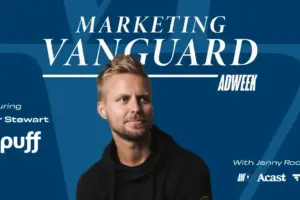
For Thomas Ranese, the Chief Marketing Officer at Intuit—the financial powerhouse behind TurboTax, QuickBooks, Credit Karma, and Mailchimp—the answer lies not in the code, but in the stagecraft. In a recent episode of Marketing Vanguard, hosted by Jenny Rooney, Ranese posits that the most potent marketing advantage is one that algorithms cannot replicate: empathy.
Ranese’s leadership philosophy, forged in the diverse fires of theater, government consulting, and tech giants like Google and Uber, suggests that successful modern marketing requires a synthesis of high-tech precision and high-touch humanity. As Intuit pivots toward an AI-integrated future, Ranese is championing a mandate for CMOs to remain "hands-on," arguing that the further a leader drifts from the customer experience, the less effective their brand strategy becomes.
Detailed Chronology: From Pasta Shops to Platforms
To understand Ranese’s approach to global marketing, one must look back to his formative years. Long before he was managing the brand identity of one of the world’s most influential fintech platforms, Ranese was an apprentice in the most fundamental form of customer service: his father’s pasta shop.
The Foundation of Customer Obsession
Working behind the counter of a local pasta shop served as Ranese’s first "marketing laboratory." It was here he learned that business is not merely a transaction; it is a relationship built on listening. His early foray into digital marketing—designing his father’s first promotional newsletter on a Commodore 64—was an early indicator of his lifelong fascination with using technology to bridge the gap between product and consumer.
A Career of Cross-Pollination
Ranese’s professional trajectory is anything but conventional. He has traversed sectors as disparate as the performing arts, government policy, and nonprofit advocacy, before moving into the high-octane world of Silicon Valley at Google and Uber. Each stop added a layer to his "marketing stack":
- Theater: Taught him the architecture of storytelling and the emotional resonance of a narrative arc.
- Government/Nonprofit: Instilled a sense of mission and the importance of purpose-driven messaging.
- Google/Uber: Provided the technical rigor and scale-driven thinking necessary to manage hyper-growth global brands.
This cross-pollination of experiences allows Ranese to view marketing not as a siloed function, but as a holistic theater of operations.
Supporting Context & Metrics: The Philosophy of "Marketing as Theater"
During his conversation with Rooney, Ranese articulated a framework that categorizes marketing into three distinct forms of theater—a concept that elevates the profession from mere advertising to total brand immersion.
The Three Pillars of Marketing Theater
- Advertising as Storytelling: The drama and narrative of a campaign that captures attention and sparks interest.
- Customer Experience (CX): The emotional choreography of the interaction. How does the user feel when they engage with the software?
- Immersive Environments: The real-world or digital "retail" space where the brand comes to life.
Ranese argues that as the digital landscape becomes increasingly cluttered with AI-generated content, human-to-human interactions and sensory-rich brand experiences will become a premium currency. "Marketing is theater," he notes, "and it goes beyond advertising."
The "Means to an End" Perspective
A recurring theme in Ranese’s leadership is the rejection of the "product-first" mindset. He challenges his teams at Intuit to look past the utility of their financial tools. For a small business owner, QuickBooks isn’t just accounting software; it is the infrastructure for a dream. For a taxpayer, TurboTax isn’t just a tax filing tool; it is the gateway to financial peace of mind. By focusing on the customer’s ultimate ambition—prosperity—Intuit aligns its brand mission with the human experience.
The AI-Human Nexus: Trust in the Age of Automation
Perhaps the most pressing challenge for modern CMOs is the integration of Artificial Intelligence. While the efficiency gains are undeniable, the risks to brand trust are significant. Ranese offers a pragmatic, authoritative perspective on this: AI needs human intelligence to earn customer trust.
The Verification Imperative
Intuit operates in the "high-stakes" sector. When a customer is filing their taxes or managing their business credit, the cost of an error is not just a bug in the code; it is a financial catastrophe. Ranese emphasizes that while AI provides the speed and the "how," human experts provide the verification, the empathy, and the assurance.
The strategy at Intuit is to build a hybrid model. The AI handles the heavy lifting of data processing, but human experts remain the final checkpoint, providing the "human-in-the-loop" oversight that customers require to feel confident in high-stakes financial decisions.
Official Statements & Strategic Initiatives
Beyond the philosophical, Ranese is driving tangible social impact through Intuit’s commitment to financial literacy.
The "50 Million" Goal
Intuit for Education has set an ambitious target: reaching 50 million students by 2030. The urgency is underscored by a sobering statistic: only 32% of students graduate with the ability to pass a basic financial literacy exam.
Ranese views this not just as a Corporate Social Responsibility (CSR) initiative, but as a strategic necessity. By fostering financial literacy, Intuit is building a more capable, informed, and prosperous society—one that is inherently more prepared to use their tools. It is a long-term play for brand trust that connects the company’s core competency directly to societal improvement.
A Mandate for CMOs: Get Your Hands Dirty
Ranese pushes back against the trend of senior leaders retreating to the "ivory tower" of management. In an environment where the underlying technology of marketing changes every quarter, he argues that the CMO must remain a practitioner.
"The bigger the organization, the more important this becomes," Ranese asserts. He advocates for CMOs to stay hands-on with the tools, the data, and the customer feedback loops. Without this connection, leadership becomes disconnected from the reality of the work, leading to sterile strategies that fail to resonate with the target audience.
Future Outlook: The Human-Centric Frontier
As Intuit continues its evolution into an integrated, AI-powered financial technology platform, the role of the marketer will continue to shift. The future, according to Ranese, will not belong to the brands that simply use the most sophisticated algorithms, but to the brands that best leverage those algorithms to serve human needs.
The Competitive Advantage of Empathy
The "Marketing Vanguard" interview underscores a critical reality for the industry: technological parity is inevitable. Soon, every competitor will have access to the same AI tools and data sets. When that happens, the only remaining differentiator is the brand’s ability to tell a story that matters and to provide an experience that feels human.
For Thomas Ranese, the playbook for the future is clear:
- Stay grounded: Never lose sight of the "pasta shop" lessons—understand what people are trying to achieve.
- Stay involved: The CMO must be an active participant in the tech, not just a spectator.
- Stay human: In a world of synthetic content, authentic connection is the ultimate competitive advantage.
As we move deeper into the decade, Intuit’s strategy serves as a blueprint for other global enterprises: do not hide behind the screen. Use the technology to empower the human, and ensure that the narrative remains anchored in the genuine ambitions of the people you serve. In the theater of modern business, the curtain is rising on a new era—and the most successful brands will be those that realize the best performance is always a human one.