Executive Overview: The High Cost of Playing It Safe
In the hyper-saturated landscape of modern commerce, the most dangerous risk a company can take is to be boring. For a challenger brand operating in the cutthroat sector of "instant commerce," where market giants possess nearly infinite capital, the traditional strategy of "outspending the competition" is not just impractical—it is a death sentence.
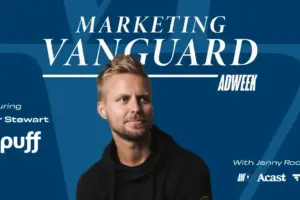
During a compelling session at Brandweek 2026, Tyler Stewart, Head of Marketing at Gopuff, laid out a radical alternative. Speaking to Adweek’s Jenny Rooney, Stewart dismantled the conventional wisdom surrounding market share, celebrity endorsements, and competitive rivalry. His thesis is simple but profound: In an attention economy, invisibility is the ultimate failure. For Gopuff, the path to sustained growth isn’t found in safe, sanitized advertising; it is found in the calculated, often debated, and highly strategic deployment of operational strengths as cultural currency.
This report explores how Stewart is steering Gopuff through the noise of the 2026 marketplace by transforming the company’s first-party logistics into a collaborative advantage, proving that for a true challenger, it is far better to be the subject of a debate than the victim of indifference.
Detailed Chronology: From Sports Media to Instant Commerce
To understand Stewart’s current strategy, one must examine the unconventional pedigree he brings to the table. His career trajectory—spanning the high-stakes worlds of sports entertainment, talent representation, and media powerhouses like GQ, The Players’ Tribune, and Bleacher Report—has served as a crucible for his current marketing philosophy.
The Influence of the "Attention Economy"
Stewart’s tenure at media giants taught him a foundational lesson: audiences do not care about logos; they care about narratives. In sports media, the difference between a successful campaign and a flop often came down to whether the content felt "earned" or "rented."
When Stewart transitioned to Gopuff, he brought this "content-first" mindset into the operational world of instant logistics. He recognized early on that Gopuff’s primary asset wasn’t just a fleet of drivers or a network of micro-fulfillment centers; it was the potential to own the "instant" moment in a customer’s life. By applying the rigorous audience-targeting skills he honed in the digital publishing space, Stewart shifted the marketing focus from broad-reach, high-spend campaigns to high-impact, culturally relevant moments.
The "Brandweek" Pivot
At the Marketing Vanguard stage at Brandweek 2026, the discussion centered on a pivotal realization: Gopuff had outgrown the "startup" phase and needed to assert its identity as a fixture of modern commerce. Stewart’s narrative during the session was not one of defensive posturing, but of offensive, creative maneuvering. He argued that the "instant" promise is not about shaving 30 seconds off a delivery window; it is about providing a solution that fits seamlessly into the consumer’s lifestyle, creating a brand experience that is as reliable as it is culturally resonant.
Supporting Context: Strategic Maneuvers and Operational Edge
The Paradox of Competition: Turning Rivals into Partners
Perhaps the most striking element of Stewart’s strategy is his refusal to view the delivery ecosystem through an adversarial lens. In an industry defined by the "zero-sum game" mentality, Stewart has championed a collaborative approach.
Gopuff’s first-party logistics—the company’s ability to manage its own inventory and last-mile delivery—has become its secret weapon. Rather than viewing major platforms like DoorDash or Uber Eats as enemies, Gopuff has utilized them as distribution channels. By listing products on these competing apps, Gopuff gains access to vast, established user bases while simultaneously serving as a last-mile fulfillment partner. This is a masterclass in modern business strategy: competitive advantage is no longer about winning a monopoly; it is about creating more options and broader reach than the competition, even if those options live on a competitor’s platform.
Resourcefulness vs. The "Checkbook Approach"
When addressing the budget disparity between Gopuff and industry titans, Stewart is blunt. "We don’t have the budget to match every competitor dollar for dollar," he admits.
This financial constraint has forced the company to become more resourceful. Instead of "logo slapping"—the practice of paying for massive media buys and celebrity placements that add little value—Stewart prioritizes "deep partnerships." A prime example is the company’s collaboration with icons like Tom Brady. These are not merely paid endorsements; they are strategic partnerships designed to create products and experiences. The goal is to build something that feels organic to both the talent and the audience, ensuring that the consumer sees a genuine collaboration rather than a transactional advertisement.
Official Statements: "We’d Rather Be Debated Than Ignored"
Perhaps the most defining moment of the 2026 Brandweek session was Stewart’s declaration regarding brand philosophy: "We’d rather be debated than ignored."
In an era of AI-generated content and mass-produced marketing, safe content is invisible content. Stewart advocates for a brand posture that is willing to provoke, challenge, and spark conversation. For a challenger brand like Gopuff, the primary risk is not that people will dislike the message—it is that they will not see it at all.
By pushing the boundaries of what a delivery brand can be, Stewart ensures that Gopuff occupies a "mental real estate" that larger, more conservative incumbents cannot reach. This approach effectively forces competitors to react to Gopuff’s moves, rather than the other way around.
The Creator Partnership Doctrine
Stewart’s rule for influencers and creators is simple: "One deep partnership beats ten logo slaps." He argues that the modern consumer has a finely tuned "BS detector." They can instantly spot an insincere sponsored post. Consequently, Gopuff’s marketing team works to build long-term, iterative relationships with creators. Whether it is co-creating a product or offering unique, "inside-the-brand" access, the objective is to make the partnership feel like a genuine extension of the creator’s own brand, thereby borrowing the creator’s authenticity rather than just renting their reach.
Future Outlook: The Next Phase of Instant Commerce
Looking ahead, the trajectory for Gopuff under Stewart’s guidance suggests a shift toward becoming a lifestyle utility. By continuing to leverage its unique first-party logistics, the company is poised to expand its definition of "instant."
The Evolution of the "Instant" Promise
The future of commerce, as Stewart envisions it, is not just about the speed of delivery; it is about the quality of the choice. As Gopuff integrates further into the daily lives of its consumers, the focus will likely shift from purely transactional convenience to "instant curation." We can expect to see more partnerships that prioritize exclusivity, cultural relevance, and hyper-local product offerings.
Conclusion: A Lesson for Marketers
The takeaway from Tyler Stewart’s tenure at the helm of Gopuff’s marketing is clear: the rules of the game have changed. In the face of massive competitors, the most effective tool in a marketer’s kit is not capital—it is courage.
By prioritizing deep, authentic partnerships over broad, shallow ones, and by embracing the role of a disruptor that is willing to spark debate, Gopuff has carved out a space that is uniquely its own. For any brand looking to survive in the crowded corners of modern commerce, the path forward is not to play it safe. It is to be bold, be relevant, and above all, ensure that you are part of the conversation.
This report is part of a special vidcast series recorded live during Brandweek 2026, presented in partnership with Tatari.