Executive Overview
The landscape of holiday shopping has undergone a profound structural shift. As consumers and professionals turn their attention toward the annual ritual of Black Friday and Cyber Monday discounts, the macroeconomic realities of 2026 have cast a long shadow over traditional tech sales. Following widespread price hikes driven by an acute global component shortage—largely catalyzed by the exponential boom in AI data center construction—finding a reliable bargain on high-end consumer electronics requires a more tactical approach than in previous years.
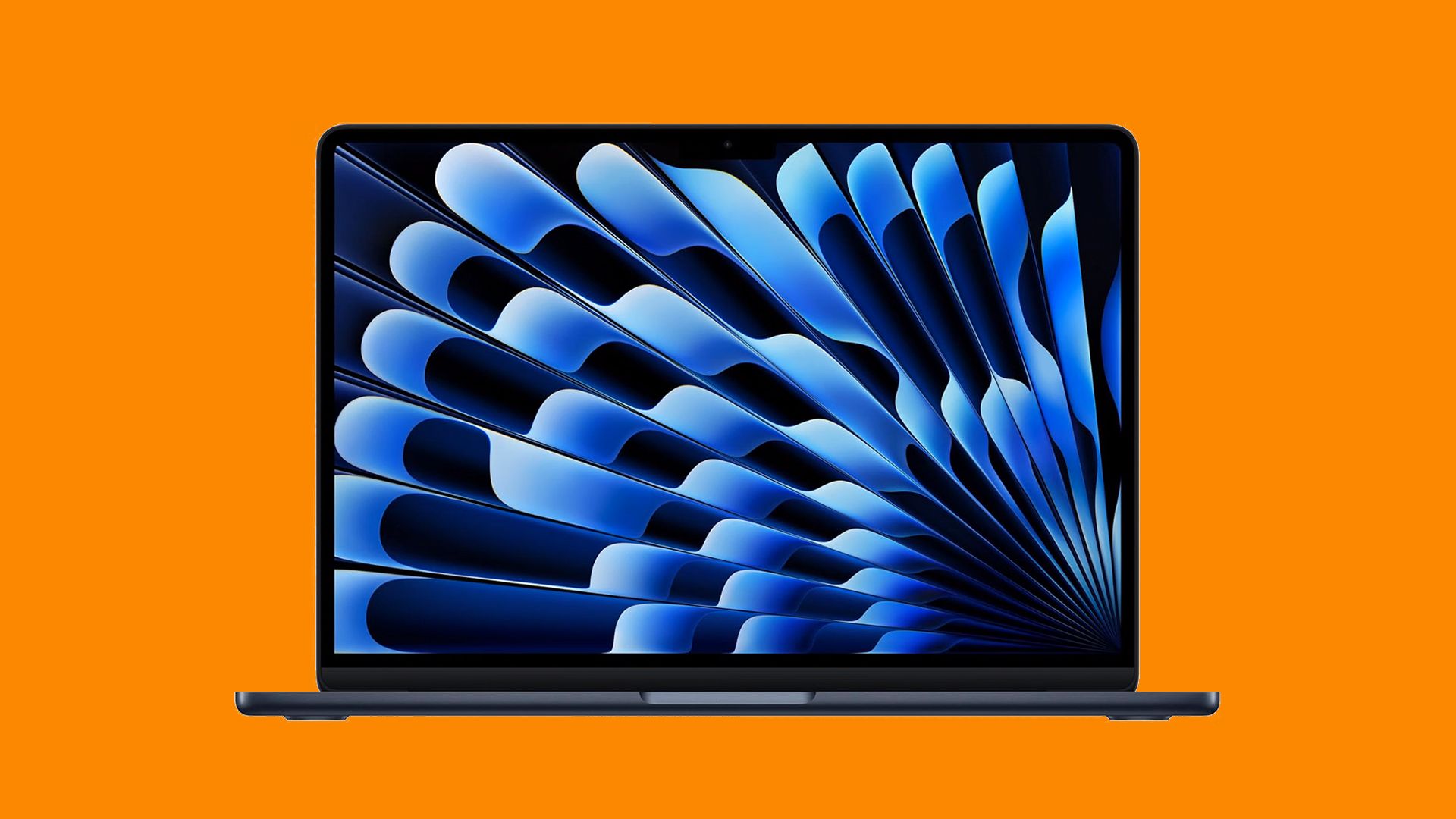
Despite these market headwinds, major retailers have officially rolled out their holiday promotions. Leading the charge are notable price cuts on the newest iterations of Apple’s portable computing lineup. Amazon has dropped prices by $200 on the 2026 M5 MacBook Air models, while B&H Photo has introduced savings of up to $300 on the robust M5 MacBook Pro lineup. Yet, questions remain regarding how deep these discounts can realistically go given Apple’s mid-2026 baseline price adjustments across all MacBooks.
This comprehensive report examines the current state of MacBook Black Friday deals, analyzing the interplay between manufacturing constraints, retail pricing strategies, and consumer purchasing decisions. By evaluating historical savings data, refurbished market alternatives, and the technological divide between the MacBook Air and MacBook Pro, this guide provides an authoritative roadmap for navigating the 2026 holiday shopping season.
Detailed Chronology of the 2026 Tech Market and Holiday Sale Evolution
The trajectory of the 2026 retail calendar has broken from historical norms, pushed forward by supply chain pressures and strategic shifts among major electronics distributors. Understanding how the current market arrived at this juncture requires a chronological examination of the events leading up to the holiday shopping window.
Early 2026: The Component Crunch and Baseline Price Increases
The first half of the year was defined by a severe bottleneck in the global semiconductor and component supply chains. The rapid, capital-intensive expansion of artificial intelligence infrastructure—specifically hyperscale data centers—strained the availability of foundational hardware components, including advanced logic chips, high-bandwidth memory, and specialized display panels.
In response to rising production costs and constrained component allocations, Apple implemented a series of baseline price hikes across its entire Mac lineup in mid-2026. These adjustments instantly altered consumer expectations, shifting the baseline cost of entry for Apple’s ecosystem. Industry analysts quickly projected that these structural price increases would naturally dampen the magnitude of subsequent holiday discounts, as retailers and manufacturers alike sought to protect profit margins.
Fall 2026: New Releases and Retail Positioning
As the fall product cycle commenced, Apple introduced several high-profile additions to its hardware ecosystem, culminating in the release of the groundbreaking touchscreen PROLED XDR MacBook Pro earlier this month. This launch set a new benchmark for professional-grade portable displays, integrating advanced tactile controls and exceptional luminance metrics.
However, the debut of such cutting-edge hardware immediately raised questions regarding its promotional vulnerability during the upcoming shopping season. Industry observers noted that newly introduced flagship devices rarely receive substantial price cuts during their initial launch window. Retailers recognized that early adopters would pay a premium, reserving deeper markdowns for established configurations like the M5 MacBook Air and the standard M5 MacBook Pro variants.
November 2026: The Early Onset of Black Friday Sales
Traditionally anchored to the Friday immediately following Thanksgiving in the United States—falling on November 27 this year—Black Friday has long since broken free of its 24-hour constraints. Major online and brick-and-mortar retailers initiated their promotional campaigns as early as the first week of November.
This front-loading of sales was designed to capture consumer demand early, mitigating the risk of inventory depletion amid ongoing supply chain limitations. By mid-November, the promotional baseline had stabilized: Amazon established a $200 discount threshold on the 2026 M5 MacBook Air models, while specialized distributors like B&H Photo aggressive positioned M5 MacBook Pro units with markdowns reaching up to $300.
As the calendar rolls toward Cyber Monday on November 30, industry experts anticipate that these early November prices will represent the ceiling for new MacBook discounts in 2026.
Supporting Context & Metrics: Analyzing the Savings and Market Dynamics
To contextualize the current promotional landscape, it is essential to evaluate the historical parameters of MacBook discounts alongside the unique economic indicators of 2026.
Historical Discount Trends vs. 2026 Realities
In previous years, standard Black Friday promotions for Apple laptops followed a predictable sliding scale:
- MacBook Air Models: Standard discounts typically hovered around the $200 mark for base configurations.
- MacBook Pro Models: Entry-to-mid-tier configurations generally saw reductions of approximately $300.
- High-Configuration Units: Premium setups featuring expanded storage arrays (such as 2TB SSDs) and higher memory allocations (36GB+ of unified memory) occasionally experienced clearance discounts of up to $500, particularly as retailers prepared to clear out previous-generation inventory.
The 2026 market diverges from this historical precedent primarily because of the aforementioned component shortage. Because baseline manufacturing costs increased earlier in the year, profit margins for both first-party vendors and third-party retailers are considerably tighter. Consequently, while the absolute dollar amount of current discounts ($200 off Airs, $300 off Pros) matches historical norms, the relative percentage discount against the newly inflated baseline prices is technically lower.
Retailer Breakdown and Strategic Positioning
| Retailer / Platform | Primary Focus | Featured 2026 Discount | Strategic Assessment |
|---|---|---|---|
| Amazon | Consumer-facing M5 MacBook Air | $200 off 13-inch models | Highly competitive for mainstream users; likely the floor price for these units. |
| B&H Photo | Professional M5 MacBook Pro | Up to $300 off select SKUs | Excellent for creative professionals seeking performance configurations without buying direct. |
| Apple Official / Direct | Trade-ins & Refurbished stock | Standardized gift card promos / educational pricing | Prioritizes ecosystem integration over direct cash-off discounting. |
Perspectives and Official Industry Commentary
While direct quotes from corporate executives regarding holiday discount strategies are tightly guarded, retail analysts and industry insiders have offered clear perspectives on the macroeconomic forces at play.
Market researchers specializing in consumer electronics supply chains note that the current pricing environment is a direct consequence of global silicon allocation. “When foundational component costs rise across the board due to intense cross-industry competition—such as the massive capital expenditure pouring into AI data centers—every downstream consumer product absorbs that pressure,” notes one senior tech supply chain analyst. “Apple’s mid-2026 price adjustments were an inevitable market correction. Retailers are now navigating a delicate balance: they need to stimulate holiday volume through promotional pricing, but they simply do not have the margin buffer to offer the aggressive, deep-cut clearances we saw in 2023 or 2024.”
Consumer advocacy groups and retail strategists similarly advise caution for buyers waiting for a miraculous eleventh-hour price drop on brand-new hardware. “If you are looking at the newly released touchscreen PROLED XDR MacBook Pro, waiting for a major Black Friday or Cyber Monday discount is a gamble with very low odds of success,” a leading retail trends commentator explains. “For proven workhorses like the M5 MacBook Air and M5 MacBook Pro, the current $200 to $300 price cuts are robust, healthy discounts. Waiting until the final hours of Cyber Monday might yield marginal stock clearance tweaks, but it also runs the severe risk of inventory depletion.”
Future Outlook: Strategic Guidance for Consumers
As the 2026 holiday shopping season reaches its crescendo between Black Friday and the close of Cyber Monday on November 30, buyers must weigh immediate hardware needs against long-term technological trajectories.
New vs. Refurbished: Making the Right Investment
For budget-conscious creators, students, and professionals, the refurbished market presents an increasingly viable alternative to purchasing brand-new hardware. Certified refurbishment programs—ranging from Apple’s own official offerings to trusted third-party platforms like Back Market—frequently feature legacy M-series machines with price reductions exceeding $800 compared to original launch values.
- When to Buy Refurbished: If primary use cases involve standard productivity tasks, web browsing, content consumption, and light creative workflows, a thoroughly tested previous-generation machine (such as an M2 or M3 series device) offers exceptional value. These units undergo rigorous diagnostic testing and often arrive with brand-new outer shells and fresh batteries.
- When to Buy New: For users requiring cutting-edge computational power, heavy 4K/8K video editing pipelines, complex 3D rendering, or native support for advanced localized AI workloads (such as future iterations of Apple Intelligence), purchasing a current-generation M5 series MacBook—or taking advantage of the active $200–$300 holiday price cuts—represents a superior long-term investment designed to last five years or more.
Choosing Between MacBook Air and MacBook Pro
Selecting the correct form factor remains paramount to ensuring long-term satisfaction.
- The MacBook Air Argument: Characterized by a fanless, silent design, incredible thinness, and stellar battery life, the MacBook Air is engineered for maximum portability. It serves the vast majority of students, writers, and mobile professionals effortlessly.
- The MacBook Pro Argument: Featuring active cooling systems, more robust chip configurations (such as the M5 Pro and M5 Max), brighter displays with ProMotion technology, and expanded input/output arrays (including HDMI and dedicated SD card slots), the MacBook Pro is purpose-built for intensive, sustained professional workloads.
Final Takeaway
The 2026 MacBook Black Friday market demonstrates resilience in the face of complex global supply chain challenges. While component shortages and prior price hikes have altered the math behind holiday discounts, meaningful savings of $200 to $300 are readily available across major retail channels. Consumers are advised to secure these promotional prices while inventory remains stable, ensuring they are well-equipped for both the holiday season and the digital demands of the years ahead.