Executive Overview
Apple’s long-awaited entry into the foldable smartphone market—the iPhone Duo—carried the heavy burden of redefining a product category pioneered years earlier by competitors like Samsung and Google. Arriving seven years after the debut of the first Samsung Galaxy Fold, the iPhone Duo was met with the familiar refrain that characterizes Apple’s entry into nascent markets: Apple arrives late, but it arrives better. Armed with the lessons of its rivals’ early missteps, Apple was expected to deliver a foldable that felt exceptionally functional, elegantly premium, and seamlessly integrated into the iOS ecosystem—a device that, in true Apple fashion, "just works."
Initial market response seemingly validated this premise. The iPhone Duo sold out within hours of its launch, with pre-orders and backorders instantly stretching into January. For a device carrying a steep $2,000 price tag, this demand signaled intense consumer appetite.
However, as early units find their way into the hands of real-world users, reviewers, and durability testers, a more complex narrative is emerging. While the hardware showcases Apple’s typical design ambition, early feedback has exposed critical pain points. From mechanical vulnerabilities around the hinge and localized screen failures to thermal management controversies and persistent software fragmentation, the iPhone Duo is proving that even Apple is not immune to the growing pains of first-generation foldable engineering. With replacement stock constrained by severe supply scarcity, early adopters facing hardware failures are discovering that owning Apple’s premiere foldable comes with unprecedented logistical and functional hurdles.
Detailed Chronology: From Launch Hype to Real-World Stress Tests
The trajectory of the iPhone Duo shifted rapidly from celebration to critical scrutiny in the weeks following its release. The timeline of its public reception highlights how quickly consumer enthusiasm can collide with engineering realities.
Phase 1: The Pre-Order Frenzy and Initial Optimism
When Apple officially announced the iPhone Duo, tech commentators and analysts focused heavily on its manufacturing polish. Touted for featuring a nearly invisible crease—a notorious weakness in rival foldable displays—the device was positioned as the pinnacle of industrial design. Consumers rushed to secure units, resulting in an immediate sellout that pushed delivery dates deep into January. Early unboxings praised the device’s weight distribution, premium chassis materials, and the sheer novelty of stepping into Apple’s foldable ecosystem.

Phase 2: Early Social Media Disclosures and Durability Stress-Testing
As independent reviewers and tech creators began putting production units through rigorous testing, the first structural and software concerns surfaced. Content creators like Tim Pan and HTX Studio subjected the iPhone Duo to manual fold endurance tests to evaluate how the proprietary hinge and ultra-thin glass held up under repetitive stress.
- Tim Pan’s Evaluation: Testing the device through thousands of manual folds, Pan noted that while the hinge mechanism maintained structural integrity, the display’s central crease became visibly and palpably deeper after 10,000 folds—a milestone easily reachable within a few months of heavy, real-world multitasking.
- HTX Studio’s Findings: HTX Studio’s stress tests raised more alarming questions. After just 3,000 folds, the Duo’s central crease was visibly deeper than those found on comparative third-generation foldable devices from competing brands. Furthermore, testers reported that the OLED screen panel immediately surrounding the fold line felt noticeably softer and more vulnerable to pressure.
Phase 3: Extreme Destructive Testing and Community Backlash
Pushing beyond standard usage, high-profile durability testers exposed the iPhone Duo to extreme environmental and physical abuse. These evaluations yielded startling vulnerabilities that quickly went viral:
- The Dirt and Debris Test: Fine particulate matter and dust easily infiltrated the mechanical track of the hinge. Testers found that trapped dirt obstructed the magnetic closing mechanism, preventing the two halves of the phone from sitting flush.
- The Flame Test: When subjected to direct exposure from a lighter flame for under 10 seconds, the inner polymer-protected OLED screen suffered permanent localized pixel failure and surface scorching.
- Structural Bend and Line Defects: Rigorous chassis-flexing tests triggered vertical line defects across the fragile internal display, confirming that extreme torsion compromises the internal ribbon cables and pixel matrices situated beneath the fold.
Phase 4: The Stock Scarcity Bottleneck
The intersection of high failure rates and unprecedented supply chain constraints quickly escalated into a customer service crisis. Real-world feedback highlighted that users experiencing dead pixels, central vertical fractures, or line defects along the display were being informed by Apple Support that replacement units or screen repairs would not be available until January due to component shortages. This forced consumers who invested heavily in a premium device to endure months of waiting with compromised hardware.
Supporting Context & Metrics: Performance, Thermals, and Software Adaptation
Beyond catastrophic hardware failures, daily usability reports have shed light on the engineering compromises Apple made to deliver a slim foldable form factor.
Thermal Management and the "Vapor Chamber" Debate
One of the most widely discussed anomalies reported by early reviewers—including prominent tech journalist Joanna Stern—was the device’s tendency to run noticeably warm during routine tasks. Users noted that prolonged FaceTime calls, intensive camera usage, and even background multitasking caused the chassis to elevate in temperature to a degree that felt uncomfortable in the hand.
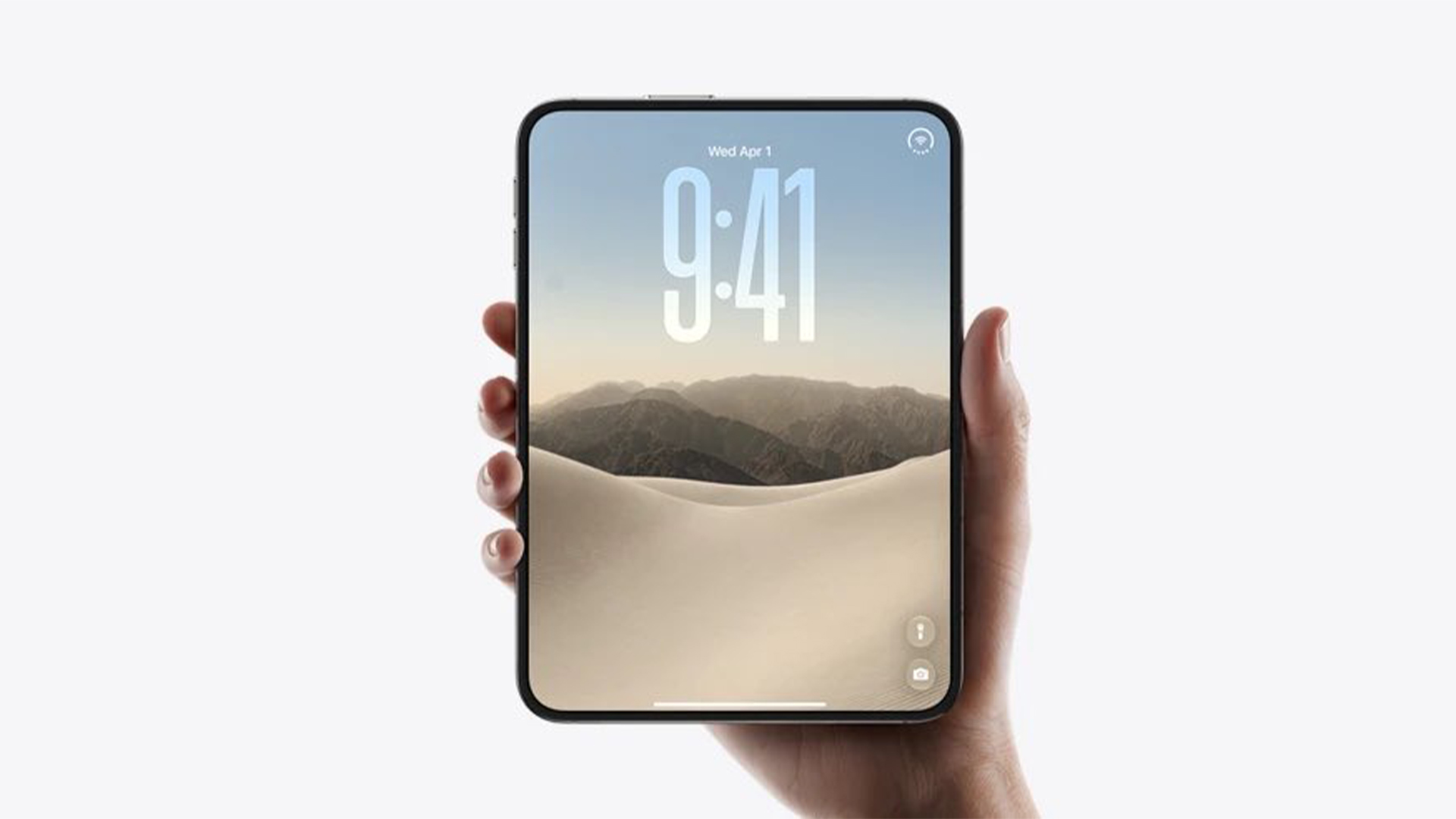
Apple addressed these concerns directly, asserting that the thermal profile is entirely intentional and reflects an advanced, custom-engineered cooling architecture at work. Because the iPhone Duo requires a significantly slimmer vapor chamber than its non-foldable sibling, the iPhone 18 Pro, Apple integrated a flexible graphite heat pipe system woven directly around the central hinge.
This design successfully transfers thermal energy away from the primary processing silicon and distributes it across both halves of the device to maximize surface-area dissipation. However, the engineering trade-off is stark: while the internal silicon remains safely cooled, the external casing absorbs and radiates that heat directly into the user’s hands.
Software Fragmentation and UI Scaling Issues
As an entirely new hardware category for the company, the iPhone Duo has exposed temporary gaps in iOS optimization. While native Apple applications and major third-party platforms have been updated to scale dynamically across the expansive inner canvas, a vast ecosystem of legacy apps struggles with layout adaptation.
Reviewers observed two distinct failure states for unoptimized software:
- The Letterbox Trap: Certain modern iOS applications default to a restricted smartphone aspect ratio centered on the massive inner display, flanked by intrusive black bars.
- The Tablet Scaling Bug: Other apps incorrectly inherit iPadOS-style display parameters, rendering a tiny, unoptimized window in the center of the screen that becomes aggressively blurry when users attempt to force a resize.
Furthermore, transition animations between the outer cover screen and the unfolded inner display frequently suffer from stuttering frame rates. Software bugs have occasionally caused the integrated camera software to misinterpret orientation data, capturing upside-down or laterally inverted media until the application is forcibly restarted.

Biometric Discontent: The Face ID vs. Touch ID Debate
Apple’s decision-making regarding biometric authentication has also drawn sharp criticism from productivity-focused users. The iPhone Duo relies on a side-mounted Touch ID sensor embedded within the power button rather than deploying dual Face ID sensor arrays across both internal and external camera notches.
When questioned by reviewers, Apple stated that maintaining a single biometric authentication method ensures a consistent unlocking experience regardless of whether the device is folded or unfolded. However, real-world usage patterns indicate that consumers spend the vast majority of their time interacting with the device in closed, single-handed "phone mode." Users have expressed frustration that Apple prioritized design consistency over practical convenience, arguing that a hybrid approach—utilizing Face ID on the exterior cover screen and Touch ID (or secondary facial mapping) on the interior—would have better served a multitasking device.
Official Statements and Industry Response
Apple has maintained a measured public stance in response to the early wave of critique, framing the initial hardware anomalies and thermal behavior as expected phenomena for a breakthrough, first-generation product category.
In communications with select tech publications and reviewers, Apple representatives emphasized that the structural integrity of the hinge has undergone rigorous internal mechanical testing that exceeds simulated lifetime wear cycles. Regarding thermal radiation, company engineers reiterated that the flexible graphite heat-pipe system is performing precisely as designed to protect battery health and processor longevity under peak workloads.
Industry analysts, however, view the early rollout through a more cautionary lens. Competitor telemetry suggests that while Apple has successfully eliminated the visual obtrusiveness of the crease during the initial unboxing phase, the underlying material science required to balance screen softness, crease prevention, and long-term durability remains a delicate tightrope walk. Independent hardware engineers note that the softness observed around the iPhone Duo’s fold line is an inherent byproduct of using flexible polymer-encased OLED matrices, suggesting that early wear and tear is an unavoidable tax for early adopters.

Future Outlook: What Lies Ahead for Apple’s Foldable Lineup
The rollout of the iPhone Duo serves as a classic case study of Apple entering a mature market late, armed with refined execution, yet still stumbling over foundational engineering hurdles.
For prospective buyers currently evaluating the device, the path forward involves a careful calculation of risk versus reward. On one hand, the iPhone Duo is not marketed as an elite camera powerhouse, nor is it free from the software fragmentation that typically plagues newly formatted device classes. On the other hand, the vast majority of software optimization issues, UI scaling bugs, and transition animation stutters are entirely rectifiable via upcoming iOS updates.
Yet, prospective buyers face a unique logistical bottleneck. With pre-orders heavily backlogged and replacement parts bottlenecked until deep into the winter, acquiring a functional unit or securing timely repairs requires exceptional patience.
Ultimately, consumers sitting on the fence are confronted with two distinct choices: wait out the next few months while Apple patches software inconsistencies and stabilizes manufacturing yields, or bypass the first-generation experiment altogether. Given the rapid pace of iteration in the foldable space, waiting could mean bypassing the growing pains of the original Duo entirely—and setting sights firmly on the inevitable refinements promised by an eventual iPhone Duo 2.