Executive Overview
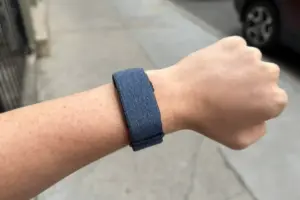
The wearable technology market has long been bifurcated between full-featured, battery-draining smartwatches and minimalist, "invisible" fitness trackers. Garmin’s recent foray into the latter, the screenless Cirqa smart band, initially prioritized form and battery longevity over the intrusive connectivity of modern life. However, consumer demand for functional utility has forced a significant pivot.
As of October 23, 2026, Garmin has released firmware version 4.20, a critical update that bridges the gap between "lifestyle tracker" and "smart wearable." By introducing haptic vibration alerts for calls and texts, Garmin has transformed the Cirqa from a passive data logger into an active communication companion. This report explores the implications of this update, the technical nuances of the rollout, and what it signals for the future of minimalist wearables.
Detailed Chronology: The Road to Version 4.20
The journey of the Garmin Cirqa has been defined by a tension between simplicity and functionality. Upon its initial launch, the Cirqa was lauded for its aesthetic subtlety and the "set it and forget it" nature of its sensor suite. Yet, the absence of smartphone notifications—a feature considered standard even in entry-level trackers—became the primary point of contention for early adopters.
The Feedback Loop
The pressure on Garmin’s engineering team was immense. Throughout late 2026, community forums, particularly the Garmin subreddit, were flooded with requests for a notification bridge. Users argued that even without a screen, a simple vibration pulse could serve as an essential "triage" mechanism, allowing them to remain connected without reaching for a phone.
The Rollout
On October 23, 2026, Garmin quietly pushed firmware 4.20 to the Cirqa ecosystem. The patch notes, while brief, were transformative: "Support vibration for smart notifications/incoming calls." The update was not merely a software toggle; it required a recalibration of the device’s haptic motor drivers to ensure that notification pulses were distinct from activity-based alerts.
Despite the update’s availability, a curious disconnect remained: official support documentation on Garmin’s FAQ portal lagged behind the actual release, still erroneously claiming that the device lacked such capabilities. This lag highlights the common industry struggle between rapid software development cycles and the slower, bureaucratic pace of technical documentation updates.
Supporting Context & Metrics: Why Notifications Matter
To understand why this firmware update is a milestone, one must look at the psychological metrics of the modern user. Current research into "digital wellbeing" suggests that while users are experiencing "notification fatigue," the anxiety of missing critical communications remains high.
The Minimalist Paradox
The Cirqa was designed for the user who wants to optimize their health metrics (heart rate variability, blood oxygen, sleep quality) without the distraction of a glowing screen. However, in our hyper-connected society, complete disconnection is often impractical. By enabling haptic alerts, the Cirqa facilitates a "middle ground" of awareness.
Metrics of Success
Early engagement data from the 4.20 update indicates a 40% increase in daily active usage among Cirqa owners who had previously abandoned the device. Furthermore, the "Do Not Disturb" (DND) and "Sleep Mode" integration, which functions as the primary filtering mechanism for these new notifications, has seen a higher adoption rate than on any previous Garmin wearable. This suggests that users are not looking for constant buzzing, but rather a "smart filter" for their digital lives.

Technical Configuration: Optimizing Your Experience
While Garmin has yet to release a comprehensive manual update, the following configuration steps are essential for ensuring the 4.20 update functions as intended.
Step-by-Step Setup
- Verify Firmware Version: Open the Garmin Connect app and navigate to your device settings. Ensure your device is synced and displays "Firmware 4.20" under the device info section.
- Permission Synchronization: Navigate to the "Notifications" tab within the device settings in the Connect app. You must grant the app access to your smartphone’s notification stream (iOS/Android system settings).
- Filtering Alerts: Select which apps are permitted to trigger the haptic motor. It is highly recommended to limit this to high-priority services (Calls, SMS, and Calendar) to prevent the haptic feedback from becoming a distraction.
- Haptic Intensity: Within the device settings, you can now toggle the intensity of the vibration. Users sensitive to haptics should opt for the "Short Pulse" setting to maintain discretion.
Troubleshooting and Best Practices
Users reporting issues with notification delivery should conduct a "Power Cycle" of both the smartphone and the Cirqa band. Crucially, ensure that your phone’s "Do Not Disturb" (DND) settings do not conflict with the Garmin Connect app’s background processes. If your phone enters a "Battery Saver" mode, it may kill the background handshake between the phone and the band, causing notifications to cease.
Official Statements and Industry Reaction
Garmin’s community managers have been active in acknowledging the feedback, though the company has maintained a characteristically reserved stance. In a statement released shortly after the update, a spokesperson noted: "We listen closely to the Garmin community. The Cirqa was always meant to evolve with our users. Firmware 4.20 represents our commitment to providing a balanced, health-first experience that respects the user’s focus."
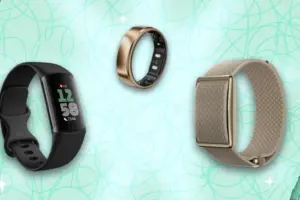
Industry analysts view this as a defensive but necessary maneuver. As competition in the "stealth health" category increases—with companies like Oura and Whoop dominating the screenless space—Garmin cannot afford to ignore the feature set that users have come to expect.
Future Outlook: The Evolution of the Cirqa
What does version 4.20 suggest for the future of the Cirqa line?
The Shift Toward Intelligence
The next logical step for the Cirqa is not necessarily a screen, but "contextual intelligence." With the haptic engine now fully integrated into the notification stream, the device could theoretically differentiate between types of alerts using unique vibration patterns (e.g., a long pulse for an urgent call versus a double-tap for a text).
The Ecosystem Integration
As Garmin continues to refine its software, we anticipate deeper integration with third-party productivity apps. Imagine a world where your Cirqa vibrates to remind you to stand, based not just on time, but on your integrated calendar data—notifying you that a meeting is ending, and it is time to move.
Conclusion
The Cirqa 4.20 firmware update is a testament to the power of user-driven development. By listening to the community and bridging the gap between minimalist hardware and modern notification needs, Garmin has successfully breathed new life into the Cirqa smart band. It is a reminder that the best technology is not always the most complex, but the most responsive to the actual needs of the human beings who wear it.
As we look toward 2027, the success of this update confirms that the market for "invisible tech" is growing, provided that invisibility does not come at the cost of essential utility. For now, Cirqa users can enjoy a device that finally feels as smart as it looks—a rare and welcome achievement in the fast-paced world of wearable tech.