Executive Overview
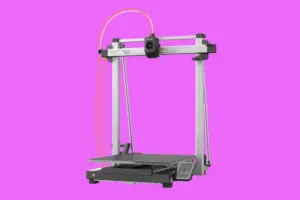
In a sweeping move that is sending shockwaves through the consumer additive manufacturing market, Anycubic has slashed the price of its flagship large-format multi-color 3D printing bundle. The Anycubic Kobra 3 Max Combo—which pairs the monumental Kobra 3 Max printer chassis with the advanced ACE Pro multi-color filament management system—is currently available at a staggering 50% discount on the company’s official United States storefront.
Originally retailing for $1,149, the four-color bundle has plummeted to a remarkably accessible $574. Meanwhile, a larger eight-color configuration has also seen steep price cuts, bringing it down to $803. According to industry insiders and retail trackers, this dramatic markdown is part of a dedicated clearance event to clear remaining warehouse inventory. Because supplies are strictly limited, analysts predict these units will not linger long on digital shelves.
For creators, industrial designers, cosplayers, and hobbyists alike, this clearance marks a watershed moment. Multi-color, large-format 3D printing has historically been an expensive proposition, often locking budget-conscious makers out of enterprise-scale builds. By reducing the cost of admission by over five hundred dollars, Anycubic is effectively democratizing massive, multi-color fabrication. This comprehensive report explores the specifications, market context, performance capabilities, and broader implications of what may be the definitive 3D printing bargain of the season.
Detailed Chronology: The Evolution of Accessible Multi-Color Large-Format Printing
To fully understand the significance of the current Anycubic Kobra 3 Max clearance, one must examine the rapid, almost breathless evolution of consumer 3D printing technology over the past several years.
The Single-Color Era and the Multi-Material Bottleneck
For a long time, desktop 3D printing was defined by compromise. Makers could either purchase a compact machine capable of high-speed printing in a single filament color, or they could invest heavily in industrial, multi-extruder systems that were notoriously difficult to calibrate, prone to nozzle oozing, and cost-prohibitive for everyday enthusiasts.
The introduction of automated material switching systems—pioneered most notably by Bambu Lab with its AMS units and subsequently matched by competitors like Creality and Anycubic—changed the paradigm entirely. Suddenly, multi-color and multi-material printing became clean, automated, and reliable. However, a new bottleneck emerged: build volume. Most multi-color systems were bound to standard 256 x 256 x 256mm build plates. If users wanted to print large helmets, sprawling architectural models, or monolithic mechanical prototypes, they were forced to chop their designs into smaller pieces, glue them together, and deal with unsightly seams and structural weak points.
The Rise of the "Max" Class
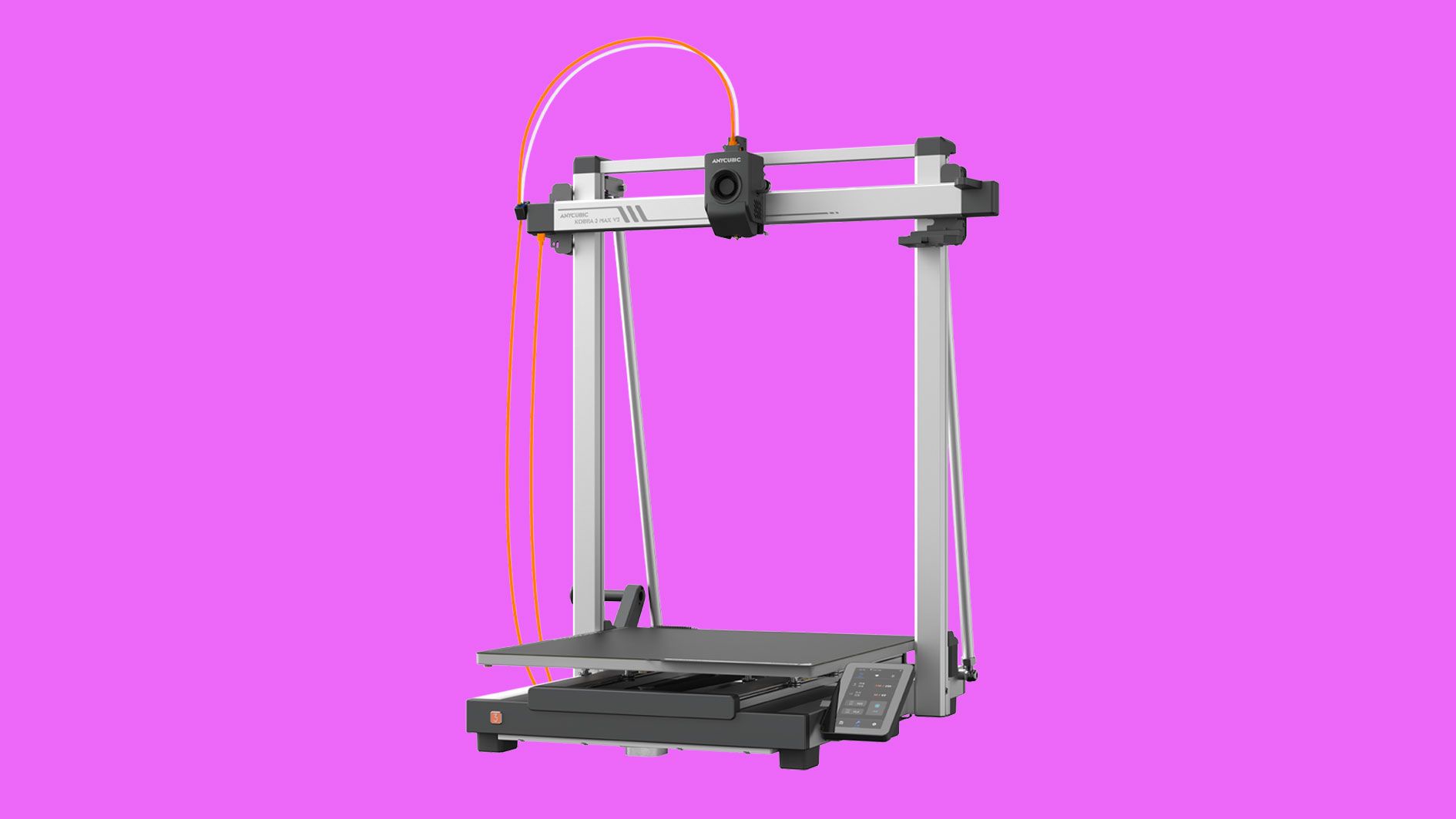
Recognizing this frustration, manufacturers began racing to scale up their platforms. Anycubic stepped into the spotlight with the conceptualization and eventual release of the Kobra 3 Max. Designed from the ground up to conquer massive spatial footprints, the printer boasted a jaw-dropping build volume of 420 x 420 x 500mm.
When paired with the ACE Pro (Anycubic Color Engine Pro) unit, the Kobra 3 Max Combo established a formidable new category: the large-format, multi-color consumer workstation. Marketed aggressively upon its initial launch, the system commanded a premium price of $1,149, positioning it as a serious investment for advanced hobbyists and small-scale production studios.
The Clearance Catalyst
The abrupt drop to $574 signals a strategic pivot in Anycubic’s product life cycle. In the fast-moving consumer electronics and additive manufacturing sectors, hardware generations succeed one another with blistering speed. Clearance events of this magnitude typically indicate that manufacturers are clearing floor space in their distribution centers to make way for next-generation hardware iterations. For savvy consumers, however, corporate inventory management translates directly into unprecedented purchasing power, setting the stage for one of the most aggressive hardware discounts in recent memory.
Supporting Context & Metrics: Breaking Down the Hardware Specifications
To appreciate why a 50% discount on the Kobra 3 Max Combo is causing such a stir within maker communities, one must look closely at the raw engineering specifications driving the machine.
Build Volume and Spatial Dominance
The defining feature of the Kobra 3 Max is, without question, its colossal work envelope. Providing a build volume of 420 x 420 x 500mm, the machine offers a staggering 88.2 liters of printing space. To put this into perspective, a user can print large-scale cosplay armor pieces, full-sized helmets, large mechanical gears, and complex architectural mockups in a single, unbroken print run. This eliminates the post-processing nightmare of chemical welding, sanding, and gap-filling that plagues users of smaller machines.
Speed and Performance Metrics
Size is frequently traded off for speed in older generation large-format printers, but Anycubic engineered the Kobra 3 Max to keep pace with modern expectations:
- Max Theoretical Speed: Up to 600 mm/s, showcasing the rigidity of the motion system and the responsiveness of the firmware.
- Recommended Everyday Speed: 300 mm/s, striking an optimal balance between high throughput, structural layer adhesion, and surface finish quality.
- Acceleration: Tuned to handle rapid directional changes smoothly, minimizing ghosting and ringing artifacts on large, flat surfaces.
The ACE Pro Multi-Color Ecosystem
The "Combo" designation includes the ACE Pro (Anycubic Color Engine Pro), a dedicated filament management and drying box designed to feed up to four distinct filaments seamlessly into the print head.
- Four-Color Capabilities (Expandable): Out of the box, the system coordinates four spools, allowing for complex multi-color designs or multi-material prints utilizing soluble support structures (such as PVA or breakaway filaments). For extreme projects, the system can scale up to support an eight-color configuration, currently discounted to $803.
- Active Filament Drying: Unlike passive dry boxes, the ACE Pro incorporates active heating and moisture management technology. This is critical for hygroscopic engineering filaments like Nylon, TPU, PETG, and even standard PLA, ensuring that damp filament does not ruin hours of multi-color printing due to stringing, bubbling, or nozzle clogs.
- RFID Smart Recognition: The system integrates smart features to track filament types, remaining lengths, and optimal temperature profiles, streamlining the setup process for complex print jobs.
Official Statements and Industry Reception
Industry analysts and independent reviewers have closely monitored Anycubic’s aggressive pricing strategy. While the company itself positions the Kobra 3 Max Combo as the premier large-format multi-color choice for consumers—a claim supported by its unique footprint in the current market landscape—external observers note that this pricing strategy reflects shifting competitive pressures.
A spokesperson for retail analytics firm Additive Insights noted:
"The consumer 3D printing market has reached a hyper-competitive inflection point. Companies can no longer rely solely on novelty features. To capture market share from entrenched rivals, brands must deliver extreme value on hardware that solves real user pain points—namely, the restriction of build size in multi-color workflows. Cutting the price of an 88-liter multi-color system in half is a definitive power play."
Early consumer reception on forums such as Reddit’s r/3Dprinting and specialized creator channels has been overwhelmingly enthusiastic, though tempered with standard logistical warnings about desk space. At 420 x 420 x 500mm of build volume, the physical machine itself commands a substantial footprint, requiring a sturdy, dedicated workbench capable of handling both the printer’s weight and the dynamic forces of rapid high-speed movement.
Future Outlook: What This Means for the Future of 3D Printing
The dramatic discounting of the Anycubic Kobra 3 Max Combo is more than just a fleeting flash sale; it offers a clear window into where the broader additive manufacturing industry is heading.
Democratization of Industrial-Scale Capabilities
For years, printing large, multi-colored objects required either industrial Selective Laser Sintering (SLS) systems costing tens of thousands of dollars, or immense patience with manual filament swaps and post-print painting. By bringing a multi-color, half-meter-tall printing capability down to the sub-$600 mark, Anycubic is effectively establishing a new baseline expectation for consumer-grade hardware.
As supply chains clear out these legacy clearance units, competitors will inevitably be forced to respond. Consumers can look forward to a market where large-format multi-color printing is no longer treated as a luxury tier reserved for professionals, but as a standard feature expected across mid-to-high-tier consumer devices.
Considerations for Prospective Buyers
For makers considering jumping on this clearance deal, a few key factors should be kept in mind:
- Space Requirements: Ensure you have adequate workshop or studio space. The Kobra 3 Max is a heavy-duty machine that requires clearance for its moving bed and external spool management systems.
- Maintenance and Calibration: Large-format beds require meticulous manual or automated leveling to ensure first-layer adhesion across a massive 420mm square surface. Fortunately, modern auto-bed-leveling sensors mitigate much of this friction, but users must still perform routine hardware checks.
- Stock Limitations: Because this is explicitly clearance stock tied to Anycubic’s US storefront, availability is finite. Once remaining inventory is depleted, these specific price points are unlikely to return.
In summary, the half-price markdown of the Anycubic Kobra 3 Max Combo represents a rare convergence of advanced technological capability and aggressive market pricing. Whether outfitting a burgeoning design studio, expanding a cosplay workshop, or simply diving headfirst into massive creative projects, makers have rarely had a more cost-effective opportunity to think—and print—big.