
Executive Overview
In an era defined by hyper-connectivity, cloud storage, and relentless data accumulation, humanity operates under a comforting illusion: digital permanence. We assume that because our creative work, personal photographs, and professional archives lack physical mass, they are somehow impervious to decay. Yet, a paradox defines our current technological epoch. While physical artifacts from the late 19th and early 20th centuries—such as F. Holland Day’s pioneering 1898 photographic series The Seven Words or newly discovered set documents from the 1926 silent horror masterpiece Faust—remain remarkably intact and viewable after more than a hundred years, our recent digital history is vanishing into thin air.
Recent revelations from the heart of the consumer electronics industry underscore an alarming reality. Flash memory, the invisible backbone of modern solid-state drives (SSDs), USB thumb drives, and camera memory cards, suffers from a silent, hidden vulnerability: data degradation through neglect. If an SSD or flash drive is left unpowered in a drawer for as little as a year, the electronic charge holding your files in place can bleed away, leaving irreplaceable digital assets corrupted or entirely unrecoverable.
Compounding this hardware volatility is the precarious nature of cloud storage, shifting corporate priorities, and rapid software obsolescence. Web-rot is consuming the internet at a staggering pace, defunct social media platforms routinely purge millions of user files during server migrations, and closed-source proprietary formats turn yesterday’s creative triumphs into tomorrow’s unreadable binary gibberish.
This investigative report explores the fragile underpinnings of digital archiving, examines manufacturing insights from global memory leaders like Lexar, unpacks hard data regarding web decay, and outlines actionable survival strategies to ensure your digital life survives into the decades ahead.
Detailed Chronology: The Evolution and Fragility of Digital Preservation
To understand how modern data archiving reached such a precarious juncture, we must examine the historical trajectory of digital storage media alongside the shifting paradigms of software support and corporate responsibility.
The Illusion of Infinite Durability (1990s–2000s)
During the mass digitization wave of the late 20th century, legacy physical media—such as floppy disks, magnetic tape, and early CD-ROMs—were heralded as eternal replacements for paper, film, and vinyl. Designers, photographers, and corporations eagerly migrated workflows away from physical studios and filing cabinets into local digital directories.
However, hardware standards evolved at a breakneck speed. Within a single decade, the floppy disk drive vanished entirely from consumer computers, rendering millions of legacy project files functionally inaccessible without specialized, aging hardware interfaces.
The Platform Economy and Corporate Purges (2010s)
As broadband speeds increased, local storage gave way to the cloud and social media networks. Platforms like MySpace, Flickr, and various independent portfolio sites positioned themselves as permanent digital museums for creative communities.
The structural fragility of this model was exposed dramatically in 2019, when MySpace admitted that a poorly executed server migration had permanently wiped out approximately 50 million uploaded tracks from 14 million artists, encompassing all audio, video, and image files uploaded between 2003 and 2015. The company offered no restitution or recovery paths, merely advising users to maintain their own independent backups—a hollow directive given that many users had trusted the platform precisely as their primary backup.
Software Abandonment and Format Obsolescence (2020)
Hardware degradation is only half the battle; software architecture presents an equally formidable barrier to long-term digital longevity. A prime watershed moment occurred on December 31, 2020, when Adobe officially ended support for Adobe Flash Player, blocking all Flash content from running across major web browsers.
For interactive designers, animators, and digital artists who built entire portfolios in Flash during the late 2000s, this corporate lifecycle sunset effectively vaporized active access to a decade’s worth of interactive web history. Without complex, third-party emulation projects like Ruffle, those digital assets would be entirely lost to time.
The Contemporary Reality Check (2023–Present)
Recent industry audits have further shattered illusions of web stability. A landmark study by the Pew Research Center revealed that roughly 38% of all webpages that existed in 2013 were no longer accessible a decade later in 2023. Furthermore, sudden corporate contractions—such as OpenAI’s unannounced wind-down of experimental video tools like Sora—demonstrate that venture-backed technologies can disappear overnight, taking user ecosystems down with them.
Supporting Context & Metrics: The Scale of the Digital Crisis
To grasp the magnitude of the threat facing modern archives, one must look at the hard metrics governing hardware lifespan, web degradation, and corporate data loss.
Flash Memory Physics and Charge Leakage
Solid-state drives (SSDs), USB flash drives, and SD/CFexpress memory cards utilize NAND flash memory. Inside these devices, microscopic floating-gate transistors or charge-trap transistors store data by trapping electrons in an isolated pocket of silicon dioxide.
- The Mechanism: To retain data, the insulation barrier must keep electrons trapped. However, natural quantum tunneling and thermal energy can cause these electrons to slowly leak over time.
- The Timeline: According to engineering briefs from major manufacturers, if a consumer flash storage device remains unpowered in a desk drawer for 12 to 18 months, the cumulative charge loss can destabilize voltage thresholds, resulting in bit-rot and unreadable file directories.
- The Firmware Safeguard: When an SSD is plugged into an active computer, its internal controller runs background garbage collection and read-refresh cycles, actively detecting drifting voltage levels and rewriting the data to maintain integrity. Unpowered drives miss these vital maintenance cycles entirely.
Web-Rot Statistics (Pew Research Center Data)
The structural decay of the World Wide Web is occurring at a rate that alarms digital historians and librarians alike:
- 38% of all 2013 web pages vanished by 2023.
- 54% of pages on popular social media platforms experience link rot or total deletion within a five-year window.
- 8% of pages on government and academic domains suffer identical fates, proving that institutional archives are not immune to administrative oversight or broken URL routing.
The Human Cost of Disconnected Archives
Creative professionals are disproportionately affected by these systemic failures. In a hypothetical audit of designers and photographers with 20 years of career history:
- Over 70% report being unable to open or locate critical work produced during the early phases of their careers due to a combination of dead hard drives, proprietary abandoned file formats, and closed cloud accounts.
Official Statements & Industry Insights
Inside Lexar’s Shenzhen Cleanrooms
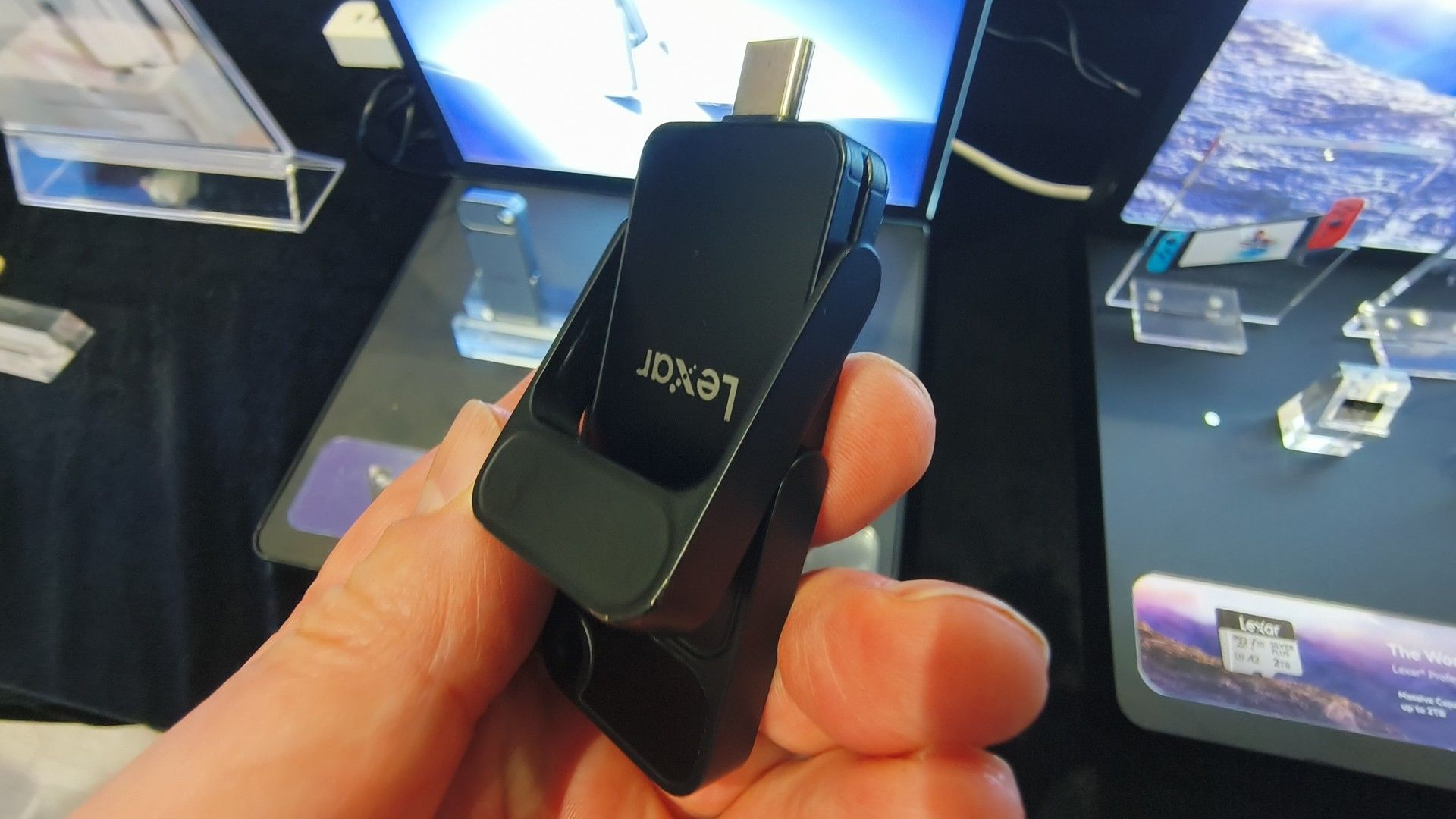
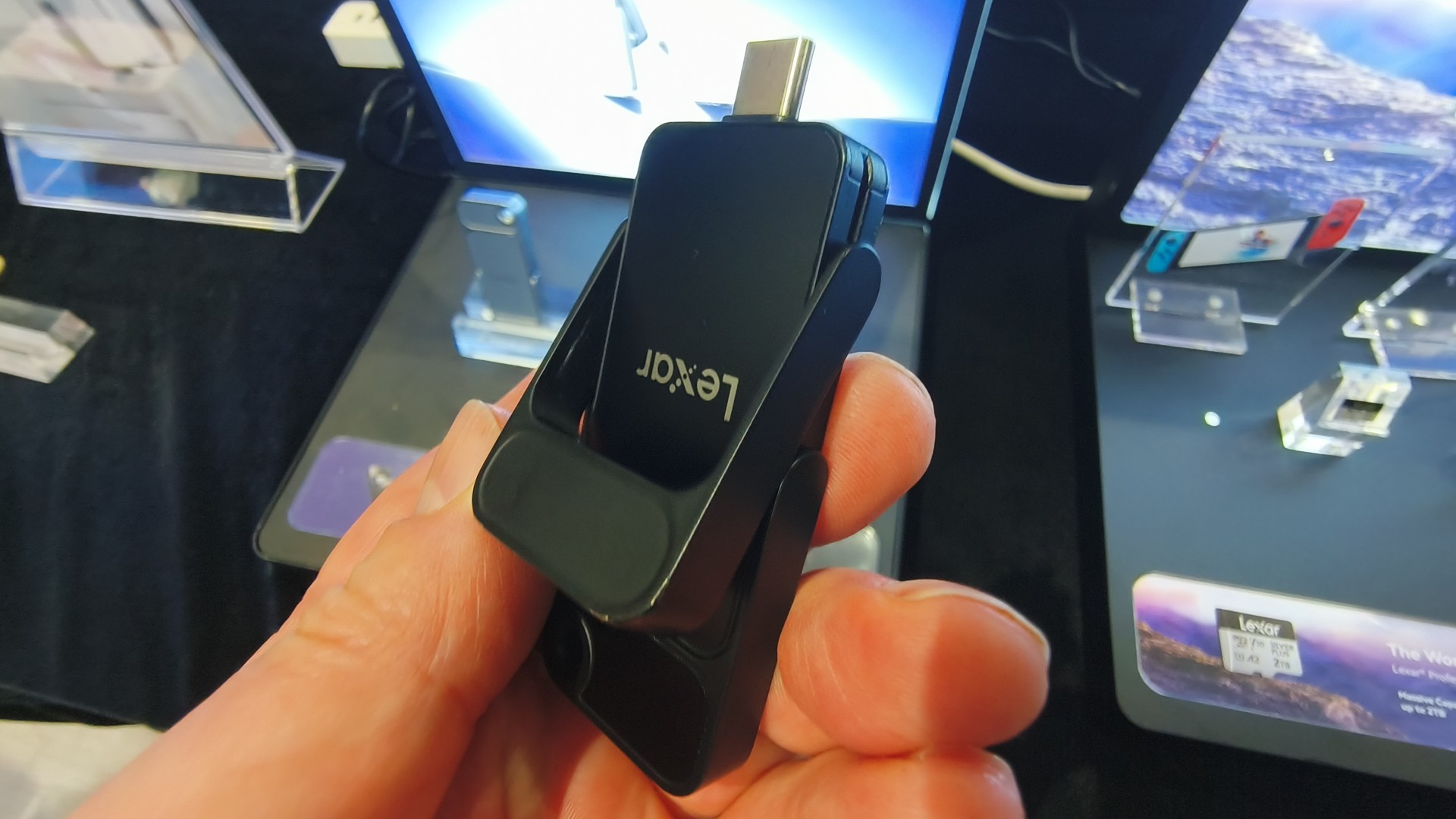
In March, industry analysts and journalists toured memory card manufacturer Lexar’s state-of-the-art production and validation facilities in Shenzhen, China. Witnessing the microscopic precision required to etch NAND wafers in cleanroom environments highlighted the incredible engineering feats behind modern storage.
Yet, during technical press briefings, company representatives delivered a sobering reality check that challenged marketing narratives surrounding indestructible solid-state tech:
"The consumer flash memory found in everyday memory cards and SSDs is an engineering marvel designed for high-speed read and write operations during active use," noted a senior Lexar technical representative. "However, it is not a vault. If you remove a card or drive from active service, place it in a drawer, and fail to supply power to it for over a year, you invite data degradation. The physics of electron containment simply demand environmental maintenance."
Lexar engineers revealed that the company is exploring specialized hardware docking solutions and firmware monitoring protocols designed to alert users to long-term storage dormancy, though such consumer-facing tools remain in early developmental stages.
The Disconnect Between Tech Giants and Archivists
The fragility of modern cloud infrastructure was further highlighted by digital rights advocates following high-profile cloud storage reorganizations and platform closures. Industry watchdogs emphasize that venture capital-funded tech platforms prioritize rapid scaling and quarterly profitability over multi-decade data stewardship.
As digital preservationist coalitions note: "When you store your life’s work on a third-party platform, you are renting space in a commercial warehouse whose owner can demolish the building whenever the profit margins shift. True preservation requires ownership, redundancy, and physical sovereignty over your files."
Future Outlook: How to Future-Proof Your Digital Legacy
If we fail to adjust our archiving habits, future historians will look back at the early 21st century as a baffling "Digital Dark Age"—an era where humanity recorded more information than at any point in history, yet left behind less durable proof of its existence than ancient civilizations carved in stone or pressed in clay.
To protect your creative assets, professional documents, and personal archives from falling victim to bit-rot, cloud abandonment, and format obsolescence, industry experts recommend adopting a multi-layered, proactive survival framework:

1. Implement the Rigorous 3-2-1 Backup Rule
Never rely on a single storage location. The gold standard of data protection requires:
- 3 total copies of all important files.
- 2 different storage media types (e.g., local hard drives and cloud storage, or SSD and archival magnetic tape/optical media).
- 1 offsite or cloud backup physically isolated from your primary workspace to protect against local disasters, theft, or power surges.
2. Establish a Routine Hardware Exercise Schedule
Do not let your storage media hibernate indefinitely.
- Every six to twelve months, pull your cold-storage external SSDs, USB drives, and camera memory cards out of storage.
- Plug them into a computer and power them up. Allow the drive controller to execute its internal diagnostic and refresh routines, ensuring that trapped electrons are re-energized and voltage levels are normalized.
3. Migrate to Open and Future-Proof File Formats
Proprietary software formats are ticking time bombs. Whenever you complete a major creative project, export your work into universal, open, or long-term preservation standards:
- Images: Migrate raw or proprietary working files into uncompressed TIFF, standardized PNG, or scalable vector SVG formats.
- Documents & Layouts: Export design files to archival-grade PDF/A formats rather than relying on native application files that may require legacy software versions to parse correctly.
4. Treat Cloud Platforms as Shop Windows, Not Vaults
Use online portfolio networks, social media platforms, and client delivery clouds for active promotion and collaboration only. Never treat a third-party server as your sole master archive. Always retain local, redundant master copies under your direct physical control.
5. Consider the Analogue Revival (Print Your Work)
While it sounds counterintuitive in a high-tech world, physical media retains an unmatched longevity advantage. High-quality archival photographic prints, acid-free paper documentation, and physical book bindings have a proven track record spanning centuries. As long as you protect physical records from extreme moisture, fire, and direct UV exposure, ink on paper outlasts transient silicon architectures.
Conclusion
The digital age has granted creators unprecedented speed, distribution, and expressive power, but it has quietly stripped away our historical permanence. By recognizing that flash memory decays in darkness, that cloud platforms answer to shareholders rather than historians, and that proprietary file formats possess an aggressive expiration date, we can take back control of our digital narratives.
If future generations judge our era harshly, it will not be because we failed to create magnificent art, code, and literature. It will be because we could not be bothered to keep the lights on for the history we left behind.