Executive Overview
In the interconnected architecture of the modern web, trust is often implicitly inherited rather than actively verified. On November 16, this foundational vulnerability was violently exposed when at least 178 high-profile web destinations unwittingly served advanced malware exploits to their visitors. The vector of infection was not a direct breach of these organizations’ internal servers, but rather a catastrophic supply chain compromise originating at Optimizely, a globally ubiquitous platform utilized for customer experience personalization and feature testing.
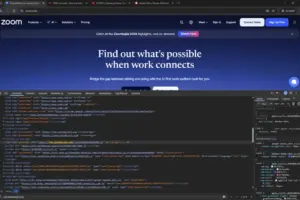
High-traffic digital properties including the BBC, CNN, Equifax, Ledger, and Zoom became unwitting distribution nodes for malicious JavaScript payloads. According to data from security firm Report URI, the breach deployed a versatile multi-purpose malware kit capable of harvesting sensitive payment card details, capturing user cookies, recording browsing screenshots, and intercepting cryptocurrency transactions
by dynamically swapping destination wallet addresses. Compounding the threat, the attack vector actively distributed zero-click exploit kits—such as "DarkSword" and "Coruna"—engineered to target and compromise unpatched vulnerabilities in older Apple iPhone and iPad devices.
This incident underscores an uncomfortable truth of modern software architecture: a digital enterprise can maintain pristine internal cybersecurity hygiene and still fall victim to a catastrophic supply chain compromise via a single third-party dependency. Because organizations routinely fail to enforce strict Content Security Policies (CSPs), and because tools like Optimizely are injected high in the Document Object Model (DOM) to bypass consent dialogs, the malicious payload executed silently and instantaneously upon page load. Cybersecurity experts warn that as threat actors leverage automation and artificial intelligence to refine supply chain attacks, the current reliance on unvetted third-party scripts represents an existential risk to the web ecosystem.
Detailed Chronology: The Anatomy of the Optimizely Supply Chain Compromise
The crisis began to unfold on November 16, when an unauthorized threat actor successfully exploited an undisclosed security vulnerability within the Optimizely Experimentation framework. By penetrating this infrastructure, the attackers gained administrative privileges sufficient to inject customized, malicious JavaScript into active customer projects. Because Optimizely’s operational mandate is to execute real-time content modification and performance tracking, its tracking snippets are deliberately placed near the very top of a host website’s Hypertext Markup Language (HTML) document.
This architectural requirement ensures that the Optimizely script renders before user consent dialogs, cookie banners, or other interactive interface elements can load. Consequently, when unsuspecting visitors navigated to mainstream domains like Zoom or the BBC, the malicious JavaScript executed immediately in the background, requiring zero user interaction, clicks, or explicit permissions.
According to Scott Helme, founder of Report URI, the malicious payload was remarkably dynamic. The injected JavaScript code was systematically rebuilt and re-deployed 26 distinct times over the course of a single 24-hour window. This iterative refinement allowed the threat actors to evade basic signature-based detection mechanisms and test varying degrees of malicious functionality. The deployed script acted as an initial loader, dropping a comprehensive suite of data-stealing utilities. This toolkit was weaponized to siphon user session cookies, log keystrokes, capture high-resolution screenshots, and execute man-in-the-middle attacks on cryptocurrency transfers by identifying wallet strings in the Document Object Model and replacing them with accounts controlled by the attackers.
Simultaneously, the injected scripts analyzed incoming user-agent strings to detect mobile visitors utilizing legacy Apple hardware. For targets identified running vulnerable, unpatched iterations of iOS or iPadOS, the script delivered tailored zero-click exploit chains—colloquially tracked under threat intelligence monikers such as "DarkSword" and "Coruna." These sophisticated toolchains chain together multiple disparate software vulnerabilities to achieve full remote code execution, escaping browser sandboxes and granting attackers deep root access to compromised iPhones and iPads for wholesale data extraction.
Optimizely’s incident response team identified the unauthorized access later that day. The company issued a rapid remediation protocol, which included blocking access to the exploited vector, deploying an emergency hotfix, scrubbing malicious scripts from affected customer projects, terminating active user sessions, revoking compromised authorization tokens, and forcing credential resets for administrative accounts. Furthermore, Optimizely partnered with cloud infrastructure provider Cloudflare to deploy edge-level mitigations designed to intercept and drop unauthorized script injections. Despite these swift containment measures, the incident had already run its course across 178 major organizations, demonstrating the devastating speed and scale of modern third-party software supply chain attacks.
Supporting Context & Metrics: The Architectural Flaws of the Modern Web
To understand how a single vendor compromise could propagate to nearly two hundred elite digital properties, one must examine the fundamental reliance on third-party JavaScript across the contemporary internet.
Modern websites are rarely built from scratch; instead, they are assembled like digital jigsaw puzzles using dozens of external components, analytics tools, marketing tags, advertising SDKs, and personalization engines. According to the 2025 Web Almanac compiled by the HTTP Archive, the median enterprise homepage loads a minimum of 22 distinct JavaScript files from external domains.
This decentralized model introduces massive attack surfaces. Zach Edwards, a cybersecurity researcher at Infoblox and co-founder of the ad-tracking firm DecryptAds, emphasizes that services like Optimizely are uniquely positioned to inflict maximum damage during a breach.
"So to make the product work as expected, this code is setup to fire immediately on-page load, and not restrict rendering behind a consent dialog box," Edwards explained. "This means that this supply chain attack didn’t require any clicking or consent to trigger — most of the impacted clients would immediately serve up the payload as soon as someone loaded the page, further increasing risks from this type of JavaScript snippet being compromised."
The primary defense mechanism designed to prevent unauthorized script execution is the Content Security Policy (CSP). A properly configured CSP is an HTTP response header that allows site operators to restrict the domains from which the browser is permitted to load scripts, styles, and other resources. If a website strictly defines its CSP, an attacker who manages to inject an unauthorized script via a third-party vendor will find their payload blocked by the browser, rendering the injection harmless.
However, the empirical data collected by Report URI in the wake of the Optimizely incident reveals a systemic, industry-wide failure in CSP adoption:

- Total Lack of Protection: Out of the 178 organizations directly impacted by the Optimizely breach, 68 sites (roughly 38%) had deployed no Content Security Policy whatsoever. For these properties, browsers blindly executed any script supplied by the compromised vendor.
- Misconfigured Protection: An additional 50 sites had implemented a CSP, but the policies were written so loosely or permissively that they actively permitted the execution of the malware payload and the subsequent exfiltration of stolen data.
- Effective Mitigation: Only 24 of the affected sites (merely 15 percent) possessed CSPs robustly configured to successfully block the malicious script injection.
When viewed across the broader web, adoption statistics remain deeply concerning. Crawler data from Helme’s security scanning initiative, crawler.ninja, indicates that only about 10 percent of the top one million most-trafficked websites utilize effective CSPs. Organizations frequently bypass CSP deployments due to the friction they introduce during marketing and analytics integrations, preferring flexibility over granular security boundaries.
Official Statements and Industry Response
In the wake of the disclosures, corporate entities and security researchers have scrambled to assess the fallout and issue guidance to the digital community.
Optimizely released an official statement detailing the timeline of the attack and the technical countermeasures deployed to secure their platform:
"On November 16, 2026, Optimizely identified a security incident in which an unauthorized party exploited a vulnerability in the Optimizely Experimentation to add malicious JavaScript to some customer projects. We acted swiftly to contain the incident and have fully remediated the identified vulnerability. These measures included blocking access to the vulnerable path, deploying a fix, removing the injected code from affected projects, ending active sessions, revoking tokens, and resetting access for affected user accounts. We have also implemented additional protections to prevent malicious code from being delivered in Cloudflare. While the incident has been fully remediated, we are working with third-party experts on a comprehensive investigation."
Despite the remediation, security analysts point out that the financial and data losses—while difficult to quantify in aggregate—reflect the opportunistic nature of modern cybercrime. Report URI estimates that the threat actors managed to siphon approximately $7,500 in cryptocurrency alongside an undisclosed volume of credit card transaction logs and session tokens. While the monetary yield may appear relatively modest for an operation affecting elite global brands, the potential for downstream account takeovers and corporate espionage remains exceptionally high.
Scott Helme did not mince words when assessing the current state of web engineering, comparing the prevailing operational model to an unregulated frontier:
"Organizations are running all this code, but they don’t know what it’s doing," Helme stated in an interview with KrebsOnSecurity. "This is why we keep seeing such large scale breaches in places [where] there are no checks and rules in place on the code we’re running, so this was kind of inevitable. Once an attacker gets to the point of running code on your site, the question is what do they want to do with that and can they write the script to do it. Now with AI that’s not a problem anymore."
The integration of artificial intelligence into the attacker’s workflow represents a paradigm shift. Threat actors no longer need to spend days manually engineering complex polyglot scripts to evade detection; generative AI models can rapidly rewrite, obfuscate, and mutate malicious JavaScript payloads in real time, bypassing traditional signature detection and maximizing the window of exploitation before security teams can respond.
Future Outlook: Reinforcing the Digital Supply Chain
The Optimizely incident serves as a stark wake-up call for CISOs, web developers, and digital architects. As organizations increasingly rely on SaaS (Software-as-a-Service) providers to manage everything from front-end user experience to analytics and ad serving, the traditional perimeter-based security model has effectively dissolved. The security of a website is now intrinsically tied to the security posture of its weakest third-party vendor.
To prevent future supply chain catastrophes of this magnitude, the cybersecurity community is urging a fundamental overhaul of web governance strategies across three core pillars:
1. Universal Adoption of Strict Content Security Policies (CSPs)
Enterprise web operators must move past the administrative friction of implementing CSPs. While deploying a strict policy requires meticulous mapping of all authorized domains and can occasionally break third-party marketing tools if misconfigured, it remains the single most effective technical control against arbitrary script injection. Organizations must transition from permissive, report-only CSPs to enforced policies that cryptographically whitelist trusted scripts using nonces or hashes.
2. Rigorous Third-Party Risk Management (TPRM)
Software supply chain auditing cannot stop at backend APIs and cloud infrastructure databases. Organizations must extend their vendor risk assessments to encompass front-end dependencies. Companies should demand continuous security attestations, penetration test summaries, and Software Bills of Materials (SBOMs)—or their web-equivalent equivalents—from every vendor permitted to inject code into their production environments.
3. Client-Side Defense and End-User Mitigation
While organizational controls are paramount, the reality of widespread misconfigurations places significant burden on end users. Historically, cybersecurity guidance advised consumers to rely on operating system firewalls and traditional antivirus software. However, as web-borne threats proliferate via malicious JavaScript, the modern ad- and script-blocker has effectively become the user’s primary firewall.
Tools such as NoScript, modern privacy-focused browser extensions, and comprehensive content blockers can intercept and neutralize unauthorized third-party JavaScript execution before it reaches the browser DOM. While these tools have historically been relegated to privacy enthusiasts and security professionals, the Optimizely incident demonstrates that script-blocking technology is rapidly becoming a mandatory layer of defense for the average internet user navigating an increasingly hostile digital landscape.
Ultimately, the Optimizely breach highlights a systemic fragility at the heart of the web economy. Until website operators treat third-party scripts with the same rigorous scrutiny applied to core database infrastructure—and until robust Content Security Policies become an enforced industry standard rather than an afterthought—the digital ecosystem will remain perpetually vulnerable to silent, sweeping infiltrations.