Executive Overview
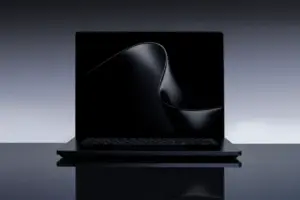
Microsoft has officially dropped the veil on its most ambitious professional hardware to date: the Microsoft Surface Laptop Ultra. Positioned squarely as a direct challenger to Apple’s dominant MacBook Pro line, this new high-end workstation aims to redefine what creative professionals can expect from a portable form factor. With a starting price of $2,599 and pre-orders already live, the Surface Laptop Ultra is scheduled to hit shelves and begin shipping on October 16.
Built from the ground up for power users, demanding creatives, and enterprise-level developers, the device promises a paradigm shift in how heavy multi-application workflows are handled on the go. Microsoft’s promotional showcases painted a picture of a machine capable of simultaneously crunching heavy code, rendering feature-film timelines in Da Vinci Resolve, and running AAA video game titles without dropping a frame.
Yet, the most compelling narrative surrounding the Surface Laptop Ultra isn’t merely raw horsepower—it is architecture. By leveraging a unified memory pooling system via a custom-designed hardware co-venture, Microsoft and Nvidia are looking to dismantle traditional bottlenecks that have constrained Windows-based laptops for decades. Whether these bold promises translate into real-world dominance remains to be seen, but the tech industry is already taking notice. As creative professionals increasingly demand desktop-class performance in mobile enclosures, the Surface Laptop Ultra may well be positioning itself at the very top of upcoming industry buying guides for 3D modeling, video production, and local AI processing.
Detailed Chronology: From Concept to Launch
The journey toward the Surface Laptop Ultra represents years of strategic maneuvering by Microsoft to capture a larger share of the lucrative creative professional market—a demographic long loyal to Apple’s macOS ecosystem and M-series chips.
The Build-Up and Industry Speculation
For years, Windows laptops faced a fragmented hardware landscape. While machines from manufacturers like ASUS, Razer, and Dell offered exceptional raw graphics processing units (GPUs) and central processing units (CPUs), they often struggled with thermal throttling, battery life degradation under heavy loads, and memory architectures that separated system RAM from dedicated video RAM (VRAM).
Microsoft’s Surface division recognized that simply upgrading components year-over-year would not suffice to dethrone the MacBook Pro. Instead, the company needed a holistic ecosystem play—one that deeply integrated cutting-edge silicon with optimized software pipelines. Rumors of a high-end, creator-focused "Ultra" tier began circulating among hardware analysts earlier this year, pointing to deep collaborations with graphics and AI giants to build a machine that could seamlessly manage heavy 3D assets, real-time ray tracing, and large language model (LLM) execution locally.
The Official Reveal and Keynote Highlights
During Microsoft’s high-profile hardware showcase, the company pulled back the curtain on the Surface Laptop Ultra, framing it not just as a laptop, but as a complete ecosystem for digital artists, engineers, and developers.
The highlight of the presentation was a live-simulation workflow designed to stress-test the machine’s capabilities to their absolute limits. A demonstration followed a creator building a complex, high-polygon scene in Blender, instantly transferring those assets directly into Unreal Engine for real-time lighting and physics simulations, and simultaneously touching up high-resolution textures in Adobe Photoshop. According to Microsoft’s internal metrics, a multi-stage pipeline that typically demands days of rendering and asset export loops was compressed into a matter of hours.
While industry veterans know to take manufacturer-led demonstrations with a grain of salt—pending rigorous, independent lab testing—the technical specifications backing up these claims are undeniably robust.
Pricing, Configurations, and Rollout Schedule
- Base Price: Starting at $2,599 for entry configurations.
- Pre-Order Status: Open immediately across major retail channels and the Microsoft Store.
- Official Launch & Shipping Date: October 16.
Given the price point, Microsoft is explicitly targeting enterprise environments, boutique creative agencies, and freelance professionals who rely on their machines as primary income-generating assets.
Supporting Context & Metrics: Under the Hood
To understand why the Surface Laptop Ultra commands a $2,599 starting price, one must examine the technological leaps baked into its architecture. The device introduces several industry-first design paradigms aimed squarely at eliminating traditional computing bottlenecks.
The RTX Spark Chip and Unified Memory Architecture
The single most significant hardware feature for creative professionals is how the Surface Laptop Ultra manages memory. Historically, laptops split resources between system RAM (managed by the CPU) and dedicated VRAM (housed directly on the discrete graphics card). If a 3D scene required 32GB of texture data, but the mobile GPU only possessed 16GB of VRAM, the system would bottleneck, leading to slowdowns, crashes, or forced optimization compromises.
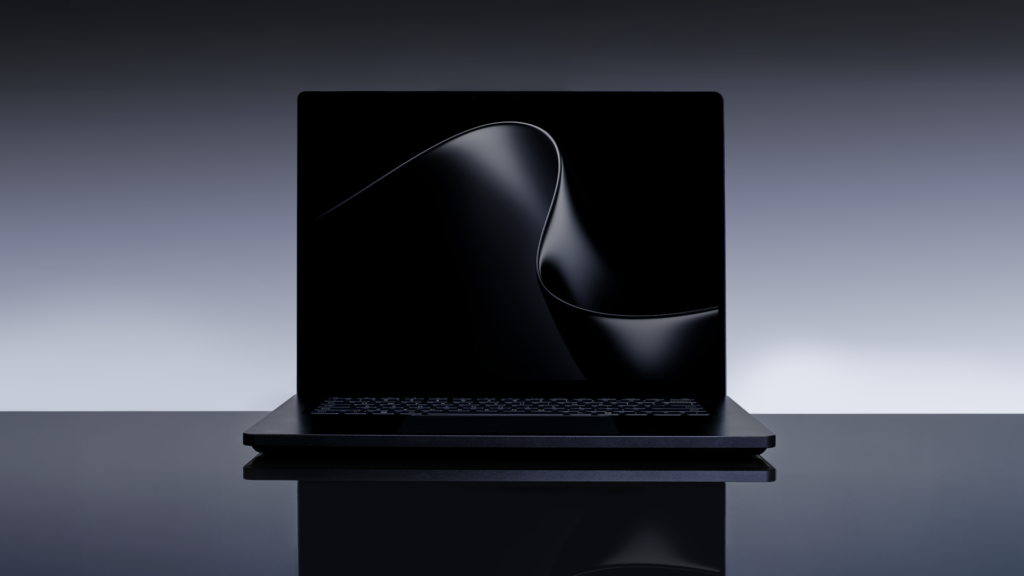
The Surface Laptop Ultra introduces the RTX Spark chip, a revolutionary architecture that allows the central processor and graphics subsystem to share a single, massive pool of up to 128GB of unified memory.
- Real-World Impact: Complex, photorealistic 3D environments, sprawling Unreal Engine maps, and multi-stream 8K video timelines in Adobe Premiere Pro or Da Vinci Resolve can be loaded directly into memory without choking the graphics pipeline.
- Comparative Advantage: This unified approach mirrors the philosophy behind Apple’s Unified Memory Architecture (UMA) found in M-series MacBook Pros, closing a generational gap that previously disadvantaged Windows creator laptops.
Local AI Processing and Model Scaling
Beyond traditional creative applications, the Surface Laptop Ultra is heavily optimized for the generative AI era. According to technical briefings provided by Nvidia, the laptop’s underlying platform is capable of running massive AI models directly on the local machine, scaling up to an astonishing 120 billion parameters.
For digital artists, concept designers, and developers experimenting with generative workflows, this represents a fundamental shift. Rather than relying on cloud-based APIs—which introduce latency, subscription costs, and data privacy concerns—creatives will be able to run advanced local models for style transfer, inpainting, text-to-3D generation, and automated coding assistance directly on the metal.
Performance Metrics at a Glance
- AI Compute Power: Up to 1 petaflop of theoretical AI performance (manufacturer-quoted metric pending independent verification).
- Maximum Unified Memory: Up to 128GB shared across CPU and GPU pipelines.
- Target Workflows: Concurrent AAA gaming, real-time Unreal Engine viewport manipulation, high-res video rendering, and heavy code compilation.
Official Statements and Industry Reception
The announcement has triggered a wave of analysis across the tech and design sectors. Industry leaders and software developers have weighed in on what the Surface Laptop Ultra means for the future of mobile workstations.
In a briefing accompanying the launch, representatives from Nvidia emphasized the democratization of high-end computing power:
"We are entering an era where cloud dependency is no longer a prerequisite for enterprise-grade AI and graphics processing. By integrating advanced silicon architectures directly into a portable laptop chassis, creators can take their entire studio—complete with large-scale LLMs and heavy 3D pipelines—anywhere in the world."
Meanwhile, early commentary from design publications and hardware reviewers has focused on the competitive dynamics of the creator market. For years, the Apple MacBook Pro has enjoyed a near-monopoly among video editors, UI/UX designers, and music producers due to its balance of silent operation, battery longevity, and color-accurate displays.
By pricing the Surface Laptop Ultra at $2,599 to start, Microsoft is signaling that it is no longer interested in competing on budget; instead, it is offering a direct, premium alternative to Apple’s high-end M3 and M4 Max configurations. The critical question facing reviewers over the coming weeks will not be whether the Surface Laptop Ultra is fast—on paper, it undoubtedly is—but rather how it manages thermal dissipation, fan noise, and battery efficiency when pushed to its limits away from a power outlet.
Future Outlook: What the Surface Laptop Ultra Means for Creatives
The launch of the Microsoft Surface Laptop Ultra marks a watershed moment for the Windows hardware ecosystem. As software suites like Adobe Creative Cloud, Blender, Unreal Engine, and Da Vinci Resolve become increasingly reliant on heterogeneous computing—leveraging CPUs, GPUs, and Neural Processing Units (NPUs) simultaneously—hardware must evolve to keep pace.
Key Trends to Watch Post-Launch:
- The Battle for the Creator Desktop Replacement: With unified memory pools becoming the standard for high-end mobile workstations, expect Apple to respond with subsequent iterations of its Silicon chips, setting up a generational showdown in performance-per-watt efficiency.
- The Rise of Local AI Workstations: As privacy regulations tighten and AI models grow more complex, the ability to run 120-billion-parameter models locally on a laptop will likely shift enterprise purchasing decisions away from desktop towers toward ultra-powerful mobile notebooks.
- Software Optimization: Independent software vendors (ISVs) will need to update their applications to fully exploit Microsoft and Nvidia’s shared memory architecture, ensuring that performance gains realized in controlled benchmark demonstrations translate seamlessly to everyday creative tasks.
Final Verdict: Is It Worth the Investment?
At $2,599 and up, the Microsoft Surface Laptop Ultra is undeniably a luxury investment aimed at professionals whose time directly translates to revenue. For 3D artists, game developers, and multimedia producers who require the flexibility of Windows-based software environments without sacrificing raw rendering power, this machine represents the pinnacle of current PC engineering.
As review units make their way into independent test labs ahead of the October 16 shipping date, the tech community eagerly awaits real-world stress tests. If the Surface Laptop Ultra can deliver on its ambitious performance and memory-pooling promises, Microsoft may finally capture the crown as the undisputed king of creative laptops.