Executive Overview
The landscape of mobile content creation has shifted dramatically over the last few years, turning the smartphone in your pocket into a legitimate, high-end cinema camera. With Apple introducing professional-grade capabilities like Apple ProRes recording, Log color profiles, and high-frame-rate 4K capture at up to 120 frames per second on flagship devices like the iPhone 15 Pro, iPhone 16 Pro, and the newly established iPhone 18 Pro, filmmakers have never had so much power at their fingertips. However, this democratization of high-end video production has introduced a severe hardware bottleneck: data management.
Shooting in uncompressed or lightly compressed professional formats generates staggering file sizes. A single minute of 4K ProRes video can consume roughly 7 GB of storage—up to 30 times the footprint of a standard HEVC file. Consequently, even a maxed-out, high-end iPhone 18 Pro can find its internal storage completely exhausted in a matter of minutes during a busy shoot. For serious creators, external solid-state drive (SSD) storage is no longer an optional luxury; it is a mandatory part of the production kit.
Compounding this storage crisis is a broader economic challenge. In 2026, the global memory and semiconductor markets have experienced severe pricing turbulence. Sky-high SSD prices, driven largely by insatiable enterprise and AI data center demand, have placed a heavy financial burden on everyday consumers and independent creators alike. Finding affordable, high-performance external storage has become a grueling hunt.
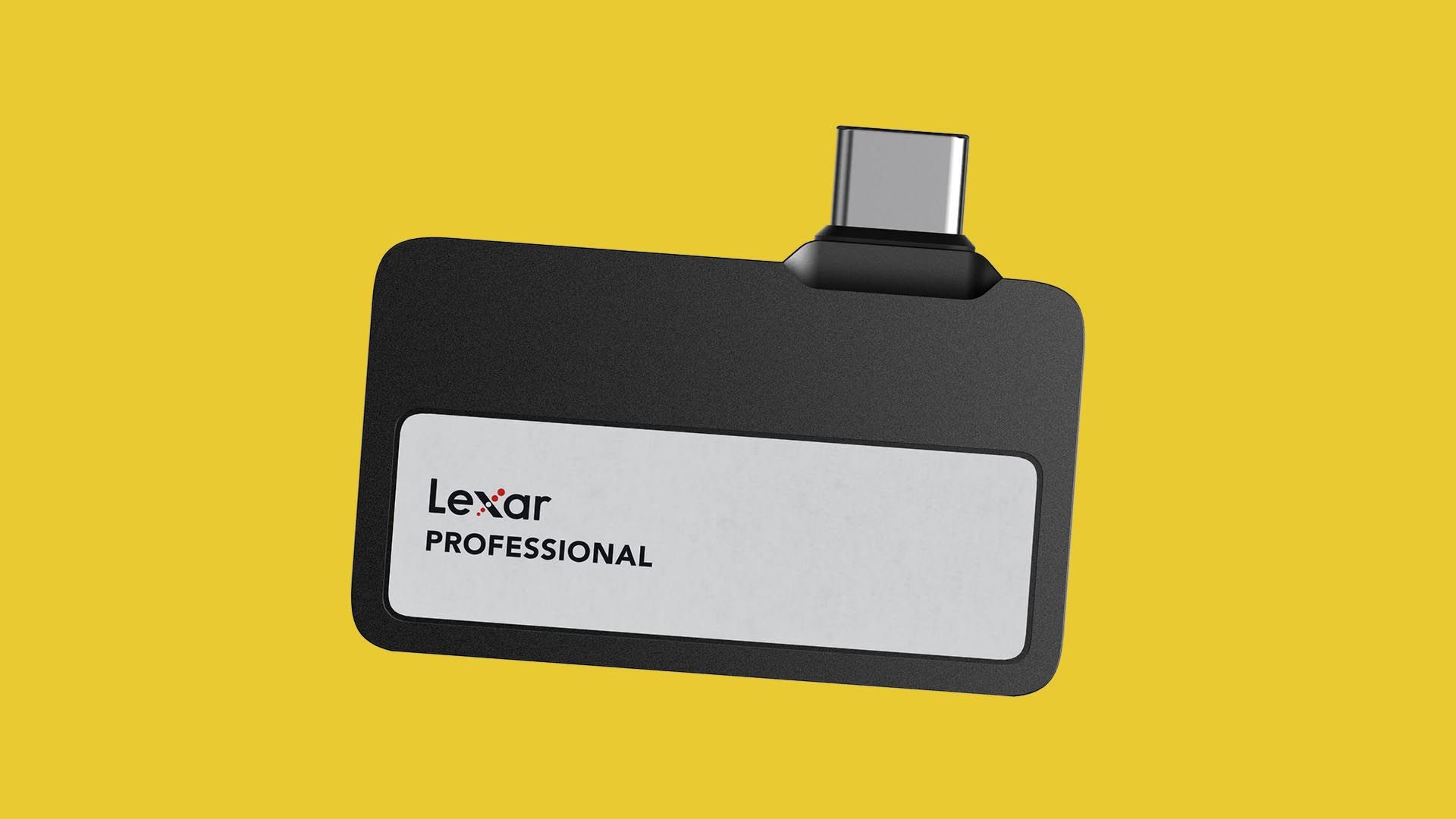
Yet, anomalies do occur in the retail landscape. B&H Photo has introduced a notable price cut on one of the industry’s most innovative mobile storage solutions: the Lexar Professional Go Portable SSD (1TB), slashed from its steep standard price of $379.99 down to $229.99. This deep discount represents the lowest price point observed for this particular model since the memory market price spikes earlier this year. For mobile videographers struggling to bridge the gap between cinematic ambition and hardware limitations, this deal offers a timely and cost-effective lifeline.
Detailed Chronology: The Evolution of Mobile Video and Storage
To understand why a specialized drive like the Lexar Professional Go is generating so much attention, it helps to examine the timeline of how mobile cinematography evolved and how the hardware industry struggled to keep pace.
1. The Pro-Res Revolution (2023)
When Apple launched the iPhone 15 Pro and iPhone 15 Pro Max, the company made a definitive play for Hollywood. By enabling native Apple ProRes recording directly to external USB-C drives—a feature previously reserved for heavy external monitors and dedicated cinema rigs—Apple opened the floodgates for independent filmmakers, documentary crews, and social media content creators. Creators could now shoot in high-dynamic-range formats that retained incredible color grading flexibility.
However, users quickly learned that the internal storage speeds and capacities of standard smartphones were fundamentally mismatched with ProRes workflows. A 256GB iPhone could disappear in less than an hour of continuous rolling.
2. The Rise of Modular Mobile SSDs (2024–2025)
Traditional external SSDs—such as the ubiquitous Samsung T7 or SanDisk Extreme Pro—were designed primarily for laptop and desktop use. While fast, hanging a bulky drive and a long cable off the bottom of an iPhone creates an unwieldy, fragile rig that is prone to accidental disconnections during dynamic handheld shots.
Recognizing this physical vulnerability, hardware manufacturers began developing modular, low-profile storage solutions. Lexar introduced the Professional Go Portable SSD, engineered specifically to sit flush against the back of USB-C-equipped smartphones. It bridged the gap between pocketability and professional data throughput, offering a direct plug-and-play workflow that bypassed the phone’s internal memory entirely.
3. The 2026 AI Infrastructure Boom and Storage Inflation
By early 2026, the technology sector entered a radically different economic climate. The exponential expansion of hyperscale AI data centers created an unprecedented global shortage of NAND flash memory and high-speed components. Factories that traditionally supplied consumer-grade storage shifted priorities toward enterprise servers and high-margin AI hardware.
As a result, consumer SSD prices surged across the board. Drives that were considered budget-friendly in previous years saw sudden, painful markup adjustments. For content creators operating on tight freelance margins, upgrading their mobile rigs became an expensive endeavor. This background makes current retail price drops—such as the B&H Photo promotion on the Lexar Professional Go—critical market events rather than routine sales.
Supporting Context & Metrics: The Mathematics of Mobile Filmmaking
To truly grasp the necessity of high-performance external SSDs, one must examine the raw numbers governing modern smartphone cinematography.
File Size and Bitrate Breakdown
Modern iPhones allow users to record video using various codecs, resolutions, and frame rates. The difference in data generation between consumer formats and professional workflows is staggering:
- Standard HEVC (H.265) 4K at 30 fps: Generates roughly 230 MB to 350 MB per minute. Highly manageable, but compresses shadow and highlight data, limiting professional color grading in post-production.
- Apple ProRes 4K at 30 fps: Generates approximately 3.5 GB to 4.5 GB per minute.
- Apple ProRes 4K at 60 fps or 120 fps (iPhone 15 Pro through iPhone 18 Pro): Generates up to 7 GB to 8.8 GB per minute.
At a rate of nearly 9 gigabytes per minute, a standard 512GB iPhone—accounting for operating system overhead and existing apps—can hold less than an hour of raw 4K/120fps ProRes footage. If a creator is filming a wedding, an indie short film, or a multi-segment documentary, internal storage is depleted within the first few hours of production.
Hardware Specifications of the Lexar Professional Go
The Lexar Professional Go Portable SSD is engineered specifically to handle these intense write speeds without choking or dropping frames. Key metrics include:
- Capacities Available: 1TB and 2TB options, with discounts hitting both tiers.
- Form Factor: An ultra-miniature, modular design that plugs directly into the phone’s USB-C port, eliminating dangling cables during handheld operation.
- Speed Performance: Leveraging high-speed USB-C connectivity, it delivers read and write speeds capable of sustaining continuous 4K ProRes recording at maximum frame rates.
- Ecosystem Add-ons: For an additional $20, buyers can integrate a specialized hub that provides power delivery, allowing users to charge their phone and power accessories while simultaneously recording to the drive.
Official Statements and Industry Perspectives
Industry analysts and hardware manufacturers have been vocal about the unique economic pressures facing the tech accessories market in 2026, as well as the design philosophy behind ultra-portable modular storage.
The Challenge of Semiconductor Supply Chains
Speaking on the state of global hardware pricing, tech supply chain analyst Marcus Vance noted earlier this year:
"We are witnessing an unprecedented squeeze on flash memory availability. Enterprise-grade demand for AI and large-scale data processing has fundamentally altered the semiconductor supply curve. Consumer electronics accessories—particularly high-speed portable storage—are absorbing these upstream costs, making significant retail discounts rare and increasingly valuable to budget-conscious professionals."
Lexar’s Design Philosophy
When introducing the Professional Go series, Lexar’s product development team emphasized the physical ergonomics of mobile video production. In a statement detailing the engineering behind the drive, a Lexar spokesperson explained:
"Smartphones have evolved into primary capture devices for high-end creators, yet the physical accessories used to support them remained anchored to desktop workflows. We designed the Professional Go to disappear into the rig. By removing the cable barrier and designing a flush, modular connection, we allow creators to focus entirely on composition and storytelling without worrying about accidental disconnections or cumbersome rigging."
Early adopters and professional mobile reviewers have echoed these sentiments, praising the drive’s ability to maintain thermal stability during long, uninterrupted takes at 120fps.
Future Outlook: Where is Mobile Storage Headed?
As we look toward the horizon of mobile technology, several clear trajectories are emerging for smartphone videography and external storage solutions.
1. Continued Resolution and Frame-Rate Escalation
Apple, Samsung, and other leading smartphone manufacturers show no signs of slowing down their camera hardware advancements. Future smartphone iterations will likely push boundaries further, introducing higher resolutions (such as 8K mobile capture) and even more complex color profiles. As video quality scales upward, file sizes will inevitably expand, reinforcing the absolute necessity of external, high-capacity solid-state drives.
2. The Stabilization of Memory Markets
While current semiconductor pricing remains inflated due to AI infrastructure demands, industry projections suggest that global manufacturing capacity will eventually stabilize as new fabrication plants come online over the next 24 to 36 months. Until that market equilibrium is reached, savvy creators must leverage targeted promotional events—such as the current B&H Photo markdown on the Lexar Professional Go—to future-proof their kits without overspending.
3. Convergence of Mobile and Desktop Workflows
The line separating mobile editing from traditional desktop post-production is blurring. With high-speed USB-C drives like the Lexar Professional Go acting as the physical bridge, the workflow is becoming entirely frictionless. A creator can shoot 4K ProRes 120fps footage directly onto the tiny SSD attached to their iPhone 18 Pro, unplug the drive instantly, snap it into a USB-C hub on a desktop editing suite, and begin color grading immediately without a single file transfer step.
Ultimately, tools that streamline this friction will dominate the creator economy. For mobile filmmakers navigating the high-cost landscape of 2026, taking advantage of major hardware discounts on modular, high-performance storage is not just a smart financial move—it is an essential operational strategy for staying competitive in a rapidly accelerating digital media landscape.