Executive Overview
For decades, desktop accessories have operated under an unspoken, frustrating dichotomy: you can either choose a sleek, ultra-thin profile that sacrifices tactility and mechanical satisfaction, or you can opt for a high-performance mechanical keyboard that requires a heavy, cumbersome chassis and sounds like a clattering typewriter. The former category—championed by low-profile membrane boards like the Apple Magic Keyboard and Logitech MX Keys—delivers minimalist aesthetic harmony at the expense of a squishy, uninspired typing experience. The latter offers precise actuation and satisfying acoustics, but at the cost of desk space, portability, and streamlined design.
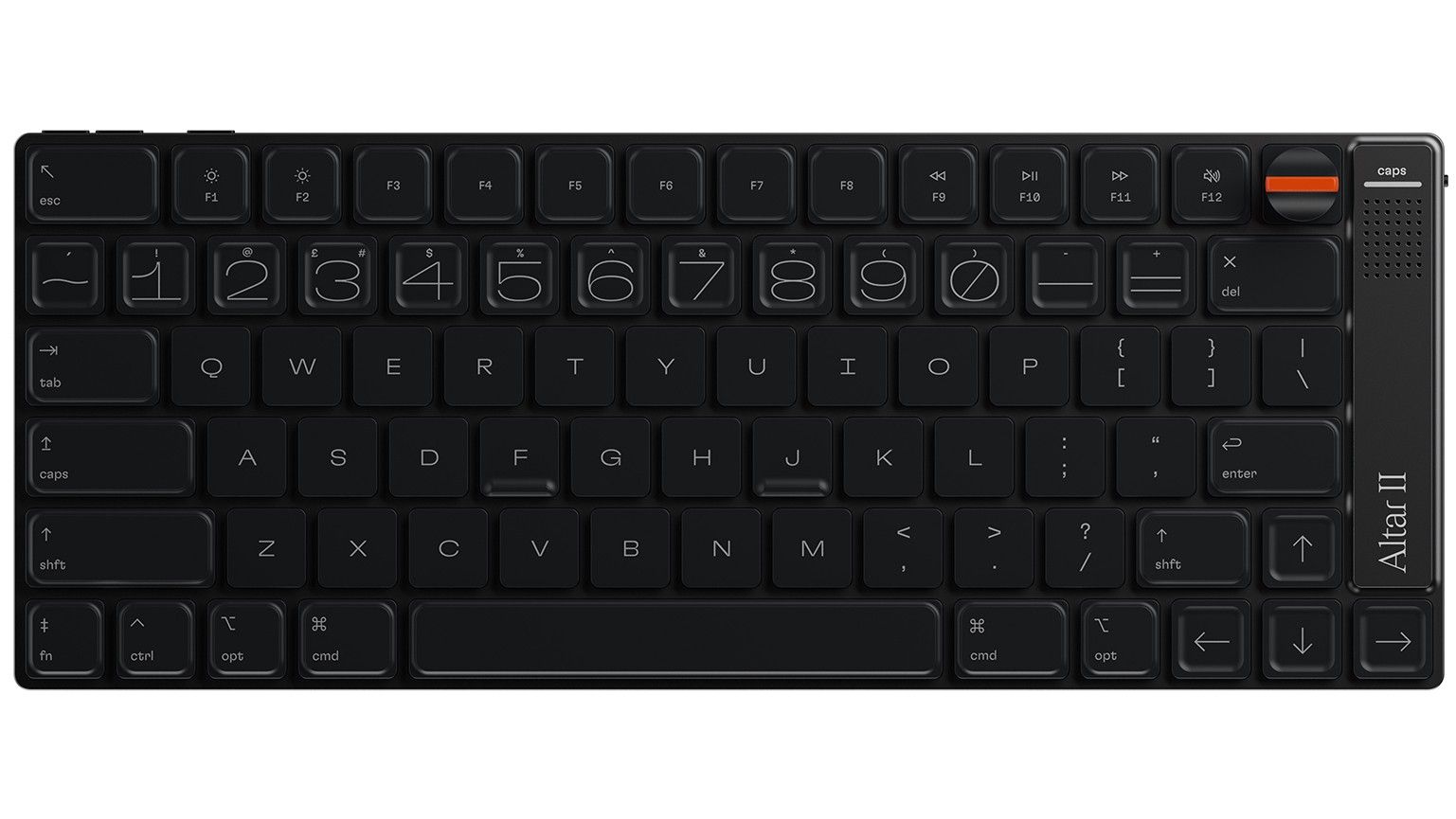
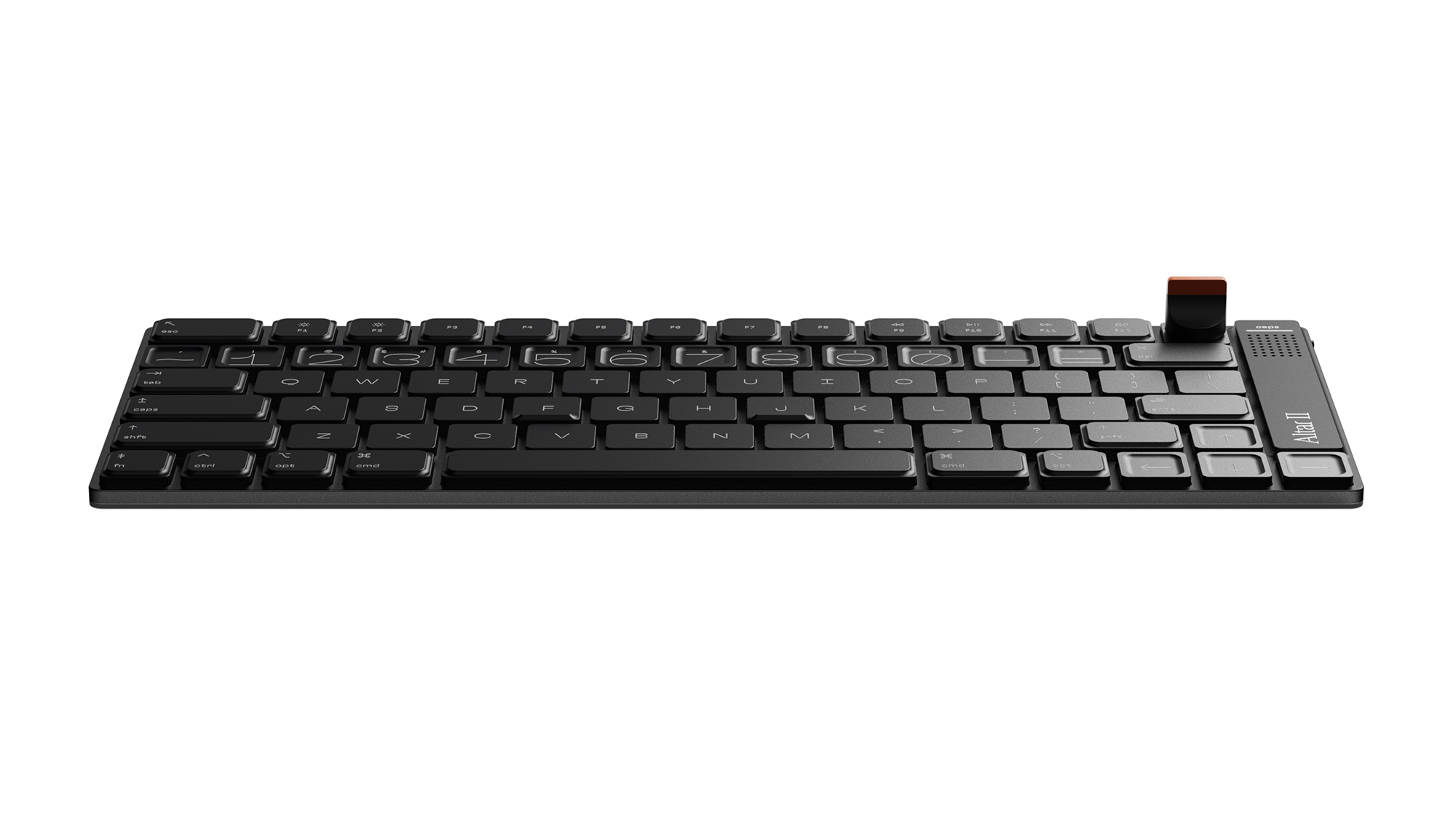
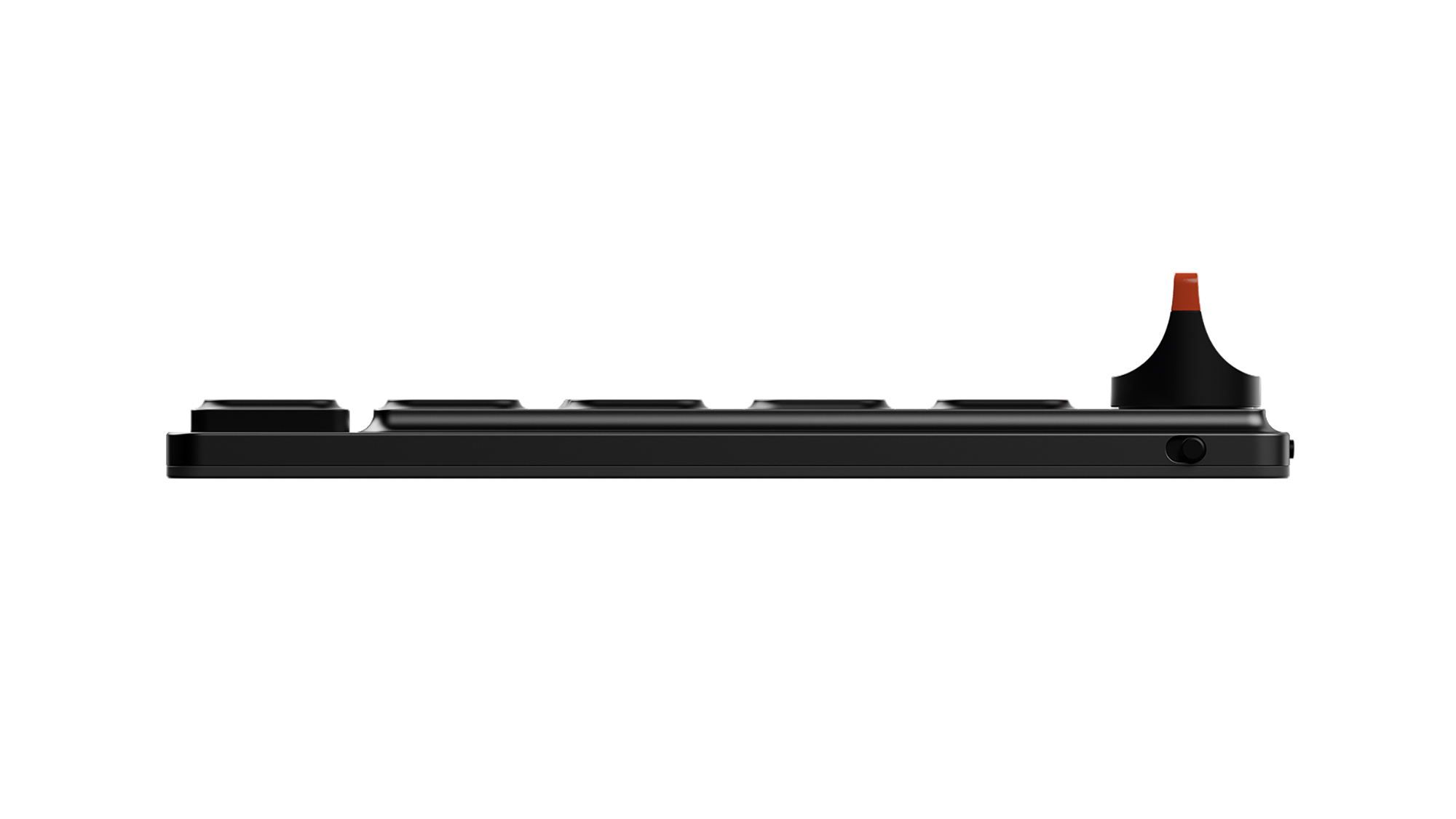
Enter London-based startup Electronic Materials Office (EMO). Founded by software designer turned industrial entrepreneur Andrew Emerson, EMO has engineered what many considered an impossible compromise: the Altar II. Machined from a single block of aerospace-grade aluminum, the Altar II boasts a fully mechanical switch architecture packaged into a chassis measuring an astonishing 4.75mm in thickness—less than half a centimeter.
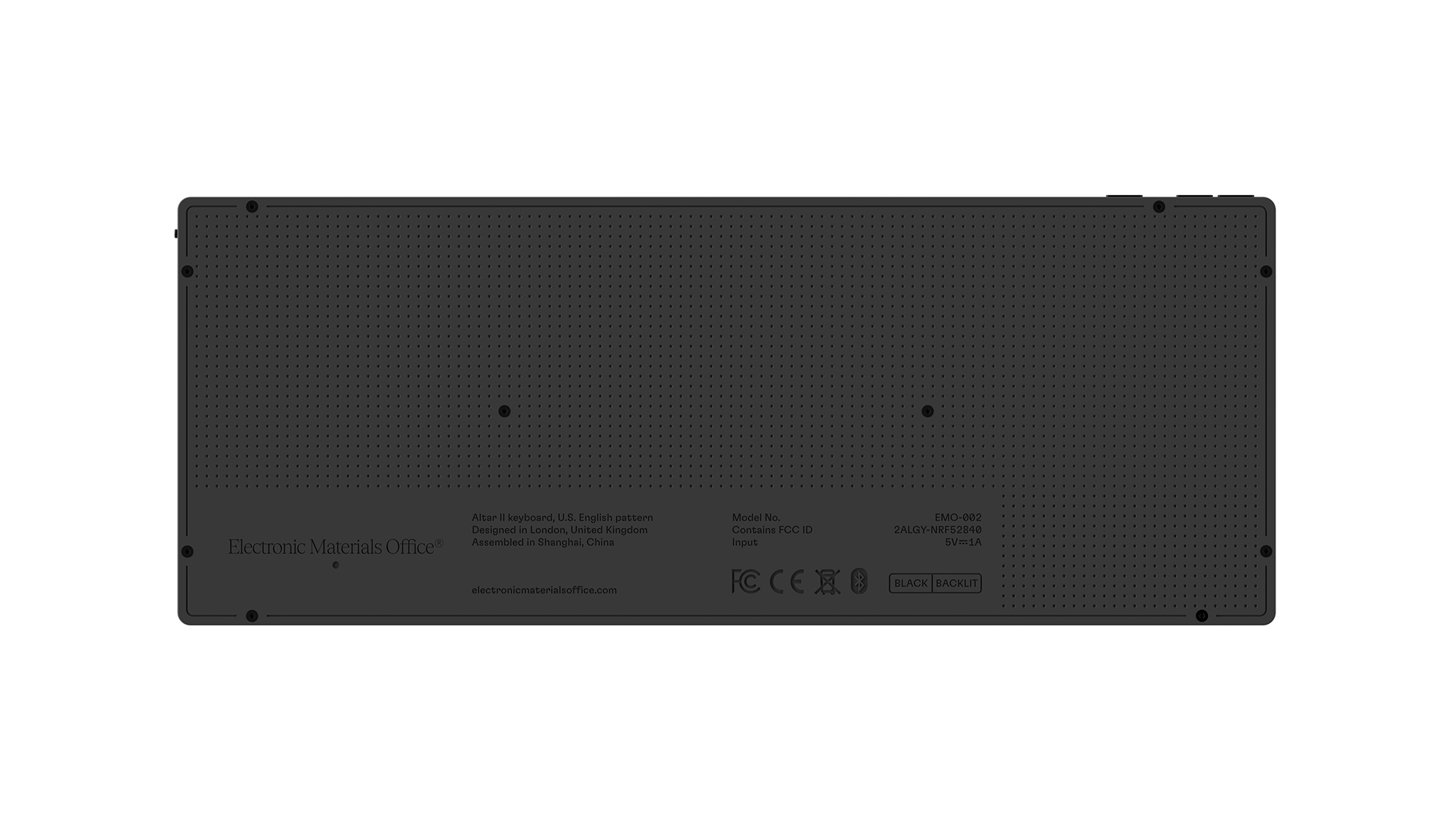
Far from being a hollow exercise in thinness, the Altar II packs an extraordinary density of advanced consumer electronics into its impossibly slim profile. It features haptic feedback, an integrated miniature speaker, subtle red backlighting, up to 30 days of wireless battery life, and a magnetically detachable, multi-functional media dial. Designed primarily for macOS ecosystems while retaining full compatibility with Windows and Linux, the Altar II represents a philosophical and engineering generational leap.
Slated for an official Kickstarter launch on November 10, the keyboard will retail at $349, with early backers securing a price of $249 via a refundable $1 reservation on EMO’s website. Deliveries are projected for early summer 2027. This deep-dive feature explores the origin story of EMO, the brutal physics of mechanical miniaturization, the anatomy of the revolutionary M-Dial, and what it takes to pivot from a solo quarantine passion project to a sustainable hardware powerhouse.
Detailed Chronology: From Lockdown Hobby to Global Startup
The Accidental Keyboard Architect
The genesis of Electronic Materials Office traces back to the global lockdowns of the early 2020s. While millions of people turned to baking sourdough bread, learning obscure languages, or renovating living spaces, Andrew Emerson developed an intense, hyper-focused obsession with mechanical keyboards.
As a software designer by trade, Emerson spent his days interacting with interfaces, but his nights were consumed by the intricate subculture of custom typing hardware. He dove deep into internet forums, scouring Reddit and reading every review available. What he found, however, deeply disappointed him. The market was flooded with what he describes as "horrendous" options: creaky plastics, glossy finishes, gigantic footprints, obnoxiously loud acoustics, and ubiquitous, garish RGB lighting.
Frustrated by the lack of aesthetic restraint and engineering elegance in the mechanical keyboard space, Emerson made a pivotal decision: if the market wouldn’t build the keyboard he wanted to use every day, he would have to design and manufacture it himself.
Scaling the Steepest Learning Curve
Emerson faced a monumental barrier to entry. His professional background was rooted in software design across automotive, music, healthcare, and fashion industries, complemented by traditional graphic design training focused on editorial layouts and typography. Electrical engineering, computer-aided design (CAD), 3D visualization, Design for Manufacturing (DFM), CNC milling, and firmware development were entirely outside his professional wheelhouse.
Undeterred, Emerson poured his nights and weekends into mastering these disparate disciplines. He spent months learning the intricacies of CAD software and thermal dynamics, iterating on designs until he produced a functional, real-world prototype. This initial labor of love culminated in the Altar I—a breakthrough proof-of-concept that established EMO’s design language.
The Hacker News Explosion
With the Altar I prototype complete, Emerson built a minimalist website featuring a simple email sign-up field, published it online, and braced for impact. Initially, the launch was met with absolute silence.
Undismayed, Emerson stepped away from his desk to clear his head with a quick lunchtime run. When he returned to his computer, everything had changed. The project had captured the imagination of tech enthusiasts on Hacker News, sparking hundreds of enthusiastic comments, technical debates, and design critiques. By the end of that single week, over 10,000 prospective buyers had joined the waiting list.
The market had spoken. Recognizing the life-changing momentum of the moment, Emerson walked into his employer’s office that very month and handed in his resignation to dedicate himself to building keyboards full-time.
Supporting Context & Metrics: The Physics of Minimization
Bridging the Chasm Between Two Worlds
To understand why the Altar II is an engineering marvel, one must examine the fundamental design paradigms that have governed computer input devices for decades.
- The Ultra-Thin Membrane Paradigm: Devices like the Apple Magic Keyboard or laptop internal keyboards prioritize desk profile and sleek aesthetics. However, they rely on rubber domes that collapse over a flexible membrane. This architecture yields a "squishy," indistinct tactile response that mechanical keyboard enthusiasts routinely reject.
- The Traditional Mechanical Paradigm: Standard mechanical keyboards utilize tall individual switches containing metal springs, stems, and electrical contacts. While they provide exquisite tactile feedback and satisfying bottom-out acoustics, the physical depth of these switches forces manufacturers to build thick, heavy chassis that elevate the wrists at unnatural, fatiguing angles.
The Altar II dissolves this dichotomy. By combining a revolutionary, ultra-low-profile mechanical switch mechanism within a 4.75mm solid aluminum frame, EMO has achieved what Emerson terms "having your cake and eating it too."
[Traditional Mechanical Keyboard] ---> Thick Chassis (~20-40mm) + Deep Switches
[Membrane Ultra-Thin Keyboard]     ---> Thin Chassis (~4-6mm)  + Squishy Domes
[EMO Altar II]                     ---> Thin Chassis (4.75mm)  + Real Mechanical Switches (Gen-Leap)
Philosophies of Technological Progress
Emerson argues that technological advancement generally follows two distinct vectors: performance enhancement and miniaturization.
- Performance gains in computer keyboards essentially reached their technological plateau in the mid-1980s, when standard layouts and baseline electronic polling were perfected.
- Consequently, the only frontier left for meaningful innovation is miniaturization.
Yet, making a device thin is relatively straightforward if you strip out functionality. The true engineering hurdle for EMO was packing a staggering array of modern technologies into a sub-5mm chassis:
- Wireless Connectivity: Low-latency Bluetooth architecture ensuring stable multi-device switching.
- Haptic Feedback Systems: Advanced actuators providing tactile confirmation without physical travel where appropriate.
- Miniature Acoustics: An onboard speaker capable of subtle auditory cues.
- Power Efficiency: Custom power management delivering up to 30 days of continuous battery life on a single charge.
- Modular Control: A magnetic, swappable media dial.
Official Statements & Team Expansion
From Passion Project to Enterprise
While the Altar I was executed primarily as a solo endeavor with ad-hoc assistance, the ambitions surrounding the Altar II demanded a structural transformation. Recognizing that the Altar II was an order of magnitude more complex, Emerson expanded EMO from a one-person passion project into a multidisciplinary team of elite specialists.
- Andrew Emerson (Founder & Industrial Designer): Manages industrial design, graphic direction, web architecture, conceptualization, marketing, and overarching company operations. Reflecting on his graphic design roots—particularly his focus on typography and editorial grids—Emerson notes that EMO’s distinct aesthetic minimalism is a direct derivative of these classical design principles.
- Steven and Jessica Nersesian (Metric Designworks): Responsible for turning digital concepts into physical reality. Handling CAD, DFM, mechanical engineering, and manufacturer relations, the duo brings world-class pedigree, having previously contributed to iconic hardware like the Playdate handheld console and various products for Teenage Engineering.
- Kurtis Lew (Embedded Engineer): Spearheads the firmware architecture that synchronizes wireless communication, power management, and key actuation data.
- Moritz Plattner (Electrical Engineer): Oversees circuit board (PCB) design, ensuring that complex components like haptic drivers, Bluetooth radios, and battery cells fit cleanly into a 4.75mm aluminum profile.
Reflecting on the collaborative dynamic, Emerson notes:
"Where exactly one person’s role ends and another’s begins is not clear in reality. Everyone has opinions and thoughts on everyone else’s domain. Altar II is a single product, and all these domains live within it. People using Altar II don’t care whose idea a detail was, they just care that it feels right."
The Birth of the M-Dial
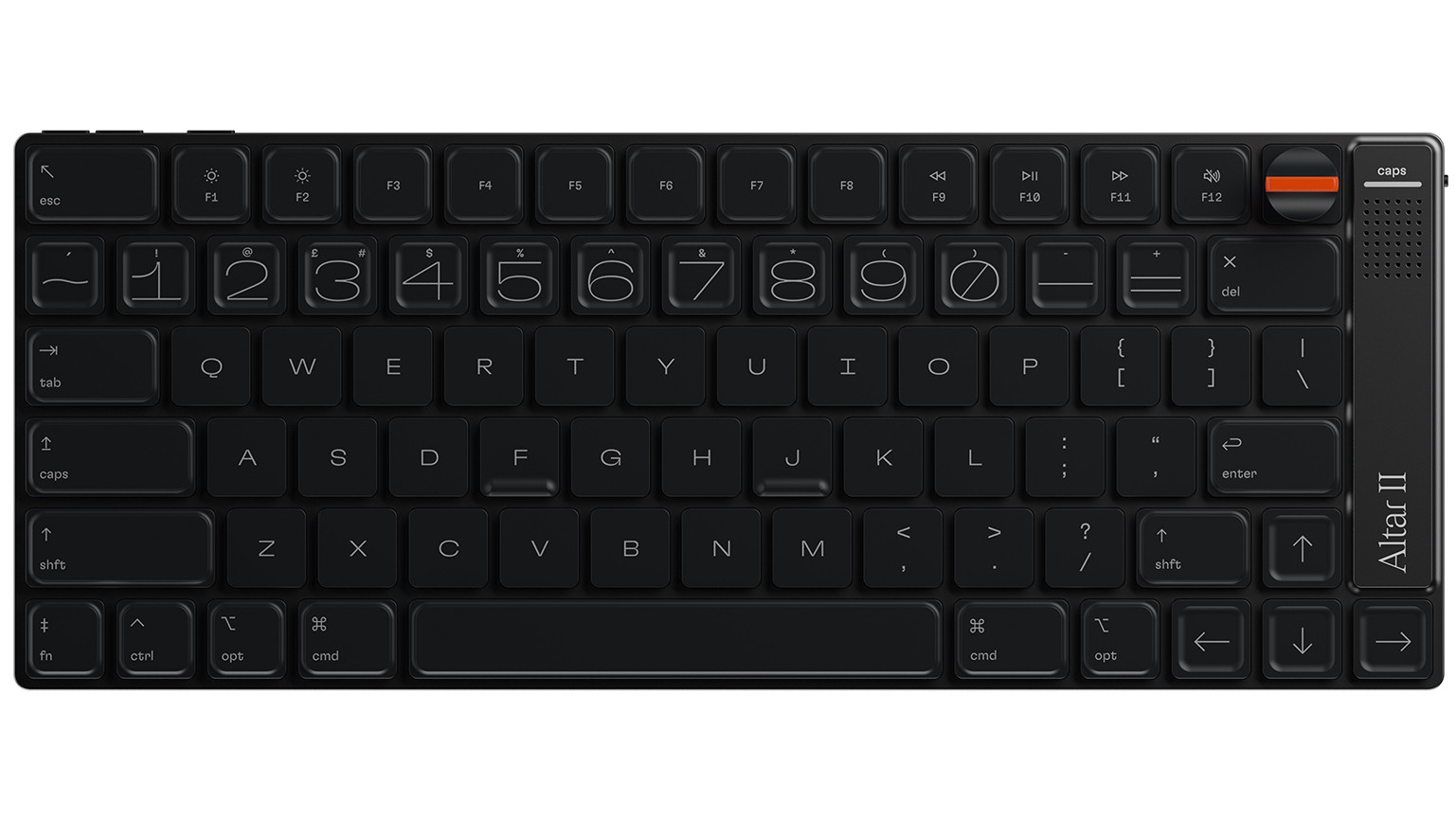
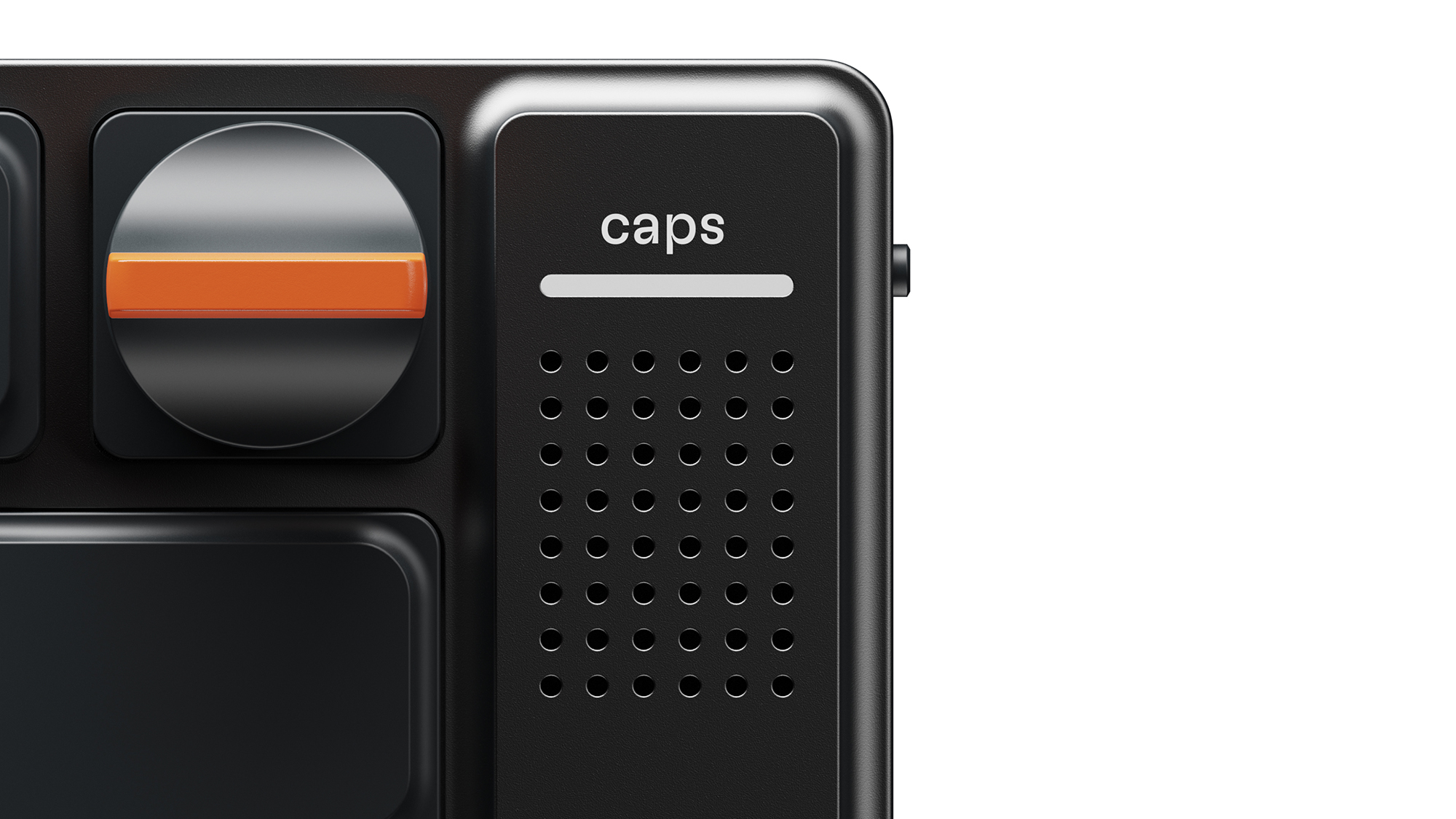
One of the most praised innovations of the Altar series is the M-Dial—a magnetically detachable, swappable, clickable control knob positioned on the top-right corner of the chassis.
The inclusion of a physical dial stems from simple ergonomics: adjusting system volume via a rotary knob is fundamentally more intuitive than repeatedly pressing digital keys. However, the EMO team expanded the M-Dial’s utility far beyond simple volume control:
- Single Click: Play or pause media playback.
- Double Click: Skip to the next track.
- Triple Click: Return to the previous track.
- Long Press: Invoke system assistants like Siri on macOS.
- Companion App Integration: All gestures and rotary functions can be fully remapped via EMO’s proprietary configuration software.
Crucially, user feedback on the Altar I highlighted that a fixed, protruding dial could occasionally snag on backpack linings during transit. EMO listened. The Altar II features a magnetically anchored M-Dial that snaps satisfyingly into place during desktop use and can be instantly removed when packing up for travel.
Furthermore, EMO ships two distinct M-Dials in the box: a standard-issue variant and a low-profile travel version. In a nod to the maker community, EMO plans to publish the open-source specifications for the M-Dial, enabling users to 3D print their own custom shapes, sizes, and textures.
Future Outlook & Market Disruption
The Generational Leap: Altar I vs. Altar II
When Emerson shipped the Altar I, he placed it next to an Apple Magic Keyboard and realized he had "unfinished business." While proud of the original device, he knew that the lessons learned during its development could unlock a genuinely generational leap.
Almost nothing has been carried over from the first iteration. Key upgrades include:
- 70% Reduction in Thickness: The Altar II is significantly slimmer than its predecessor, representing a remarkable achievement given that the Altar I was already classed as a low-profile keyboard.
- Redesigned Switch Platform: Entirely new switch mechanics, custom-tooled keycaps, and redesigned stabilizers engineered specifically for ultra-thin vertical travel.
- Integrated Hardware Features: Addition of subtle red backlighting, advanced haptic feedback modules, and a built-in miniature speaker.
Pricing, Availability, and the Road Ahead
Electronic Materials Office is transitioning from a grassroots startup into a long-term, sustainable enterprise.
- Kickstarter Launch: November 10.
- Retail Price: $349.
- Early Access Reservation: Customers can secure a unit on EMO’s official website for a fully refundable $1 deposit, reducing the purchase price to $249.
- Estimated Delivery: Early summer 2027.
By rejecting the hyper-lit, chunky aesthetic of traditional gaming peripherals and refusing to accept the squishy compromise of standard membrane boards, EMO has carved out a unique space in modern hardware design. The Altar II is not merely a keyboard; it is a testament to the power of uncompromising industrial design, proving that when meticulous craftsmanship meets radical miniaturization, the humble desktop workspace can be permanently transformed.