Executive Overview
When AdHoc Studios set out to create Dispatch, they were not merely building another narrative-driven video game. They were executing a calculated assault on the invisible barrier that keeps non-gamers away from interactive media. Designed to look, sound, and play with the polished cadence of a high-end animated television series, Dispatch merges the cinematic gravity of prestige television with the agency of branching gameplay.
Now, celebrating a monumental milestone one year after its October 22, 2025 launch—surpassing five million active players—the episodic superhero workplace comedy has firmly established itself as a cultural touchstone. The release of the Dispatch Deluxe Edition has further expanded the title’s footprint, offering innovative new ways to experience the game, including an alternative graphics mode that transforms the entire runtime into living storyboard animatics.
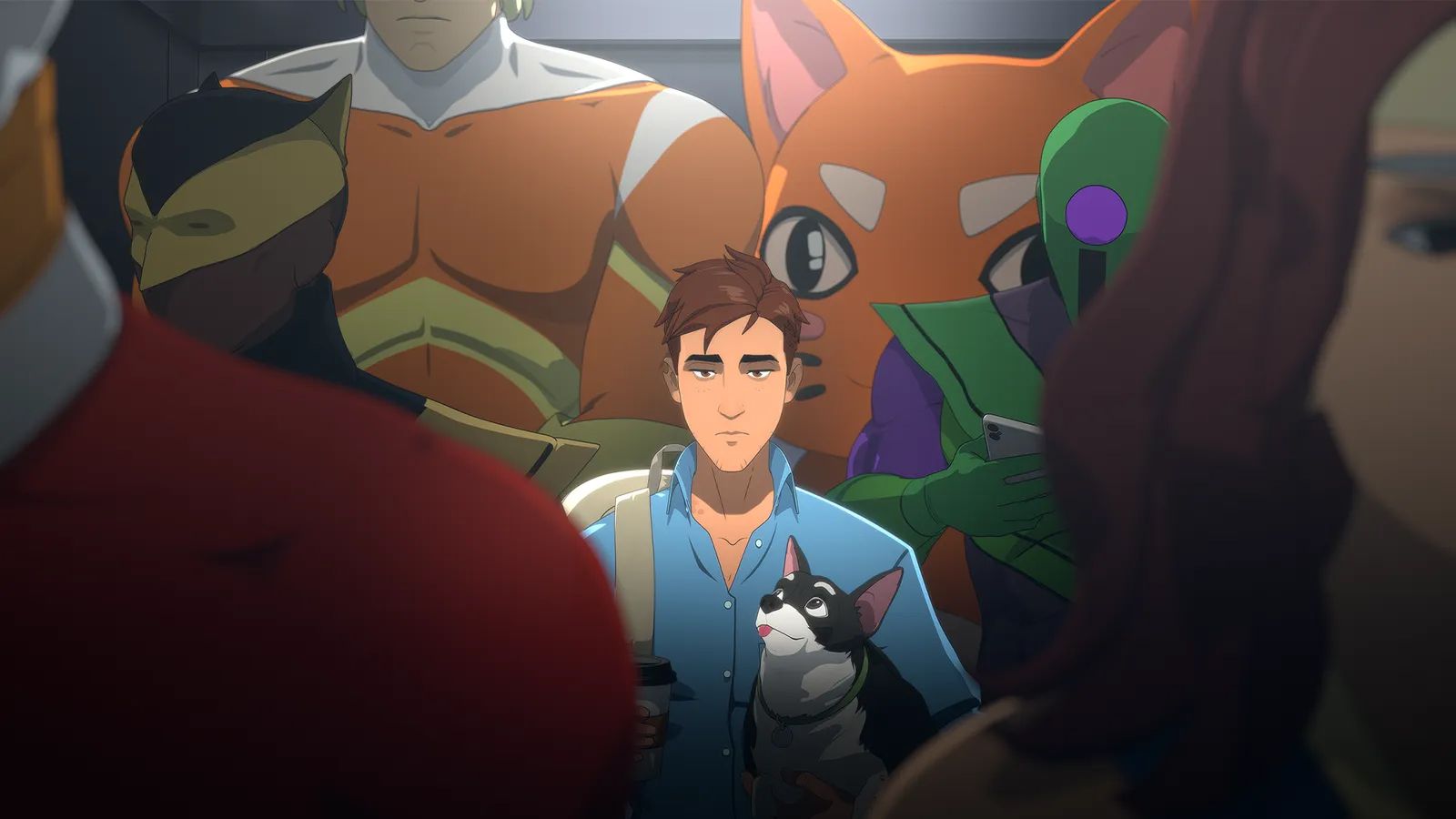
At its core, Dispatch follows Robert Robertson—voiced by Breaking Bad icon Aaron Paul—a former superhero turned beleaguered dispatcher managing a dysfunctional team of reformed supervillains known as the "Z-Team." Alongside Paul, the ensemble features heavy-hitting talent like Jeffrey Wright, Laura Bailey, and members of the renowned Critical Role cast.
Yet, achieving the seamless illusion of a single, unified theatrical space where these legendary voice actors sound like they are sitting across a desk from one another required a radical departure from traditional game development. Behind the scenes, AdHoc co-founders Nick Herman and Dennis Lenart had to completely unlearn the frantic, seat-of-the-pants methodologies of their past lives at Telltale Games. By combining proprietary software development, rigorous early-stage pipelines, and meticulous audio engineering, AdHoc has not only redefined what an animated game can look like, but also how stories are told across interactive mediums.
Detailed Chronology: From Doughnut Shops to a Five-Million-Player Phenomenon
The genesis of AdHoc Studios and, by extension, Dispatch, was born out of shared frustrations and visionary ambitions among industry veterans. Long before Dispatch became a household name for millions of players across PlayStation 5, Xbox Series X, Nintendo Switch, and PC, the conceptual framework was forged through late-night discussions over coffee and pastries.
Unlearning Telltale: The Shift to Traditional Pipelines
Co-founders Nick Herman and Dennis Lenart spent formative years at Telltale Games, helping to shape defining narrative adventures like The Walking Dead, The Wolf Among Us, and Tales from the Borderlands. At Telltale, the production rhythm was defined by what the team called "live development."
Under this high-pressure model, episodes were built on a rolling schedule. The studio would ship one episode, and then aggressively pivot to the next, often working with a compressed six-week turnaround. This meant cinematics and character motivations were fluid, shifting up to the literal day before final submission. Player feedback from the previous chapter could be injected directly into the pipeline, altering character arcs and emotional beats on the fly.
While this agile approach fostered a distinct style of storytelling, it also left lasting scars on its creators. Herman and Lenart craved a higher level of polish and visual fidelity—the kind associated with premium animated television series produced by major studios. When they founded AdHoc, they established a strict mandate: Dispatch needed to feature a traditional animation pipeline where major creative decisions were locked down much earlier in the cycle.
This required a profound psychological and operational shift. For veterans accustomed to tweaking lines and facial animations right up until the final hour, freezing assets a year in advance felt counterintuitive. However, that discipline ultimately forced the team to tackle complex narrative branches and character beats during the early scripting phases. According to Lenart, this early pressure cooker resulted in a vastly superior final product, forcing rigorous conversations that ensured every narrative thread paid off organically.
The Launch and the Deluxe Evolution
Dispatch officially debuted on October 22, 2025, instantly captivating audiences with its unique premise: a workplace comedy wrapped in superhero tropes, driven by administrative micromanagement and frantic dispatch mechanics. Rather than relying on traditional combat loops, players step into the shoes of Robert Robertson (Mecha Man), navigating workplace politics, managing a roster of volatile supervillains, and making high-stakes, split-second choices.
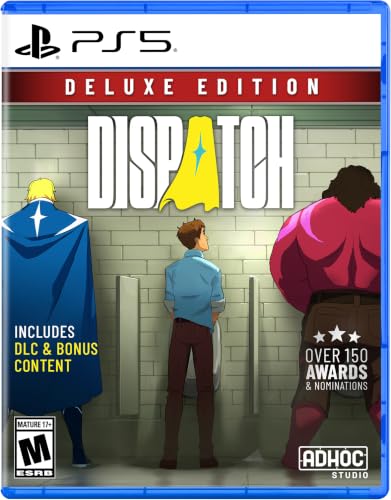
One year later, the release of the Dispatch Deluxe Edition has proven that AdHoc is committed to pushing creative boundaries. Beyond bundling previous episodic content, the Deluxe Edition introduces a revolutionary alternative gameplay mode: players can swap out the final 3D rendered graphics entirely, playing through the entire game rendered in raw, dynamic storyboard animatics. This feature offers a rare, behind-the-scenes look at the artistic architecture of the game, transforming Dispatch into an interactive graphic novel that appeals directly to animation purists and art enthusiasts alike.
Supporting Context & Metrics: The Scale of Dispatch
Achieving a seamless fusion of prestige animation and branching video game narratives is a notoriously difficult technical feat. The success of Dispatch is reflected not only in its critical acclaim, but in hard metrics that demonstrate its cultural penetration.
- Player Milestone: One year post-launch, Dispatch has amassed a staggering player base exceeding five million active users.
- Platform Availability: Initially rolled out as an episodic digital title, the franchise is now fully accessible via physical and digital storefronts on PlayStation 5, Xbox Series X, Nintendo Switch, and the upcoming Nintendo Switch 2 hardware ecosystems.
- Upgrade Path: Existing owners of the base game were given access to the Dispatch Deluxe Edition upgrade path for $10.99, ensuring the community could experience the storyboard modes and additional features without repurchasing the core experience.
- Cast Lineup: The production utilizes an elite tier of Hollywood and voice-acting royalty, anchoring its comedic and dramatic weight in performances by Aaron Paul, Jeffrey Wright, Laura Bailey, and the Critical Role ensemble.
Official Statements: Behind the Creative Process
The unique creative DNA of Dispatch stems from the meticulous philosophies of its co-creators, Nick Herman and Dennis Lenart, who serve as co-creative directors, COO, and CTO respectively. In exclusive insights detailing the studio’s production methods, they revealed the invisible engineering required to bring the world of Robert Robertson to life.
Directing Branching Performances
Writing a linear script is challenging enough; writing a script where player choices fracture the narrative into dozens of possible branches—while maintaining emotional continuity—is a monumental undertaking.
"Everything is written with choice in mind," explains Herman. To manage this labyrinthine structure, AdHoc engineered proprietary software tools capable of ingesting massive, interconnected scripts. These tools generate a playable, clickable script format that allows the creative team to test narrative flows interactively. While the physical printout used by voice actors in the recording booth looks "a little bit crazy to read on a linear page," the underlying architecture ensures that every narrative branch eventually trunks back into the main spine of the story.
To capture authentic human chemistry, AdHoc rejected the standard industry practice of recording actors in isolated booths with no context. Instead, they used previously recorded performances as a dynamic directing tool. When an actor stepped into the booth to record dialogue opposite an existing character, the team would play back the prior actor’s lines for them to react to in real time.
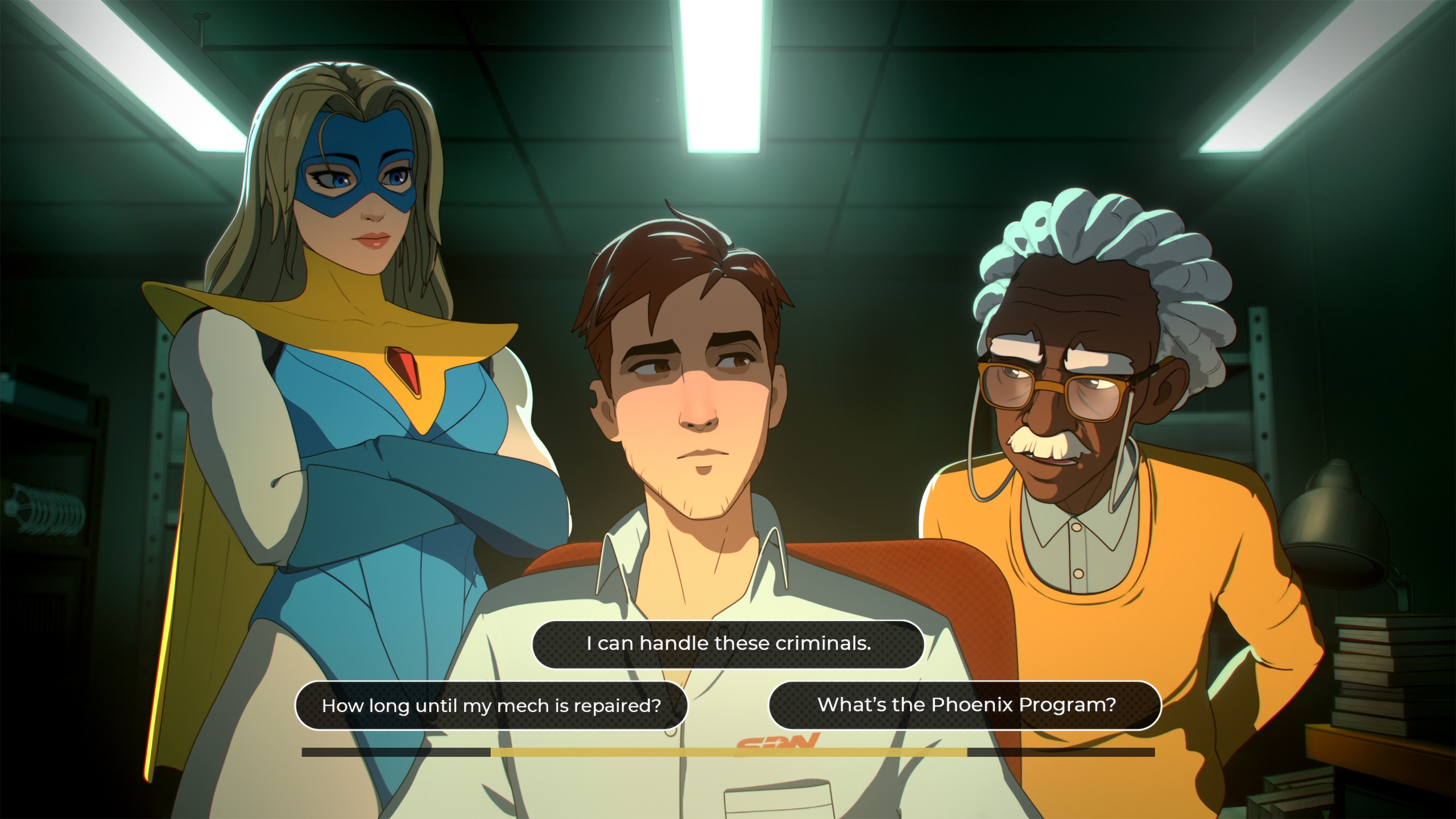
Herman illustrates the method: with Aaron Paul’s lines as Robert Robertson already safely captured, the team could bring in voice actor Erin to portray the superhero Blonde Blazer. They would play Paul’s audio cue, capture Erin’s natural response, and then feed that interaction back into the loop.
"It’s a clever bit of craft," Herman notes. "By building each conversation around real delivery, we simulate the actors being in the same room. It helps performances feel grounded and integrated, gives a scene its natural flow because the actors know where they’re coming in from, and makes testing branches infinitely easier."
Once the voice work was locked in, the animation team took over. Translating vocal performances into facial animation required a deep understanding of individual character psychology. "Not everyone laughs the same. When they cry, they look different," Herman points out. "Every character is their own person. Like they are on the page, they are in animation." To achieve this level of nuance, animators studied extensive reference footage shot specifically by the studio to map out micro-expressions and physical reactions.
Eradicating the "Seam" Between Story and Gameplay
One of the most persistent issues in narrative-heavy video games is the jarring transition—the "seam"—between a passive cinematic cutscene and active gameplay.
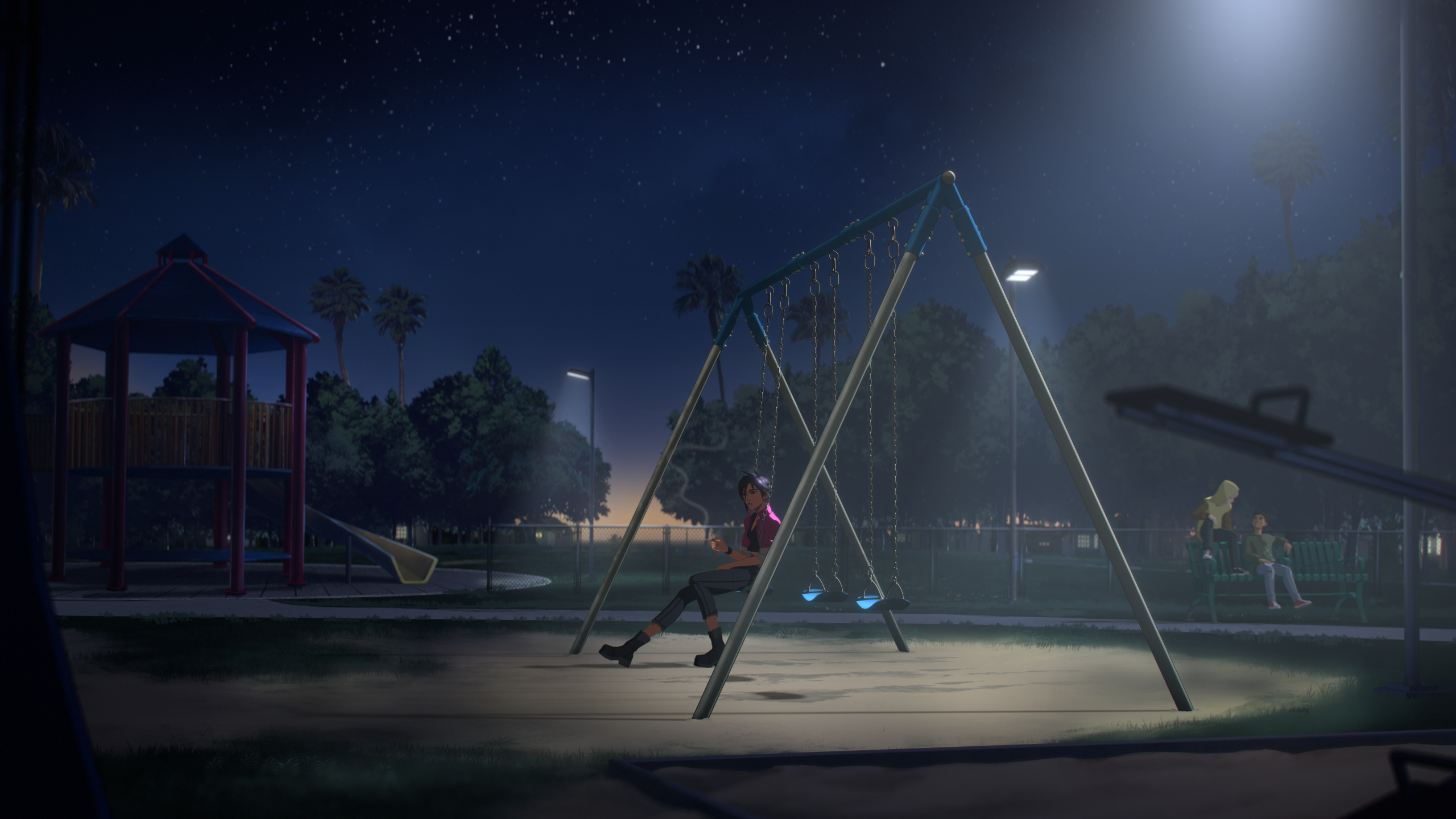
"The goal was always to make it feel integrated," says Lenart. Having worked on numerous titles where clear cinematic sections alternated abruptly with traditional gameplay blocks, Lenart and Herman were determined to eliminate that friction. "You could feel that break every single time, and it always kind of drove us crazy."
When designing Dispatch, the mandate was clear: gameplay mechanics must reflect the actual life and responsibilities of the protagonist. If a character needs to pick a lock, it must make narrative sense within their daily routine rather than feeling like a mini-game bolted onto the experience for the sake of interactivity.
For Robert Robertson, this philosophy manifested in the core "shift" mechanic. Managing heroes and sending them out on emergency calls is literally his day job. "It’s the thing he does every day," Lenart explains. "So, when he sits down at his computer to do it, it feels entirely natural."
To maintain this momentum, AdHoc ensured that the Z-Team maintained radio chatter with the player throughout every administrative shift. Relationships and dialogue flows continue uninterrupted, ensuring the story never halts simply because the player is engaged in management mechanics. Even when a shift cuts away to a cinematic sequence and back again, the transition feels effortless because, as Lenart emphasizes, the team "spent a lot of time and effort to make it that way."
Future Outlook: The Blueprint for Narrative Gaming
As Dispatch enters its second year on the market, its commercial and critical trajectory offers a compelling blueprint for the future of interactive entertainment. By successfully bridging the gap between passive viewers and active players, AdHoc Studios has demonstrated that narrative-driven games do not need to rely on traditional combat loops or open-world busywork to captivate audiences.
The introduction of the Dispatch Deluxe Edition—complete with its storyboard animatic mode—signals a growing industry appetite for transparency in game development, offering fans a deeper appreciation of the artistic milestones required to build a modern animated interactive experience.
With five million players already invested in the bureaucratic misadventures of Robert Robertson and his rogue’s gallery of reformed heroes, AdHoc Studios has proven that taking creative risks, enforcing rigorous early-stage production pipelines, and prioritizing character-driven performance can transform a modest workplace comedy into an industry-defining triumph. As the studio looks toward future projects, the lessons learned in the Dispatch recording booths and engineering bays will undoubtedly continue to shape the evolution of interactive storytelling for years to come.