Executive Overview
In a development that signals a seismic shift in professional creative workflows, Maxon has announced major software updates designed to harness the capabilities of Apple’s newly unveiled MacBook Pro PROLED XDR. Powered by the formidable M5 Pro and M5 Max silicon chips and featuring Apple’s most advanced tandem OLED laptop display to date, this new hardware generation breaks a long-standing company paradigm by introducing native touch input to an Apple laptop.
Capitalizing on this milestone, Maxon has confirmed that both Cinema 4D and ZBrush—industry-standard mainstays for 3D modeling, animation, and digital sculpting—will receive dedicated touch support in late November. This integration brings the tactile, direct-manipulation fluidity previously associated with tablet computing directly into the desktop ecosystem. Furthermore, Maxon is expanding the boundaries of spatial computing through a new Spatial Preview API, enabling real-time, life-size 3D previews on the Apple Vision Pro.
For architects, industrial designers, visual effects artists, and experiential creators, this convergence of touch-enabled high-performance hardware, desktop-grade software, and spatial reality represents an entirely new dimension in professional production. This report examines the technical implications, software updates, industry impacts, and future outlook surrounding this major ecosystem evolution.
Detailed Chronology: Hardware Meets Software
The convergence of Maxon’s professional suite with Apple’s latest hardware ecosystem follows a deliberate, multi-year progression toward cross-device continuity and touch-first interaction.
The Evolution Toward Touch
For decades, Apple maintained a strict philosophical separation between its touch-first mobile devices (such as the iPad and iPhone) and its keyboard-and-trackpad-driven Mac line. However, the success of ZBrush for iPad—which revolutionized mobile digital sculpting by allowing artists to manipulate complex geometry using fingers or the Apple Pencil—proved that professional-grade 3D workloads could thrive in touch environments.
With the release of the MacBook Pro PROLED XDR, Apple has introduced a tandem OLED display that balances extreme brightness, high contrast ratios, and color accuracy with capacitive touch capabilities. Recognizing the potential of this architecture, Maxon began development on touch-optimized UI frameworks for its flagship DCC (Digital Content Creation) tools.
Key Milestones in the Rollout
- Early November 2026: Apple begins shipping the new MacBook Pro PROLED XDR, featuring M5 Pro and M5 Max processors. Maxon’s existing iterations of Cinema 4D and ZBrush become immediately available on the hardware, running with traditional input methods.
- Late November 2026: Maxon deploys native touch support updates for Cinema 4D and ZBrush, alongside the launch of the Open in Spatial Preview feature for Apple Vision Pro (running visionOS 27) and Mac (running macOS 27).
- Late 2026 (Scheduled): Maxon slated to release a brand-new, purpose-built Cinema 4D iPad app, further solidifying its multi-platform ecosystem approach.
Technical Architecture & Workflow Integration
The integration of touch input into traditional 3D pipelines requires more than simply mapping finger gestures to mouse clicks. 3D viewports demand precision, multi-axis navigation, and rapid parameter adjustments.
Touch Input in Cinema 4D and ZBrush
Maxon’s upcoming updates bridge the gap between traditional keyboard-and-mouse workflows and natural hand gestures.
- In ZBrush: Sculpting digital clay on a high-resolution laptop screen mirrors the intuitive nature of the iPad app. Artists can smooth, pinch, inflate, and carve intricate organic or hard-surface details directly on the canvas using their fingers, reducing reliance on external graphics tablets for quick adjustments.
- In Cinema 4D: Navigating complex 3D scenes, framing cameras, scrubbing timelines, and adjusting node graphs can now be augmented with touch controls. Multi-touch gestures allow for fluid panning, rotating, and zooming within the viewport, operating seamlessly alongside standard keyboard shortcuts and trackpad navigation.
The Power of the Tandem OLED Display and M5 Silicon
The tactile experience is elevated by the hardware it runs on. The PROLED XDR display delivers profound black levels and high peak brightness, allowing artists working in color-critical environments—such as film post-production and high-end advertising—to evaluate lighting, shadows, and HDR highlights with absolute precision.
Under the hood, the M5 Pro and M5 Max chips provide the thermal and computational headroom required to run heavy viewport simulations, real-time rendering, and complex mesh deformations without stuttering, even while processing high-frequency touch inputs.
Spatial Computing: Expanding into Apple Vision Pro
Beyond the laptop screen, Maxon is fundamentally altering how artists review and collaborate on 3D data by integrating Apple Vision Pro support via a new Spatial Preview API.
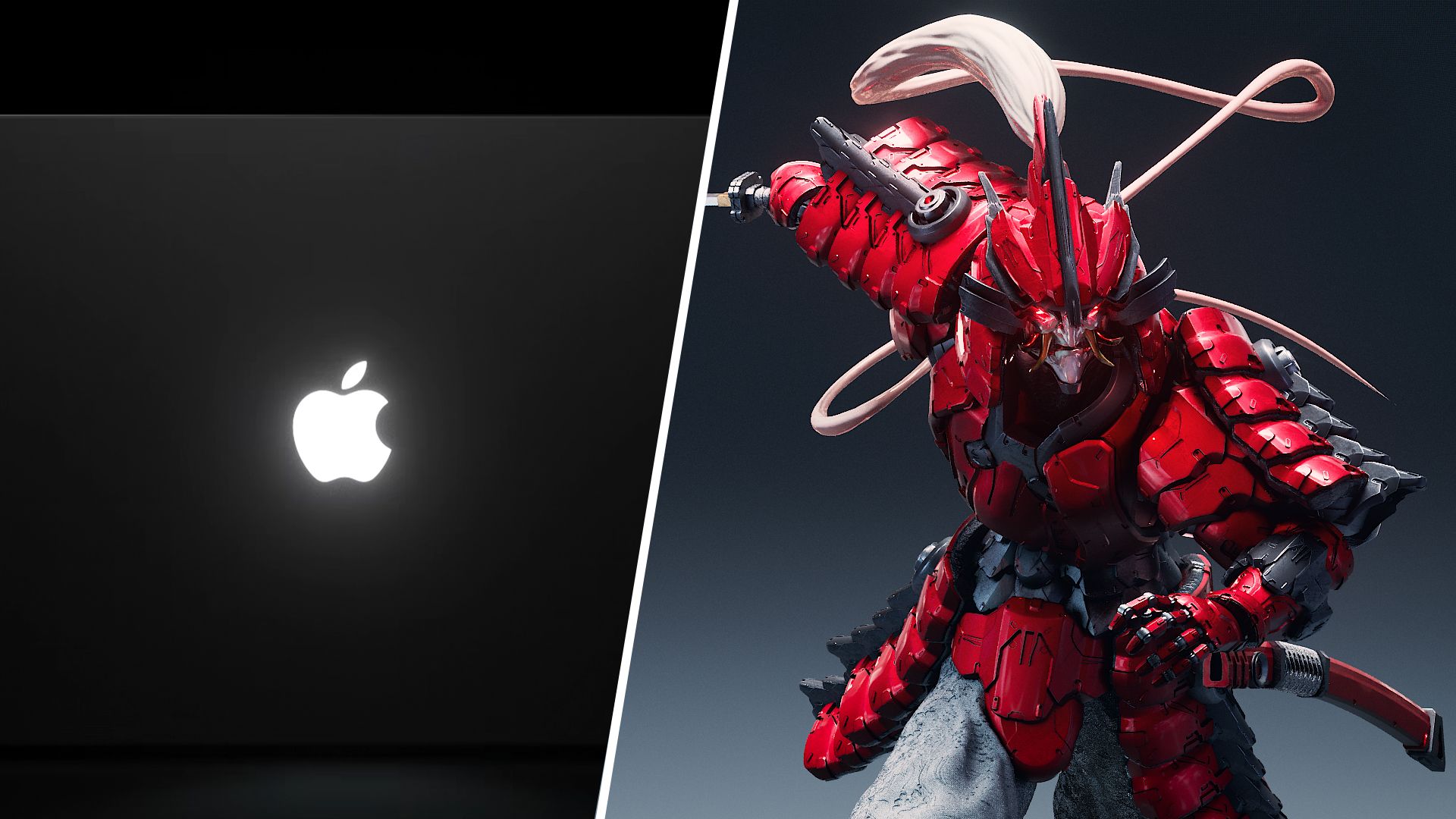
Real-Scale Visualization
Historically, 3D artists and clients have evaluated volumetric work through the restrictive window of a two-dimensional monitor. The new integration allows creators using Mac Virtual Display on Apple Vision Pro to bypass 2D approximations entirely.
Through the Spatial Preview API, users can project their Cinema 4D creations into physical space at a true 1-to-1 scale. This capability carries profound implications across multiple verticals:
- Architectural Visualization & Interior Design: Designers can virtually walk through a proposed building interior, evaluate ceiling heights, inspect furniture proportions, and experience spatial flow before a single foundation is poured.
-
**Retail Environments
& Exhibition Spaces:** Brand experience agencies can construct life-size mockups of trade show booths, pop-up shops, and retail layouts, assessing customer sightlines and environmental ergonomics in real-world contexts.
- Experiential & Industrial Design: Large-scale installations and industrial components can be analyzed in their intended physical environments to identify ergonomic flaws or structural misalignments early in the development cycle.
Collaborative Review and Stakeholder Engagement
One of the greatest bottlenecks in design production is the translation gap between technical 3D artists and non-technical stakeholders (such as corporate clients, marketing executives, or property developers).
The Vision Pro integration bridges this communication divide. Collaborators can inhabit the same virtual space simultaneously—either immersed directly within the scene or observing from a bird’s-eye architectural scale. Stakeholders unfamiliar with navigating complex 3D software can naturally look around, point out areas of concern, and communicate desired changes intuitively, resulting in more informed feedback loops and drastically reduced revision cycles.
Official Statements and Industry Perspective
While Maxon has positioned these updates as a natural evolution of its multi-platform strategy, industry analysts and creative professionals are already evaluating the broader implications for the DCC market.
Industry observers note that while Windows-based laptops have featured touchscreens for over a decade, the lack of standardized, high-performance touch applications has historically kept creative professionals tethered to traditional peripherals. Apple’s entry into the touch-enabled pro laptop market—backed by Tier-1 software vendors like Maxon—establishes a viable precedent for professional touch workflows.
Maxon’s leadership has emphasized that touch input is not intended to replace the precision of a mouse, keyboard, or professional stylus, but rather to complement them. By offering a hybrid interaction model, creative professionals can fluidly transition between analytical modeling tasks (via keyboard and mouse) and organic sculpting or spatial navigation (via touch and spatial computing).
Future Outlook
The simultaneous deployment of touch-enabled desktop software, high-performance M5 hardware, and spatial computing integration marks the beginning of a transitional era for digital content creation.
- Ecosystem Standardization: As Maxon rolls out its dedicated Cinema 4D iPad app alongside these MacBook Pro updates, the company is establishing a unified software experience that flows seamlessly across macOS, iPadOS, and visionOS. Competitors in the DCC space will likely feel pressured to accelerate their own multi-platform and touch-optimization roadmaps.
- Workflow Redefinition: The boundary between desktop creation and spatial review is dissolving. We can expect future design pipelines to rely heavily on real-time mixed reality previews as a standard quality-assurance gate before physical manufacturing or final rendering.
- Hardware Adoption: For studios specializing in architecture, automotive design, visual effects, and immersive media, the combination of the MacBook Pro PROLED XDR, Maxon’s updated toolset, and Apple Vision Pro offers a compelling, highly portable workstation ecosystem that minimizes friction from initial concept to final client sign-off.
As these tools roll out in late November 2026, the creative industry will closely watch how artists adapt these hybrid touch and spatial workflows into their daily production pipelines. One thing is certain: the way we touch, shape, and inhabit digital worlds is evolving faster than ever before.