Executive Overview: A Significant Milestone for Rugged Enterprise Hardware
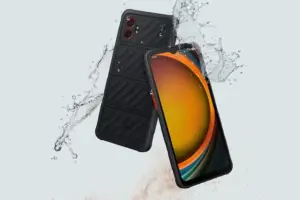
Samsung Electronics has officially initiated the U.S. rollout of its highly anticipated One UI 9 interface, built upon the foundation of the Android 17 operating system. The update, which first made landfall in the South Korean market last month, is now reaching the Galaxy XCover 7 Pro, one of the most prominent devices in Samsung’s ruggedized enterprise lineup.
For fleet managers, field workers, and mobile professionals who rely on the XCover 7 Pro for its durability and environmental resilience, this update represents more than just a cosmetic refresh. It signals a shift in Samsung’s software strategy, bridging the gap between high-performance consumer hardware and the rigorous, secure demands of the enterprise sector. The deployment—identified by firmware version G766USQUADZJ7—marks the arrival of enhanced privacy controls, a refined user interface, and deeper integration with Samsung’s ecosystem of productivity tools. As the industry moves toward longer hardware lifecycles, Samsung’s commitment to providing consistent, feature-rich updates for its rugged devices serves as a vital benchmark for the competitive landscape of professional-grade mobile technology.
Detailed Chronology: From Development to Deployment
The trajectory of this update reflects Samsung’s methodical approach to regional software distribution. The following timeline outlines the progression of the Android 17/One UI 9 release for the XCover 7 Pro:
- Initial Beta and Development: Throughout the previous quarter, Samsung focused on optimizing One UI 9 for its non-consumer-centric hardware. Developers prioritized the stability of the device’s unique physical programmable keys and its high-sensitivity touch capabilities, ensuring these features remained intact during the transition to the latest Android iteration.
- The South Korean Premiere: In early-to-mid last month, the update was first pushed to devices in the South Korean domestic market. This served as a "canary in the coal mine" release, allowing Samsung engineers to monitor performance metrics, system stability, and battery optimization across a controlled user base before broadening the distribution scope.
- The North American Expansion: As of this week, carrier-locked models of the Galaxy XCover 7 Pro in the United States have begun receiving the OTA (Over-the-Air) notification. Industry observers have noted that this rollout is occurring in waves, primarily targeting major telecommunications providers first.
- The Unlocked Segment: While unlocked, carrier-agnostic models are currently awaiting their turn, historical patterns suggest that these versions typically receive the update within two to four weeks of the initial carrier-locked deployment.
Supporting Context & Metrics: What the Update Changes
The One UI 9 update is far from a mere security patch; it introduces systemic changes that alter how users interact with their hardware.
Interface Re-Engineering: The Quick Settings Panel
One UI 9 introduces a revamped Quick Settings panel that prioritizes user autonomy. Historically, Samsung’s Quick Settings were functional but rigid. The new update allows for granular customization of the quick-toggle grid, enabling users to move essential tools—such as the "Rugged Key" shortcuts or "Glove Mode" activation—to the forefront of their interface. For field workers who rely on speed and efficiency in adverse conditions, this reduction in navigation time is a significant productivity gain.
Privacy and Transparency
In an era where data sovereignty is paramount, Samsung has integrated a new location privacy indicator. This visual cue provides an persistent, non-intrusive alert whenever a background process or third-party application initiates a request for the device’s GPS coordinates. This provides a layer of transparency that is particularly critical for enterprise environments where sensitive data, such as location-tagged site inspections or proprietary logistical mapping, is handled daily.
Enhanced Productivity Ecosystem
- Samsung Notes: The update includes substantial under-the-hood optimizations to the Notes application, specifically targeting synchronization speed and multi-layer document rendering.
- Samsung DeX: The desktop-like interface has received performance patches that improve external monitor responsiveness and window management, making the XCover 7 Pro a more viable "pocket PC" for engineers on remote job sites.
- Centralized Care: A new, dedicated "Warranty and Care" hub within the Settings menu consolidates device health metrics, diagnostic tools, and support contact channels. This minimizes the friction typically associated with troubleshooting enterprise hardware.
Official Statements and Industry Impact
While Samsung has remained characteristically reserved regarding granular technical documentation, industry analysts have interpreted the move as a clear consolidation of their rugged market share.
"Samsung is successfully decoupling its rugged portfolio from the ‘legacy hardware’ stigma," noted an industry consultant. "By providing the same One UI 9 experience on the XCover 7 Pro as they do on the Galaxy S-series, they are telling the enterprise market that they don’t have to sacrifice modern software features for physical durability."
The commitment to a seven-year security update lifecycle is the most critical metric for the enterprise sector. By extending support, Samsung is effectively reducing the Total Cost of Ownership (TCO) for companies that purchase these devices in bulk. For an organization with 5,000 field employees, the difference between a three-year support cycle and a seven-year cycle is measured in millions of dollars of saved capital expenditure.
Future Outlook: A New Standard for Enterprise Mobility
Looking toward the future, the Galaxy XCover 7 Pro’s transition to One UI 9 sets a high bar for competitors like Panasonic, Zebra, and Sonim.
The Path Toward Android 18 and Beyond
The current firmware release represents the second major OS update for the device, which launched with Android 15. While Samsung has yet to provide an official roadmap for Android 18, the current trajectory suggests that the XCover 7 Pro is being positioned as a long-term anchor in the Samsung Knox ecosystem. As the integration between AI-driven software and hardware-based security grows more sophisticated, users can expect subsequent updates to focus heavily on on-device machine learning for tasks like real-time language translation for international crews and predictive battery management.
The Role of Software in Hardware Longevity
The success of this rollout will likely dictate how Samsung approaches the hardware-software lifecycle for the next generation of its "Active" and "XCover" devices. If the transition to One UI 9 proves stable and performance-positive, it will solidify the argument that modern mobile operating systems can—and should—scale across different hardware form factors without compromising the user experience.
User Action Required
For owners of the Galaxy XCover 7 Pro currently operating on U.S. carrier networks, the path to the update is straightforward. Users should navigate to Settings > Software Update > Check for updates. It is strongly advised to perform this update while connected to a stable Wi-Fi network and ensuring that the device has at least 50% battery capacity, as the installation process involves significant system-level re-indexing.
As the industry watches the deployment progress, the XCover 7 Pro stands as a testament to the fact that, in the world of professional technology, durability is no longer an excuse for software stagnation. With One UI 9, Samsung has successfully fortified its rugged hardware with the intelligence and agility required for the modern digital workspace.