Executive Overview
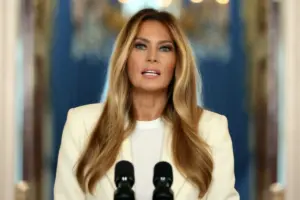
In an aggressive push to capitalize on high-profile political and cultural figures, Amazon Prime Video has announced the upcoming November 20 release of a two-part docuseries focused on Melania Trump. Billed as an intimate, behind-the-scenes companion piece to the earlier theatrical feature, the upcoming series promises audiences "content never before shared with the public." However, the expansion of the Melania intellectual property arrives at a complex crossroads for Amazon MGM Studios. While the streaming giant is eager to mine the enduring cultural fascination surrounding the former First Lady, the project is inextricably linked to a turbulent financial history and fierce critical polarization.
The two-part television event—comprising episodes titled "Family & Trust" and "Pride & Honor"—follows the trajectory of an ambitious media rollout that began with a theatrical window earlier this year and subsequently moved to PVOD streaming platforms. Yet, beneath the polished veneer of exclusive footage and carefully curated access lies a sobering financial post-mortem. Despite defying conventional box-office expectations for a feature documentary by pulling in $16.6 million worldwide, the enterprise has thus far resulted in substantial losses for the studio. Heavy acquisition costs and a lavish marketing campaign have left Amazon staring down a steep deficit.
Compounding these financial hurdles is a relentless wave of critical condemnation. Directed by Brett Ratner and executive produced by Trump alongside Marc Beckman, the cinematic predecessor Melania was met with widespread critical derision. Industry tastemakers and chief film critics decried the project as an airbrushed, stage-managed infomercial devoid of dramatic tension or journalistic inquiry. As Amazon prepares to roll out the television series to its global subscriber base, the project serves as a fascinating case study in modern political branding, the economics of streaming acquisitions, and the friction that occurs when high-stakes political access collides with unforgiving market realities.
Detailed Chronology
The Genesis and Production Phase
The journey of the Melania media ecosystem began long before cameras rolled in public view. Conceived as an unprecedented visual chronicle of one of the most enigmatic figures in modern American political history, the project was steered by a high-powered creative team. Brett Ratner, a veteran filmmaker and producer, stepped behind the camera as director, collaborating with producers Fernando Sulichin, Muse Films, New Element Media, and RatPac Entertainment.
Uniquely, the subject herself maintained direct executive oversight. Melania Trump served as an executive producer alongside longtime collaborator Marc Beckman, ensuring that the production adhered strictly to the subjects, tones, and boundaries desired by the subject’s inner circle. Filming spanned several critical junctures, capturing the private contemplation, high-stakes planning, and domestic routines leading up to monumental political shifts. For months, the production operated largely under a veil of secrecy, fueling rampant speculation across the media landscape regarding what kind of access the filmmakers had truly secured.
The Theatrical and PVOD Rollout
The grand strategy for the project commenced with a traditional theatrical release on January 30. In an era where documentaries typically bypass the big screen entirely—or receive only token, qualifying runs in select arthouse cinemas—Melania was given a wider, more traditional theatrical footprint. This theatrical premiere was engineered to establish cultural gravity, positioning the film not merely as a piece of streaming content, but as a major cinematic event.
Following its theatrical window, the film transitioned to digital rental and purchase platforms on March 9, capturing audiences at home who preferred to engage with the material away from public cinemas. Throughout this initial phase, Amazon Prime Video positioned itself as the ultimate home for the franchise, securing the streaming rights and laying the groundwork for the expansive television series that would follow months later.
The Upcoming Streaming Premieres
The final chapter of this multi-tiered distribution strategy culminates on November 20, when Amazon Prime Video drops the two-part docuseries globally. The television format allows for a deeper, more episodic exploration of the material gathered during production.
The first installment, "Family & Trust," turns the clock back to the tense, preparatory weeks leading up to the inauguration. It aims to showcase the domestic and emotional adjustments required as a private family prepares to step onto the glaring stage of global politics. The second installment, "Pride & Honor," shifts the timeline forward immediately following the inauguration, capturing the emotional aftershocks, logistical whirlwinds, and public expectations that greet the incoming administration. By breaking the narrative into digestible, themed hours, Amazon hopes to re-engage audiences who may have skipped the theatrical release while drawing in completionists eager for the newly promised archival and backstage footage.
Supporting Context & Metrics
The Financial Ledger: A High-Stakes Gamble
While corporate press releases from major studios often lean heavily into superlatives, the financial reality of Melania, The Film tells a markedly different story—one of aggressive spending and an uphill battle to profitability.
To secure the worldwide rights to the project, Amazon shelled out a staggering $40 million. Recognizing the immense cultural divide and the necessity of breaking through the noise, the studio backed the acquisition with an equally formidable $35 million marketing campaign. This brought Amazon’s total initial capital outlay to an eye-watering $75 million.
When the film grossed $16.6 million worldwide at the box office, studio executives initially pointed to the figure as proof of concept, highlighting that $16.6 million represents an exceptionally strong performance for a documentary feature in an increasingly hostile theatrical market. However, industry financial analysts quickly popped the celebratory champagne corks. Because studios typically retain roughly half of theatrical ticket sales (and an even smaller percentage from international territories), the film’s theatrical box-office revenue translated to a modest return for Amazon relative to its massive budget.
When factoring in the hefty acquisition fee, global marketing expenditures, and subsequent distribution overhead, Melania failed to recoup its investment during its theatrical run, resulting in tens of millions of dollars in losses for the studio. The pivot to Prime Video is therefore not just a creative expansion, but an essential commercial mechanism designed to amortize those heavy upfront costs by driving subscriber acquisition, retention, and engagement across the platform.
The Critical Reception: Artifice Versus Authenticity
If the ledger presented financial hurdles, the critical response presented a reputational minefield. Upon its release, Melania was universally dissected by mainstream film critics who questioned its artistic merit, journalistic integrity, and editorial independence.
Variety’s chief film critic, Owen Gleiberman, set the tone for the critical consensus with a blistering review that dismissed the movie as a "cheeseball infomercial of staggering inertia." Gleiberman zeroed in on the meticulously controlled nature of the production, arguing that the film’s attempt to humanize the First Lady was undercut by over-rehearsed staging and an obsessive need for image management.
"It’s a ‘portrait’ of the First Lady of the United States, but it’s so orchestrated and airbrushed and stage-managed that it barely rises to the level of a shameless infomercial," Gleiberman wrote. He further critiqued the film’s pacing and tonal flatness, noting, "Is it cheesy? At moments, but mostly it’s inert. It feels like it’s been stitched together out of the most innocuous outtakes from a reality show. There’s no drama to it. It should have been called Day of the Living Tradwife."
This sentiment was echoed across the critical spectrum. Detractors argued that the film offered zero investigative depth or counter-perspective, functioning instead as a visual extension of the subject’s personal branding strategy. Conversely, supporters and conservative commentators praised the project for offering a rare, unmediated glimpse into the personal poise and stoic resilience of a figure routinely scrutinized by mainstream media outlets. They argued that the documentary successfully humanized a woman who has intentionally maintained a fiercely guarded private life amidst intense public exposure.
Official Statements and Corporate Strategy
Amazon MGM Studios has maintained a publicly optimistic stance throughout the lifecycle of the Melania franchise. In promotional materials and corporate briefings, executives have consistently highlighted the project’s unique market positioning. Amazon’s marketing apparatus has championed the "historic success" of the brand, emphasizing the undeniable cultural hunger for content related to the Trump family. By framing the project as a major event viewing opportunity, the studio has attempted to steer the narrative away from balance-sheet anxieties and toward engagement metrics.
Insiders note that Amazon’s broader streaming strategy relies heavily on appointment viewing and cultural conversation drivers. In an oversaturated streaming marketplace populated by dozens of competing platforms, acquiring polarizing, headline-grabbing content can be a calculated win. Even negative press and fierce critical backlash can serve as free marketing, driving curiosity-driven viewership figures upward as audiences log on simply to see what all the fuss is about.
Furthermore, representatives for the production team have defended the authenticity of the upcoming two-part series. Speaking on condition of anonymity, sources close to the production assert that "Family & Trust" and "Pride & Honor" offer a genuinely distinct perspective that transcends the traditional news cycle. They emphasize that the inclusion of never-before-seen footage provides an unmatched window into the emotional reality of navigating high-level American politics from a uniquely personal vantage point.
Future Outlook
As the November 20 release date for Melania, The Series rapidly approaches, the broader industry will be watching closely to evaluate how Amazon’s gamble ultimately shakes out. Several critical questions remain unanswered as the franchise enters its next phase:
- Streaming Conversion: Will the massive global subscriber base of Amazon Prime Video embrace a multi-part docuseries format in numbers large enough to help offset the film’s theatrical losses? Streaming metrics are notoriously opaque, but third-party viewership trackers will undoubtedly monitor how quickly the series climbs the platform’s daily charts.
- Audience Polarization: In an era defined by deep political tribalism, the series is almost guaranteed to split audiences down familiar partisan lines. Will the project manage to break out beyond core political supporters, or will it remain an insular viewing experience cherished by loyalists and avoided by detractors?
- Future Political Collaborations: The financial and critical performance of the Melania franchise could heavily influence Hollywood’s appetite for future high-profile political documentaries. If Amazon manages to turn a profit through long-term streaming engagement and subscriber retention, it could greenlight similar deep-dive projects involving political figures across the ideological spectrum. Conversely, if the financial deficit proves insurmountable, studios may grow increasingly wary of underwriting high-cost acquisitions tied to polarizing contemporary figures.
Ultimately, Melania stands as a watershed moment at the intersection of entertainment, politics, and modern streaming economics. Whether remembered as a visionary foray into unfiltered political portraiture or a cautionary tale of inflated acquisition budgets and critical backlash, the saga is far from over. With two new episodes set to drop on Prime Video, the cultural conversation—and the debate over its legacy—is poised to reignite with renewed intensity.