

By Investigative Staff
Published: November 6, 2026
8-minute read
Executive Overview
The modern media landscape faces an invisible, systemic hemorrhage. While newsrooms frequently celebrate their diversity metrics at entry-level hiring phases, a starkly different reality emerges further up the ladder: representation among ethnic minority journalists plummets sharply past the midpoint of their careers.
Media organizations have long relied on a superficial playbook—recruiting diverse junior talent to meet equity quotas or public relations benchmarks—while ignoring the toxic, entrenched structures that drive these same professionals out of the industry entirely. As industry veteran Shirish Kulkarni bluntly puts it: "We keep asking the victims of racism to fix the racism. Then we wonder why they leave."
This investigative report examines why newsrooms cannot simply "hire their way out" of a structural crisis. By exploring the mid-career exodus of ethnic minority journalists, we unpack the psychological toll, cultural microaggressions, and institutional roadblocks that prevent diverse voices from ascending to editorial leadership. Furthermore, this piece analyzes the urgent need for a paradigm shift—moving away from performative inclusivity and toward profound organizational accountability.
Detailed Chronology: The Lifecycle of Marginalization in Modern Newsrooms
To understand why ethnic minority journalists vanish from newsrooms by their mid-to-late careers, one must trace the trajectory of systemic exclusion from the moment a journalist steps into the industry.
Phase 1: The Illusion of Progress at Entry Level (Years 0–3)
In recent years, newsrooms have made concerted efforts to diversify their intake pipelines. Scholarships, traineeships, and targeted entry-level schemes have successfully brought a wave of diverse graduates into the industry. During this phase, organizations often publicize their shifting demographics as proof of cultural transformation.
However, many early-career journalists report feeling tokenized almost immediately. They are frequently assigned stories solely tied to their cultural backgrounds—such as community crime, immigration, or ethnic festivals—while mainstream or investigative beats are reserved for their white peers. Despite these invisible guardrails, optimism remains high, and early-career professionals push forward, assuming that hard work alone will break open future opportunities.
Phase 2: The Middle Management Wall (Years 4–8)
The cracks in the institutional facade widen significantly as journalists approach the mid-point of their careers. This is the critical juncture where promotions to senior reporter, section editor, or producer positions take place.
Historically, this is also where ethnic minority journalists encounter the "glass ceiling" or what sociologists term the "concrete ceiling"—an invisible barrier compounded by racial bias. Mid-career journalists note that while mentorship programs exist on paper, actual sponsorship—where senior leaders actively advocate for a candidate’s promotion—is rarely extended to them.
Instead, performance reviews often rely on subjective metrics such as "cultural fit" or "assertiveness," coded terms that penalize individuals who do not conform to traditional, Eurocentric standards of newsroom behavior. Consequently, talented professionals watch less experienced peers leapfrog over them into leadership roles.
Phase 3: The Breaking Point and the Silent Exodus (Years 9+)
By the time a journalist reaches the decade mark in their career, the cumulative exhaustion of navigating institutional friction reaches a boiling point. The emotional labor of constantly educating colleagues and superiors about microaggressions, editorial blind spots, and racially insensitive coverage takes a severe psychological toll.
Rather than enduring a system that treats their retention as an afterthought, experienced ethnic minority journalists make a calculated exit. Some transition into corporate communications, public relations, or academia, where compensation is higher and the cultural climate is less hostile. Others leave the industry entirely. The result is a hollowed-out middle tier in journalism—leaving senior executive suites predominantly white and out of touch with an increasingly diverse global readership.
Supporting Context & Metrics: You Can’t Hire Your Way Out of a Structural Problem
The prevailing institutional strategy for addressing newsroom diversity has relied on recruitment rather than retention. Human resources departments celebrate annual spikes in diverse hiring percentages, yet executive leadership teams remain stubbornly homogenous.
The Math of Attrition
Data from media watchdogs consistently reveals a funnel-shaped demographic curve:
- Entry-Level: Moderate to high representation of ethnic minorities (often hovering near or slightly below societal demographics due to targeted initiatives).
- Mid-Career: A noticeable 30% to 50% drop-off in retention rates between years five and ten.
- Executive Leadership: Near-total erasure, with fewer than 5% of top-tier editorships held by journalists of color in many Western media markets.
This data proves that the problem is not a lack of talent or initial interest, but rather an unyielding hostile work environment. When organizations pour resources into recruitment while ignoring workplace culture, they are essentially pouring water into a bucket full of holes.
The Cost of Cultural Gaslighting
A recurring theme in testimonies from departed journalists is "cultural gaslighting"—the institutional habit of denying systemic bias while weaponizing diversity metrics for public relations campaigns. When journalists raise concerns about editorial blind spots (such as stereotypical framing of minority communities or a lack of nuance in breaking news coverage), they are frequently labeled as "difficult," "oversensitive," or "activist" rather than valued professionals offering crucial context.
Furthermore, the burden of fixing these structural flaws is routinely outsourced to the very people suffering under them. Newsroom leaders will form "diversity and inclusion committees" composed entirely of junior or mid-level minority staff members—unpaid, voluntary labor tacked on to already grueling reporting schedules—while executive boards retain absolute decision-making power and accountability-free comfort.
Official Statements and Industry Insights
The discourse surrounding institutional racism in journalism has grown increasingly urgent, with industry leaders and commentators demanding structural overhauls rather than superficial reforms.
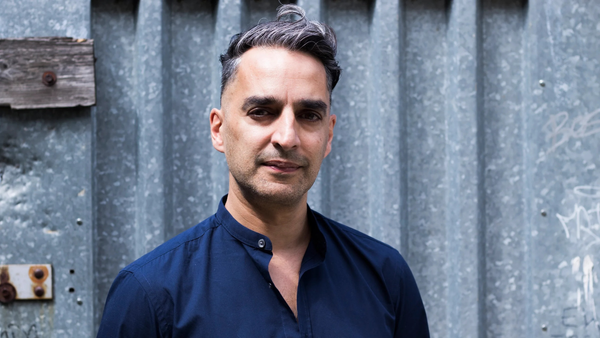
Shirish Kulkarni, a prominent media innovator and industry commentator, captured the core of the crisis during recent sector discussions:
"We keep asking the victims of racism to fix the racism. Then we wonder why they leave."
This poignant observation cuts through the corporate jargon that often dominates diversity, equity, and inclusion (DEI) seminars. It shifts the gaze away from the symptoms—low retention, lack of promotion—and places it squarely on the disease: an unwillingness among legacy power structures to dismantle institutionalized white supremacy within newsrooms.
Independent media analysts have echoed these sentiments, pointing out that traditional news organizations are failing to adapt to demographic shifts in their audience base. An editorial board that lacks lived experience across diverse communities will inevitably misread major social stories, alienate readerships, and erode public trust.
Industry advocacy groups have issued clear calls to action for media executives:
- Tie Executive Compensation to Retention: Make senior leadership financially accountable for the retention and promotion rates of minority staff, moving past mere hiring quotas.
- Mandate Independent Audits: Subject newsroom culture, pay parity, and promotion pathways to rigorous third-party audits with publicly available findings.
- Decenter Eurocentric News Values: Re-evaluate what constitutes "hard news" and "authority," dismantling traditions that marginalize stories and reporting styles originating outside traditional elite circles.
Future Outlook: Rebuilding the Foundation of Trust
The future of journalism depends entirely on its ability to reflect the societies it covers. As trust in traditional media continues to face historical lows, newsrooms can no longer afford to treat diversity as a charitable outreach project or a temporary PR fix.

If the mid-career drain of ethnic minority journalists is allowed to continue unchecked, the consequences will be catastrophic for the industry’s credibility. Newsrooms will become ideological echo chambers, incapable of covering complex social dynamics with the depth, nuance, and accuracy required in the 21st century.
Reversing this trend requires a radical departure from the status quo. It demands that media leaders stop treating diversity as an HR checklist item and start viewing it as a core prerequisite for journalistic integrity. Until executives are willing to dismantle the toxic internal structures that drive brilliant journalists away, the industry will continue to bleed its best minds—leaving behind a hollowed-out profession unable to meet the demands of a changing world.