Executive Overview
The video game industry thrives on innovation born from simplicity. Often, the most memorable independent games are those that take a foundational, nostalgic concept and twist it through a modern lens, resulting in an experience that feels simultaneously classic and avant-garde. Enter Screenbound, a title that first seized the collective attention of the gaming community in 2024 through a viral, 28-second teaser trailer.
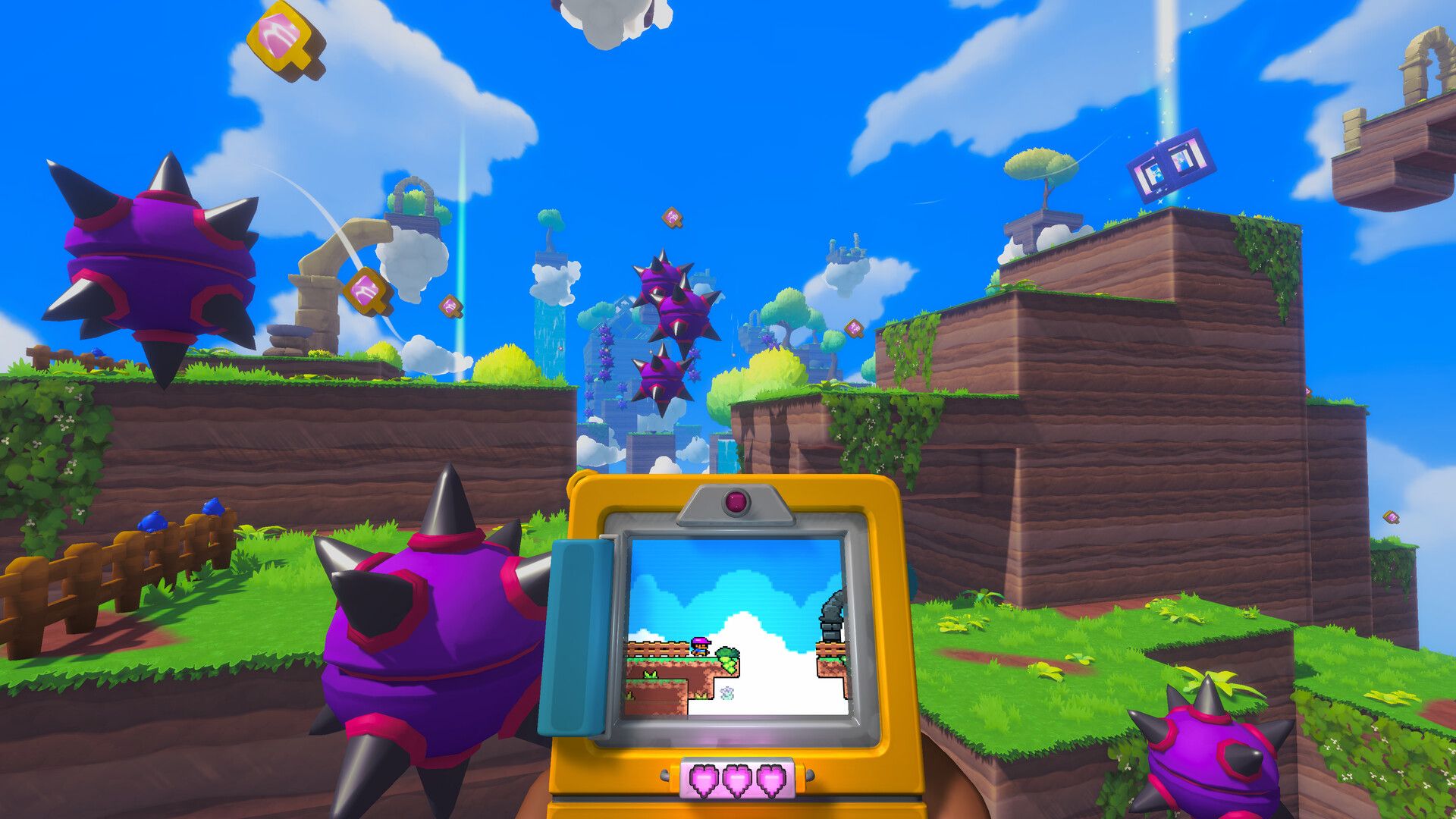
The core premise of Screenbound—touted by its creators as a "5D" experience—is as brilliantly confounding as it is mechanically complex. Players simultaneously navigate a vibrant 3D world in the first-person perspective while playing an identical 2D platformer of that exact same environment on a retro, Game Boy-style handheld console known as the "Qboy."
What began as a low-fidelity, proof-of-concept prototype by indie publisher and developer Crescent Moon Games has since blossomed into a fully realized, playable reality. This transformation was made possible through an increasingly common yet fascinating practice in independent development: co-development. By partnering with Radical Forge—a studio renowned for its support on titles like Gang Beasts and various Vampire Survivors spin-offs—Crescent Moon Games brought in heavy-hitting technical expertise to turn a blocky, asset-packed prototype into a cohesive, mechanically synchronized reality.
This article explores the arduous journey of bringing Screenbound to life, the monumental technical challenges of synchronizing two distinct spatial dimensions, the artistic inspirations behind its retro-modern aesthetic, and why the development team ultimately chose to delay its release to perfect the magic of dual-screen gameplay.
Detailed Chronology: From Viral Teaser to Co-Development Reality
The Spark: A 28-Second Phenomenon
When Screenbound initially stepped into the public eye in 2024, the internet reacted with a mixture of awe and disbelief. The short, 28-second clip demonstrated a player walking through a 3D environment while holding a yellow handheld device. Every jump, step, and movement executed in the first-person 3D space was mirrored in real-time by a 2D pixel-art counterpart on the Qboy screen.
For many observers, it looked like a magic trick or an elaborate video editing effect. However, behind the viral marketing hook lay a very raw, early-stage prototype. According to Lyra Owen, lead tech artist at Radical Forge, the initial build presented by Crescent Moon Games was fundamentally "bare bones."
"A lot of it was just mockups with very basic artwork that used a lot of asset packs," Owen reveals.
The Co-Development Pivot
Outsourced development and co-development are terms typically reserved for blockbuster AAA titles with bloated budgets and multi-studio pipelines. However, the indie sphere is increasingly adopting these collaborative models to push ambitious concepts across the finish line. Recognizing that the original prototype lacked the technical depth and visual polish required for a full commercial release, Crescent Moon Games enlisted Radical Forge.
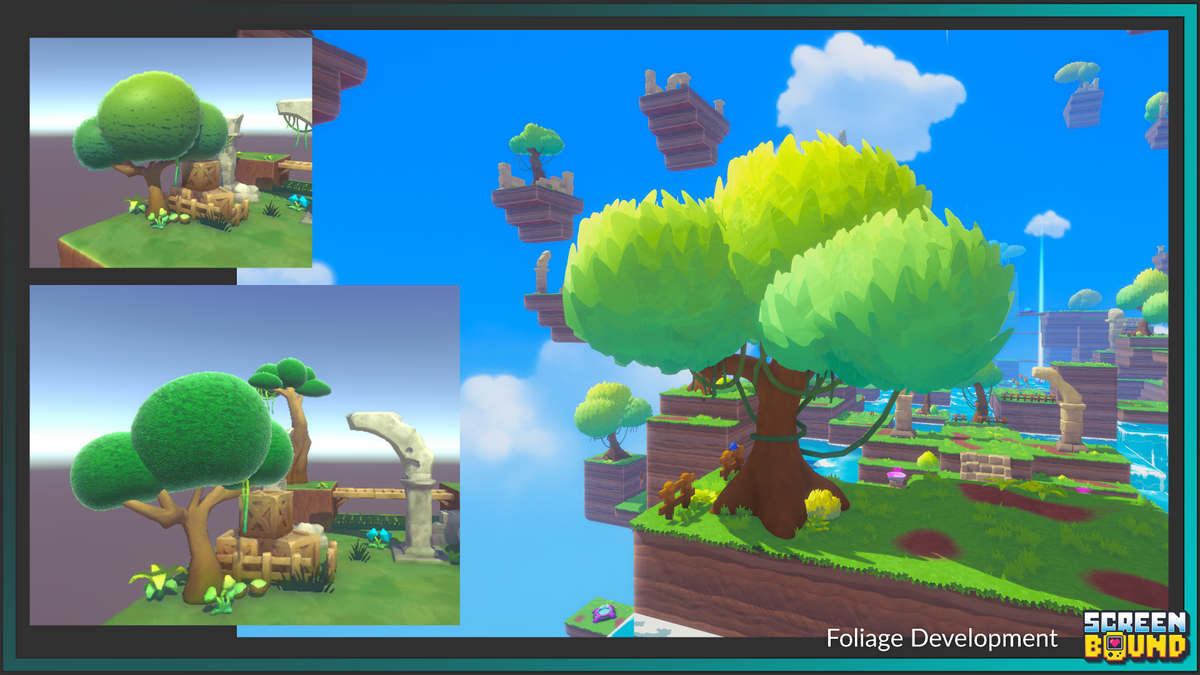
Upon taking the reins of the project, Radical Forge realized that a massive overhaul was necessary. "So when we got hold of it, we started again in a lot of respects, especially from the 3D side where we redeveloped how the terrain system works. We remade all the foliage," Owen explains. The original iteration relied heavily on smooth, blocky aesthetics reminiscent of Minecraft. To elevate the project, the team looked toward contemporary 3D platformers for inspiration, setting their sights on the sophisticated terrain systems found in titles like Mario + Rabbids.
Supporting Context & Metrics: Designing Across Dimensions
Bridging the Gap Between 2D and 3D
Making a game where two different visual perspectives run concurrently is a monumental task. The primary engineering hurdle lies in achieving absolute parity between the 3D world and its 2D translation.
Radical Forge discovered that the most effective way to unify these worlds was through procedural generation. The 2D levels were assembled using a framework likened to a "primitive" version of the level editor found in Super Mario Maker, while the 3D world was constructed via algorithmic procedural systems.
"That was the best way we found that you could get parity between the two worlds," says Owen. "So a lot of the procedural systems had to be redone and restarted."
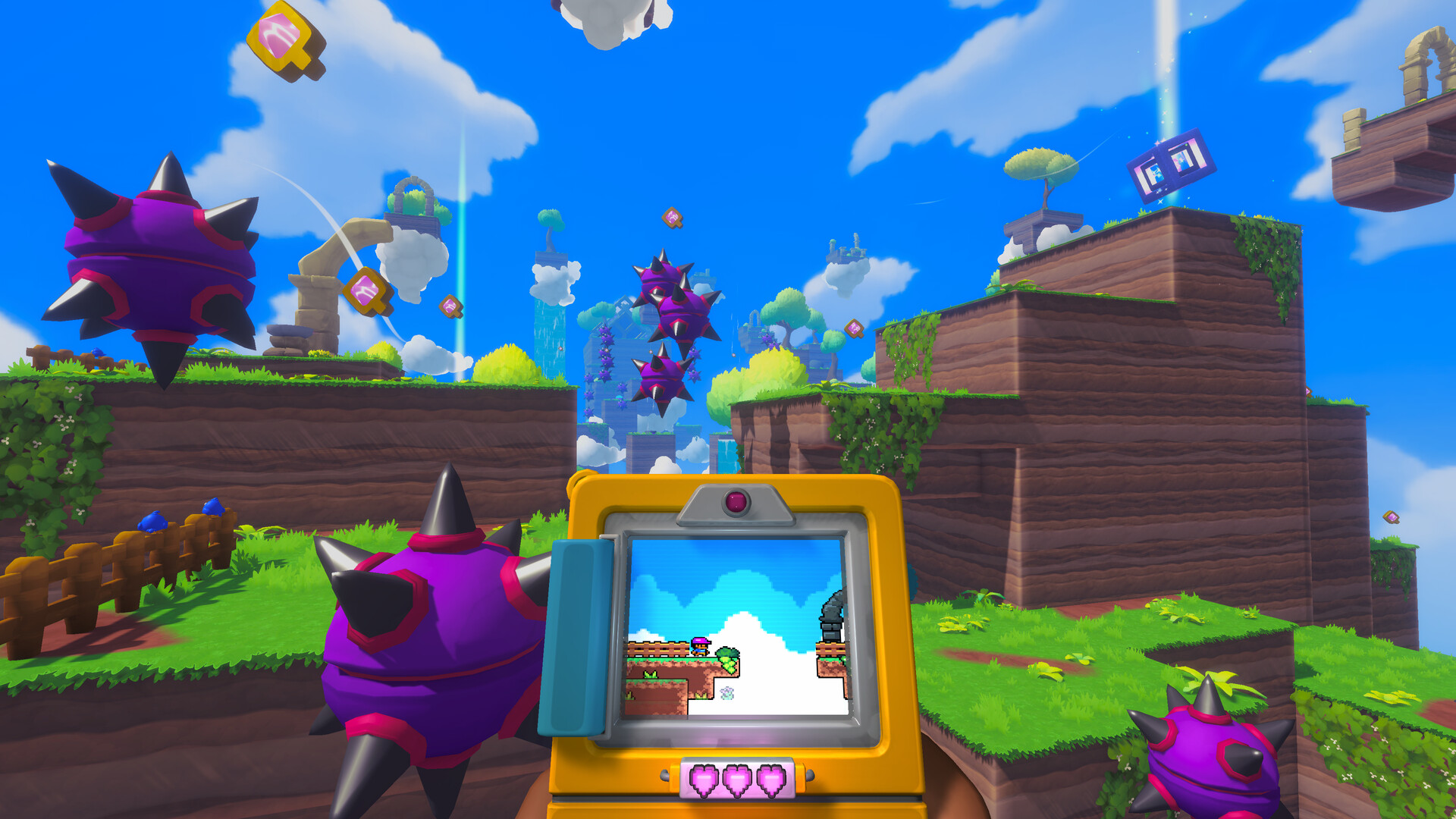
However, translating a 3D world—which inherently features depth along a Z-axis—into a flat 2D plane introduced spatial contradictions. The solution? Multi-layered 2D planes.
"Essentially it’s 2D, but it’s got layers, and then each layer represents a track in the 3D world," Owen explains. "So in the editor we can scroll in and out through the z-depth of the scene, and we basically build the level in z-layers from left, and then all the levels go from left to right like a classic Mario game."
Art Direction and Retro References
While the 3D environment drew inspiration from modern architectural and platforming philosophies, the 2D elements housed within the Qboy relied heavily on nostalgic references to the 1980s and 1990s. Despite the vast amount of technical restructuring, the pixel art for the handheld screen was largely entrusted to a single artist, Daniel Cossaboon, ensuring a cohesive and authentic retro aesthetic.
Yet, matching art styles was only half the battle. Scale and composition presented persistent roadblocks. For instance, converting the height of a towering 3D tree into a compressed 2D sprite required immense balancing.
"You’ve only got so much screen, so many pixels, and it’s entirely different trying to convert that into a 3D perspective and get the composition right," notes Owen.
Official Statements & Design Philosophy
Maintaining the Core Illusion
One of the design philosophies driving Screenbound is the avoidance of passive gameplay loops. The development team was acutely aware of the pitfalls associated with dual-screen hardware, referencing past devices like the Nintendo DS where players might relegate one screen to a secondary map and ignore it entirely.
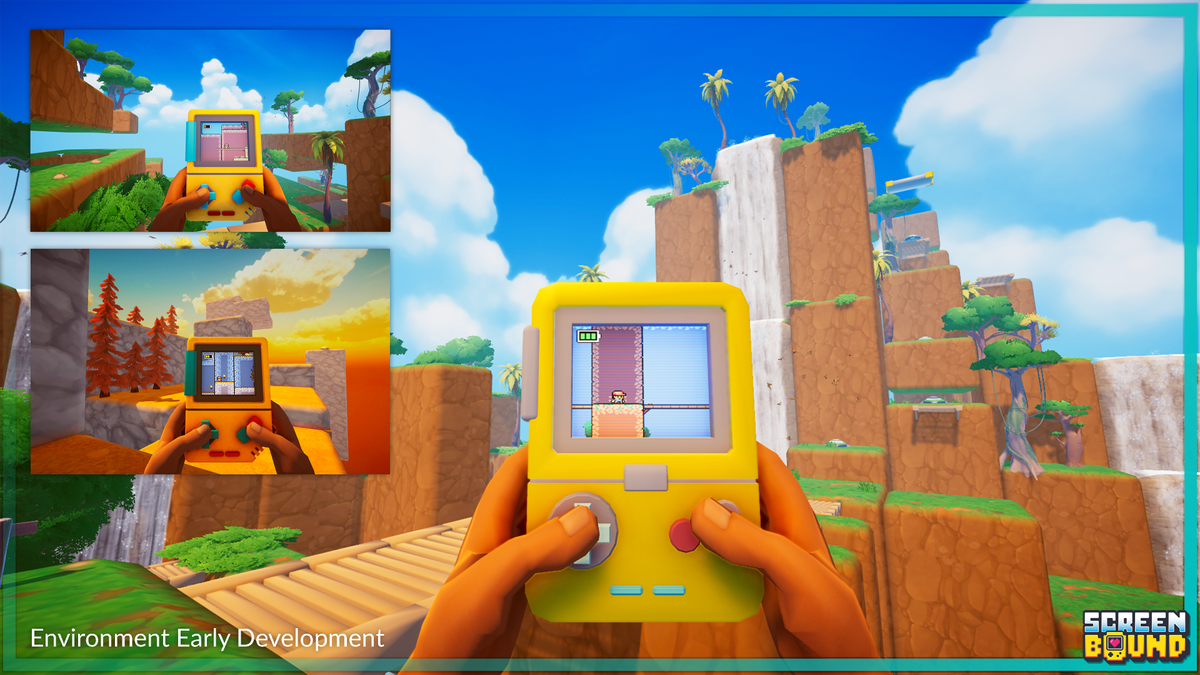
"What we don’t want is to be like a DS, where you have a map on one screen, and you’re playing a 3D game, or the other way around where you could just play it in 2D and never look at the environment," Owen elaborates.
To prevent players from staring exclusively at either the floor or the handheld, Screenbound deliberately blurs the lines between its two realities. Game elements dynamically cross the barrier: enemies can vanish from the 3D world only to materialize within the 2D screen, forcing the player to constantly shift their attention and adapt.
Furthermore, the Qboy is not merely a passive window into a parallel dimension. Players can lift the console closer to the camera to use it as a viewfinder to spot hidden secrets within the 3D environment, or even use its display to aim and shoot at targets.
This deep mechanical integration led Crescent Moon Games to make a pragmatic decision: delaying Screenbound from its initial September release window. Ensuring that the dual-focused "5D" concept remains intuitive, functional, and magical required extra time in the oven.
"Essentially, it’s two games running on top of each other, and that was one of the challenges," Owen concludes. "There are no separate things happening; when you are running through the 3D world, you are actually also running through the 2D world. That’s kind of the magic of it."
Future Outlook
As the independent gaming landscape becomes increasingly saturated, standing out requires more than just a fresh coat of paint—it demands conceptual disruption. Screenbound has positioned itself as one of the most mechanically inventive indie titles on the horizon by daring to ask what happens when a player’s physical reality and digital simulation are inextricably bound together.
Though the road from a viral 28-second concept clip to a fully optimized commercial product has required complete technical overhauls, procedural rewrites, and delayed release dates, the collaborative efforts of Crescent Moon Games and Radical Forge have paid off.
Players eager to test their multitasking capabilities and experience this mind-bending dimensional crossover do not have to wait for the full launch to get a taste of the action. A playable demo for Screenbound is currently available on Steam, offering a glimpse into a world where playing a handheld retro game and running for your life in 3D are, quite literally, the exact same thing.