Executive Overview
In a cinematic surprise that instantly electrified the festival circuit, writer Quentin Tarantino stunned audiences at the TCL Chinese Theatre during the AFI Fest on Friday night. Following a retrospective screening of his 2019 masterpiece, Once Upon a Time in Hollywood, Tarantino participated in a lively Q&A session moderated by Rotten Tomatoes’ Jacqueline Coley. What began as a standard post-screening conversation crescendoed into a historic industry moment when the auteur casually offered the crowd a choice: discuss the legacy of his ninth feature film or watch the first 17 minutes of its highly anticipated follow-up, The Further Mis-Adventures of Cliff Booth.
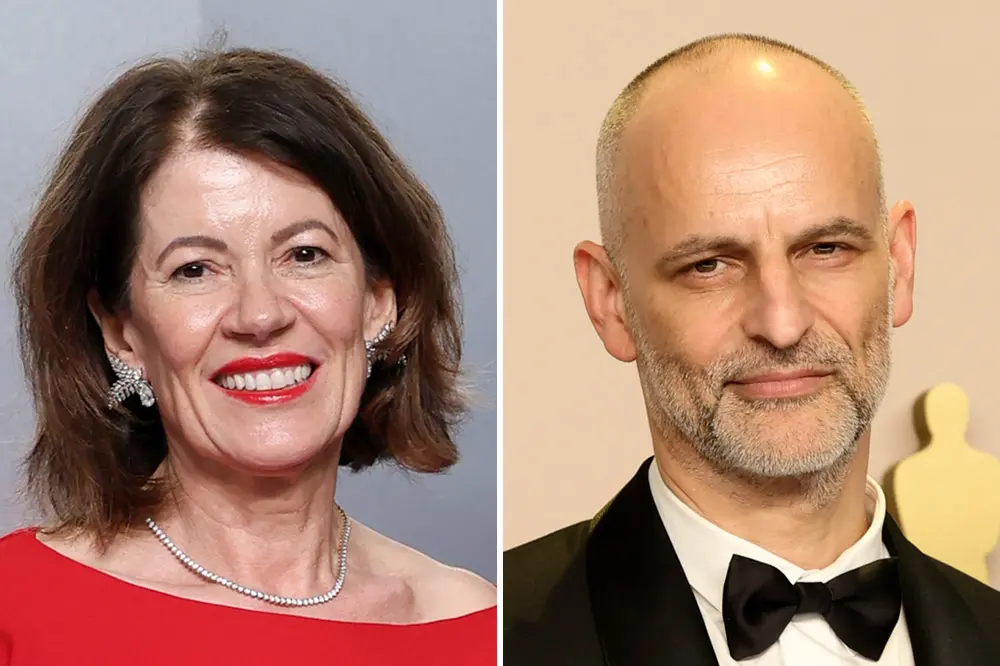
The audience chose the footage, receiving an exclusive, unannounced first look at the new project. Directed by acclaimed filmmaker David Fincher—who was present in the audience for the grand reveal—the Netflix film brings back Brad Pitt as the cool, collected, and lethal World War II veteran and stuntman Cliff Booth. Shifting the timeline forward from the sun-drenched, Manson-era backdrop of 1969 Los Angeles to the gritty, transitional landscape of 1977, the narrative explores a changing city where the aging stuntman must adapt to an evolving industry.
The project represents a fascinating intersection of cinematic powerhouses: written by Quentin Tarantino, directed by David Fincher, starring Brad Pitt, and backed by the distribution muscle of Netflix alongside a theatrical IMAX run. During the subsequent conversation, Tarantino illuminated his creative rationale for returning to the character, likening Booth to a classic paperback pulp hero whose adventures could stretch infinitely across various mediums.
Beyond the cinematic surprise, Tarantino also offered brief updates regarding his theatrical endeavors, including his upcoming West End play, The Popinjay Cavalier, starring Sacha Baron Cohen. As details surrounding The Further Mis-Adventures of Cliff Booth continue to cascade ahead of its late-November IMAX debut and subsequent December streaming release, the surprise screening marks a monumental shift in how major auteurs engage with festival audiences and hybrid release models.
Detailed Chronology: The Night at TCL Chinese Theatre
The evening began as a standard, albeit prestigious, retrospective celebration of Once Upon a Time in Hollywood. Set against the iconic backdrop of Hollywood Boulevard, the TCL Chinese Theatre was packed with cinephiles, industry insiders, and critics eager to experience Tarantino’s 1969 revisionist fairy tale on the big screen. The atmosphere inside the historic auditorium was already thick with reverence as the credits rolled on the tale of Rick Dalton and Cliff Booth.
Following the screening, Jacqueline Coley of Rotten Tomatoes took the stage to host an in-depth Q&A with Tarantino. The conversation meandered through the legacy of the 2019 film, the intricacies of its production design, and the nostalgic atmosphere that captivated global audiences. However, the energy in the room shifted palpably as the conversation drew toward its natural conclusion.
Tarantino, known for his spontaneous showmanship and deep love for theatrical surprises, leaned into the microphone. With a characteristic grin, he posed a rhetorical dilemma to the ecstatic crowd. Instead of merely talking about a hypothetical future or sharing anecdotes, he offered a definitive fork in the road: "Well, I could talk a little bit about ‘The Further Mis-Adventures of Cliff Booth,’ or I could show you the first 17 minutes."
The roar of approval from the audience left no room for debate. Without missing a beat, the house lights dimmed, and the theater was treated to a pristine, uninterrupted 17-minute sequence of the new film. The footage immediately established a stark tonal evolution from its predecessor. While Once Upon a Time in Hollywood basked in the golden-hour glow of late-1960s counterculture and television history, the opening of The Further Mis-Adventures of Cliff Booth plunged viewers into the tawdry, neon-lit, and cynical underbelly of 1977 Los Angeles.
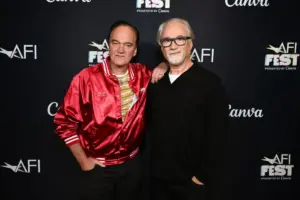
Following the screening, David Fincher—who had been quietly observing the reaction from the audience—was acknowledged, drawing an extra wave of applause from the star-struck crowd. The seamless blend of Tarantino’s idiosyncratic dialogue and world-building with Fincher’s meticulous, razor-sharp visual craftsmanship was immediately apparent to those fortunate enough to witness the preview.
Supporting Context & Metrics: The Evolution of Cliff Booth
To understand the weight of The Further Mis-Adventures of Cliff Booth, one must examine the legacy of its predecessor. Released in the summer of 2019, Once Upon a Time in Hollywood grossed over $377 million worldwide against a production budget of approximately $90 million, earning 10 Academy Award nominations and winning two (including Best Supporting Actor for Brad Pitt, who brilliantly brought Cliff Booth to life).
While Leonardo DiCaprio’s Rick Dalton anchored the emotional anxiety of a fading television star, Pitt’s Cliff Booth became a modern cultural icon—a stoic, effortlessly cool stunt double, loyal friend, and lethal martial artist with a mysterious past involving a missing wife and a dog named Brandy.
The official logline for the new Netflix film details a Los Angeles that has largely outgrown its need for a "hippie-slaying stuntman" in the way it did back in ’69:
"Los Angeles no longer needs a hippie-slaying stuntman the way it did. But Hollywood will always have problems, problems that can only be solved by someone with Cliff’s unique (occasionally extralegal) abilities. When he’s not earning his keep bartending or as a projectionist, Cliff Booth is a fixer — solving situations for Hollywood’s great and, sometimes, not so good."
This evolution turns Booth into a classic hard-boiled pulp hero. The 1977 setting places the character squarely in the era of gritty, neo-noir cinema (Taxi Driver, The Long Goodbye, Night Moves), a cinematic movement that naturally aligns with David Fincher’s directorial sensibilities. The transition of Booth from a stunt double to a Hollywood "fixer" operating out of projection booths and neighborhood bars provides a brilliant narrative engine for procedural storytelling within the glitzy yet sleazy framework of late-70s Tinseltown.
Furthermore, the release strategy for the project underscores the changing dynamics of modern distribution. Netflix has secured the project for a global streaming release, but not before giving it a prestigious IMAX theatrical run. The film is scheduled to premiere in IMAX theaters on November 25, allowing audiences to experience Fincher’s widescreen cinematography and Tarantino’s cinematic universe on the grandest possible canvas, before dropping on the streaming platform on December 23 just in time for the holiday viewing window.
Official Statements & Creative Vision
During the post-screening Q&A at AFI Fest, Quentin Tarantino elaborated on the genesis of the project and why he felt compelled to return to the world of Once Upon a Time in Hollywood. He noted that while positive reviews are often fleeting, specific critical insights tend to linger in his memory:
"I tend to not remember good reviews of mine in quotes; I remember the bad reviews in quotes, but I don’t really remember good reviews of mine in quotes. But one quote that I do remember somebody writing about ‘Once Upon a Time in Hollywood’ was, ‘This seems like the first world Quentin Tarantino has ever created that he would like to live in,’ and there is that aspect; I loved the Cliff Booth character," Tarantino explained.
The filmmaker expanded on the unique literary inspirations behind the character’s enduring appeal, viewing Booth not merely as a cinematic creation, but as a staple of vintage paperback fiction:
"I loved the way that Brad played him, and there was this aspect of him as sort of like a paperback hero. I could see like a series of paperbacks with Cliff Booth getting involved with this adventure or that adventure or something like that."
This pulp-fiction sensibility explains why Tarantino opted to write the screenplay while handing over directorial reins to David Fincher. The collaboration between two of the most influential filmmakers of the modern era represents a rare creative union. Fincher, renowned for his obsessive attention to detail, precision framing, and bleak psychological atmospheres, brings a chillingly sophisticated visual grammar to Tarantino’s pop-culture-infused, dialogue-driven universe.
In addition to discussing the cinematic venture, Tarantino touched upon his concurrent literary and theatrical projects. When questioned about his upcoming West End play, The Popinjay Cavalier—which is set to star Sacha Baron Cohen and premiere in London next year—Tarantino maintained a measured approach while confirming production milestones:
"I’m not going to talk a whole lot about that, but our previews are in February. In November we’ll start rehearsals. I’m just a writer, and that’s just kind of what I do. I’m always writing."
This relentless creative output proves that despite periodic rumors regarding his cinematic retirement or the conclusion of his "10-film rule," Tarantino’s mind remains an active workshop of transmedia storytelling, spanning cinema, streaming, publishing, and live theater.
Future Outlook: A New Paradigm for Auteur Collaboration
The surprise screening of The Further Mis-Adventures of Cliff Booth at AFI Fest serves as more than just a promotional stunt; it signals a fascinating evolution in how premier Hollywood auteurs navigate the modern entertainment landscape. By pairing Quentin Tarantino’s legendary screenwriting voice with David Fincher’s directorial precision, and channeling the project through a hybrid IMAX-and-streaming window with Netflix, the film bridges the gap between old-school theatrical prestige and new-age digital accessibility.
As the industry counts down to the film’s IMAX premiere on November 25 and its subsequent streaming debut on December 23, anticipation has reached a fever pitch. Critics and fans who caught the initial 17 minutes have reported a masterclass in tone, blending the sun-bleached melancholy of 1970s Los Angeles with the razor-sharp wit and visceral danger that defined the original characters.
Moreover, Tarantino’s ongoing ventures—from the theatrical run of The Popinjay Cavalier in London’s West End to his continuous writing endeavors—demonstrate that his creative footprint will continue to expand across multiple mediums for years to come. For now, all eyes are locked on the dark streets of 1977 Los Angeles, where Cliff Booth is back on the clock, proving that some Hollywood problems can only be solved by a man with a very specific, extralegal set of skills.