Executive Overview
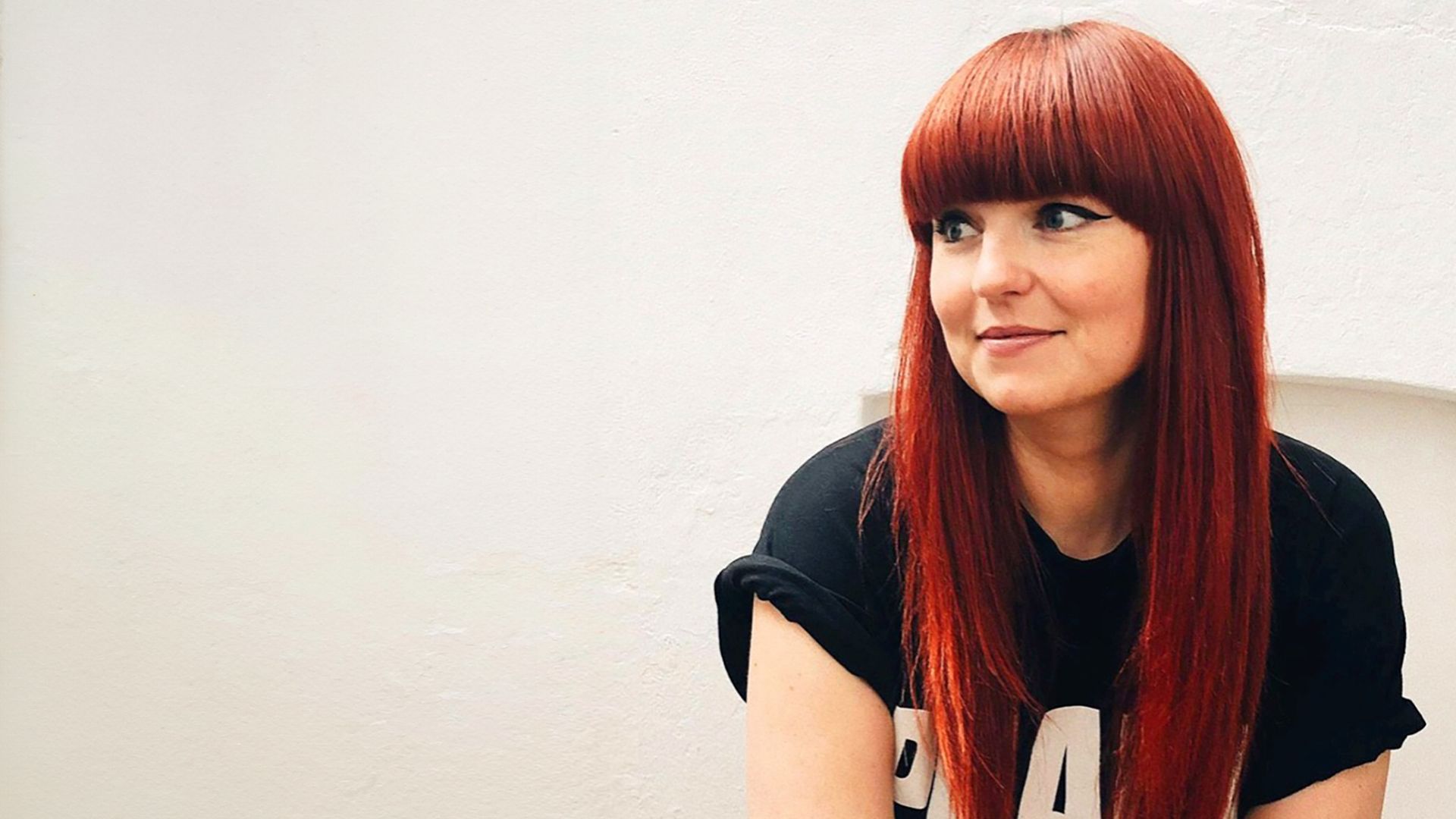
In the fast-evolving landscape of global branding and strategic design, few voices carry as much weight or perspective as Chloé Templeman. As the Executive Creative Director at Pearlfisher—a globally renowned, strategy-first brand design agency celebrated for building "irresistible human connection"—Templeman sits at the intersection of commercial viability and unbridled artistic expression. Hailing originally from Scotland, her impressive 17-year tenure across London’s elite creative agencies has seen her helm massive visual transformations for household names and luxury powerhouses alike, including Fortnum & Mason, Diageo, and Unilever.
Beyond her commercial portfolio, Templeman has cultivated a reputation as a fierce advocate for the next generation of creative talent. Through extensive mentoring programs, she actively champions diversity within the industry, with a special focus on paving pathways for women to ascend into executive leadership roles.
In a recent installment of Creative Bloq’s prominent "5 Questions" series, staff writer Natalie Fear sat down with Templeman to dissect the psychological and philosophical realities of modern design. From the unexpected resurgence of early-internet "anti-design" aesthetics to the pervasive nature of career imposter syndrome, Templeman offers an unfiltered look at what it truly takes to survive and thrive at the top of the creative ladder. This deep dive explores her insights, examining how the profession is grappling with technological disruption, the perils of algorithmic feedback, and the relentless, 24/7 drive that defines the modern creative mind.
Detailed Chronology & Industry Evolution: From MS Paint to Global Boardrooms
To fully understand Templeman’s approach to creative direction, one must examine the trajectory of her career against the broader backdrop of the design industry over the past two decades. Breaking into the notoriously competitive London agency scene seventeen years ago required a unique blend of technical execution and conceptual endurance.
The Formative Years
During her early days in the industry, digital tools were transitioning from novelties to foundational standards. Templeman’s early exposure to digital tinkering—dating back to nostalgic sessions on rudimentary software like MS Paint during her childhood in the 1990s—instilled a foundational appreciation for unpolished, expressive visual communication. This early fascination with raw aesthetics contrasts sharply with the hyper-polished, vector-perfect corporate design mandates that dominated the mid-2000s.
Ascending the Ranks
As she progressed through London’s top-tier agencies, Templeman worked on increasingly complex multinational portfolios. Managing brands like Diageo and Unilever demanded a delicate balancing act: respecting decades of brand equity while injecting contemporary cultural relevance. Her work with heritage brands like Fortnum & Mason further honed her ability to merge tradition with modern storytelling—a skill that eventually earned her the title of Executive Creative Director at Pearlfisher.
However, moving from a senior designer or creative lead into the executive tier brought its own set of trials. The chronological milestone of stepping into the CD role marked both the fulfillment of a lifelong professional ambition and the onset of profound psychological hurdles. Rather than feeling an immediate sense of arrival, Templeman faced a crucible of self-doubt that many high-achieving professionals—particularly women—quietly endure as they breach the glass ceiling of executive leadership.
Supporting Context & Metrics: The Psychology of Modern Design Leadership
Templeman’s reflections open up critical conversations regarding mental health, technological encroachment, and aesthetic counter-movements within the contemporary design ecosystem.
Navigating Career Imposter Syndrome
When Templeman assumed the mantle of Creative Director, she was met with an unexpected psychological barrier: imposter syndrome. Looking around the boardroom at her peers—many of whom had previously acted as her mentors or direct superiors—she felt an acute sense of alienation.
"It definitely hit hardest when I was promoted to creative director… I looked at the other directors around me, many who used to be my boss, and felt like I didn’t quite measure up to their brilliance. I didn’t operate the same way they did, and I was secretly convinced I shouldn’t be in the role."
The turning point arrived during a high-stakes, competitive pitch process. By trusting her distinct creative instincts and securing the win, Templeman realized that homogenization is the enemy of great design. A leadership team requires cognitive diversity, contrasting personalities, and varied approaches to solve complex branding challenges effectively.
The Resurgence of "Anti-Design"
In an era dominated by sleek minimalism, corporate Memphis vector illustrations, and hyper-clean UI/UX standards, Templeman identifies a surprising counter-trend that she secretly loves: anti-design.

Characterized by clumsy typography, deliberately clashing color palettes, and layouts that violently break traditional grid systems, anti-design offers an unapologetic throwback to the lo-fi digital aesthetics of the early web.
"There’s a real charm in this intentional chaos that makes me smile. By pushing objectively bad design until it loops back to being iconic, it injects a much-needed playfulness into the landscape."
While the style appears chaotic, Templeman stresses that executing anti-design requires absolute mastery. It is not merely bad design; it is a calculated subversion of rules that demands precise context and intentional application to communicate a clear, nostalgic message.
Official Perspectives & Industry Warnings: The AI Feedback Trap
As artificial intelligence rapidly permeates every facet of the creative workflow, industry leaders are increasingly forced to draw lines in the sand regarding where technology aids humanity—and where it actively harms original thought.
Templeman issues a stark warning regarding one of her primary creative pet peeves: using AI to evaluate and provide feedback on creative work.
The Danger of Algorithmic Homogenization
According to Templeman, outsourcing creative critique to a machine is a slippery slope. Large language models and generative AI systems are, by their very architecture, derivative; they are trained on vast datasets of what has already been created.
- Lack of Context: An algorithm does not understand the specific brief, the brand’s unique history, or the nuanced human problem a design team is attempting to solve.
- Erosion of Gut Instinct: Relying on AI feedback strips power away from human decision-makers, encouraging them to override their intuition and default to safe, predictable outcomes.
- Killing Innovation: If an agency’s goal is to disrupt the status quo and craft brave, category-defining work, seeking validation from a risk-averse algorithm will invariably kill that momentum.
"If we want to create truly great, disruptive design, the human perspective has to lead… The moment you hand over your decision-making power to an algorithm, the work suffers."
Templeman does not condemn AI entirely—noting it can be a useful tool to summarize or sharpen opinions after human convictions have already been formed—but she fiercely protects the sanctity of human-to-human dialogue in the creative feedback loop.

Future Outlook: Embracing the "24/7" Creative Lifestyle
Looking ahead, Templeman offers a grounded perspective on the lifestyle demands of top-tier creative leadership. One of the most persistent misconceptions about the design industry, she notes, is the expectation that creative professionals can simply shut their laptops at 5:30 PM and switch off their imaginations.
Creativity as an Existence, Not an Occupation
For Templeman, creativity cannot be neatly compartmentalized into standard working hours. It is an all-encompassing lens through which the world is experienced.
"Creativity isn’t a job you clock out of; it’s a lifestyle… My eyes and ears are constantly open and pulling inspiration from the most unexpected places 24/7, always thinking."
While outsiders might view this relentless mental engagement as a recipe for burnout, Templeman embraces it as an inherent, deeply rooted passion. This perpetual state of observation and synthesis is precisely what fuels award-winning branding work, ensuring that agencies remain culturally attuned to shifting consumer behaviors.

Embodying Gaisgeil
When asked to summarize her professional ethos and personal legacy in a single word, Templeman bypasses conventional corporate jargon. Instead, she looks to her Scottish heritage, selecting the Gaelic word Gaisgeil.
Gaisgeil describes an individual who is fiercely capable, profoundly brave, and driven by an unwavering determination to achieve a goal with intense passion. As Pearlfisher and the broader design community continue to navigate the complexities of modern branding, technological disruption, and shifting cultural paradigms, leaders anchored in Gaisgeil will undoubtedly pave the way forward—proving that while tools and trends may change, authentic human ingenuity remains irreplaceable.