By the Editorial Board
Published in Business & Strategy
Executive Overview
When the word “magic” is invoked to describe a corporate entity, it usually signals a marketing department at work—a convenient, hand-waving substitute meant to obscure the grueling mechanics of scale. Few companies lean into this vernacular quite like The Walt Disney Company. To the outside observer, the sprawling theme parks, global cruise lines, consumer products, and media empires seem to hum along on a steady diet of nostalgia, pixie dust, and corporate optimism.
Yet, beneath the glittering surface lies an operation of staggering complexity. Running one of the most visible and heavily trafficked conglomerates in human history requires far more than wishful thinking. It demands relentless training, a deeply ingrained institutional culture, systemic redundancy, and an organizational tolerance for failure and iterative improvement.
To understand the machinery behind the myth, a recent behind-the-scenes look inside “Disney University” in Florida reveals how the organization prepares its “cast members”—the corporate nomenclature for its employees—for everything from flipping hotel rooms to managing large-scale infrastructure. While Disney operates at a tier of capitalization and brand recognition that few businesses can ever hope to touch, its core philosophies on training, employee empowerment, product testing, and internal talent mobility offer surprisingly practical, scalable blueprints for entrepreneurs and startup founders alike.
This deep-dive investigation explores the four foundational lessons extracted from the heart of Disney’s training apparatus, translating corporate goliath methodologies into actionable strategies for growing enterprises.
Detailed Chronology: Inside the Florida Facility
The Genesis of "Traditions" and the Sandbox Environment
The onboarding pipeline at Disney University is not merely a lecture series on company history; it is a meticulously choreographed sociological experiment. The centerpiece of this curriculum is a multi-day orientation seminar known internally as “Traditions.”
Historically, corporate onboarding focuses heavily on compliance, paperwork, and technical proficiency. A new hire learns the software, signs the tax forms, and is thrown into the deep end of their specific department. Disney’s approach inverts this model. Before a newly minted cast member ever touches a cash register, cleans a carpet, or greets a guest, they are immersed in the corporate ethos through a combination of historical context and physical simulation spaces.
Tucked away within the nondescript corridors of Disney University are spaces that feel less like a corporate office and more like a set designer’s workshop. These are mock hotel rooms, replica lobbies, and simulated attraction queues. Here, prospective housekeepers practice resetting rooms against the clock, and front-desk personnel engage in exhaustive role-playing exercises covering everything from routine check-ins to high-stakes concierge problem-solving.
This methodology bridges the gap between theoretical training and operational reality, effectively removing the paralyzing friction of the "first day on the job."
Supporting Context & Metrics: The Scale of Operations
To appreciate the gravity of Disney’s internal systems, one must look closely at the sheer volume of assets and human capital involved. The logistical challenges of maintaining brand integrity across millions of touchpoints every single day require industrial-strength solutions.
Consider the scope of just one operational sub-unit: Disney’s costuming department.
- 46 distinct costuming locations globally.
- 1,500 costuming cast members managing logistics, tailoring, and distribution.
- More than 900 unique, character-specific and role-specific costume designs.
- 746 individual styles of hats.
- An astonishing 2.5 million garments in active circulation at any given moment.
When parking attendants, historic characters, hospitality staff, and operational engineers all require specific, branded, and functional attire, the margin for operational failure shrinks to zero. A poorly designed uniform does not just look bad; it causes physical fatigue, dampens employee morale, and ultimately degrades the guest experience.
The Four Core Lessons for Entrepreneurs
Lesson 1: Go Full Nathan Fielder (The Power of the Rehearsal)
One of the more surreal elements of a tour through Disney University is its uncanny resemblance to an episode of The Rehearsal, the HBO comedy-documentary series created by Nathan Fielder, where elaborate, hyper-realistic mock environments are constructed to help ordinary people practice difficult social interactions.
At Disney, these mock-ups are deadly serious. Repeatedly rehearsing a task in a realistic, low-stakes environment allows employees to iron out operational bugs long before showtime. Every human being makes mistakes. The critical differentiator is where those mistakes occur. By providing fake environments for cast members to stumble, forget procedures, or fumble guest interactions, Disney ensures that these learning curves happen entirely away from paying customers.
[Traditional Onboarding]
New Hire ──> Direct Customer Contact ──> High-Stakes Mistakes ──> Churned Customer / Burnout

[The Disney Model]
New Hire ──> Simulated Environment (Mock Rooms/Lobbies) ──> Controlled Failure ──> Mastery ──> Customer-Facing Role
The Entrepreneurial Takeaway: Do not let a talented employee flame out simply because their first real attempt at a critical task happens live in front of a client. While startup culture often romanticizes "sink-or-swim" management styles, plenty of high-potential workers are better served by a sandbox environment. Create internal staging grounds—such as staging internal product demos, running dry-run customer service calls, or testing software updates on internal user groups—where mistakes are free and learning is guaranteed.
Lesson 2: Don’t Confuse the Task With the Job
The "Traditions" orientation seminar serves a dual purpose. Beyond transmitting company culture, it solves a massive logistical problem: How do you empower tens of thousands of employees performing wildly different jobs to make consistently sound, aligned decisions without requiring a manager’s sign-off for every minor issue?
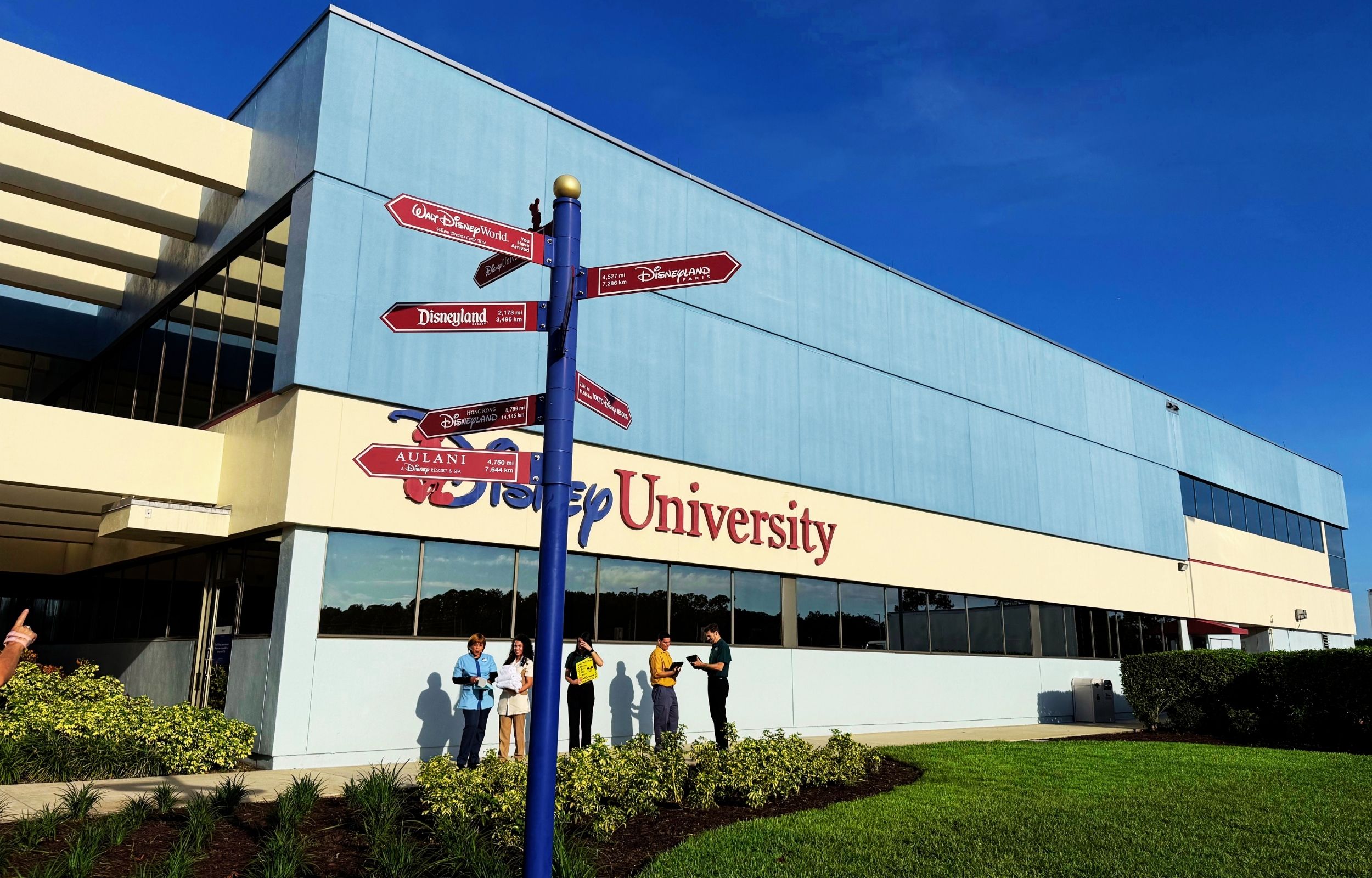
The curriculum establishes a shared, overarching goal. Employees are not simply given a hollow mission statement to memorize; they are handed a common framework to answer a vital operational question: What are we all ultimately trying to accomplish?
Throughout the seminar, cast members are reminded that their collective job is to personally “create happiness.” While the phrasing is distinctly corporate-theatrical, the underlying principle is universally applicable. A job description can never anticipate every edge case—every dropped ice cream cone, every crying child, every food allergy, or every sudden ride breakdown. At some point, an employee must rely on their own judgment.
- The Parking Attendant: Often the very first employee a guest encounters, setting the emotional baseline for the entire day.
- The Custodial Staff: Charged with sweeping and cleaning, but functionally utilized as primary wayfinders, doling out directions to restrooms and attractions.
The Entrepreneurial Takeaway: In smaller companies, vital tasks frequently fall through the cracks between rigid job descriptions. If an engineer notices a glaring product bug, "I’m not in QA" should never be the end of the conversation. If a developer answers an inbound sales call, "I’m not in sales" should not mean dumping the lead into a voicemail abyss. Employees do not need to do everyone else’s job, but they must understand the broader organizational mission well enough to route friction toward the right solution. The goal is to ensure critical initiatives do not die in the empty space between "my job" and "somebody else’s job."
Lesson 3: Go Extreme With Your "Dogfooding"
In startup lexicon, "dogfooding"—the practice of a company using its own software or products internally—is a staple of product development. However, simply using your own product under normal, controlled conditions is rarely enough to surface critical flaws.
Disney’s costuming department takes dogfooding to an extreme level. Designers and developers do not merely sketch uniforms in climate-controlled studios; they are required to field-test their creations by wearing them for hours in Florida’s punishing heat, humidity, and torrential downpours. These grueling conditions quickly expose structural and material flaws that would never materialize indoors.
This philosophy extends beyond garments. Bianca Cross, manager of costume design and development, highlights how custodial uniforms were re-engineered using four-way stretch, breathable fabrics with adjustable pant cuffs specifically designed for wet environments. These enhancements were not dreamed up in a boardroom; they were pulled directly from the daily complaints and lived experiences of the workers wearing them.
┌────────────────────────────────────────────────────────┐
│              Extreme Dogfooding Framework              │
├───────────────────────┬────────────────────────────────┤
│ Industry              │ Extreme Stress-Test Method     │
├───────────────────────┼────────────────────────────────┤
│ Luggage Manufacturing │ Drag bags through airports     │
│                       │ during peak holiday rushes     │
├───────────────────────┼────────────────────────────────┤
│ Software Development  │ Test apps on outdated phones   │
│                       │ with intermittent bandwidth    │
├───────────────────────┼────────────────────────────────┤
│ Subscription Retail   │ Attempt to cancel your own     │
│                       │ service without a guide        │
└───────────────────────┴────────────────────────────────┘
The Entrepreneurial Takeaway: Stop relying solely on sanitized feedback loops. If you build a product, subject it to its absolute worst-case operating environments. Furthermore, build frictionless channels for front-line workers and end-users to talk back. The people who live with your product every day are already testing it for you; your job is simply to make sure you are actually listening to the results before minor annoyances metastasize into customer churn.
Lesson 4: Look Sideways for Talent
Disney operates as a decentralized ecosystem of diverse industries: hospitality, mass transit, culinary arts, apparel manufacturing, mechanical engineering, and media production. This operational breadth creates career mobility that would be nearly impossible to map out within a linear corporate structure.
Consider the trajectory of Ivan Diaz, currently the director of transportation services for the company. Diaz initially entered the corporate fold in a specialized, technical role. His career trajectory shifted permanently when a superior looked past his immediate departmental silo and asked a transformative question: "Have you ever thought about running a large organization?" Today, Diaz oversees one of the most complex private transportation networks in the United States.
The Entrepreneurial Takeaway: Never assume that an employee’s current job title defines the upper boundary of their capabilities. In growing businesses, internal mobility is frequently overlooked in favor of expensive external hiring searches. The absolute best candidate for an emerging leadership or operational role may already be on your payroll—they are simply operating in a department you haven’t thought to look at yet.
Official Statements and Industry Insights
Reflecting on the psychological and operational mechanics of the Disney model, organizational theorists point to the alignment of culture and mechanics as the ultimate differentiator for enduring enterprises.
"When a company succeeds at scale, it is rarely because of a single brilliant innovation. It is because they have institutionalized the boring, unsexy fundamentals of training, listening, and rehearsing," notes an organizational development researcher specializing in scaled consumer ecosystems.
"Disney’s genius is not that they invent happiness; it is that they build industrial systems that allow thousands of disparate individuals to deliver a consistent emotional outcome under intense operational pressure."
Future Outlook
As businesses across all sectors navigate an increasingly automated, remote, and fragmented working landscape, the lessons embedded within physical institutions like Disney University take on renewed urgency. The temptation to reduce onboarding to asynchronous video modules and Slack channels has left many modern companies struggling with cultural cohesion and operational quality control.
The future of high-performing enterprises will likely belong to those leaders who can successfully merge digital efficiency with tactile, rigorous, and human-centric training models. Whether running a ten-person software startup or a ten-thousand-employee hospitality network, the mandate remains clear: build the sandbox before stepping onto the stage, align the task with the overarching mission, test your products until they break, and look sideways across your own organization for the hidden talent waiting to lead.