Executive Overview
In an era defined by ubiquitous digital connectivity, the smartphone has evolved into an extension of the human consciousness. It holds our financial records, private communications, personal photographs, and professional networks. Yet, this high degree of integration makes modern mobile devices prime targets for increasingly sophisticated cyber threats. Among the most pernicious of these threats are commercial mercenary spyware tools—such as the infamous Pegasus software developed by the NSO Group—which are capable of silently compromising a device via "zero-click" exploits that require zero user interaction.
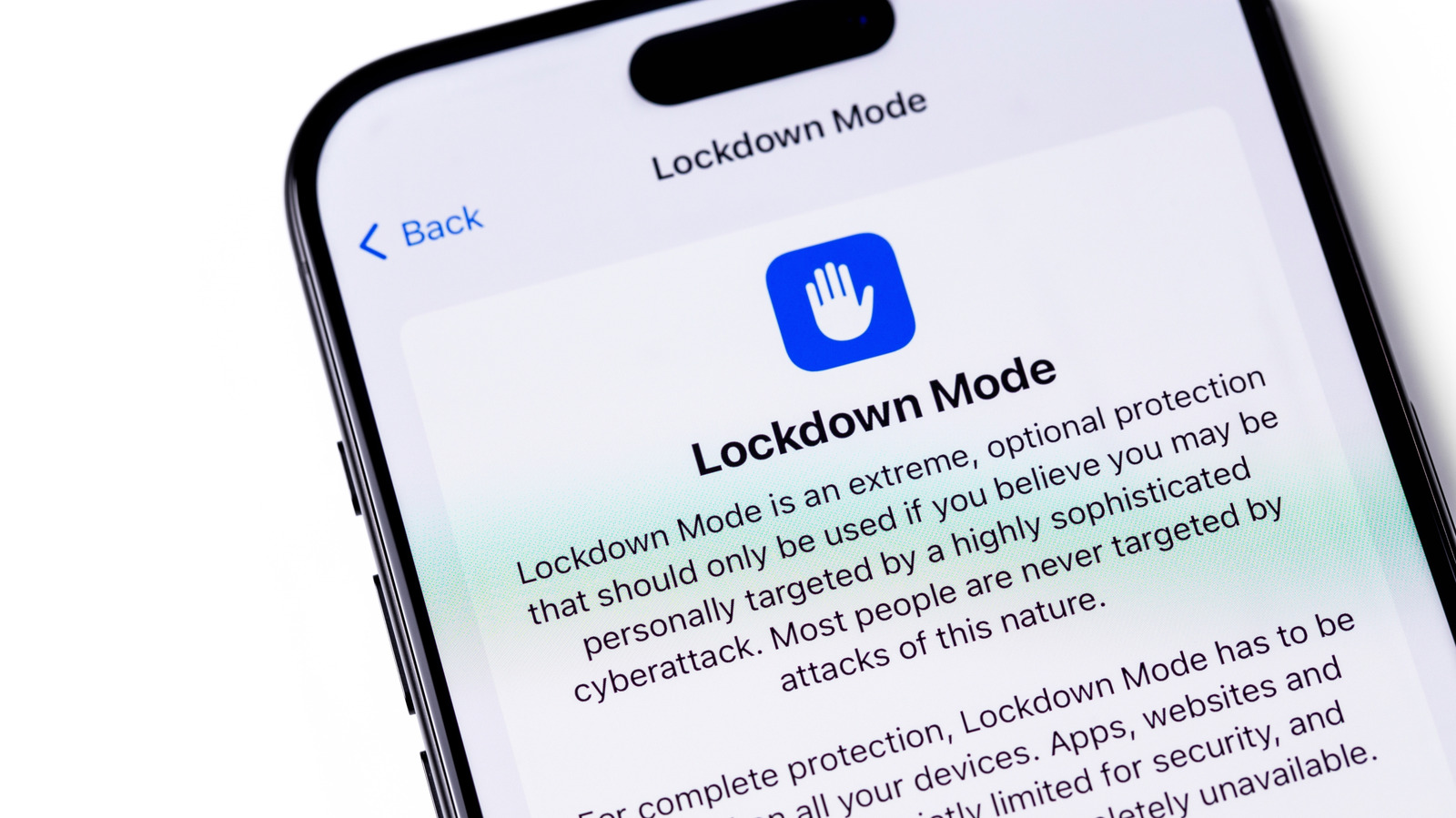
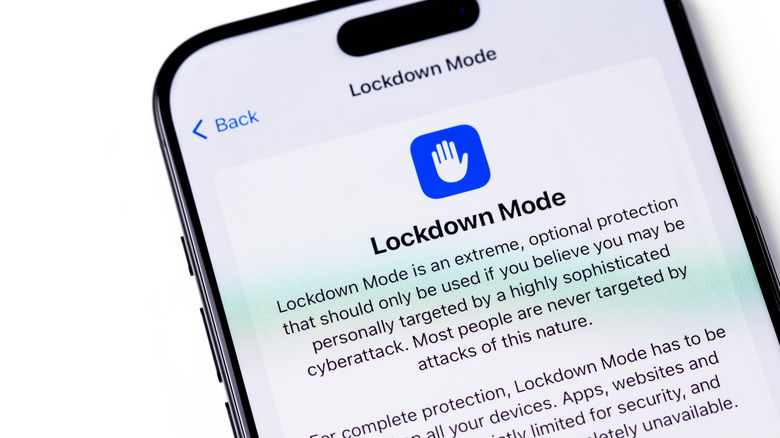
To counter this severe and asymmetric threat vector, Apple introduced Lockdown Mode alongside iOS 16 in 2022. Designed as an extreme, last-resort security fortress, the feature aggressively strips away standard smartphone conveniences to virtually eliminate potential attack surfaces. However, because its defensive posture is so uncompromising, it transforms a fluid, dynamic communication device into a tightly restricted digital vault.
While Lockdown Mode offers nearly impenetrable protection against targeted state-sponsored cyberattacks, it is intentionally unsuited for the average consumer. This comprehensive analysis explores the genesis of Apple’s extreme security toggle, evaluates its operational mechanics, weighs its significant trade-offs, and provides strategic guidance on who truly needs to live behind its digital ramparts.
Detailed Chronology: The Evolution of Targeted Spyware and Apple’s Defensive Response
The trajectory leading to the creation of Lockdown Mode is a sobering timeline of escalating digital espionage, wherein high-end exploit development outpaced traditional consumer security paradigms.
Pre-2022: The Rise of Mercenary Spyware
For years, digital security research organizations, most notably Citizen Lab at the University of Toronto and Amnesty International’s Security Lab, documented widespread abuses of commercial surveillance software. High-profile dissidents, investigative journalists, human rights defenders, and politicians across the globe found their personal devices compromised without warning. Attackers relied on covert vectors—such as malicious PDF files sent via iMessage or invisible calendar invites—that executed arbitrary code deep within the operating system kernel before the user could even view the notification.
The 2022 Breakthrough: iOS 16 and the Introduction of Lockdown Mode
Recognizing that traditional patching cycles were reactive and often too slow to protect high-risk individuals from bespoke, multi-million-dollar zero-day exploits, Apple changed its tactical strategy. At WWDC 2022, the company announced Lockdown Mode as an opt-in, defense-in-depth utility bundled into iOS 16, iPadOS 16, and macOS Ventura. By offering an extreme lockdown state, Apple sought to fundamentally break the assumptions that spyware developers relied upon to infiltrate target devices.
2023: The "Blastpass" Validation and the $2 Million Bounty
The true mettle of Lockdown Mode was rigorously tested in the wild shortly after its debut. In late 2023, security researchers uncovered a sophisticated exploit chain dubbed "Blastpass," which leveraged malicious PassKit attachments sent via iMessage to silently install Pegasus spyware on unpatched iPhones.
Crucially, forensic analysis revealed that devices operating with Lockdown Mode enabled were entirely immune to the Blastpass exploit. This real-world validation prompted Apple to double down on its confidence in the feature. The company doubled the top payout of its Bug Bounty program to a staggering $2 million exclusively for security researchers capable of finding a complete bypass of Lockdown Mode—a testament to how secure Apple believes the architecture to be.
Supporting Context & Metrics: What Lockdown Mode Disables and Why
To understand why Lockdown Mode is so effective, one must examine the specific systemic concessions it demands. Apple’s engineering team meticulously evaluated every potential attack surface within its operating systems and systematically locked down—or entirely disabled—components historically targeted by exploit developers.
Core System Restrictions
When activated, Lockdown Mode alters the behavior of nearly every major subsystem on an iPhone, iPad, or Mac:
- Messages: Most message attachment types—including rich links, link previews, and complex media formats—are blocked outright. The only attachments permitted by default are images, and even those are subject to intensive local processing. This effectively neutralizes remote code execution via messaging applications.
- Web Browsing: Complex web technologies, such as Just-In-Time (JIT) JavaScript compilation, are disabled by default unless a trusted site is specifically excluded. This severely hampers the ability of advanced web-based exploits to manipulate browser memory, though it causes certain modern, script-heavy web pages to load slowly or malfunction entirely.
- FaceTime and Communication: Incoming FaceTime calls are completely blocked unless the user has previously called the initiator or established a trusted contact record. This prevents zero-click audio/video ingestion exploits from triggering automatically upon receiving a call.
- Wired Connections: When an iPhone is locked, data communication via USB accessories and wired computer links is disabled. An attacker cannot physically plug into the device via Lightning or USB-C to extract data or inject payloads without the user first inputting their device passcode.
- Wireless and Network Protocols: Automated connections to unsecured public Wi-Fi networks are disabled. Furthermore, legacy cellular network protocols (such as 2G and 3G, where still operational abroad) are completely turned off to prevent false-base-station eavesdropping and downgrade attacks.
- Configuration Profiles & Enterprise Management: Users cannot install new Mobile Device Management (MDM) configuration profiles while in Lockdown Mode. This creates a friction point for corporate or educational environments that rely on root certificates and remote management tools.
- Peripheral Integration: Apple Watch integration is restricted; phone call notifications will not mirror to the wearable. Shared photo albums, Game Center invitations, and Apple Home shared-access requests are similarly frozen.
| Feature Category | Standard Mode | Lockdown Mode Active | Security Impact |
|---|---|---|---|
| iMessage Attachments | All formats allowed (PDFs, vCards, etc.) | Restricted to select images only | Eliminates attachment-based remote code execution. |
| Web Browser (JavaScript) | JIT compilation fully enabled | JIT disabled by default (can be overridden) | Hardens browser memory against exploit chains. |
| Wired Data Access | Data transfer permitted when locked | Blocked when locked | Prevents physical extraction tools (e.g., Cellebrite) from working on a locked phone. |
| FaceTime | Accepts calls from any caller ID | Restricted to recent contacts/explicit permissions | Stops zero-click audio/video vector attacks. |
| Cellular Radio | Supports 2G through 5G/LTE | Legacy 2G/3G disabled | Protects against rogue cell tower (IMSI catcher) attacks. |
Official Statements and Industry Perspective
Apple has consistently framed Lockdown Mode not as a general consumer utility, but as a digital shield forged for a distinct demographic operating in high-risk threat environments.
In public disclosures and engineering briefings, Apple representatives emphasize that the architecture of iOS is already among the most secure in the consumer technology sector, featuring hardware-level encryption, sandboxing, and runtime protections. However, the company acknowledges that targeted attacks by state actors employing sophisticated mercenary tooling operate on an entirely different economic and technical scale.
"Lockdown Mode is an extreme capability for the very few individuals who, because of who they are or what they do, might be personally targeted by some of the most advanced digital threats," Apple noted in its initial deployment brief. "While the vast majority of users will never be the targets of cyberattacks of this severity, we are tireless in our efforts to protect all our users."
Independent security analysts and human rights organizations have widely praised the feature, noting that it democratizes enterprise-grade protection for vulnerable groups who previously had zero recourse against state-sponsored digital espionage. Organizations like Citizen Lab have integrated guidance on Lockdown Mode into their digital security protocols for high-risk journalists reporting in hostile zones.
Future Outlook: The Next Frontier of Mobile Security
As mobile operating systems continue to mature, the cat-and-mouse game between elite security engineering teams and offensive cyber-weapon developers will only accelerate. The future of features like Lockdown Mode points toward deeper contextual intelligence and broader ecosystem integration.
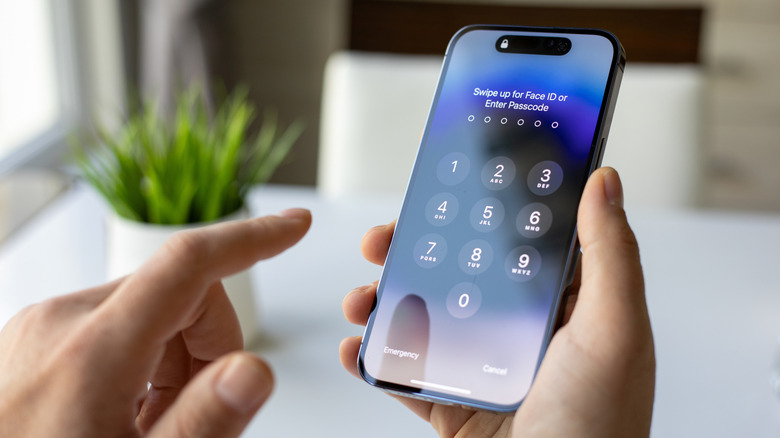
Granular Customization and Automated Triggers
Future iterations of Apple’s operating systems are anticipated to introduce more nuanced controls, allowing users to toggle specific sub-features of Lockdown Mode without sacrificing the entirety of their device utility. Furthermore, security researchers speculate about automated threat-detection triggers: if an iPhone detects anomalous radio signatures, unusual localized network manipulation, or potential Pegasus-like indicators, the device could theoretically prompt the user—or automatically shift—into a temporary lockdown state.
The Spillover Effect to Consumer Security
While Lockdown Mode itself remains a niche tool, the architectural hardening required to build it has inherently strengthened standard iOS security for every user. Defensive mitigations developed for Lockdown Mode—such as strengthened memory-safety models, improved blast-door sandboxing for media parsing, and stricter inter-process communication controls—automatically elevate the baseline security of every iPhone sold globally.
Conclusion: Is It Right for You?
For the average consumer checking emails, scrolling through social media, and managing banking applications, enabling Lockdown Mode is unnecessary and counterproductive. The daily friction—broken web scripts, missing message attachments, restricted accessories, and silenced FaceTime calls—far outweighs the marginal security benefit against generic, untargeted malware.
However, for investigative journalists, political dissidents, human rights defenders, diplomats, and executives operating in politically volatile regions, Lockdown Mode represents a vital, life-preserving technological lifeline. It transforms a vulnerable consumer electronics device into a hardened digital redoubt, proving that when the stakes are high enough, users are more than willing to trade convenience for absolute peace of mind.