Executive Overview
For nearly three decades, the sprawling, multibillion-dollar Pokémon empire has captivated a global audience that spans generations. Yet, a glaring geographical paradox has persisted for international fans: the ultimate brick-and-mortar retail experiences—places where one can fully immerse oneself in the commercial and cultural phenomenon of Pokémon Centers—have remained almost exclusively confined to Asia, primarily Japan.
For international Trainers residing in North America, Europe, and beyond, engaging in physical, official Pokémon retail therapy has historically required either a costly overseas voyage or fleeting, highly competitive pop-up shop appearances.
That paradigm is finally shifting. In a landmark announcement that has sent ripples of excitement through the global gaming and collecting communities, The Pokémon Company International has officially confirmed its long-term strategy to establish permanent physical retail destinations outside of Asia. Leading this historic charge is the British capital, with a state-of-the-art permanent Pokémon store slated to open its doors in London by 2029.
This ambitious retail initiative marks a major turning point in The Pokémon Company’s international business model. By transitioning from temporary pop-up engagements to permanent brick-and-mortar strongholds, the corporation is signaling a deepened commitment to its non-Asian markets.
London, already a bustling hub for pop culture, gaming conventions, and international tourism, serves as the ideal beachhead for this expansion. As the countdown to 2029 begins, the retail landscape of the United Kingdom—and potentially the broader Western world—is preparing to welcome a permanent monument to pocket monsters.
Detailed Chronology: From Tokyo Landmarks to London Horizons
To understand the magnitude of a permanent Pokémon store opening in London, one must examine the rich and varied history of Pokémon retail. The journey of the official Pokémon store has evolved from localized novelties in the late 20th century to massive, experiential tourist destinations today.
The Early Experiments: The New York Precedent
Long before the current global renaissance of trading cards and digital gaming, The Pokémon Company tested the waters of Western physical retail in the United States. In November 2001, Pokémon Center New York officially opened its doors in Rockefeller Center. Spanning thousands of square feet, the store was an immediate sensation, drawing massive crowds of enthusiastic American fans who, up until that point, had only interacted with the franchise through Game Boy cartridges, trading cards, and television screens.
However, the retail landscape of the early 2000s presented unique challenges. As the initial Pokémon craze evolved, Nintendo and its partners restructured their North American retail strategy. Just four years after its grand opening, the New York location underwent a transformative metamorphosis. In 2005, the space was officially rebranded and converted into the iconic Nintendo World Store (later known as Nintendo NY), shifting its primary branding away from exclusive Pokémon merchandise to encompass the entire pantheon of Nintendo intellectual properties. For nearly two decades, Western fans have been left without a dedicated, permanent Pokémon retail sanctuary of that scale.
The Japanese Retail Renaissance
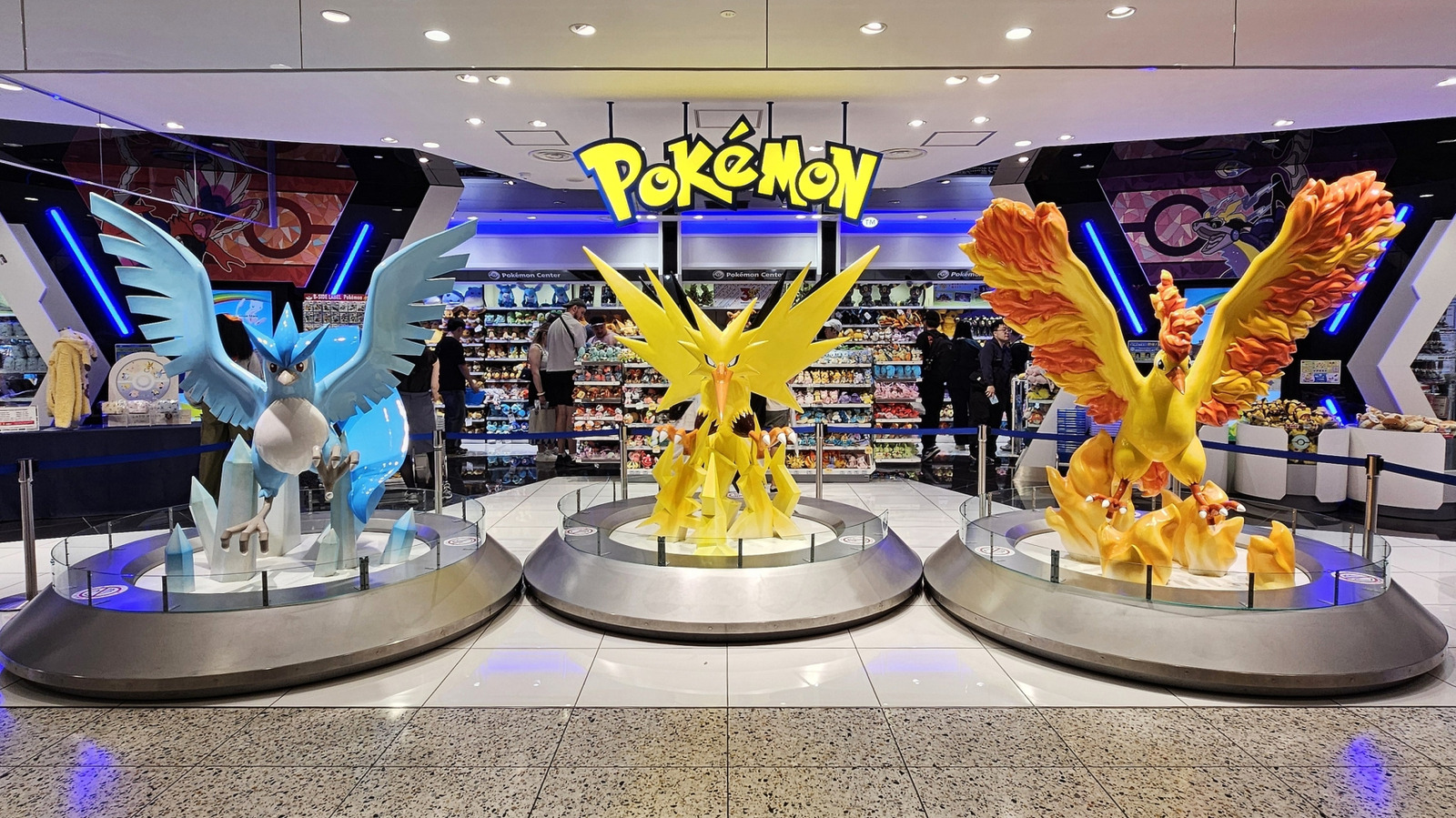
While Western markets saw their dedicated storefront transition into a multi-brand Nintendo hub, Pokémon Centers in Japan experienced an explosive evolution. Today, official Pokémon Centers across Tokyo, Osaka, Kyoto, and other major Japanese cities are not merely shops; they are cultural touchstones. Featuring life-sized statues of legendary and starter Pokémon, exclusive regional merchandise, interactive gaming stations, and meticulously designed interior themes, these stores generate immense foot traffic and tourism revenue.
The Era of the Pop-Up
Recognizing the insatiable global demand for these immersive environments, The Pokémon Company International began deploying temporary pop-up shops across major Western cities. London, in particular, has played host to several high-profile temporary retail events over recent years.
Fans vividly remember the wildly successful Pokémon pop-up shop hosted in conjunction with the Natural History Museum in London, which drew massive queues and sold out of exclusive, museum-themed merchandise in record time. Similar temporary stores have materialized during various iterations of the Pokémon European International Championships, proving that the UK market possessed more than enough appetite to sustain a permanent establishment.
Now, moving beyond the ephemeral nature of pop-ups, the upcoming 2029 London store represents the logical maturation of these trial runs—a permanent brick-and-mortar commitment to the European fanbase.
Supporting Context & Metrics: The Global Pokémon Phenomenon
The decision to invest heavily in permanent Western retail infrastructure is underpinned by staggering financial metrics and an evolving consumer demographic that views Pokémon not merely as a childhood hobby, but as an enduring lifestyle brand.
A Multibillion-Dollar Empire
According to industry trackers and licensing metrics compiled by License Global and other retail analysts, Pokémon consistently ranks as the highest-grossing media franchise of all time, outperforming formidable competitors such as Mickey Mouse & Friends, Star Wars, Marvel Cinematic Universe, and Hello Kitty.
- Lifetime Franchise Revenue: Estimated to have surpassed $100 billion globally across video games, trading card games (TCG), anime, mobile applications (such as Pokémon GO), and licensed merchandise.
- The TCG Boom: The Pokémon Trading Card Game has experienced unprecedented demand over the past half-decade, breaking sales records year after year and creating a robust secondary market that attracts both nostalgic collectors and astute investors.
- Digital Integration: With the ongoing success of titles like Pokémon Sleep, Pokémon UNITE, and the anticipation surrounding mainline game releases, the digital ecosystem constantly feeds fresh and returning consumers directly into the retail pipeline.
The Demographics of the Modern Trainer
The contemporary Pokémon consumer base is uniquely broad. It encompasses:
- The Generation 1 Purists: Adults in their 30s and 40s who grew up with Pokémon Red, Blue, and Yellow in 1996/1998, possessing substantial disposable income and a deep sense of nostalgic loyalty.
- The Interlocking Successors: Subsequent generations introduced via newer console generations, the anime, and competitive esports circuits.
- The Collectible Investor Class: Modern collectors who view plushies, limited-edition pins, and rare trading cards as valuable assets to be preserved in mint condition.
This diverse audience requires more than a standard digital storefront or a transient weekend pop-up. They crave tactile, community-driven physical spaces where they can validate their shared passion. The London store is strategically positioned to capture this multifaceted demographic, serving as a physical anchor for fans across the UK and continental Europe.
Official Statements: Vision for the Future
The announcement of the permanent London retail location has been met with profound enthusiasm from the leadership ranks of The Pokémon Company International. Executives emphasize that these new storefronts are designed to transcend traditional retail, functioning instead as experiential hubs.
Gaku Susai, The Pokémon Company International’s Chief Product and Experience Officer, articulated the corporate philosophy driving this multi-year retail expansion:
"We are always exploring new opportunities that help us create unique and memorable experiences for our fans. This new London store will give visitors the chance to step into the world of Pokémon, whether they’re discovering the brand for the first time or have been Trainers for years."
This sentiment underscores a broader trend in modern experiential retail. In an era where e-commerce dominates daily transactions, physical brick-and-mortar stores must offer something that a website cannot: immersion, community, and spectacle.
By designing environments where visitors can interact with large-scale thematic displays, participate in community events, and acquire region-exclusive products, The Pokémon Company is transforming retail into a destination entertainment experience.
Future Outlook: What Lies Beyond 2029?
While the confirmation of the London flagship store slated for 2029 is a monumental milestone, industry analysts and fans alike are already looking toward the horizon. What does this strategic shift mean for the broader international footprint of Pokémon retail?
The Ripple Effect: More Stores Outside Asia?
The Pokémon Company has explicitly noted that the London location is part of a broader initiative, stating that more permanent locations outside of Asia will follow. While specific cities and timelines have not yet been disclosed, speculation is running rampant across digital forums and gaming news outlets.
- North American Resurgence: Given the historical significance of the original New York store and the massive population centers in cities like Los Angeles, Chicago, and Toronto, North America is widely considered a prime candidate for subsequent permanent Pokémon Centers.
- European Expansion: Beyond London, major cultural and travel hubs such as Paris or Berlin could potentially host future permanent outposts, cementing Pokémon’s presence across the European Union as well.
The Lead-Up to 2029: What to Expect
As London prepares for the grand opening over the next few years, fans can anticipate several transitional developments:
- Continued Pop-Up Engagements: To maintain momentum and test localized merchandising strategies, temporary pop-up shops will likely continue to appear at major European events and cultural institutions leading up to the permanent store’s launch.
- Exclusive Merchandise Teasers: As construction plans, architectural designs, and location specifics are finalized by The Pokémon Company, promotional campaigns will gradually build anticipation, teasing exclusive UK-themed merchandise featuring iconic Pokémon interacting with British cultural motifs.
- Economic Impact: The establishment of a permanent flagship store is expected to drive significant local tourism, creating jobs and further solidifying London’s status as a premier global destination for pop-culture enthusiasts.
Conclusion
The announcement of a permanent Pokémon store in London by 2029 is much more than a simple retail lease agreement; it is the formal acknowledgment of a global community that has sustained a cultural phenomenon for nearly three decades.
By bridging the geographical divide between Asia and the West, The Pokémon Company is ensuring that the magic of the Pokémon Center is no longer an exclusive travel privilege, but an accessible, immersive reality for international Trainers. As the world counts down the years to 2029, the message to fans is clear: your journey to catch ’em all is about to get a permanent home in the heart of London.