Executive Overview
Google’s positioning within the consumer health and wearable technology sector has experienced a profound strategic evolution. For years following its acquisition of Fitbit, the tech giant’s hardware ambitions appeared fragmented, divided between the premium, smartphone-adjacent Pixel Watch line and sporadic updates to legacy fitness bands. However, a deliberate pivot in 2024 and 2025 has redefined Google’s hardware footprint. By introducing two distinct, value-conscious form factors—the screenless, Whoop-competing Fitbit Air at $99 and the feature-rich Fitbit Edge at $179—Google has systematically addressed different segments of the wellness market without boxing consumers into the Android ecosystem.
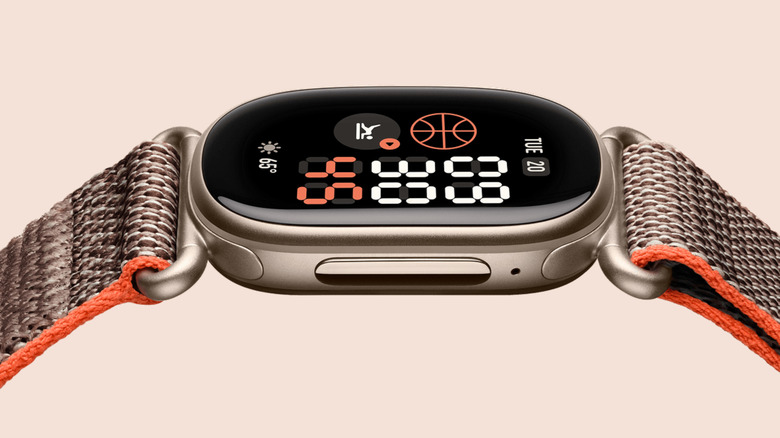
While surface-level assumptions might categorize the Fitbit Edge as merely a screen-equipped iteration of the Fitbit Air, a deeper technical evaluation reveals a stark divergence in engineering, sensor arrays, use cases, and user experiences. The Air prioritizes passive data collection and minimal digital distraction, functioning primarily as a discreet sensor puck tethered to the Google Health mobile application. Conversely, the Edge straddles the boundary between a traditional fitness tracker and a lightweight smartwatch, bringing an AMOLED display, a mechanical side button, comprehensive health metrics, and advanced onboard processing to a middle-tier price point.
This report provides an exhaustive comparative breakdown of the Fitbit Edge and Fitbit Air, examining their physical form factors, sensor capabilities, software integrations, and what this dual-track hardware strategy signifies for the future of consumer digital health.
Detailed Chronology: Google’s Reinvestment in Affordable Wearables
To understand the market positioning of the Edge and the Air, it is essential to trace Google’s recent movements within the wearables landscape:
- October 2022: Google launches the inaugural Pixel Watch, signaling its intent to compete directly in the premium smartwatch arena dominated by Apple and Samsung.
- May 2024: Shifting its focus toward alternative form factors, Google releases the kid-focused Fitbit Ace LTE, proving that the company is still willing to experiment with niche wrist-worn devices.
- May 2025: Google disrupts the budget health tracking market by debuting the Fitbit Air at $99. Targeted squarely at screen-free competitors like Whoop and Oura, the Air relies entirely on passive data collection and smartphone synchronization.
- October 2025: Filling the massive pricing and functional gap between the Air and its flagship smartwatch line, Google introduces the Fitbit Edge at $179. Positioned as a half-step toward the Pixel Watch 5, the Edge integrates a vibrant AMOLED touchscreen, an expanded sensor suite, and extended standalone tracking capabilities.
This sequence highlights Google’s calculated diversification. Rather than relying on a single device type to capture every demographic, the company has split its portfolio into distinct tiers based on user engagement levels, aesthetic preferences, and price sensitivity.

Hardware Architecture, Design, and Sensor Array
Form Factor and Physical Interaction
The most immediate distinction between the two devices lies in how users physically interact with them.
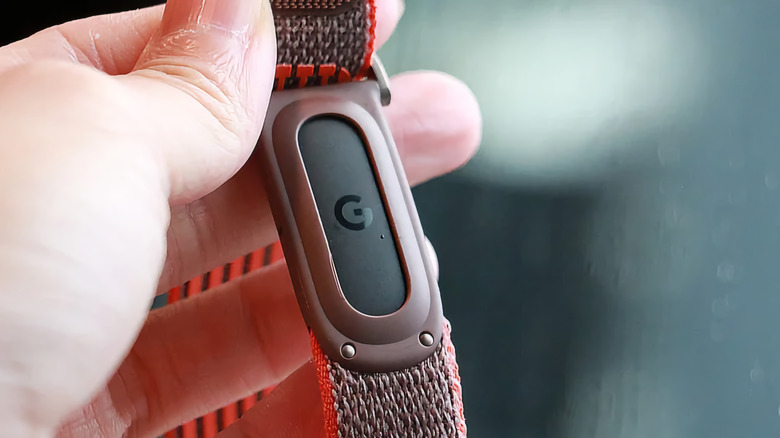
- Fitbit Air: Measuring 1.37 x 0.66 x 0.32 inches (excluding the band), the Air is a minimalist sensor puck. It features no display, no buttons, and no interactive UI. Users only touch the device when swapping bands or placing it on its charger. All interactions, data reviews, and configurations occur entirely within the Google Health companion app.
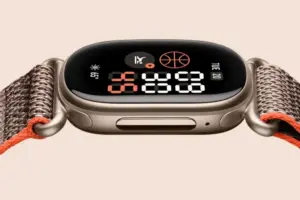
- Fitbit Edge: Significantly larger at 1.54 x 1.01 x 0.46 inches, the Edge is designed to be seen. It anchors its interface around a 1.34-inch oval-shaped AMOLED touchscreen, supplemented by a tactile mechanical side button. This hardware layout allows users to view live workout metrics, receive smartphone notifications, and navigate a streamlined version of Fitbit OS directly from the wrist.
Sensor Technology and Telemetry
While both wearables share standard foundational metrics, the Fitbit Edge boasts a materially superior sensor package that unlocks medical-grade tracking features:
| Feature / Sensor | Fitbit Air ($99) | Fitbit Edge ($179) |
|---|---|---|
| Display | None (Screenless) | 1.34-inch Oval AMOLED Touchscreen |
| Navigation | App-Dependent | Touchscreen + Mechanical Side Button |
| Optical Heart Rate | Yes | Yes |
| ECG Support (Electrical) | No | Yes |
| Altimeter (Elevation) | No | Yes |
| Ambient Light Sensor | No | Yes |
| Water / Dust Resistance | IP68 / 5ATM | IP68 / 5ATM |
The inclusion of an electrical sensor suite on the Edge enables clinical-grade electrocardiogram (ECG) readings for monitoring heart rhythms. Furthermore, the altimeter allows the device to accurately track elevation changes and floors climbed—a metric entirely absent from the screenless Air.
Battery Longevity and Power Management
Battery performance represents a fascinating engineering trade-off between the two devices:
- Fitbit Air: Benefiting from the absence of a power-hungry display, the Air delivers a reliable seven-day battery life on a single charge under normal operating conditions.
- Fitbit Edge: Google rates the Edge for up to seven days of battery life provided the always-on display (AOD) feature is disabled. However, enabling the always-on functionality transforms its usage profile into that of a standard smartwatch, reducing endurance to approximately two days.
To mitigate the battery drain of the display, Google equipped the Edge with rapid-charging capabilities. The device can power from zero to 100 percent in 90 minutes. Moreover, a quick 15-minute emergency top-up yields a full day of operational battery life, minimizing user friction during charging routines. Both devices maintain robust environmental durability, sharing identical IP68 dust-and-water resistance ratings alongside 5ATM pressure protection.
Software, AI Features, and Ecosystem Integration
The Google Health Ecosystem
Both the Fitbit Edge and Fitbit Air operate within Google’s broader wellness ecosystem, supported by the Google Health mobile platform. To unlock the full depth of analytical insights, predictive coaching, and long-term trend analysis, users must subscribe to Google Health Premium. However, even out of the box, both trackers provide a robust suite of baseline metrics:
- Activity and step tracking
- Continuous heart rate monitoring
- Daily readiness scores
- Cardio load insights
- Irregular heart rhythm notifications
- Comprehensive sleep tracking
- Resilience scores (estimating physiological stress)
AI and Advanced Health Guardian Metrics
A major selling point for these newer wearables is the integration of advanced artificial intelligence. Google has systematically expanded its Health Guardian suite—originally debuted on the Pixel Watch 5—to encompass both the Edge and the Air.
Because features relating to heart health trends, metabolic indicators, and insulin trends rely less on bespoke physical sensors and more on algorithmic analysis of accumulated longitudinal health data, Google has been able to bridge the software gap between its screenless and screen-equipped devices. As artificial intelligence models mature within the Google Health ecosystem, owners of both the Air and the Edge are expected to receive continuous algorithmic upgrades.
On-Device Capabilities vs. Digital Minimalism
Despite sharing foundational AI software features, the user experience diverges sharply when examining on-device processing:
- The Edge Advantage: Because the Fitbit Edge runs a lightweight implementation of Fitbit OS, it acts as an active extension of your digital life. It can display comprehensive health dashboards on-device, push real-time smartphone notifications, show live workout metrics mid-stride, and even run a stripped-down client for Google Maps.
- The Air Philosophy: The Fitbit Air deliberately eschews these capabilities. For users experiencing digital fatigue, notification overload, or screen anxiety, the Air offers a sanctuary. It collects data silently in the background without buzzing, flashing, or demanding visual attention throughout the day.
Official Statements and Industry Context
Industry analysts have noted that Google’s bifurcated hardware strategy marks a mature understanding of consumer psychology. In official product briefings, Google representatives emphasized that the modern fitness market cannot be served by a one-size-fits-all smartwatch approach.
"Consumers are increasingly looking for specialized form factors that match their lifestyle, whether that means absolute digital disconnect with passive biometric gathering or a lightweight, glanceable screen that avoids the complexity and cost of a full-scale smartwatch," noted a product development lead during the rollout of the mid-tier lineup.
By pricing the Air at $99 and the Edge at $179, Google has successfully undercut competing ecosystems while avoiding the steep financial barrier of premium smartwatches. Crucially, by keeping both devices platform-agnostic—supporting both Android and iOS without restrictive ecosystem walls—Google has cast a wide net across the global consumer base.
Future Outlook
The introduction of the Fitbit Edge and Fitbit Air points toward several long-term trends in personal health technology:
- The Rise of Screenless Biometrics: The market for discrete, biometric-only trackers (popularized by brands like Whoop and Oura) has proven that a significant portion of consumers actively reject wrist notifications. Google’s commitment to the Fitbit Air suggests that screenless health tracking is a permanent pillar of their hardware strategy, not a temporary experiment.
- Democratization of Advanced Diagnostics: Features once locked behind $300+ flagship smartwatches—such as ECG readings, advanced stress resilience scoring, and AI-driven health guardian insights—are rapidly migrating down-market. At $179, the Fitbit Edge establishes a new baseline for what consumers should expect from mid-tier health hardware.
- Algorithmic Longevity: As artificial intelligence continues to drive health software development, the physical sensor suite will increasingly serve as a baseline, while software updates dictate the lifespan and utility of a wearable. Google’s ability to push Health Guardian features to both the Air and Edge simultaneously demonstrates that software ecosystems will outweigh hardware iteration cycles in consumer retention.
Ultimately, choosing between the Fitbit Edge and the Fitbit Air depends entirely on personal philosophy regarding technology interaction. For those who want a classic, glanceable tracker with advanced cardiac sensors and map navigation, the Edge is a compelling mid-tier champion. For those seeking absolute digital minimalism, marathon battery life, and passive data collection without a screen interrupting their day, the Air remains an unmatched value proposition.