Executive Overview
The American smartphone market is dominated by familiar tech behemoths. Year after year, domestic consumers are presented with a predictable slate of releases from Apple, Google, and Samsung. While these devices represent the gold standard of reliability, safety, and integration within the United States, they rarely push the envelope of aggressive industrial design or experimental hardware.
Look across the Pacific, however, and a wildly different landscape emerges. International manufacturers—particularly Chinese powerhouses like Xiaomi, OPPO, and Honor—are pushing the boundaries of mobile technology at a breakneck pace. From ultra-thin foldables and tri-fold displays to periscope camera systems capable of rivaling dedicated DSLRs and battery capacities that easily stretch across two full days of heavy usage, foreign markets are living in the technological future.
For tech enthusiasts residing in the U.S., the temptation to bypass domestic retail channels and import an exotic foreign device is stronger than ever. Thanks to the globalized nature of modern manufacturing and cross-border e-commerce platforms, ordering an unreleased flagship from Shenzhen or Hong Kong is just a few clicks away.
Yet, bridging the gap between international hardware and U.S. network infrastructure is fraught with hidden complications. Importing a smartphone is not merely a matter of swapping a SIM card; it is a calculated gamble involving carrier compatibility, missing software ecosystems, regulatory hurdles, and a complete absence of domestic warranty support. This comprehensive guide explores the multifaceted pros and cons of importing a foreign smartphone into the United States, providing a definitive roadmap for tech enthusiasts looking to walk on the wild side of mobile innovation.
Detailed Chronology: The Evolution of Smartphone Importation
To understand why importing phones has become both easier and more treacherous than ever, one must examine how the global mobile market has transformed over the last two decades.
- The Early 2010s: The Wild West of Gray Markets (CDMA vs. GSM)
During the early era of smartphones, importing a phone was a nightmare reserved for hardcore tech hobbyists on forums like XDA Developers. The U.S. telecom market was heavily fragmented between GSM carriers (like AT&T and T-Mobile) and CDMA carriers (like Verizon and Sprint). Foreign phones—predominantly designed for European and Asian GSM standards—frequently lacked the necessary radio frequencies to connect to U.S. networks, often leaving imported devices stranded on rudimentary 2G or 3G speeds. - The Mid-2010s: The Rise of Global Bands and Online Retailers
As LTE (4G) technology matured and manufacturers adopted standardized global chipsets from Qualcomm and MediaTek, hardware became inherently more compatible across borders. Simultaneously, cross-border e-commerce platforms like AliExpress, GearBest, and specialized proxy-buying services democratized access. Consumers could suddenly purchase international variants of Samsung Galaxy flagships or Xiaomi Mi devices with relative ease, though software region-locking and language barriers remained prevalent. - The Late 2010s to 2020s: The Geopolitical and Regulatory Squeeze
As smartphones evolved into vital personal computing and security hubs, geopolitical tensions began to reshape the landscape. Increased regulatory scrutiny from the U.S. government on Chinese telecommunications firms led to sweeping restrictions. While consumer devices were rarely banned outright like network infrastructure equipment, giants like Huawei found themselves completely cut off from Google Mobile Services (GMS). This era created a stark division: phones could be physically imported, but many lost their fundamental utility for Western consumers who relied on Google’s software ecosystem. - The Present Day: Hardware Supremacy Meets Software Barriers
Today, importing is easier from a logistics standpoint than at any point in history, but riskier from a functional perspective. While global 5G band integration has improved, regional software variations, carrier certification bottlenecks, and the complete elimination of dual-SIM trays in the U.S. market continue to drive adventurous consumers toward international alternatives—even if it means sacrificing local support.
Supporting Context & Metrics: The Reality of U.S. vs. International Hardware
Before taking the plunge and ordering an imported device, buyers must evaluate the stark differences in hardware philosophy, network topology, and software ecosystems.
1. Carrier Frequency Bands and 5G Connectivity
The most common pitfall for the uninitiated importer is the assumption that cellular signals are universal. While modern smartphones pack dozens of antenna bands into their chassis, manufacturers tune specific regional models for local telecom operators.
- The Problem: U.S. carriers (Verizon, T-Mobile, and AT&T) utilize a unique mosaic of LTE and 5G frequency bands (such as n71, n41, and mmWave bands).
- The Consequence: An imported smartphone—such as an OPPO Find X series flagship or a Xiaomi Mix Fold—may support global GSM bands, allowing you to make phone calls and browse the web. However, it may completely lack the specific sub-6GHz or millimeter-wave bands required by your carrier for high-speed 5G. Buyers frequently find themselves throttled down to legacy LTE connections, or experiencing intermittent signal drops in suburban and rural areas.
2. Carrier-Specific IMS Features
Beyond basic connectivity, advanced cellular features rely on carrier certification. Services such as:
- Voice over LTE (VoLTE)
- Wi-Fi Calling
- Visual Voicemail
- Emergency SOS via satellite
…are not standardized plug-and-play features. U.S. carriers explicitly whitelist approved devices through their internal databases (the IMEI registry). Because imported phones lack official U.S. certification, carriers may block them from utilizing VoLTE. As carriers aggressively sunset their older 3G and legacy networks, a non-certified imported phone may suddenly lose voice-calling capabilities entirely, rendering an expensive flagship little more than a Wi-Fi-dependent tablet.
3. The Software Divide: Google Play Services and Bloatware
Software localization is arguably the most jarring hurdle for Western buyers importing devices from Asian markets.
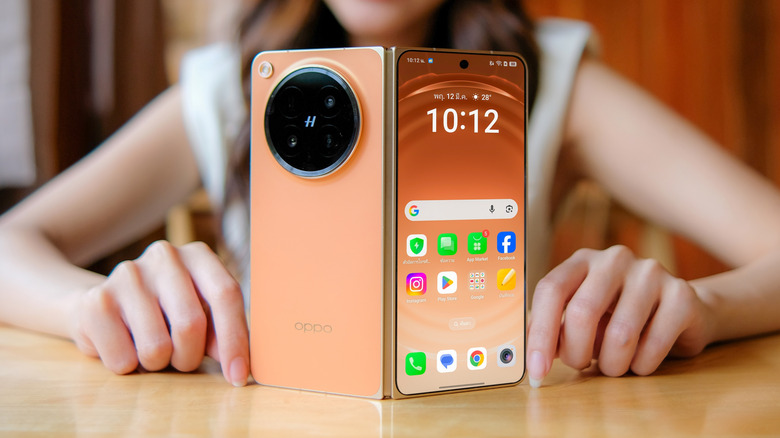
- The Chinese ROM Dilemma: Devices intended strictly for the domestic Chinese market (often referred to as running "China ROM") ship without Google Play Services (GMS) pre-installed. While technically savvy users can manually sideload the Google Play Store and framework, system-level integrations—such as push notifications, Google Assistant, Android Auto, and location-based services—frequently break or behave erratically.
- Localization Bloat: China ROMs are packed with localized app ecosystems, digital payment assistants, proprietary voice assistants, and alternative app stores that cannot be easily uninstalled. Conversely, "Global ROM" variants of these same phones exist, but they are often harder to source, more expensive, and may still suffer from delayed software updates compared to their domestic counterparts.
4. The Hardware Perks: Why People Still Import
Despite the overwhelming technical obstacles, the allure of foreign phones persists for several undeniable reasons:
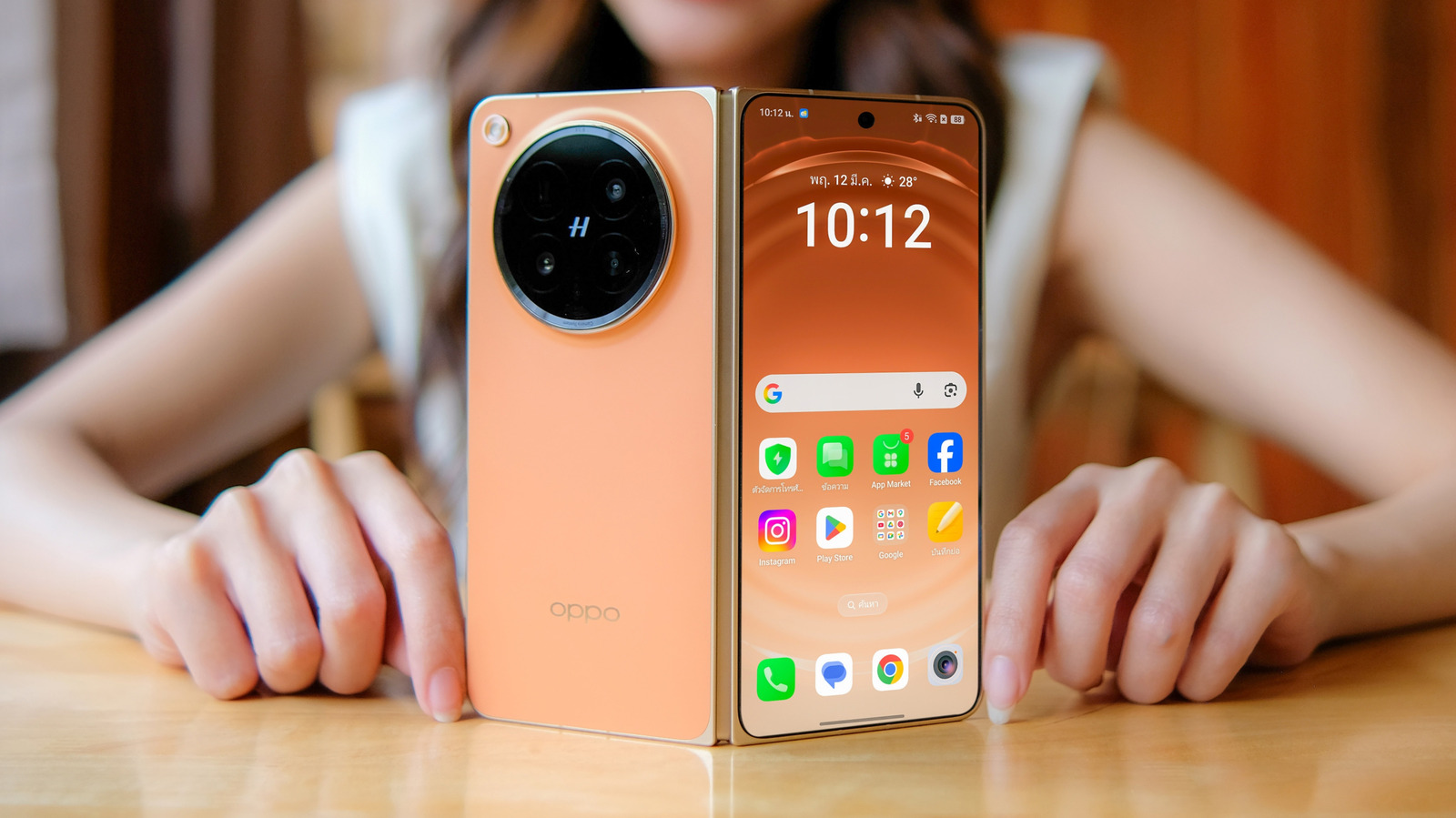
- Form Factor Innovation: While U.S. shelves are saturated with traditional slab phones and a handful of mature foldables, international markets feature ultra-thin book-style foldables, experimental rollables, and cutting-edge tri-fold devices (such as the Huawei Mate XT) that have no American equivalent.
- Dual-Physical SIM Cards: Apple and major U.S. carriers have aggressively pushed consumers toward eSIM technology, completely removing physical SIM trays from domestic iPhone models. Most international smartphones, however, proudly retain dual physical nano-SIM slots (or dual-SIM hybrid slots), making them invaluable for frequent international travelers or professionals managing multiple lines.
- Aggressive Pricing and Specifications: Brands like Xiaomi, Vivo, and OPPO often deliver hardware packages featuring ceramic backs, massive 5,000+ mAh silicon-carbon batteries, 120W+ ultra-fast charging bricks included in the box, and camera sensors co-engineered with legendary optical brands like Leica or Hasselblad—often at a significantly lower price point than U.S. flagship equivalents.
Official Industry Perspectives and Expert Insights
Navigating the grey-market import ecosystem requires listening closely to industry analysts, telecom engineers, and seasoned community veterans.
Consumer advocacy groups and telecom analysts frequently emphasize that the smartphone has ceased to be a standalone piece of hardware; it is now an integrated node within a massive domestic infrastructure. According to mobile network engineers, the aggressive push toward standalone 5G (SA 5G) and customized carrier aggregations means that "phone-to-tower" communication is more localized than ever before. Devices built for the sprawling urban densification networks of Shenzhen or Beijing are simply not tuned for the wide-area dispersion footprints typical of rural and suburban American cellular grids.
Furthermore, tech support authorities note a complete void in consumer protection when devices cross borders. Major manufacturers do not offer international warranties on devices imported into regions where they maintain no official retail presence or distribution network.
Tech communities—such as specialized subreddits and enthusiast forums—remain the primary frontline for prospective importers. The universal consensus among veteran community contributors is clear: Treat an imported phone as a hobbyist project, not a mission-critical daily driver. Prospective buyers are strongly advised to consult crowdsourced compatibility spreadsheets (such as frequency band matching tools on Kimovil or Reddit) before executing a purchase, ensuring they understand precisely which compromises they are making.

Future Outlook: Will the U.S. Market Ever Open Up?
As we look toward the horizon of mobile technology, the landscape of smartphone availability remains deeply fractured. What does the future hold for cross-border device adoption in the United States?
- Geopolitical Friction and Regulatory Hurdles: In the near term, it is unlikely that major Chinese OEMs will establish official retail footprints in the U.S. market. Ongoing regulatory friction, intellectual property disputes, and national security policies ensure that brands like Xiaomi, OPPO, and Vivo will continue to focus their expansion efforts on Europe, Latin America, Southeast Asia, and the Middle East. Consequently, American consumers will remain locked out of official domestic distribution channels for these cutting-edge devices.
- The Convergence of Global Hardware Standards: On the technical front, chipmakers like Qualcomm are continually refining multi-band radio architectures. As global chipsets become even more agnostic, the raw hardware barriers to cross-network compatibility will slowly diminish. Future international flagships may inherently support a broader array of American sub-6GHz and mid-band 5G frequencies out of the box.
- The eSIM Evolution: As eSIM adoption accelerates globally, the traditional advantage of international dual-physical SIM trays may gradually erode. However, the software fragmentation and lack of U.S. carrier certification will likely persist as the ultimate bottleneck for mainstream adoption.
Final Verdict: Is Importing Right For You?
Ultimately, importing a foreign smartphone into the United States is a high-risk, high-reward endeavor.
If you view your smartphone as an appliance—something that must work flawlessly 100% of the time, integrate seamlessly with local carrier features like Wi-Fi calling and VoLTE, and be easily repairable at a local brick-and-mortar store if you drop it—stick to officially supported domestic releases.
However, if you are a passionate tech enthusiast who craves pioneering hardware designs, superior camera optics, massive battery innovations, and dual physical SIM flexibility—and you are willing to tolerate potential cellular compromises, sideloaded software adjustments, and zero local warranty coverage—then importing a foreign flagship can unlock a thrilling mobile experience unlike anything available in American retail stores today. Proceed with caution, do your research on frequency bands, and embrace the adventure.