Executive Overview
In an era defined by ubiquitous digital surveillance, millions of private security cameras, video doorbells, and dashboard cameras quietly record the rhythms of British daily life. Yet, when a crisis strikes—such as a vulnerable child wandering off, an elderly relative with dementia going missing, or the unthinkable nightmare of an abduction—this vast, decentralized web of potential evidence largely goes untapped.
Traditionally, law enforcement and search-and-rescue teams have had to rely on old-fashioned "door-knocking" campaigns to locate relevant CCTV footage. In fast-moving missing persons cases, where the initial hours dictate the trajectory and often the outcome of a search, those precious hours spent canvassing neighborhoods can mean the difference between a safe recovery and tragedy. Time and again, vital footage is overwritten or lost forever before investigators can even identify which homes possess operational cameras.
Seeking to bridge this dangerous gap between modern technology and emergency response, Wiltshire-based private investigator and military veteran Charles Land has launched an innovative, free-to-use platform called SPI Vision. Developed through his private investigation firm, SPI (Surveillance, Protection & Investigation), the platform aims to harness the collective power of the UK’s domestic and vehicular camera networks. By allowing camera owners to pre-register their devices voluntarily, SPI Vision creates a rapid-response map that alerts users within seconds when someone goes missing in their local area.
Operating under strict GDPR compliance with privacy-first engineering—including automated data purges and explicit user consent protocols—SPI Vision is designed to supplement, not replace, official police operations. For Land, the initiative is more than a technological solution; it is deeply personal. Stemming from his own family’s harrowing brush with danger in 2003, when his 13-year-old sister Amy narrowly escaped an attempted abduction in Trowbridge, the platform represents a lifetime of investigative expertise channeled directly into community safety.
Detailed Chronology: The Roots of SPI Vision and the 2003 Trowbridge Incident
While the concept behind SPI Vision is thoroughly modern, relying on cloud connectivity and real-time geofencing alerts, its conceptual foundation was laid more than two decades ago on a Wednesday afternoon in Wiltshire.
The October Afternoon That Changed Everything
In October 2003, Charles Land’s younger sister, Amy, was a 13-year-old schoolgirl walking home from her secondary school in Trowbridge. It was roughly 3:30 PM when Amy was dropped off by her school bus near the church on Wyke Road. As she began her familiar walk home, she noticed an unsettling presence: a black Vauxhall Corsa was crawling slowly behind her, repeatedly creeping forward and stopping.
Sensing danger, Amy maintained her pace, attempting to distance herself from the vehicle. However, as she reached the halfway point of her journey, the vehicle stopped, and a slim, dark-haired man wearing jeans and a navy-blue hoodie emerged. He quickly approached her from behind, grabbed her, and violently pulled her toward the car.
Demonstrating remarkable composure and courage, Amy fought back, kicking her assailant and managing to wrench herself free from his grip. She sprinted the rest of the way home in absolute shock.
The Frustration of an Incomplete Investigation
Immediately upon her return, Amy’s parents contacted West Wiltshire emergency services, dialing 999 to report the attack. In an effort to locate the vehicle while the trail was fresh, Amy and her mother spent the next three to four hours being driven around Trowbridge in the back of a police car, scanning the streets for the black Vauxhall Corsa.
Despite their swift response, the search yielded no immediate results. Approximately two weeks later, the suspect vehicle was finally discovered abandoned in London, but the perpetrator was never identified or brought to justice. The case remained an open wound for the family, casting a long shadow over their understanding of public safety and the limitations of reactive policing.

Decades of Experience Meet Modern Innovation
Years later, Charles Land forged a career in security and investigation, eventually founding SPI Surveillance, Protection & Investigation in 2018 after years of working within the sector. Throughout his career, Land has seen firsthand how pivotal a single clear piece of CCTV or dashcam footage can be in cracking a case, verifying an alibi, or tracking a suspect.
Reflecting on his sister’s childhood ordeal and combining it with his professional insights into evidence collection, Land realized that the fundamental flaw in modern missing persons investigations was not a lack of technology, but a lack of organization.
"I have spent my career finding people and gathering evidence. I know how much one clear piece of footage can change the outcome, and I wanted to put that to work for families when it matters most," Land explained. By building SPI Vision, he has transformed a personal family trauma into a scalable public safety tool designed to spare other families the agonizing hours of uncertainty that he and his parents endured.
Supporting Context & Metrics: The Scale of the Missing Persons Crisis in the UK
To understand the urgent necessity of platforms like SPI Vision, one must examine the staggering scale of missing persons reports across the United Kingdom.
According to data compiled by the prominent charity Missing People, an individual is reported missing in the UK every 90 seconds. Annually, approximately 160,000 people are officially logged as missing—a figure that accounts for repeat incidents, as some vulnerable individuals may go missing multiple times within a single year.
+-------------------------------------------------------------+
|               THE UK MISSING PERSONS LANDSCAPE              |
+-------------------------------------------------------------+
| Frequency:     1 person reported missing every 90 seconds   |
| Annual Volume: ~160,000 reported incidents per year         |
| Critical Time: The first few hours dictate case outcomes    |
| Primary Tools: Historically limited to door-to-door canvas  |
+-------------------------------------------------------------+
Vulnerable Demographics and the Critical Window
While missing persons cases span all age groups, certain demographics face disproportionately high risks where time is the single most critical factor:
- Children and Teenagers: Youth missing from home or school are at immediate risk of exploitation, grooming, or harm. In these fast-moving scenarios, every street, alleyway, and vehicle captured on camera matters.
- Vulnerable Adults: Individuals living with Alzheimer’s disease, dementia, or experiencing acute mental health crises frequently wander away from residences or care facilities. Often disoriented and unable to communicate their location, their survival depends heavily on rapid route-tracing before exposure or exhaustion sets in.
- Suspected Abductions: In rare but high-stakes criminal investigations, private and public cameras provide the only objective timeline of a suspect’s vehicle, direction of travel, and associates.
Beyond Missing Persons: Multi-Crime Utility
While purpose-built for tracing missing individuals, the underlying infrastructure of SPI Vision holds immense potential for combating a wide array of localized property and violent crimes. Charles Land designed the network to assist with:
- Burglaries and Break-ins: Capturing the arrival and departure of intruders, along with getaway vehicles.
- Vehicle Crime: Tracking perpetrators involved in catalytic converter thefts, carjackings, and hit-and-run collisions where motorists fail to stop at the scene.
- Anti-Social Behaviour and Criminal Damage: Building cumulative evidence files for persistent local disturbances and repeat offences occurring within the same neighborhoods.
Official Statements and Privacy Framework
The introduction of a private investigator-led surveillance network naturally raises questions regarding data privacy, civil liberties, and the cooperation between private entities and statutory authorities. Charles Land and his team have built SPI Vision from the ground up to address these concerns head-on.
Privacy-First Architecture
In an age where data protection regulations are rightly stringent, SPI Vision is fully General Data Protection Regulation (GDPR) compliant. The system operates on strict opt-in principles and incorporates robust technical safeguards:
- Voluntary Participation: Camera owners retain absolute control over their devices. Joining the network is entirely free and voluntary.
- Targeted Alerts: Rather than continuous monitoring or live-streaming streams, members only receive localized alerts if a missing person search is initiated within their specific geographical vicinity.
- Data Minimization: When an alert is sent, it requests footage from a strictly defined, narrow time window. SPI reviews only what is submitted.
- Strict Deletion Protocols: Irrelevant footage is deleted immediately upon review. Any submitted material that is not reviewed by investigators is automatically and permanently purged from the system after 14 days.
- Advanced Masking: Features such as field-of-view checks and automated privacy masking ensure that unrelated private property outside the public right-of-way is protected.
Supporting, Not Superseding, Law Enforcement
Land is explicit that SPI Vision is intended to act as an auxiliary force multiplier for official emergency services, rather than a vigilante operation or a replacement for the police.
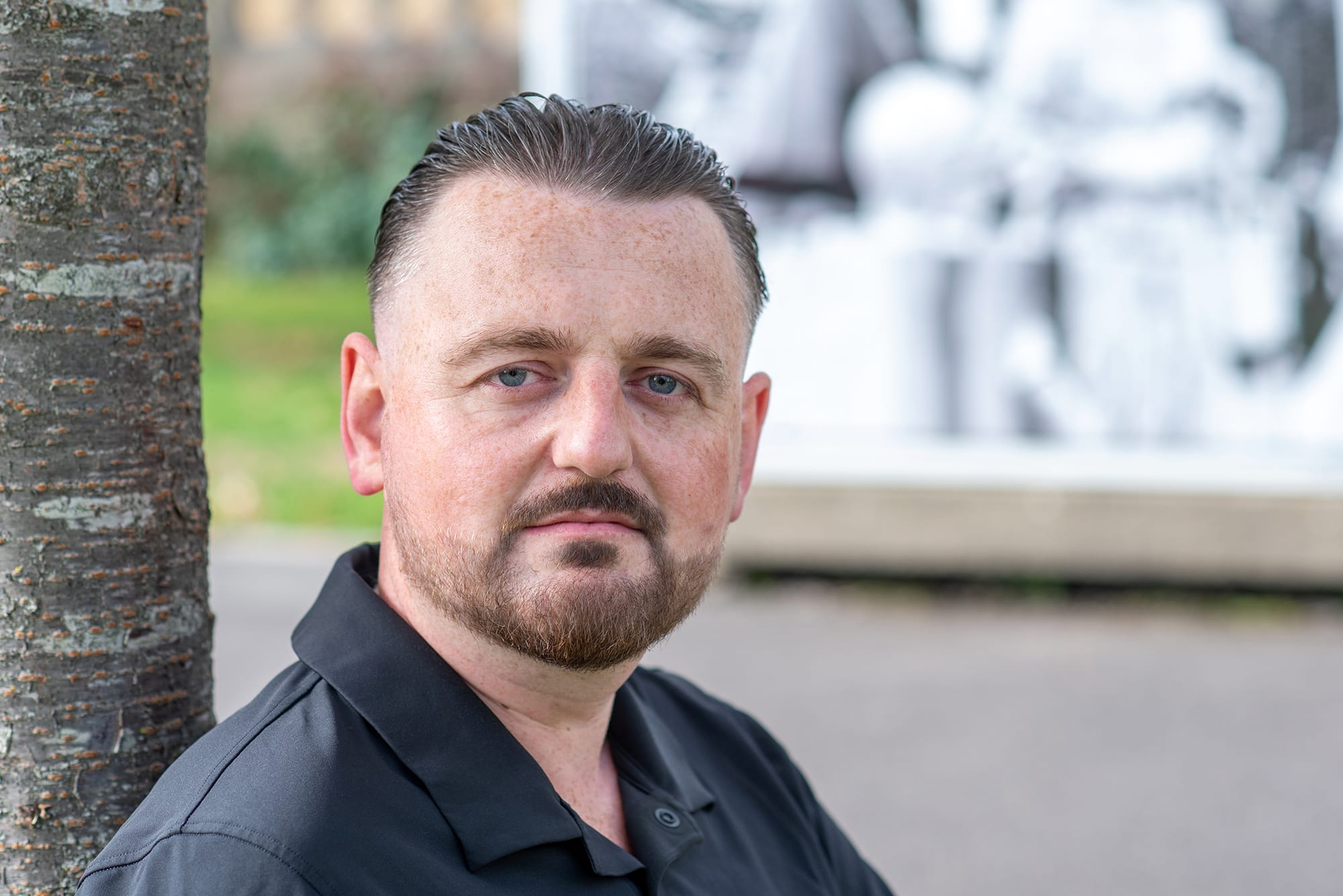
"This is about supporting the police and search teams, not replacing them," Charles Land emphasized during the platform’s launch. "Every camera on the map is another pair of eyes when someone needs to be found."
A Personal Legacy of Awareness
Reflecting on the platform’s launch and her own childhood trauma, Amy Land—now 36 years old and a mother living in the Warminster area—expressed her strong endorsement of her brother’s initiative:
"This experience has stayed with me," Amy shared. "I was only 13 years old, walking home from school, when a stranger grabbed me and tried to pull me toward his car. I was fortunate that I managed to fight him off and escape, but it was a frightening experience that no child should ever have to go through. Now I’m a parent myself, and I don’t want this happening to my child.
"I think SPI Vision is a positive and worthwhile idea. I hope that by speaking about what happened, I can help raise awareness and support efforts to prevent other children from experiencing something similar. I also hope it will encourage parents and young people to be aware of unusual behaviour, trust their instincts, and take sensible steps to keep themselves safe."
Future Outlook: Expansion and the Road Ahead
As SPI Vision opens its digital doors, its initial rollout is strategically focused on Wiltshire. However, the long-term vision for the platform is national scalability.
Following the initial Wiltshire deployment, SPI Surveillance, Protection & Investigation plans a phased rollout across the broader South West of England, with the ultimate objective of establishing a comprehensive, nationwide UK camera network. Given the density of private ring-style doorbells, static security cameras, and dashcams fitted to British vehicles, a mature SPI Vision network could theoretically transform millions of passive lenses into an active, coordinated shield for vulnerable citizens.
How to Participate
For private citizens, business owners, and motorists wishing to bolster their local community’s safety infrastructure, registration is free of charge. Participants can sign up, map their device locations securely, and learn more about the platform’s operational protocols by visiting the official portal at spi.world/spi-vision.
As technology continues to reshape the landscape of modern security and private investigation, initiatives like SPI Vision demonstrate how grassroots innovation, personal resilience, and privacy-conscious engineering can converge to protect the most vulnerable members of society when every second counts.
Disclaimer: JournalismUK publishes this report based on submitted press release materials without warranty of any kind. We accept no responsibility or liability for the accuracy, content, images, completeness, legality, or reliability of the information contained herein. For inquiries, corrections, or copyright concerns, please contact the original author.