Executive Overview
In the modern media landscape, the boundaries separating journalism, political advocacy, and entertainment have grown increasingly porous. Nowhere is this phenomenon more acutely visible—or more legally distinct—than in the United Kingdom. While the rest of Europe maintains a steadfast firewall between the ballot box and the television studio, the UK has charted a radically different course, normalizing the sight of serving members of parliament stepping off the floor of the House of Commons and directly into the presenter’s chair of national current affairs programs.
A landmark research report published by the influential think tank Demos, authored by Dr James Painter of the Reuters Institute for the Study of Journalism, has thrown this uniquely British phenomenon into sharp relief. Surveying 37 media regulators across Europe through the European Platform of Regulatory Authorities (EPRA), the study reveals a striking continental consensus: the UK is an extreme outlier. In 35 of the 37 European nations examined, serving politicians are strictly prohibited—either by explicit statutory bans, robust regulatory frameworks, or deeply ingrained journalistic convention—from hosting national television news and current affairs broadcasts. Only Iceland and Malta emerged as minor exceptions, and even in those jurisdictions, such appearances were historically isolated, limited in scope, and remarkably short-lived.
This regulatory divergence is not merely an academic curiosity; it strikes at the very heart of public trust, democratic accountability, and the perceived impartiality of broadcast media. For decades, the UK broadcasting ecosystem has prided itself on the "due impartiality" mandated by the Office of Communications (Ofcom) Broadcasting Code. Yet, the proliferation of sitting MPs acting as broadcasters—spurred by the rise of niche news channels and commercial incentives—has tested the limits of this framework.
As media executives, regulators, and politicians grapple with the implications of hybrid media careers, the Demos report provides a timely, empirical wake-up call. It forces a critical examination of whether British broadcasting is uniquely enlightened in its flexibility, or dangerously exposed to conflicts of interest that undermine the public’s faith in independent journalism.
Detailed Chronology: The Evolution of Political Broadcasting in the UK
To understand how the United Kingdom became the lone European outlier regarding politician-presenters, it is necessary to trace the historical evolution of broadcast regulation and political culture. The journey from a rigidly walled-off broadcasting environment to the current era of crossover media personalities involves decades of regulatory shifts, technological disruption, and changing political norms.
The Post-War Settlement and the Birth of Impartiality
Following the establishment of the BBC as a public service broadcaster, and the subsequent launch of independent commercial television under the Independent Television Authority (ITA) in the 1950s, the UK established a foundational commitment to broadcast impartiality. Unlike the partisan press, which historically aligned itself openly with political parties, the broadcast medium was subjected to strict statutory requirements to remain neutral, particularly on matters of political controversy and matters relating to current public policy and industrial disputes.
During the post-war decades, the convention was clear: politics was practiced in Parliament and reported on by professional journalists. While former politicians frequently contributed to public debate, and occasional figures transitioned fully into media roles after leaving elected office, the concept of a serving MP interviewing constituents, grilling political opponents, or shaping the news agenda while actively holding legislative office was virtually unthinkable.
The De-escalation of Restrictions and the Rise of Commercial Pressures
The turning point began to materialize with the gradual deregulation of the UK media market in the late 20th and early 21st centuries. The passage of the Communications Act 2003 replaced legacy bodies with Ofcom, designed to be a "super-regulator" overseeing both telecommunications and broadcasting. While Ofcom inherited the core requirement for due impartiality, the competitive pressures facing commercial broadcasters intensified exponentially with the proliferation of digital multi-channel television.
As viewing figures fragmented, broadcasters increasingly sought high-profile personalities who could guarantee headlines and drive audience engagement. Serving politicians—who brought immediate news value, institutional insider access, and high name recognition—proved to be irresistible commodities for networks seeking to boost ratings.
The Catalyst: The Launch of New Commercial Networks
The modern era of the politician-presenter crystallized with the launch of new broadcast channels, most notably GB News and talkTV, alongside established platforms like LBC and Sky News. The entry of these outlets fundamentally altered the economics and style of British broadcast journalism, leaning heavily into opinion-led programming, debate-driven formats, and conversational current affairs.
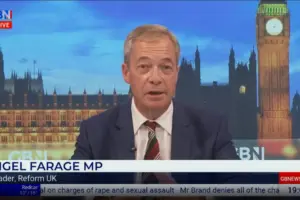
Suddenly, sitting Members of Parliament—predominantly from the Conservative Party, though with notable examples from other benches—were routinely announced as regular hosts or guest anchors. Programs featuring serving MPs interviewing cabinet ministers, discussing pending legislation, and opining on national crises became regular fixtures of the evening schedule.
While these networks repeatedly argued that such appointments fostered democratic debate and brought authentic political voices directly to the public, critics contended that it blurred the lines between statecraft and entertainment, transforming lawmakers into media performers and compromising the integrity of independent scrutiny.
The European Contrast: A Path Not Taken
While the UK was progressively loosening its interpretation of impartiality to accommodate political figures in broadcasting media, the rest of Europe was reinforcing its defenses. Drawing on historical lessons regarding state propaganda, political interference, and the fragility of democratic institutions, European legislators and media regulators constructed robust legal frameworks designed to insulate broadcast media from direct political control.
Consequently, by the time Dr. James Painter conducted his extensive EPRA survey for Demos, the gap between the UK and continental Europe had become an unbridgeable chasm.
Supporting Context & Metrics: What the Demos-Reuters Study Revealed
The empirical data compiled by Dr James Painter in the Demos report provides an invaluable quantitative and qualitative mapping of European media regulation. By surveying 37 regulatory authorities belonging to the European Platform of Regulatory Authorities (EPRA), the research offers a definitive comparative analysis of how different nations police the boundary between elected office and broadcast presentation.
The Continental Consensus: By the Numbers
The headline statistics of the Demos report underscore just how exceptional the UK’s regulatory posture is:
- 37 European media regulators surveyed via the EPRA network.
- 35 out of 37 countries demonstrated zero tolerance or historical absence of serving politicians presenting news or current affairs programs on national television channels.
- 34 countries explicitly ban or substantially restrict the practice through statutory law, regulatory codes, or binding ethical mandates.
- 2 countries—Iceland and Malta—represented the sole exceptions outside the UK, and in both cases, the occurrences were heavily restricted, exceptionally rare, and short-lived anomalies rather than an established industry practice.
How European Regulators Police the Boundary
The report details the diverse mechanisms utilized across Europe to prevent politicians from occupying broadcasting chairs:
- Constitutional and Statutory Bans: In many continental democracies, media laws explicitly disqualify individuals holding public office from executive or presenting roles within licensed broadcasting organizations. These laws are rooted in constitutional principles safeguarding the independence of the press and public service media.
- Strict Broadcaster Codes of Conduct: Even where explicit statutory bans do not exist, internal editorial codes enforced by independent regulators create insurmountable barriers. Broadcasters are required to demonstrate absolute independence from political parties and actors, rendering the employment of a sitting parliamentarian as a presenter legally and ethically untenable.
- Conflict of Interest Regulations: European labor and public ethics laws frequently prohibit elected officials from engaging in secondary employment that poses a direct conflict of interest with their primary constitutional duties, particularly roles that involve public communication, journalism, or media influence.
The UK Exception: Why Britain Stands Apart
In stark contrast to the continental model, the UK relies heavily on Ofcom’s principle of "due impartiality" rather than an outright, categorical ban on politician-presenters. Under the Ofcom Broadcasting Code, serving politicians are permitted to act as news presenters or current affairs hosts, provided that specific editorial safeguards are met. These include:
- Ensuring that alternative viewpoints are adequately represented across the broader programming schedule.
- Preventing politicians from interviewing people with whom they have a direct political or personal conflict, or covering matters in which they are personally heavily invested without appropriate disclosure and balance.
- Maintaining overarching editorial control by professional production staff rather than the political presenter.
However, critics and media watchdogs have repeatedly argued that Ofcom’s framework is structurally incapable of policing the subtle biases, agenda-setting power, and inherent conflicts of interest that arise when an active legislator controls a broadcast microphone. The Demos report places these domestic debates into an international context, proving that what is treated in the UK as a manageable regulatory nuance is viewed across the rest of Europe as an intolerable threat to media integrity.
Official Statements & Industry Perspectives
The release of the Demos report has ignited a fierce debate across the British political and media landscape, drawing sharp commentary from researchers, regulatory watchdogs, broadcasting executives, and parliamentarians alike.
The Research Perspective: Dr James Painter and Demos
Dr James Painter, the author of the report and a senior research associate at the Reuters Institute for the Study of Journalism, emphasized the profound nature of the UK’s divergence from European norms.
"Our survey of 37 European regulatory authorities reveals a near-universal consensus: the integration of serving politicians into the broadcast presentation of news and current affairs is viewed as fundamentally incompatible with the principles of independent journalism," Dr Painter noted. "The UK is not just a minor variant; it stands almost entirely alone in permitting a practice that other European democracies have systematically barred to protect the integrity of their public sphere."
Polly Mackenzie, Chief Executive of Demos, added that the findings should prompt an urgent reassessment of the health of British public discourse.
"When the public tunes into a current affairs broadcast, they deserve absolute confidence that the person asking the questions is acting in the public interest as an independent journalist, not as an active political actor seeking to advance their own electoral or partisan fortunes. The fact that the UK permits this while almost the entirety of Europe prohibits it suggests our regulatory guardrails have fallen dangerously behind the times."
The Regulatory Stance: Ofcom’s Balancing Act
Ofcom has consistently maintained that its regulatory framework is robust enough to handle the complexities of political broadcasting, provided that broadcasters adhere strictly to the due impartiality rules. In statements addressing previous controversies surrounding politician-presenters, the regulator has emphasized that the law does not automatically bar politicians from broadcasting, but rather places the onus on broadcasters to prove that their output maintains balance over time.
However, regulators face mounting pressure from civil society groups, academics, and former broadcasters who argue that Ofcom’s reactive enforcement mechanisms are ill-equipped to deal with the cumulative impact of politicians shaping daily news agendas.
Broadcasters and Political Reactions
Proponents of politician-presenters—particularly within commercial channels that have embraced the format—argue that such programming revitalizes political engagement by bringing real political actors face-to-face with the public in unfiltered environments. They contend that traditional broadcasting has historically been too sterile and institutional, and that transparently partisan or politically experienced presenters offer greater authenticity.
Conversely, critics within Parliament and professional journalism unions have warned that the practice degrades the standing of both institutions. Lawmakers who double as broadcasters face accusations of neglecting their primary parliamentary duties—such as constituency casework and legislative scrutiny—in favor of lucrative media side-hustles, while simultaneously enjoying an unfair platform to amplify their political brand using the credibility of a broadcast network.
Future Outlook: The Road Ahead for UK Media Regulation
As the dust settles on the Demos report, the UK media industry faces a critical crossroads. The convergence of political ambition and broadcasting is no longer a fringe experiment; it has become an entrenched feature of the contemporary media ecosystem. Yet, the stark realization that the UK stands in absolute isolation from its European neighbors forces a vital question: Where do we go from here?
1. Re-Evaluating Ofcom’s Regulatory Fitness
The most immediate pressure point will be the ongoing adequacy of Ofcom’s Broadcasting Code. As media consumption habits shift toward digital-first, personality-driven platforms, pressure is mounting on the regulator to tighten its interpretation of due impartiality—or for Parliament to consider legislative intervention.
Legislators may ultimately be forced to decide whether self-regulation and post-broadcast enforcement are sufficient, or if a statutory ban modeled on European standards is required to restore public trust.
2. The Impact on Public Trust and Journalistic Integrity
Public trust in journalism is a fragile commodity. In an era defined by concerns over misinformation, polarization, and institutional distrust, the sight of lawmakers interviewing rival politicians or commenting on pending legislation poses an inherent threat to the perceived objectivity of newsrooms.
Future media studies will undoubtedly track whether audiences continue to draw a distinction between independent journalism and political advocacy, or if the normalization of the politician-presenter further erodes faith in broadcast media as a trusted arbiter of fact.
3. Ethical Standards and Parliamentary Reform
Beyond broadcast regulation, the debate intersects directly with parliamentary ethics and the rules governing MPs’ outside interests. The House of Commons Standards Committee and the Parliamentary Commissioner for Standards will increasingly need to examine the financial and operational implications of MPs undertaking regular, paid media work while holding legislative office. Questions regarding transparency, time management, and potential conflicts of interest will remain central to the political reform agenda.
Conclusion
The Demos report by Dr James Painter has provided a service far beyond academic research; it has served as a mirror reflecting the exceptionalism—and vulnerability—of the British media landscape. While European democracies have built robust legal firewalls to separate the lawmakers from the newsroom, the UK has chosen a path of permissive experimentation.
Whether this unique British experiment proves to be a progressive modernization of broadcasting or a cautionary tale of regulatory failure will depend heavily on the willingness of policymakers, regulators, and broadcasters to confront the uncomfortable truths laid bare by our continental neighbors. As the media landscape continues to evolve, the question of who speaks for the public—and who holds the microphone—will remain one of the defining democratic battles of our time.