Executive Overview
Modern media thrives on conflict. From prime-time political panels to endless social media feeds, contemporary journalism is frequently structured as an adversarial bloodsport. Nowhere is this structural pathology more evident—or more damaging—than in discussions surrounding identity, culture, and immigration.
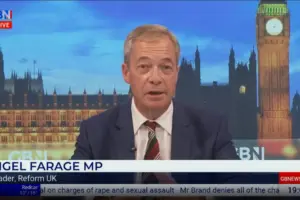
Consider Suella Braverman’s high-profile appearance on BBC Question Time. The ingredients are familiar to any consumer of contemporary media: blinding studio lights, a panel dominated by partisan politicians, arbitrary and tight time limits, and deliberately pointed questions designed to elicit defensive postures. It is a calculated recipe for a hyper-politicised, zero-sum debate built entirely for snappy soundbites rather than deep nuance. The ultimate output is rarely collective understanding; instead, it leaves audiences exhausted, polarized, and profoundly alienated.
Yet, this adversarial framework is not an immutable law of nature; it is a design choice.
As trust in legacy media plummets to historic lows, a quiet revolution is taking root at the grassroots level. A prominent paradigm shift is emerging from the News For All project, spearheaded by acclaimed journalist, researcher, and community organizer Shirish Kulkarni—currently a news innovation research fellow at Media Cymru and the founder of Inclusive Journalism Cymru. Backed by key strategic partners, including the Welsh Government and Welsh-language public broadcaster S4C, Kulkarni’s groundbreaking work asks a deceptively simple yet radical question: What conditions does a community actually need to make sense of its own life together?
By stepping away from the Westminster bubble and moving deep into the former slate-mining town of Blaenau Ffestiniog in north Wales, this project offers an ambitious blueprint for the future of journalism. It demonstrates that when media institutions relinquish top-down editorial control and empower local communities to set their own terms of engagement, the result is not cacophony, but clarity, empathy, and democratic resilience.
Detailed Chronology: From Westminster Showdowns to the Valleys of North Wales
To understand why innovative frameworks like the News For All project are urgently required, one must first examine the systemic failures of the conventional news production pipeline. The trajectory from standard broadcast media to community-led inquiry reveals a stark contrast in methodologies.
The Anatomy of a Breakdown: The Broadcast Model
For decades, broadcast journalism has relied on a formula inherited from mid-century television production: the studio debate.
- The Setup: Gather three to four politicians representing opposing ideological factions, add a representative from an industry or advocacy group, and seat them under hot studio lights.
- The Rules of Engagement: Impose strict, uncompromising time limits—often 60 to 90 seconds per answer. Introduce a moderator whose primary role is not necessarily to illuminate facts, but to referee clashes, interrupt spin, and manufacture tension.
- The Subject Matter: Introduce hyper-sensitive, high-emotion topics such as immigration, national identity, or resource distribution.
When figures like Suella Braverman step into this arena, the structural incentives completely override any possibility of a constructive exchange. Nuanced policy positions are discarded in favor of rhetorical fortification. The audience is positioned not as citizens seeking understanding, but as spectators in a political colosseum. The emotional aftermath is predictable: division hardens, prejudice is reinforced, and the underlying social fabric frays further.
The Antidote: The News For All Timeline
Recognizing the unsustainability of this model, Shirish Kulkarni and his collaborators set out to test an entirely different hypothesis over a rigorous, year-long investigation. The chronology of the News For All project highlights a deliberate, patient, and deeply consultative methodological process:
- Phase One: Conceptualization and Institutional Alignment (Early 2023): Kulkarni conceptualized a framework that treated journalism not as a finished product delivered to an audience, but as a public utility constructed with them. Securing backing from Media Cymru, the Welsh Government, and S4C, the project aimed to decouple local storytelling from metropolitan newsroom priorities.
- Phase Two: Selecting the Micro-Laboratory (Spring 2023): The project chose Blaenau Ffestiniog, a proud, Welsh-speaking, former slate-mining town in north Wales. Geographically isolated and economically transitional, Blaenau Ffestiniog provided a rich socio-cultural backdrop—a community navigating questions of identity, linguistic preservation, demographic change, and economic renewal.
- Phase Three: Recruiting Co-Researchers (Summer 2023): Rather than parachuting in reporters with pre-formed story ideas, Kulkarni recruited and trained 14 local community co-researchers. These individuals represented diverse ages, occupations, and viewpoints within the town, ensuring that the questions asked truly reflected local priorities rather than national news agendas.
- Phase Four: Deliberative Inquiry (Autumn 2023 – Winter 2023/24): Over several months, the co-researchers engaged in structured listening sessions, workshops, and dialogues across Blaenau Ffestiniog. They tested the core research question: What conditions does this community need to make sense of its own life together?
- Phase Five: Synthesis and Dissemination (2024): The findings were compiled into a comprehensive framework designed to show public broadcasters, independent publishers, and policymakers how to reconstruct local information ecosystems from the ground up.
Supporting Context & Metrics: The Crisis of Trust and the Economics of Empathy
The urgency of Kulkarni’s intervention is underscored by a sobering array of data regarding public trust in the media, psychological research on cognitive framing, and the socio-economic realities of modern regional communities.
The Global Crisis of Media Trust
According to the Reuters Institute Digital News Report, trust in news remains persistently low across Western democracies. In the United Kingdom, trust hovers near historic lows, with a significant portion of the population actively avoiding the news because it makes them feel helpless, angry, or depressed.
| Metric / Indicator | Traditional Media Model | Community-Led Model (News For All) |
|---|---|---|
| Primary Incentive | Clicks, ratings, outrage, advertising impressions | Social cohesion, shared understanding, civic health |
| Editorial Control | Centralized in metropolitan newsrooms | Decentralized, shared with local co-researchers |
| Format | Adversarial panels, soundbites, breaking-news alerts | Deliberative listening circles, long-form narrative, context |
| Public Sentiment Impact | Increases polarization, fatigue, and alienation | Fosters empathy, active listening, and local agency |
The economic pressures facing regional journalism compound this crisis. As local newspapers vanish or are hollowed out by corporate conglomerates, "news deserts" expand. Where local reporting survives, it is often underfunded, relying on wire services and sensationalized crime reporting rather than deep civic engagement.
Identity, Immigration, and the Psychology of Fear
Psychological and sociological research demonstrates that when delicate topics like immigration and cultural identity are framed through an adversarial lens, the human brain triggers a "threat response."
- Amygdala Activation: High-conflict media coverage stimulates the amygdala, shutting down prefrontal cortex functions associated with empathy, long-term planning, and nuanced reasoning.
- In-Group vs. Out-Group Bias: Polarizing debates weaponize tribal instincts, forcing individuals to pick sides rather than explore common ground.
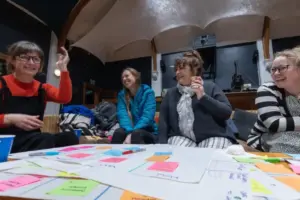
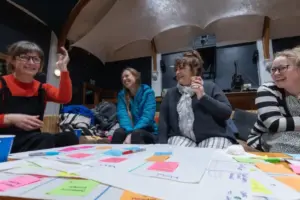
The News For All project deliberately subverts this psychological trap. By shifting the venue of discussion from a London television studio to a community hall in Blaenau Ffestiniog, the physical and emotional environment changes. Participants are no longer performing for an invisible, national audience; they are conversing with neighbors whom they will see at the local shop the next day. This spatial intimacy radically alters the discourse, transforming toxic certainty into vulnerable inquiry.
Official Statements and Expert Perspectives
The implications of the News For All project extend far beyond the borders of Wales, touching on fundamental questions of how democratic societies communicate in the 21st century.
Shirish Kulkarni, founder of Inclusive Journalism Cymru and architect of the project, emphasized the structural necessity of changing how journalism operates:
"We cannot continue to use 20th-century broadcast tools—designed for a monocultural, top-down era—to navigate the deeply complex, multicultural, and fragmented realities of the 2020s. When we stage debates as battles, we shouldn’t be surprised when society tears itself apart. Our research in Blaenau Ffestiniog proves that people don’t inherently hate nuance; they are simply starved of the structural conditions required to practice it."
Media analysts and public policy researchers have also rallied around the findings, noting the critical role played by institutional backers such as the Welsh Government and S4C.
Public service broadcasters, increasingly vulnerable to accusations of bias or irrelevance, are finding in these community-led models a viable path toward fulfilling their democratic mandate. By funding innovation that steps outside traditional Westminster-centric corridors, institutions like S4C are demonstrating that public media can act as an active facilitator of social trust rather than a passive mirror of political polarization.
A community co-researcher from the Blaenau Ffestiniog cohort reflected on the transformative nature of the participatory process:
"For too long, people from London or Cardiff came to our town only when something went wrong, or to ask us how we felt about big national talking points that had little to do with our daily struggles. Being part of this project meant we weren’t being ‘covered’—we were doing the discovering. We set the agenda. For the first time in years, we felt like active authors of our own community’s story, rather than passive characters in someone else’s script."
Future Outlook: Rebuilding the News Ecosystem from the Ground Up
As we look toward the horizon of media innovation, the lessons gleaned from Blaenau Ffestiniog and the News For All project offer a vital roadmap for journalists, editors, policymakers, and civic leaders alike.
1. Re-engineering Editorial Workflows
Newsrooms must move away from the reflex of immediately organizing panels of opposing politicians whenever a sensitive cultural or political issue arises. Editors should invest in training reporters in constructive journalism and deliberative facilitation—techniques that prioritize understanding over victory.
2. Institutionalizing Community Co-Production
Public service media should permanently allocate budgets for community co-research models. Journalism should not be something done to communities; it must become a collaborative civic practice. By embedding co-researchers permanently within news organizations, outlets can rebuild the deep wells of trust required to report on contentious issues without inciting cultural backlash.
3. Redefining Success Metrics
Media organizations must evaluate their success not merely by engagement metrics driven by outrage, but by the quality of civic health they foster. If a broadcast or article leaves an audience more divided, hostile, and fearful than before, it has failed its democratic purpose—regardless of its viewing figures.
Conclusion
The spectacle of high-profile political punch-ups on prime-time television will likely remain a staple of modern media for the near future, driven by legacy commercial incentives. However, the pioneering work of Shirish Kulkarni, Inclusive Journalism Cymru, and their partners in Wales shows us that an alternative is not only possible—it is already being built.
By stepping away from the studio lights, slowing down the clock, and trusting communities to ask their own questions, we catch a glimpse of a healthier information ecosystem. It is an ecosystem where identity and immigration are discussed not as weapons to be deployed in a culture war, but as shared human experiences to be navigated with curiosity, dignity, and care.